

4 months 1 week ago
After all, why should ordinary people want to contemplate the End, especially when we see the condition of those who do?
4 months 1 week ago
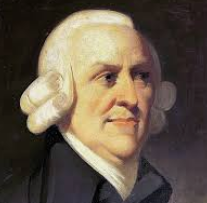
China has been long one of the richest, that is, one of the most fertile, best cultivated, most industrious, and most populous countries in the world. It seems, however, to have been long stationary. Marco Polo, who visited it more than five hundred years ago, describes its cultivation, industry, and populousness, almost in the same terms in which they are described by travellers in the present times.
▼
Source
Chapter VIII, p. 86.
4 months 1 week ago
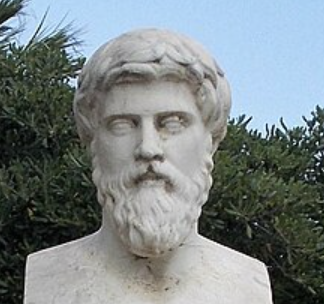
Antagoras the poet was boiling a conger, and Antigonus, coming behind him as he was stirring his skillet, said, "Do you think, Antagoras, that Homer boiled congers when he wrote the deeds of Agamemnon?" Antagoras replied, "Do you think, O king, that Agamemnon, when he did such exploits, was a peeping in his army to see who boiled congers?"
▼
Source
46 Antigonus I

4 months 1 week ago
The evil of totalitarianism is not only that it fails to protect specific liberties but that it extinguishes the very possibility of freedom.
▼
Source
'Isaiah Berlin: The Value of Decency' (p.104)
4 months 1 week ago
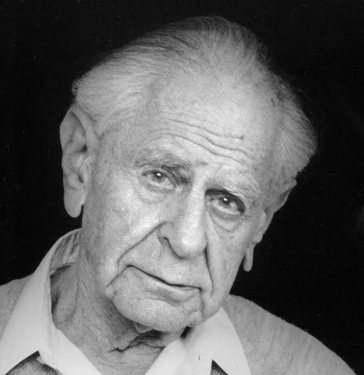
If in this book harsh words are spoken about some of the greatest among the intellectual leaders of mankind, my motive is not, I hope, the wish to belittle them. It springs rather from my conviction that, if our civilization is to survive, we must break with the habit of deference to great men. Great men may make great mistakes; and as the book tries to show, some of the greatest leaders of the past supported the perennial attack on freedom and reason. Their influence, too rarely challenged, continues to mislead those on whose defence civilization depends, and to divide them. The responsibility of this tragic and possibly fatal division becomes ours if we hesitate to be outspoken in our criticism of what admittedly is a part of our intellectual heritage. By reluctance to criticize some of it, we may help to destroy it all.
▼
Source
Preface to the First Edition
4 months 1 week ago
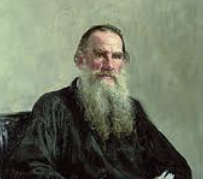
Anna Pávlovna's reception was in full swing. The spindles hummed steadily and ceaselessly on all sides. With the exception of the aunt, beside whom sat only one elderly lady, who with her thin careworn face was rather out of place in this brilliant society, the whole company had settled into three groups. One, chiefly masculine, had formed round the abbé. Another, of young people, was grouped round the beautiful Princess Hélène, Prince Vasíli's daughter, and the little Princess Bolkónskaya, very pretty and rosy, though rather too plump for her age. The third group was gathered round Mortemart and Anna Pávlovna.
▼
Source
Bk. I, Ch. III
4 months 1 week ago
But yet, since He knew that it would be good, He created both angels and men free to do that which is righteous, and He appointed periods of time during which He knew it would be good for them to have the exercise of free-will; and because He likewise knew it would be good, He made general and particular judgments; each one’s freedom of will, however, being guarded.
▼
Source
Dialogue with Trypho, chapter CII. In ANF1, that is, Roberts A, Donaldson J and Coxe AC (1885) Ante-Nicene Fathers, Vol 1. [Cf chapter LXXXVIII.]
4 months 1 week ago
When people are friends, they have no need of justice, but when they are just, they need friendship in addition.
▼
Source
Book VIII, 1155a.26
4 months 1 week ago
Only the great generalizations survive. The sharp words of the Declaration of Independence, lampooned then and since as 'glittering generalities,' have turned out blazing ubiquities that will burn forever and ever.
▼
Source
From a lecture on Books given in the Fraternity Course in Boston in 1864; the quoted phrase 'glittering generalities' had been used by Rufus Choate to describe the declaration of the rights of man in the Preamble to the Constitution

4 months 1 week ago
The vicious circle linking poverty, police, courts and prison is an integral element of ghetto existence.
4 months 1 week ago
We are struck by the psychological force and even fierceness with which he reveals the deepest recesses of the human heart.
▼
Source
[http://www.lib.uiowa.edu/spec-coll/MSC/ToMsc500/MsC488/MsC488.htm Eric F. J. Payne], in his introduction to his 1958 translation of [http://books.google.com/books?id=pvnAL_fReokC&pg=PR7&lpg=PR7&dq=%22are+struck+by+the+psychological+force+and+even+fiercen
4 months 1 week ago
I anticipated witnessing in my lifetime the disappearance of our species. But the Gods have been against me.
4 months 1 week ago
Everything intercepts us from ourselves.
▼
Source
1833
4 months 1 week ago
This is not the first period during which we have confronted the difficult problem of using difference as a way of bringing people together, rather than as incontrovertible evidence of separation. There are more options than sameness, opposition, or hierarchical relations. One of the basic challenges confronting women of color today, as Audre Lorde has pointed out, is to think about and act upon notions of equality across difference. There are so many ways in which we can conceptualize coalitions, alliances, and networks that we would be doing ourselves a disservice to argue that there is only one way to construct relations across racial and ethnic boundaries. We cannot assume that if it does not unfold in one particular way, then it is not an authentic coalition.
4 months 1 week ago
Melancholy redeems this universe, and yet it is melancholy that separates us from it.
4 months 1 week ago
We do not, however, reckon that trade disadvantageous which consists in the exchange of the hard-ware of England for the wines of France;and yet hard-ware is a very durable commodity, and were it not for this continual exportation, might too be accumulated for ages together, to the incredible augmentation of the pots and pans of the country. But it readily occurs that the number of such utensils is in every country necessarily limited by the use which there is for them;that it would be absurd to have more pots and pans than were necessary for cooking the victuals usually consumed there;and that if the quantity of victuals were to increase, the number of pots and pans would readily increase along with it, apart of the increased quantity of victuals being employed in purchasing them, or in maintaining an additional number of workman whose business it was to make them.
▼
Source
Chapter I, p. 471.
4 months 1 week ago
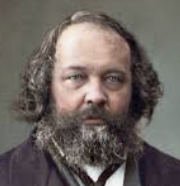
Freemasonry, in its development, in its growing power at first and later in its decadence, represented in a way the development, power, and moral and intellectual decadence of the bourgeoisie. Today, fallen to the sad position of a senile old intriguer, it is a useless, sometimes malevolent and always ridiculous nullity, whereas, before 1830 and especially before 1793, having gathered together at its core, with very few exceptions, all the minds of the elite, the most ardent hearts, the proudest spirits, the most audacious personalities, it had constituted an active powerful, and truly beneficial institution. It was the energetic incarnation and implementation of the humanitarian ideal of the eighteenth century. All those great principles of liberty, equality, and fraternity, of reason and human justice, elaborated theoretically at first by the philosophy of that century, became in the hands of the Freemasons practical dogmas and the foundations of a new moral and political program, the soul of a gigantic enterprise of demolition and reconstruction. In that epoch, Freemasonry was nothing less than the universal conspiracy of the revolutionary bourgeoisie against the feudal monarchical and divine tyranny. It was the International of the bourgeoisie.
▼
Source
"Letter to the Comrades of the International Workingmen's Association of Locle and Cheau-de-Fonds", (1869)
4 months 1 week ago
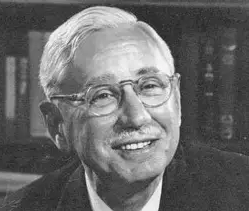
Science tells us how to heal and how to kill; it reduces the death rate in retail and then kills us wholesale in war; but only wisdom — desire coordinated in the light of all experience — can tell us when to heal and when to kill. To observe processes and to construct means is science; to criticize and coordinate ends is philosophy: and because in these days our means and instruments have multiplied beyond our interpretation and synthesis of ideals and ends, our life is full of sound and fury, signifying nothing. For a fact is nothing except in relation to desire; it is not complete except in relation to a purpose and a whole. Science without philosophy, facts without perspective and valuation, cannot save us from havoc and despair. Science gives us knowledge, but only philosophy can give us wisdom.
▼
Source
Introduction : On the Uses of Philosophy
4 months 1 week ago
There is another accusation which irritates me on Plutarch's behalf: it is where Bodin says that Plutarch showed good faith in his parallels between Roman and Roman or Greek and Greek but not between Roman and Greek. Witness, he says, Demosthenes and Cicero; Cato and Aristides; Sylla and Lysander; Marcellus and Pelopidas; Pompey and Agesilaus, reckoning as he does that he favoured the Greeks by matching them so unfairly. That is precisely to attack what is most excellent and commendable in Plutarch: for in those parallel lives (which are the most admirable part of his works and to my mind the one he took most pleasure in) the faithfulness and purity of his judgements equals their weight and profundity. He is a philosopher who teaches us what virtue is.
▼
Source
Michel de Montaigne, 'In defence of Seneca and Plutarch', The Complete Essays, translated by M. A. Screech (1991; 2003), p. 822
4 months 1 week ago
Humans kill one another – and in some cases themselves – for many reasons, but none is more human than the attempt to make sense of their lives. More than the loss of life, they fear loss of meaning.
▼
Source
In the Puppet Theatre: Roof Gardens, Feathers and Human Sacrifice (p. 87)
4 months 1 week ago
Justice is of two kinds, justice in distribution and justice in rectification. ... Aristotle thinks primarily of setting things straight, and denies that rectificatory justice contains an element of 'tit for tat'.
▼
Source
Alan Ryan, Introduction in Justice (1993) edited by Alan Ryan
4 months 1 week ago
I assert(1) There is no method of discovering a scientific theory.(2) There is no method of ascertaining the truth [i.e., verification] of a scientific hypothesis...(3) There is no method of ascertaining whether a hypothesis is 'probable', in the sense of the probability calculus.
4 months 1 week ago
I thought: "I am perishing of cold and hunger, and here is a man thinking only of how to clothe himself and his wife, and how to get bread for themselves. He cannot help me. When the man saw me he frowned and became still more terrible, and passed me by on the other side. I despaired, but suddenly I heard him coming back. I looked up, and did not recognize the same man: before, I had seen death in his face; but now he was alive, and I recognized in him the presence of God.
4 months 1 week ago
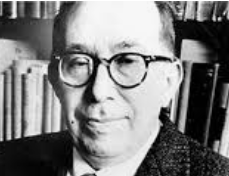
We believe that failing to call a spade a spade is not scientific.
▼
Source
p. 50
4 months 1 week ago
You can take better care of your secret than another can.
▼
Source
1863
4 months 1 week ago
To reiterate, rather than try to imagine one single alternative to the existing system of incarceration, we might envision an array of alternatives that will require radical transformations of many aspects of our society. Alternatives that fail to address racism, male dominance, homophobia, class bias, and other structures of domination will not, in the final analysis, lead to decarceration and will not advance the goal of abolition.
▼
Source
Chapter Six
4 months 1 week ago
Boredom is connected naturally with time, with the horror of time, with the experience and the consciousness of time. Those who are not aware of time do not become bored. Basically life is only possible if one is not aware of time. If one should happen to want to experience consciously one of those moments that pass, one would be lost; life would become unbearable.
4 months 1 week ago
Every system which endeavours, either, by extraordinary encouragements, to draw towards a particular species of industry a greater share of the capital of the society than what would naturally go to it; or, by extraordinary restraints, to force from a particular species of industry some share of the capital which would otherwise be employed in it; is in reality subversive of the great purpose which it means to promote. It retards, instead of accelerating, the progress of the society towards real wealth and greatness; and diminishes, instead of increasing, the real value of the annual produce of its land and labour. All systems either of preference or of restraint, therefore, being thus completely taken away, the obvious and simple system of natural liberty establishes itself of its own accord. Every man, as long as he does not violate the laws of justice, is left perfectly free to pursue his own interest his own way, and to bring both his industry and capital into competition with those of any other man, or order of men. The sovereign is completely discharged from a duty, in the attempting to perform which he must always be exposed to innumerable delusions, and for the proper performance of which no human wisdom or knowledge could ever be sufficient; the duty of superintending the industry of private people, and of directing it towards the employments most suitable to the interest of the society. According to the system of natural liberty, the sovereign has only three duties to attend to; three duties of great importance, indeed, but plain and intelligible to common understandings: first, the duty of protecting the society from the violence and invasion of other independent societies; secondly, the duty of protecting, as far as possible, every member of the society from the injustice or oppression of every other member of it, or the duty of establishing an exact administration of justice; and, thirdly, the duty of erecting and maintaining certain public works and certain public institutions, which it can never be for the interest of any individual, or small number of individuals, to erect and maintain; because the profit could never repay the expence to any individual, or small number of individuals, though it may frequently do much more than repay it to a great society. The proper performance of those several duties of the sovereign necessarily supposes a certain expence; and this expence again necessarily requires a certain revenue to support it.
▼
Source
Chapter IX, p. 749.
4 months 1 week ago
We … have humanity divided into an indefinite number of foreign states, all hostile and threatened by each other. There is no common right, no social contract of any kind between them; otherwise they would cease to be independent states and become the federated members of one great state. But unless this great state were to embrace all of humanity, it would be confronted with other great states, each federated within, each maintaining the same posture of inevitable hostility. War would still remain the supreme law, an unavoidable condition of human survival. Every state, federated or not, would therefore seek to become the most powerful. It must devour lest it be devoured, conquer lest it be conquered, enslave lest it be enslaved, since two powers, similar and yet alien to each other, could not coexist without mutual destruction. The State, therefore, is the most flagrant, the most cynical, and the most complete negation of humanity. It shatters the universal solidarity of all men on the earth, and brings some of them into association only for the purpose of destroying, conquering, and enslaving all the rest. It protects its own citizens only; it recognises human rights, humanity, civilisation within its own confines alone. Since it recognises no rights outside itself, it logically arrogates to itself the right to exercise the most ferocious inhumanity toward all foreign populations, which it can plunder, exterminate, or enslave at will. If it does show itself generous and humane toward them, it is never through a sense of duty, for it has no duties except to itself in the first place, and then to those of its members who have freely formed it, who freely continue to constitute it or even, as always happens in the long run, those who have become its subjects. As there is no international law in existence, and as it could never exist in a meaningful and realistic way without undermining to its foundations the very principle of the absolute sovereignty of the State, the State can have no duties toward foreign populations. Hence, if it treats a conquered people in a humane fashion, if it plunders or exterminates it halfway only, if it does not reduce it to the lowest degree of slavery, this may be a political act inspired by prudence, or even by pure magnanimity, but it is never done from a sense of duty, for the State has an absolute right to dispose of a conquered people at will. This flagrant negation of humanity which constitutes the very essence of the State is, from the standpoint of the State, its supreme duty and its greatest virtue. It bears the name patriotism, and it constitutes the entire transcendent morality of the State. We call it transcendent morality because it usually goes beyond the level of human morality and justice, either of the community or of the private individual, and by that same token often finds itself in contradiction with these. Thus, to offend, to oppress, to despoil, to plunder, to assassinate or enslave one's fellowman is ordinarily regarded as a crime. In public life, on the other hand, from the standpoint of patriotism, when these things are done for the greater glory of the State, for the preservation or the extension of its power, it is all transformed into duty and virtue. And this virtue, this duty, are obligatory for each patriotic citizen; everyone is supposed to exercise them not against foreigners only but against one's own fellow citizens, members or subjects of the State like himself, whenever the welfare of the State demands it.This explains why, since the birth of the State, the world of politics has always been and continues to be the stage for unlimited rascality and brigandage, brigandage and rascality which, by the way, are held in high esteem, since they are sanctified by patriotism, by the transcendent morality and the supreme interest of the State. This explains why the entire history of ancient and modern states is merely a series of revolting crimes; why kings and ministers, past and present, of all times and all countries — statesmen, diplomats, bureaucrats, and warriors — if judged from the standpoint of simple morality and human justice, have a hundred, a thousand times over earned their sentence to hard labour or to the gallows. There is no horror, no cruelty, sacrilege, or perjury, no imposture, no infamous transaction, no cynical robbery, no bold plunder or shabby betrayal that has not been or is not daily being perpetrated by the representatives of the states, under no other pretext than those elastic words, so convenient and yet so terrible: "for reasons of state."
4 months 1 week ago
Man is as young as the risks he takes.
▼
Source
Ch. 2 : On Youth

4 months 1 week ago
We can open our hearts to God, but only with Divine help.
▼
Source
q. 24, art. 15, ad 2
4 months 1 week ago
The leading critic of the positivists in their heyday was of course Popper. There has been a tendency for philosophers of science to regard Popper as something of an embarrassment. However, naturalistic philosophers should take it as an interesting fact about science that Popper has long been the favourite philosopher of science among scientists; and it would be condescending to attribute this entirely to the fact that Popper's philosophy is relatively non-complex, self-contained, and flattering to scientists.
▼
Source
James Ladyman and Don Ross, "The World in the Data" in Scientific Metaphysics (2013) edited by Don Ross, James Ladyman, and Harold Kincaid
4 months 1 week ago
There is a scale of virtues, and it is necessary, if one would mount the higher steps, to begin with the lowest; and the first virtue a man must acquire if he wishes to acquire the others, is that which the ancients called ἐγκράτεια or σωφροσύνη — i.e., self-control or moderation.
▼
Source
Ch. VIII
4 months 1 week ago
For a philosophy based on faith is no longer philosophy. Perhaps it was this unresolved conflict which has prevented Western thought from ever coming to rest. Perhaps it is this conflict which is at the bottom of a kind of thought which is philosophic indeed but no longer Greek: modern philosophy. It is in trying to understand modern philosophy that we come across Machiavelli. Machiavelli is the only political thinker whose name has come into common use for designating a kind of politics, which exists and will continue to exist independently of his influence, a politics guided exclusively by considerations of 'expediency, which uses all means, fair or foul, iron or poison, for achieving its ends-its end being the aggrandizement of one's country or fatherland-but also using the father land in the service of the self-aggrandizement of the politician or statesman or one's party.
4 months 1 week ago
Wherever a man comes, there comes revolution. The old is for slaves.
▼
Source
p. 25
4 months 1 week ago
What the civil rights movement did, it seems to me, was to create a new terrain for asking new questions and moving in new directions. It's not a betrayal that people like Colin Powell and Condoleeza Rice and the Black conservatives who are the heart of government are where they are. As a matter of fact, the civil rights movement demanded access, right? But I don't think that we can assume that what was done in the 1950s and 1960s is going to do the work of the 1980s and 1990s.
4 months 1 week ago
But bounty and hospitality very seldom lead to extravagance; though vanity almost always does.
▼
Source
Chapter III, Part V, p. 987.
4 months 1 week ago
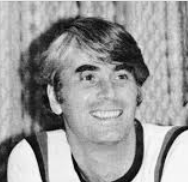
Robert Nozick, the Arthur Kingsley Porter Professor of Philosophy at Harvard University, always attacks his problems in a disconcertingly original way. … in The Examined Life, he took on nothing less than the meaning of life, a subject that academic philosophers tended to steer clear of — and still do, despite his best efforts. From Mr. Nozick you always expect fireworks, even if some of them go off in their box. His questions, hints, counterarguments and suggestions come so thick and fast that it is next to impossible to appreciate all of them. Start pondering a sentence and you will find yourself led away prematurely by a parenthetical question; think about the question and you will be dragged into a discursive footnote; from the bowels of the footnote, another parenthetical query will leap out at you. If you escape back to the main argument with your concentration intact (unlikely, after a while), the whole wearing business just starts over again. Yet it is worth the effort — certainly for regular readers of philosophy, and often for others.
▼
Source
Anthony Gottlieb, in a review of The Nature of Rationality, [http://www.nytimes.com/1993/08/22/books/why-do-you-do-the-things-you-do.html "Why Do You Do the Things You Do?" in The New York Times (22 August 1993)]
4 months 1 week ago
We cannot pretend that we do not see the armed policeman who marches up and down beneath our window to guarantee our security while we eat our luxurious dinner, or look at the new piece at the theater, or that we are unaware of the existence of the soldiers who will make their appearance with guns and cartridges directly our property is attacked.
▼
Source
Chapter XII, Conclusion—Repent Ye, for the Kingdom of Heaven is at Hand
4 months 1 week ago
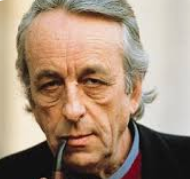
Marx compellingly proved it in Capital Volume Two, that no production is possible which does not allow for the reproduction of the material conditions of productions: the reproduction of the means of production.
▼
Source
p.128
4 months 1 week ago
Go where he will, the wise man is at home, His hearth the earth, his hall the azure dome.
▼
Source
Wood-notes, st. 3
4 months 1 week ago
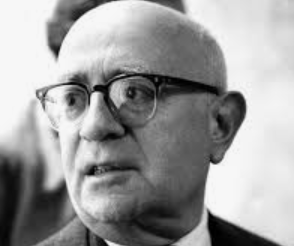
The phrase, the world wants to be deceived, has become truer than had ever been intended. People are not only, as the saying goes, falling for the swindle; if it guarantees them even the most fleeting gratification they desire a deception which is nonetheless transparent to them. They force their eyes shut and voice approval, in a kind of self-loathing, for what is meted out to them, knowing fully the purpose for which it is manufactured. Without admitting it they sense that their lives would be completely intolerable as soon as they no longer clung to satisfactions which are none at all.
▼
Source
Section 10

4 months 1 week ago
A Right Mind, and Generous Affection, [has] more Beauty and Charm, than all other Symmetrys in the World besides.
▼
Source
Vol. 2, p. 209; "Miscellany III".
4 months 1 week ago
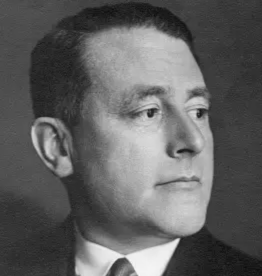
Whoever asserts a value, must bring its influence to bear. Whoever maintains that it has value regardless of the influence brought to bear by any individual human being who endorses it, is simply cheating.
4 months 1 week ago
Partisans of the free market invoke Adam Smith in order to lend the authority of his name to the case they themselves want to make: for the complete removal of the state from economic enterprise; for the economic sovereignty of the market; and for leaving all questions of production and distribution to the magic of the invisible hand... But...the reason Adam Smith wanted an end to government intervention in the market was that in his time (in contrast to today) it was only thanks to state intervention that what he called "the mean rapacity, the monopolising spirit of merchants and manufacturers" was able to dominate the economy, to the great detriment of the society as a whole.
▼
Source
Heinz Lubasz, 'Adam Smith and the ‘free market’', in Stephen Copley and Kathryn Sutherland (eds.), Adam Smith's Wealth of Nations: New Interdisciplinary Essays (1995), p. 49
4 months 1 week ago
Such ... was the theory (an outgrowth of Malthusian) of the selection and struggle for existence as the basis of human progress. Such again, is Marx's theory, with regard to the gradual destruction of small private production by large capitalistic production... as an inevitable decree of fate. However unfounded such theories are, however contrary to all that is known and confessed by humanity, and however obviously immoral these may be, they are accepted with credulity, pass uncriticized, and are preached ... To this class belongs this astonishing theory of the Baungarten trinity — Goodness, Beauty and Truth — according to which it appears that the very best that can be done by the art of nations after 1900 years of Christian teaching is to choose as the ideal of their life that which was held by a small, semi-savage, slaveholding people who lived 2000 years ago, who imitated the nude human body extremely well, and erected buildings pleasing to the eye. Educated people write long, nebulous treatises on beauty as a member of the aesthetic trinity of beauty, truth, and goodness... and they all think that by pronouncing these sacrosanct words, they speak of something quite definite and solid... on which they can base their opinions. ... only for the purpose of justifying the false importance we attribute to an art that conveys every feeling, provided those feelings give us pleasure.
4 months 1 week ago
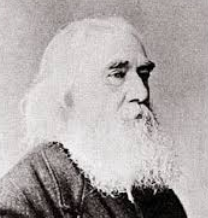
Children learn the fundamental principles of natural law at a very early age. Thus they very early understand that one child must not, without just cause, strike or otherwise hurt, another; that one child must not assume any arbitrary control or domination over another; that one child must not, either by force, deceit, or stealth, obtain possession of anything that belongs to another; that if one child commits any of these wrongs against another, it is not only the right of the injured child to resist, and, if need be, punish the wrongdoer, and compel him to make reparation, but that it is also the right, and the moral duty, of all other children, and all other persons, to assist the injured party in defending his rights, and redressing his wrongs. These are fundamental principles of natural law, which govern the most important transactions of man with man. Yet children learn them earlier than they learn that three and three are six, or five and five ten. Their childish plays, even, could not be carried on without a constant regard to them; and it is equally impossible for persons of any age to live together in peace on any other conditions.It would be no extravagance to say that, in most cases, if not in all, mankind at large, young and old, learn this natural law long before they have learned the meanings of the words by which we describe it. In truth, it would be impossible to make them understand the real meanings of the words, if they did not understand the nature of the thing itself. To make them understand the meanings of the words justice and injustice before knowing the nature of the things themselves, would be as impossible as it would be to make them understand the meanings of the words heat and cold, wet and dry, light and darkness, white and black, one and two, before knowing the nature of the things themselves. Men necessarily must know sentiments and ideas, no less than material things, before they can know the meanings of the words by which we describe them.
▼
Source
Section IV, p. 9–10
4 months 1 week ago
Act, if you like,—but you do it at your peril. Men's actions are too strong for them. Show me a man who has acted, and who has not been the victim and slave of his action. What they have done commits and enforces them to do the same again. The first act, which was to be an experiment, becomes a sacrament. The fiery reformer embodies his aspiration in some rite or covenant, and he and his friends cleave to the form, and lose the aspiration. The Quaker has established Quakerism, the Shaker has established his monastery and his dance; and, although each prates of spirit, there is no spirit, but repetition, which is anti-spiritual.
▼
Source
Goethe; or, the Writer
4 months 1 week ago
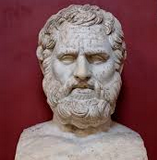
Seek to please all the citizens, even though Your house may be in an ungracious city. For such a course will favour win from all: But haughty manners oft produce destruction.
4 months 1 week ago
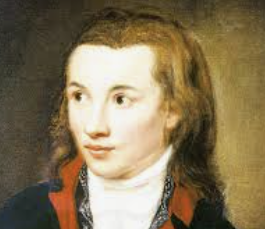
Blood will stream over Europe until the nations become aware of the frightful madness which drives them in circles. And then, struck by celestial music and made gentle, they approach their former altars all together, hear about the works of peace, and hold a great celebration of peace with fervent tears before the smoking altars.
▼
Source
As quoted in the Fourth Leaflet of the White Rose (1942)
CivilSimian.com created by AxiomaticPanic, CivilSimian, Kalokagathia