
4 months ago
No doubt I shall be told: "In the immense majority of cases this is an illusion." But it is of the essence of hope to exlclude the consideration of cases; moreover, it can be shown that there exists an ascedning dialectic of hope, whereby hope rises to a plane which transcends the level of all possible empirical disproof - the plane of salvation as opposed to that of success in whatever form
4 months ago
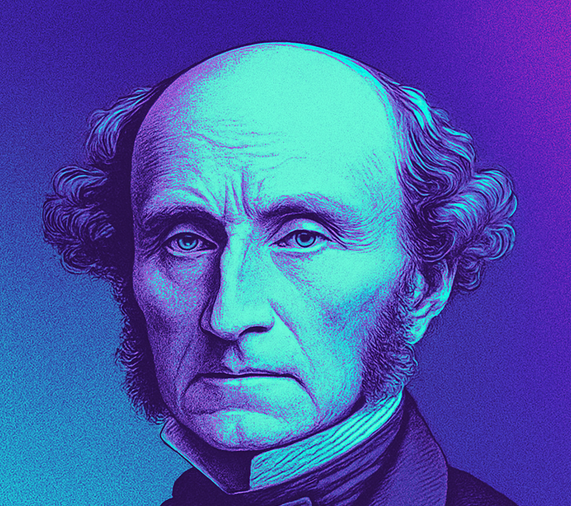
Of the evils most liable to attend on any sort of early proficiency, and which often fatally blights its promise, my father most anxiously guarded against. This was self-conceit. He kept me, with extreme vigilance, out of the way of hearing myself praised, or of being led to make self-flattering comparisons between myself and others. From his own intercourse with me I could derive none but a very humble opinion of myself; and the standard of comparison he always held up to me, was not what other people did, but what a man could and ought to do. He completely succeeded in preserving me from the sort of influences he so much dreaded. I was not at all aware that my attainments were anything unusual at my age.
▼
Source
([https://archive.org/details/autobiography01mill/page/32/mode/1up pp. 32–33])
4 months ago
To-day the [Enlightenment] ideal has been changed into a reality; not only in legislation, which is the mere framework of public life, but in the heart of every individual, whatever his ideas may be, and even if he be a reactionary in his ideas, that is to say, even when he attacks and castigates institutions by which those rights are sanctioned.… The sovereignty of the unqualified individual, of the human being as such, generically, has now passed from being a juridical idea or ideal to be a psychological state inherent in the average man. And note this, that when what was before an ideal becomes a component part of reality, it inevitably ceases to be an ideal. The prestige and the magic that are attributes of the ideal are volatilised.
▼
Source
Chap.II: The Rise Of The Historic Level
4 months ago
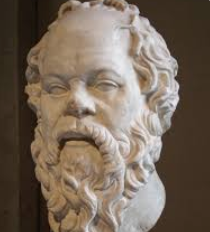
But when returning into herself she [the soul] reflects; then she passes into the realm of purity, and eternity, and immortality, and unchangeableness, which are her kindred, and with them she ever lives, when she is by herself and is not let or hindered; then she ceases from her erring ways, and being in communion with the unchanging is unchanging. And this state of the soul is called wisdom.

4 months ago
I have just turned life into a proverb. I just killed it.
4 months ago
The correct statement would be, not that I disliked poetry, but that I was theoretically indifferent to it. I disliked any sentiments in poetry which I should have disliked in prose; and that included a great deal. And I was wholly blind to its place in human culture, as a means of educating the feelings. But I was always personally very susceptible to some kinds of it. ...Long before I had enlarged in any considerable degree, the basis of my intellectual creed, I had obtained in the natural course of my mental progress, poetic culture of the most valuable kind, by means of reverential admiration for the lives and characters of heroic persons; especially the heroes of philosophy. The same inspiring effect which so many of the benefactors of mankind have left on record that they had experienced from Plutarch’s Lives, was produced on me by Plato’s pictures of Socrates, and by some modern biographies, above all by Condorcet's Life of Turgot; a book well calculated to rouse the best sort of enthusiasm, since it contains one of the wisest and noblest of lives, delineated by one of the wisest and noblest of men. The heroic virtue of these glorious representatives of the opinions with which I sympathized, deeply affected me, and I perpetually recurred to them as others do to a favourite poet, when needing to be carried up into the more elevated regions of feeling and thought. I may observe by the way that this book cured me of my sectarian follies. The two or three pages beginning "Il regardait toute secte comme nuisible," and explaining why Turgot always kept himself perfectly distinct from the Encyclopedists, sank deeply into my mind. I left off designating myself and others as Utilitarians, and by the pronoun "we" or any other collective designation, I ceased to afficher, sectarianism. My real inward sectarianism I did not get rid of till later, and much more gradually.
▼
Source
([https://archive.org/details/autobiography01mill/page/112/mode/1up pp. 112-114])
4 months ago
To imagine that Caesar aspired to do something in the way Alexander did it — and this is what almost all historians have believed — is definitely to give up trying to understand him. Caesar is very nearly the opposite of Alexander. …[I]t is not merely a universal kingdom that Caesar has in view. His purpose is a deeper one. He wants a Roman empire which does not live on Rome, but on the periphery, on the provinces, and this implies the complete supersession of the City-State. It implies a State in which the most diverse peoples collaborate, in regard to which all feel solidarity.
▼
Source
Chapter XIV: Who Rules The World?
4 months ago
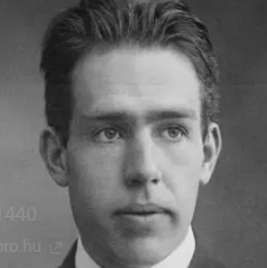
What is it that we humans depend on? We depend on our words... Our task is to communicate experience and ideas to others. We must strive continually to extend the scope of our description, but in such a way that our messages do not thereby lose their objective or unambiguous character ... We are suspended in language in such a way that we cannot say what is up and what is down. The word "reality" is also a word, a word which we must learn to use correctly.
▼
Source
Quoted in Philosophy of Science Vol. 37 (1934), p. 157, and in The Truth of Science : Physical Theories and Reality (1997) by Roger Gerhard Newton, p. 176
4 months ago
If any man could arrive at the exterior limit, or take the wings of a bird and fly upward, like a fish who puts his head out and sees the world, he would see a world beyond; and, if the nature of man could sustain this sight, he would acknowledge that this was the place of the true heaven and the true light and the true stars. For this earth, and the stones, and the entire region which surrounds us, are spoilt and corroded...
4 months ago
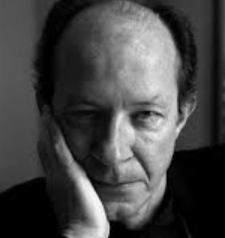
Love is never directed toward this or that property of the loved one (being blond, being small, being tender, being lame), but neither does it neglect the properties in favor of an insipid generality (universal love): The lover wants the loved one with all of its predicates, its being such as it is.
▼
Source
page 2.
4 months ago
The notion that truths external to the mind may be known by intuition or consciousness, independently of observation and experience, is, I am persuaded, in these times, the great intellectual support of false doctrines and bad institutions. By the aid of this theory, every inveterate belief and every intense feeling, of which the origin is not remembered, is enabled to dispense with the obligation of justifying itself by reason, and is erected into its own all-sufficient voucher and justification. There never was such an instrument devised for consecrating all deep-seated prejudices.
▼
Source
([https://archive.org/details/autobiography01mill/page/225/mode/1up pp. 225-226])
4 months ago
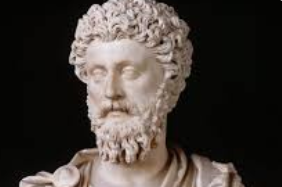
But that which is useful is the better.
▼
Source
III, 6
4 months ago
When asked whether the algorism of quantum mechanics could be considered as somehow mirroring an underlying quantum world, Bohr would answer, "There is no quantum world. There is only an abstract quantum physical description. It is wrong to think that the task of physics is to find out how nature is. Physics concerns what we can say about nature." Bohr felt that every step in the development of physics has strengthened the view that the problem of establishing an unambiguous description of nature has only one solution. He regarded all attempts to replace our elementary concepts or to introduce a new logic to account for the peculiarities of quantum phenomena as not merely unnecessary but also incompatible with our most fundamental conditions, since we are suspended in a unique language.
▼
Source
Aage Petersen, [http://books.google.com/books?id=DgcAAAAAMBAJ&lpg=PA36&pg=PA8 "The philosophy of Niels Bohr"] by in the Bulletin of the Atomic Scientists Vol. 19, No. 7 (September 1963); The Genius of Science: A Portrait Gallery (2000) by Abraham Pais, p.

4 months ago
The animals themselves are incapable of demanding their own liberation, or of protesting against their condition with votes, demonstrations, or boycotts. Human beings have the power to continue to oppress other species forever, or until we make this planet unsuitable for living beings. Will our tyranny continue, proving that morality counts for nothing when it clashes with selfinterest, as the most cynical of poets and philosophers have always said? Or will we rise to the challenge and prove our capacity for genuine altruism by ending our ruthless exploitation of the species in our power, not because we are forced to do so by rebels or terrorists, but because we recognize that our position is morally indefensible? The way in which we answer this question depends on the way in which each one of us, individually, answers it.
▼
Source
Ch. 6: Speciesism Today
4 months ago
Education is the kindling of a flame, not the filling of a vessel.
▼
Source
No findable citation to Socrates. First appears in this form in the 1990s, such as in the Douglas Bradley article "Lighting a Flame in the Kickapoo Valley", Wisconsin Ideas, UW System, 1994. It appears to be a variant on a statement from Plutarch in On Li
4 months ago
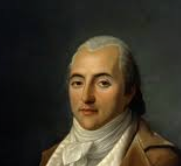
The philosophy of the last century was revolutionary ; that of the nineteenth century must be constructive. Lack of institutions leads to the destruction of all society; outworn institutions prolong the ignorance and the prejudices of the times which produce them. Shall we be forced to choose between barbarism and stupidity? Writers of the nineteenth century, you alone can avert this frightful dilemma.
▼
Source
Preface
4 months ago
As increased industrial efficiency makes it possible to procure the means of livelihood with less labor, the energies of the industrious members of the community are bent to the compassing of a higher result in conspicuous expenditure, rather than slackened to a more comfortable pace. ...this want ...is indefinitely expansible, after the manner commonly imputed in economic theory to higher or spiritual wants. It is owing chiefly to the presence of this element in the standard of living that J. S. Mill was able to say that "hitherto it is questionable if all the mechanical inventions yet made have lightened the day's toil of any human being."
▼
Source
Thorstein Veblen, The Theory of the Leisure Class: An Economic Study of Institutions (1899)
4 months ago
The 'public' is a phantom, the phantom of an opinion supposed to exist in a vast number of persons who have no effective interrelation and though the opinion is not effectively present in the units. Such an opinion is spoken of as 'public opinion,' a fiction which is appealed to by individuals and by groups as supporting their special views. It is impalpable, illusory, transient; "'tis here, 'tis there, 'tis gone"; a nullity which can nevertheless for a moment endow the multitude with power to uplift or destroy.
4 months ago
How much time he gains who does not look to see what his neighbor says or does or thinks, but only at what he does himself, to make it just and holy.
▼
Source
IV, 18
4 months ago
Some of Singer's critics call him a Nazi and compare his proposals to Hitler's schemes for eliminating the unwanted, the unfit and the disabled. But...Singer is no Hitler. He doesn't want state-sponsored killings. Rather, he wants the decision to kill to be made by you and me. Instead of government-conducted genocide, Singer favors free-market homicide.
▼
Source
Dinesh D'Souza, [http://townhall.com/columnists/dineshdsouza/2008/05/12/atheism_and_child_murder/page/full "Atheism and Child Murder," in Townhall (12 May 2008)].
4 months ago
The true objective of war is peace.
▼
Source
This is attributed to Sun Tzu in The Art of War. Actually [http://www.scribd.com/doc/42222505/The-Art-Of-War James Clavell’s foreword in The Art of War] [http://www.collegetermpapers.com/TermPapers/History_Other/Sun_Tzu_vs_The_Wisdom_of_the_Desert.shtml s
4 months ago
To do easily what is difficult for others is the mark of talent. To do what is impossible for talent is the mark of genius.
4 months ago
A horse at the end of the race...A dog when the hunt is over...A bee with its honey stored...And a human being after helping others. They don't make a fuss about it. They just go on to something else, as the vine looks forward to bearing fruit again in season. We should be like that. Acting almost unconsciously.
▼
Source
V, 6 (Hays translation)
4 months ago
The weakest living creature, by concentrating his powers on a single object, can accomplish something. The strongest, by dispensing his over many, may fail to accomplish anything. The drop, by continually falling, bores its passage through the hardest rock. The hasty torrent rushes over it with hideous uproar, and leaves no trace behind.
▼
Source
The life of Friedrich Schiller: Comprehending an examination of his works (1825).
4 months ago
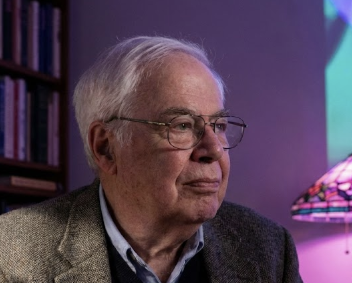
If I had to lay bets, my bet would be that everything is going to go to hell, but, you know, what else have we got except hope?
▼
Source
"Richard Rorty Interviewed by Gideon Lewis-Kraus." The Believer, June 2003.

4 months ago
Souls are not Spaniards too; one friendly floodOf baptism blends them all into a blood.Christ's faith makes but one body of all souls,And love's that body's soul; no law controlsOur free traffic for heav'n; we may maintainPeace, sure, with piety, though it come from Spain.What soul soe'er, in any language, canSpeak heav'n like hers is my soul's countryman.Oh, 'tis not Spanish, but 'tis heav'n she speaks!'Tis heaven that lies in ambush there, and breaksFrom thence into the wond'ring reader's breast,Who feels his warm heart hatched into a nestOf little eagles and young loves, whose highFlights scorn the lazy dust and things that die.
▼
Source
Richard Crashaw, Apology for the Foregoing Hymn (the Hymn to the Name and Honor of the Admirable Saint Teresa)
4 months ago
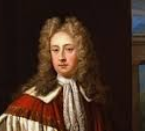
The service of our country is no chimerical, but a real duty. He who admits the proofs of any other moral duty, drawn from the constitution of human nature, or from the moral fitness and unfitness of things, must admit them in favour of this duty, or be reduced to the most absurd inconsistency.
▼
Source
pp. 27-28
4 months ago
How many, once lauded in song, are given over to the forgotten; and how many who sung their praises are clean gone long ago!
▼
Source
VII, 6
4 months ago
There is endless merit in a man's knowing when to have done.
▼
Source
Dr. Francia (1845).
4 months ago
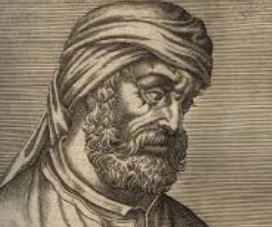
But everything which is against nature deserves to be branded as monstrous among all men; but with us it is to be condemned also as sacrilege against God, the Lord and Creator of nature.
▼
Source
Chapter V
4 months ago
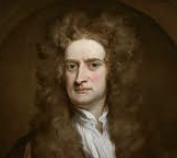
When I wrote my treatise about our System, I had an eye upon such principles as might work with considering men for the belief of a Deity and nothing can rejoice me more than to find it useful for that purpose. But if I have done the public any service this way, 'tis due to nothing but industry and a patient thought.
▼
Source
Newton to Bentley, 10 December 1692 (first letter), The Correspondence of Isaac Newton, ed. H. W. Turnbull (Cambridge: Cambridge University Press, 1961), 3:233. Referenced on p. 383 of Snobelen SD: "[https://isaacnewtonstheology.files.wordpress.com/2013/0
4 months ago
He was called indeed a tory; but his writings prove him a stronger advocate for liberty than any of his countrymen, the whigs of the present day. Irritated by his exile, he committed one act unworthy of him, in connecting himself momentarily with a prince rejected by his country. But he redeemed that single act by his establishment of the principles which proved it to be wrong... Lord Bolingbroke's...is a style of the highest order. The lofty, rhythmical, full-flowing eloquence of Cicero. Periods of just measure, their members proportioned, their close full and round. His conceptions, too, are bold and strong, his diction copious, polished and commanding as his subject. His writings are certainly the finest samples in the English language, of the eloquence proper for the Senate. His political tracts are safe reading for the most timid religionist, his philosophical, for those who are not afraid to trust their reason with discussions of right and wrong.
▼
Source
Thomas Jefferson to Francis Eppes (19 January 1821), quoted in Thomas Jefferson, Writings, ed. Merrill D. Peterson (1984), p. 1451
4 months ago
Thinking which displaces, or otherwise defines, the sacred has been called atheistic, and that philosophy which does not place it here or there, like a thing, but at the joining of things and words, will always be exposed to this reproach without ever being touched by it.
▼
Source
p. 46
4 months ago
Consider thyself to be dead, and to have completed thy life up to the present time; and live according to nature the remainder which is allowed thee.
▼
Source
Variant: Think of yourself as dead. You have lived your life. Now, take what's left and live it properly. | VII, 56
4 months ago
We are no longer instinctively driven to apprehend, and lay to heart, what is Good and Lovely, but rather to inquire, as onlookers, how it is produced, whence it comes, whither it goes. Our favourite Philosophers have no love and no hatred; they stand among us not to do, nor to create anything, but as a sort of Logic mills, to grind out the true causes and effects of all that is done and created.
4 months ago
If there is a sin against life, it consists perhaps not so much in despairing of life as in hoping for another life and in eluding the implacable grandeur of this life.
▼
Source
[http://books.google.com/books?id=N0bNUqDVKJgC&q=%22If+there+is+a+sin+against+life+it+consists+perhaps+not+so+much+in+despairing+of+life+as+in+hoping+for+another+life+and+in+eluding+the+implacable+grandeur+of+this+life%22&pg=PA153#v=onepage "Summer in Alg

4 months ago
The island of Utopia is in the middle two hundred miles broad, and holds almost at the same breadth over a great part of it, but it grows narrower towards both ends. Its figure is not unlike a crescent. Between its horns the sea comes in eleven miles broad, and spreads itself into a great bay, which is environed with land to the compass of about five hundred miles, and is well secured from winds. In this bay there is no great current; the whole coast is, as it were, one continued harbour, which gives all that live in the island great convenience for mutual commerce. But the entry into the bay, occasioned by rocks on the one hand and shallows on the other, is very dangerous. In the middle of it there is one single rock which appears above water, and may, therefore, easily be avoided; and on the top of it there is a tower, in which a garrison is kept; the other rocks lie under water, and are very dangerous. The channel is known only to the natives; so that if any stranger should enter into the bay without one of their pilots he would run great danger of shipwreck.
▼
Source
Ch. 1 : Discourses of Raphael Hythloday, of the Best State of a Commonwealth
4 months ago
If I had stayed for other people to make my tools and things for me, I had never made anything.
▼
Source
This first appears in the Isaac Newton : A Biography (1934), citing unpublished papers by John Conduitt reporting an anecdote of an occasion where Conduitt asked Newton where he obtained the tools to make his reflecting telescope. Newton is said to have l
4 months ago
In loving things and the being in them man should rather draw things up to the human level than reduce humanity to their measure.
▼
Source
p. xv.
4 months ago
External things are not the problem. It's your assessment of them. Which you can erase right now. (Hays translation)
▼
Source
VIII, 47
4 months ago
There are no arguments. Can anyone who has reached the limit bother with arguments, causes, effects, moral considerations, and so forth? Of course not. For such a person there are only unmotivated motives for living. On the heights of despair, the passion for the absurd is the only thing that can still throw a demonic light on chaos. When all the current reasons — moral, esthetic, religious, social, and so on — no longer guide one's life, how can one sustain life without succumbing to nothingness? Only by a connection with the absurd, by love of absolute uselessness, loving something which does not have substance but which simulates an illusion of life. I live because the mountains do not laugh and the worms do not sing.
4 months ago
For is not a Symbol ever, to him who has eyes for it, some dimmer or clearer revelation of the God-like?
▼
Source
Bk. III, ch. 3.
4 months ago
We get into the habit of living before acquiring the habit of thinking.
4 months ago
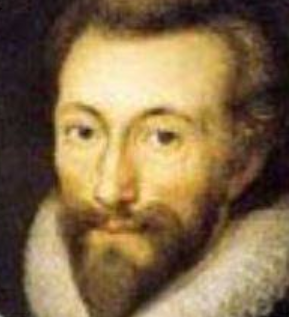
If thou wilt not quit thy Aristotle, let not any prejudice hinder thy further search.
4 months ago
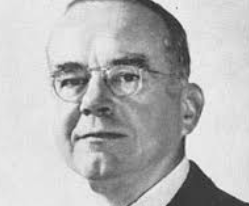
The Russian revolution was not a socialist revolution... but a managerial revolution... Today Russia is the nation which has, in its structural aspects, advanced furthest along the managerial road.
▼
Source
p. 220–221; As cited in Marcel van der Linden (2007, p. 83)
4 months ago
Although the formulations of science now offer the most advanced knowledge of nature, men continue to use obsolete forms of thought long discarded by scientific theory. In so far as these obsolete forms are superfluous for science, the fact that they persist violated the principle of the economy of thought, that characteristic trait of the bourgeois temper.
▼
Source
p. 133.
4 months ago
The rottenness of the matter which is the foundation of everything!
▼
Source
IX, 36
4 months ago
This world was created from God's fear of solitude. In other words, us, the creatures, have no other meaning but to distract the Creator. Poor clowns of the absolute, we forget that we live dramas for the boredom of a spectator, whose claps have never reached the ears of a mortal.
4 months ago
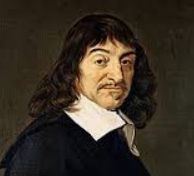
No doubt you know that Galileo had been convicted not long ago by the Inquisition, and that his opinion on the movement of the Earth had been condemned as heresy. Now I will tell you that all things I explain in my treatise, among which is also that same opinion about the movement of the Earth, all depend on one another, and are based upon certain evident truths. Nevertheless, I will not for the world stand up against the authority of the Church. ...I have the desire to live in peace and to continue on the road on which I have started.
▼
Source
Letter to Marin Mersenne (end of Feb., 1634) as quoted by , Pendulum: Leon Foucault and the Triumph of Science (2003)
4 months ago
Everywhere in life, the true question is not what we gain, but what we do.
▼
Source
Essays. Goethe's Helena.
CivilSimian.com created by AxiomaticPanic, CivilSimian, Kalokagathia