
Common sense tells you, respecting the individual is all about dictating what must absolutely be avoided in limited sense to preserve the social contract, not dictating social particularities.


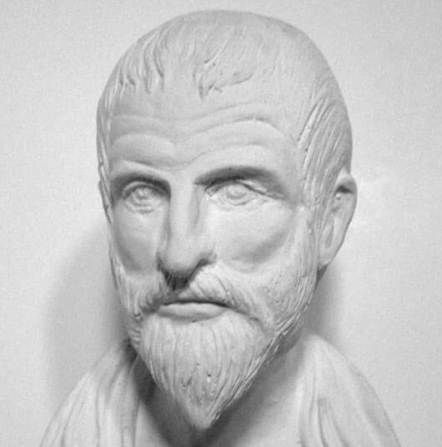
The mathematician speculates the causes of a certain sensible effect, without considering its actual existence; for the contemplation of universals excludes the knowledge of particulars; and he whose intellectual eye is fixed on that which is general and comprehensive, will think but little of that which is sensible and singular.
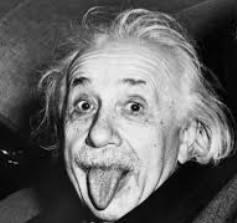
I see a clock, but I cannot envision the clockmaker. The human mind is unable to conceive of the four dimensions, so how can it conceive of a God, before whom a thousand years and a thousand dimensions are as one?
There is the name and the thing: the name is a voice which denotes and signifies the thing; the name is no part of the thing, nor of the substance; 'tis a foreign piece joined to the thing, and outside it. God, who is all fulness in Himself and the height of all perfection, cannot augment or add anything to Himself within; but His name may be augmented and increased by the blessing and praise we attribute to His exterior works: which praise, seeing we cannot incorporate it in Him, forasmuch as He can have no accession of good, we attribute to His name, which is the part out of Him that is nearest to us. Thus is it that to God alone glory and honour appertain; and there is nothing so remote from reason as that we should go in quest of it for ourselves; for, being indigent and necessitous within, our essence being imperfect, and having continual need of amelioration, 'tis to that we ought to employ all our endeavour.
The journalists have constructed for themselves a little wooden chapel, which they also call the Temple of Fame, in which they put up and take down portraits all day long and make such a hammering you can't hear yourself speak.
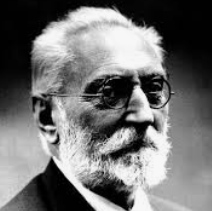
What objection is there in reason to there being no other purpose in the sum of things save only to exist and happen as it does exist and happen? For him who places himself outside of himself, none; but for him who lives and suffers and desires within himself - for him it is a question of life or death.
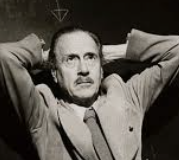
Blast Sputnik for closing terrestrial nature in a man-made environment that transfers the evolutionary process from biology to technology.
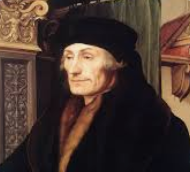
The most disadvantageous peace is better than the most just war.
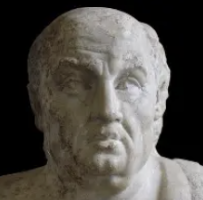
The much occupied man has no time for wantonness, and it is an obvious commonplace that the evils of leisure can be shaken off by hard work.
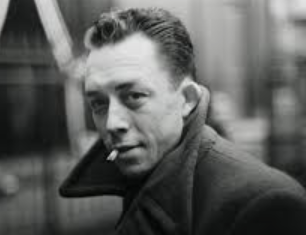
Nothing is harder to understand than a symbolic work. A symbol always transcends the one who makes use of it and makes him say in reality more than he is aware of expressing.
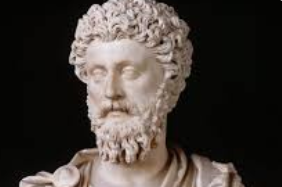
Thou art a little soul bearing about a corpse, as Epictetus used to say.
How can anyone see the only way the world can be saved and not be forced to weep?
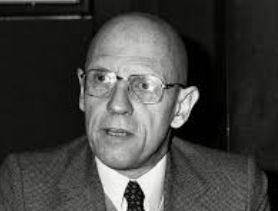
We are aware of all the inconveniences of prison, and that it is dangerous when it is not useless. And yet one cannot 'see' how to replace it. It is the detestable solution, which one seems unable to do without.
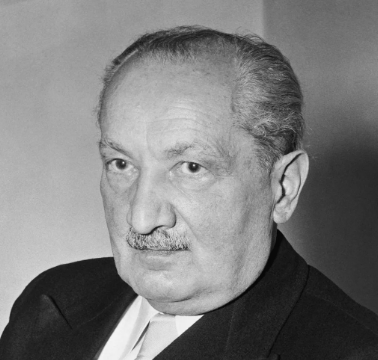
In contrast to "Blessed are they who do not see and still believe," he speaks of "seeing and still not believing."
Of all the schools of patience and lucidity, creation is the most effective. It is also the staggering evidence of man's sole dignity: the dogged revolt against his condition, perseverance in an effort considered sterile. It calls for a daily effort, self-mastery, a precise estimate of the limits of truth, measure, and strength. It constitutes an ascesis. All that "for nothing," in order to repeat and mark time. But perhaps the great work of art has less importance in itself than in the ordeal it demands of a man and the opportunity it provides him of overcoming his phantoms and approaching a little closer to his naked reality.
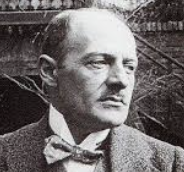
All the seemingly positive valuations and judgments of ressentiment are hidden devaluations and negations.
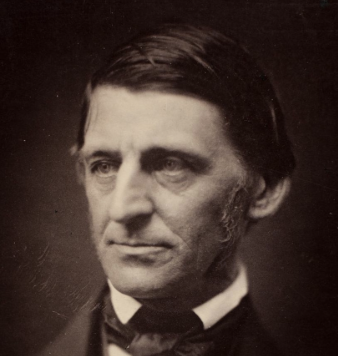
If the red slayer think he slays, Or if the slain think he is slain, They know not well the subtle ways I keep, and pass, and turn again. Brahma, st. 1 Composed in July 1856 this poem is derived from a major passage of the Bhagavad Gita, one of the most popular of Hindu scriptures, and portions of it were likely a paraphrase of an existing translation. Though titled "Brahma" its expressions are actually more indicative of the Hindu concept "Brahman"
New technological environments are commonly cast in the molds of the preceding technology out of the sheer unawareness of their designers.
Life creates itself in delirium and is undone in ennui.
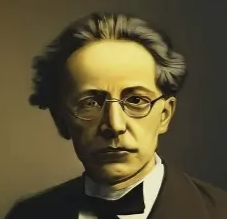
One is not worthy to have what one, through weakness, lets be taken from him; one is not worthy of it because one is not capable of it.
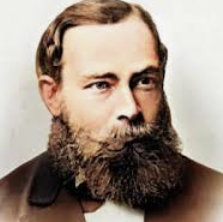
We suppose, it would seem, that concepts grow in the individual mind like leaves on a tree, and we think to discover their nature by studying their growth; we seek to define them psychologically, in terms of the human mind. But this account makes everything subjective, and if we follow it through to the end, does away with truth. What is known as the history of concepts is really a history either of our knowledge of concepts or of the meanings of words.
There certainly is self division. The man who watches a woman undressing has the red eyes of an ape; yet the man who sees two young lovers, really alone for the first time, who brings out all the pathos, the tenderness and uncertainty when he tells about it, is no brute; he is very much human. And the ape and the man exist in one body; and when the ape's desires are about to be fulfilled, he disappears and is succeeded by the man, who is disgusted with the ape's appetite.
...the Outsider's problem is the problem of denial of self-expression.
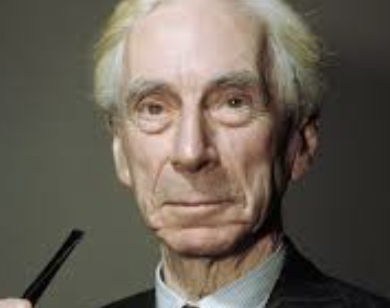
I shall keep it [the manuscript] by me until the end of May for purposes of revision, and of adding malicious foot-notes.
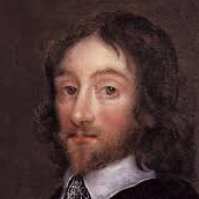
The created World is but a small Parenthesis in Eternity.
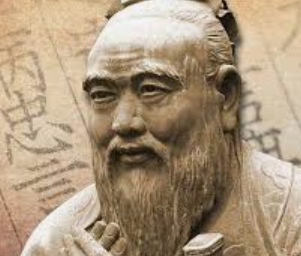
It is only he who is possessed of the most complete sincerity that can exist under heaven, who can give its full development to his nature. Able to give its full development to his own nature, he can do the same to the nature of other men. Able to give its full development to the nature of other men, he can give their full development to the natures of animals and things. Able to give their full development to the natures of creatures and things, he can assist the transforming and nourishing powers of Heaven and Earth. Able to assist the transforming and nourishing powers of Heaven and Earth, he may with Heaven and Earth form a ternion.
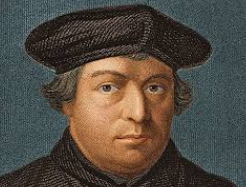
I know that a Christian should be humble, but against the Pope I am going to be proud and say to him: "You, Pope, I will not have you for my boss, for I am sure that my doctrine is divine."
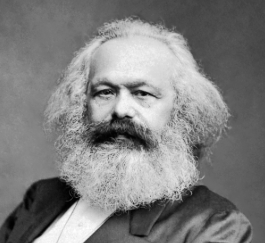
The entire process seems simple and natural, i.e., possesses the naturalness of a shallow rationalism.
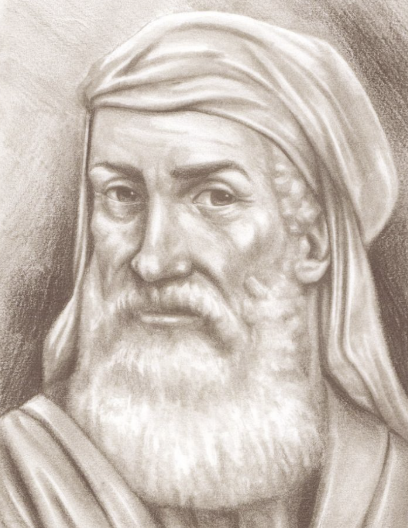
Fools -- for their thoughts are not well-considered who suppose that not-being exists or that anything dies and is wholly annihilated.
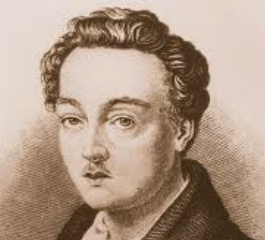
The state is therefore everyone; the rules within the state are laws which safeguard the welfare of all and which must originate from the welfare of all.
As for large landed property, its defenders have always, sophistically, identified the economic advantages offered by large-scale agriculture with large-scale landed property, as if it were not precisely as a result of the abolition of property that this advantage, for one thing, would receive its greatest possible extension, and, for another, only then would be of social benefit.
Burden not the back of Aries, Leo, or Taurus, with thy faults, nor make Saturn, Mars, or Venus, guilty of thy Follies.
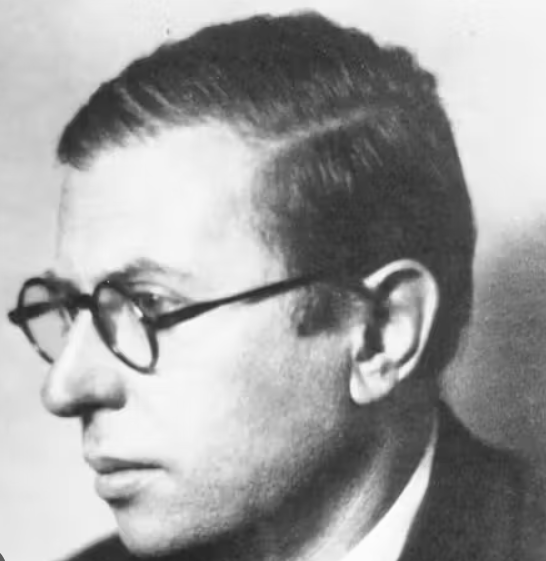
One always dies too soon - or too late. And yet, life is there, finished: the line is drawn, and it must all be added up. You are nothing other than your life.
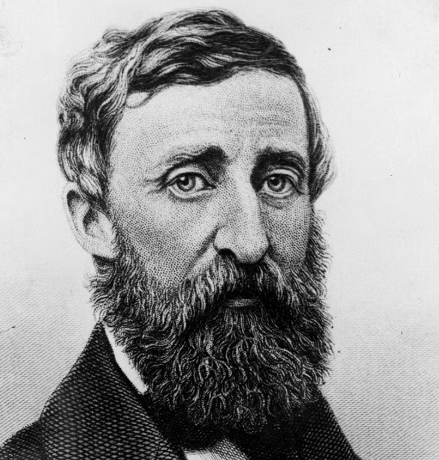
You must love the crust of the earth on which you dwell more than the sweet crust of any bread or cake; you must be able to extract nutriment out of a sand heap.
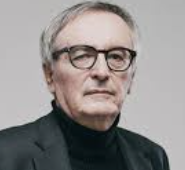
Against the many Russian thinkers influenced by Hegel who believed that history was governed by universal laws to which one could only submit, Turgenev upheld the freedom of different societies to pursue different paths of development and of individuals to pursue, even in opposition to powerful historical forces, their own goals and values. Here Turgenev endorsed the celebrated dictum of Alexander Herzen, with whom he disagreed on other matters: that history has no libretto. Human history is a realm of contingency and unpredictability, in which each generation faces conflicts that have no ideal solution.
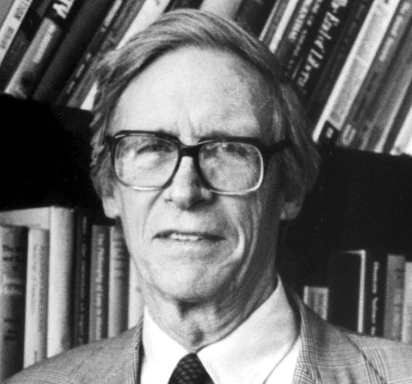
The first statement of the two principles reads as follows. First: each person is to have an equal right to the most extensive basic liberty compatible with a similar liberty for others. Second: social and economic inequalities are to be arranged so that they are both (a)reasonably expected to be to everyone's advantage, and (b) attached to positions and offices open to all.
By public administration is meant, in common usage, the activities of the executive branches of national, state, and local governments; independent boards and commissions set up by the congress and state legislatures; government corporations, and certain agencies of a specialized character. Specifically excluded are judicial and legislative agencies within the government and nongovernmental administration.
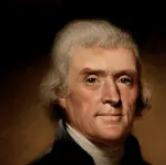
I never will, by any word or act, bow to the shrine of intolerance, or admit a right of inquiry into the religious opinions of others.
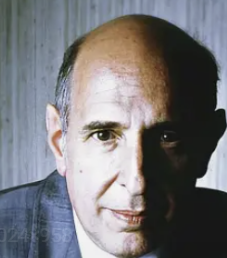
The highest activities are always essentially lonely and private, and these men had a robust sense of their independence and the ultimate self-sufficiency of the mind. In this they were just like Socrates. The only change they operated was to bring philosophy out of the closet into the open, instead of seeking protection behind a little wall like men in a storm. Of course, in so doing they made philosophy, on the one hand, more vulnerable to the public if the hopes of controlling the public are not fulfilled, and, on the other, put at risk that inner intransigence which is the necessary condition of the quest for truth. Not only the rewards but the new responsibilities might prove irresistible temptations to compromise.
Blessed are the hearts that can bend; they shall never be broken.
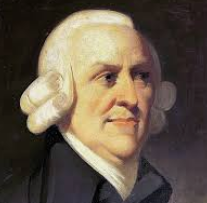
It appears, accordingly, from the experience of all ages and nations, I believe, that the work done by freemen comes cheaper in the end than that performed by slaves.
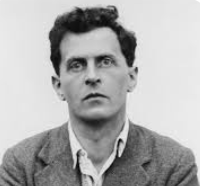
Frazer is much more savage than most of his savages, for they are not as far removed from the understanding of spiritual matter as a twentieth-century Englishman. His explanations of primitive practices are much cruder than the meaning of these practices themselves.
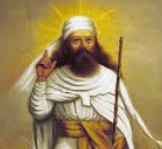
By Thy perfect Intelligence, O MazdaThou didst first create us having bodies and spiritual consciences,And by Thy Thought gave our selves the power of thought, word, and deed.Thus leaving us free to choose our faith at our own will.
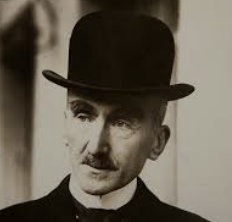
The open society is one that is deemed in principle to embrace all humanity.
CivilSimian.com created by AxiomaticPanic, CivilSimian, Kalokagathia