

☠️😁....now we'll never get invited to the parties....


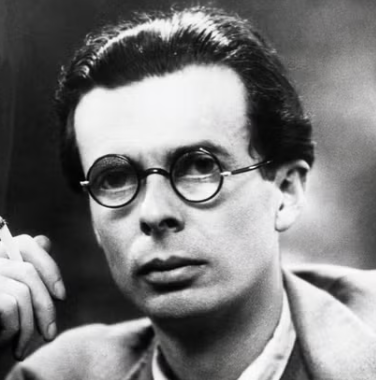
Wherever we turn we find that the real obstacles to peace are human will and feeling, human convictions, prejudices, opinions. If we want to get rid of war we must get rid first of all of its psychological causes. Only when this has been done will the rulers of the nations even desire to get rid of the economic and political causes.
For what gives my work its peculiar quality, and what is most remarkable in the present age, is this. Fortune has guided almost all the affairs of the world in one direction and has forced them to incline towards one and the same end; a historian should likewise bring before his readers under one synoptical view the operations by which she has accomplished her general purpose.
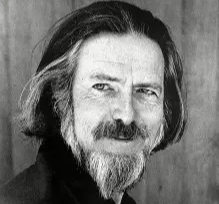
I have suggested that behind almost all myth lies the mono-plot of the game of hide-and-seek.
Objectivity does not simply involve passivity and detachment; it is a particular structure composed of distance and nearness, indifference and involvement.
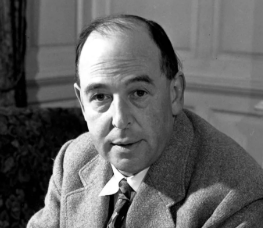
For me, reason is the natural organ of truth; but imagination is the organ of meaning. Imagination, producing new metaphors or revivifying old, is not the cause of truth, but its condition.
The novel, the novel proper that is, is about people's treatment of each other, and so it is about human values.
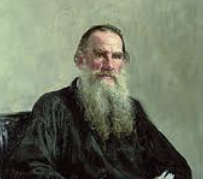
How good is it to remember one's insignificance: that of a man among billions of men, of an animal amid billions of animals; and one's abode, the earth, a little grain of sand in comparison with Sirius and others, and one's life span in comparison with billions on billions of ages. There is only one significance, you are a worker. The assignment is inscribed in your reason and heart and expressed clearly and comprehensibly by the best among the beings similar to you. The reward for doing the assignment is immediately within you. But what the significance of the assignment is or of its completion, that you are not given to know, nor do you need to know it. It is good enough as it is. What else could you desire?
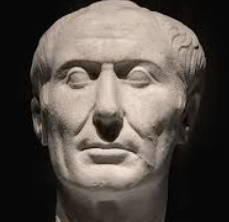
Even when the wound is healed, the scar remains.
Each such answer to the great question, invariably asserted by the followers of its propounder, if not by himself, to be complete and final, remains in high authority and esteem, it may be for one century, or it may be for twenty: but, as invariably, Time proves each reply to have been a mere approximation to the truth-tolerable chiefly on account of the ignorance of those by whom it was accepted, and wholly intolerable when tested by the larger knowledge of their successors.

The verdict of the world is conclusive.
Democracy can hardly be expected to flourish in societies where political and economic power is being progressively concentrated and centralized. But the progress of technology has led and is still leading to just such a concentration and centralization of power.
Yes, Lord, you are innocence itself: how could you conceive of Nothingness, you who are plenitude? Your gaze is light and transforms all into light: how could you know the half-light in my heart?
What concerns me alone I only think, what concerns my friends I tell them, what can be of interest to only a limited public I write, and what the world ought to know is printed...
The tax upon land values is, therefore, the most just and equal of all taxes. It falls only upon those who receive from society a peculiar and valuable benefit, and upon them in proportion to the benefit they receive. It is the taking by the community, for the use of the community, of that value which is the creation of the community. It is the application of the common property to common uses. When all rent is taken by taxation for the needs of the community, then will the equality ordained by Nature be attained. No citizen will have an advantage over any other citizen save as is given by his industry, skill, and intelligence; and each will obtain what he fairly earns. Then, but not till then, will labor get its full reward, and capital its natural return.
As the few adepts in such things well know, universal morality is to be found in little everyday penny-events just as much as in great ones. There is so much goodness and ingenuity in a raindrop that an apothecary wouldn't let it go for less than half-a-crown.
In its relation to the reality of daily life, the high culture of the past was many things-opposition and adornment, outcry and resignation. But it was also the appearance of the realm of freedom: the refusal to behave.
It is, I think, safe to say that nothing was more alien to the minds of the scientists, who brought about the most radical and most rapid revolutionary process the world has ever seen, than any will to power. Nothing was more remote than any wish to 'conquer space' and to go to the moon. It was indeed their search for 'true reality' that led them to lose confidence in appearances, in the phenomena as they reveal themselves of their own accord to human sense and reason. They were inspired by an extraordinary love of harmony and lawfulness which taught them that they would have to step outside any merely given sequence or series of occurrences if they wanted to discover the overall beauty and order of the whole, that is, the universe.
To ascend to the origin of things and speculate on the creation, is not the business of the natural philosopher. An humbler field is sufficient for him in the endeavor to discover, as far as our faculties will permit; what are these primary qualities impressed on matter, and to discover the spirit of the laws of nature
It is not proper either to have a blunt sword or to use freedom of speech ineffectually. Neither is the sun to be taken from the world, nor freedom of speech from erudition.
And this in turn makes it plain that the Right Man problem is a problem of highly dominant people. Dominance is a subject of enormous importance to biologists and zoologists because the percentage of dominant animals - or human beings - seems to be amazingly constant. Bernard Shaw once asked the explorer H. M. Stanley how many other men could take over leadership of the expedition if Stanley himself fell ill; Stanley replied promptly: "One in twenty." "Is that exact or approximate?" asked Shaw. "Exact." And biological studies have confirmed this as a fact. For some odd reason, precisely five per cent - one in twenty - of any animal group are dominant - have leadership qualities. During the Korean War, the Chinese made the interesting discovery that if they separated out the dominant five per cent of American prisoners of war, and kept them in separate compound, the remaining ninety-five per cent made no attempt to escape.
Writing does not cause misery. It is born of misery.
So clearly will truths kindle light for truths.
Nothing is lost, nothing wholly passes away, for in some way or another everything is perpetuated; and everything, after passing through time, returns to eternity.
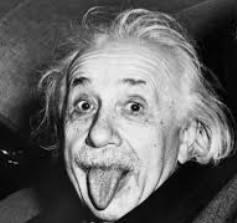
Everyone who is seriously involved in the pursuit of science becomes convinced that some spirit is manifest in the laws of the universe, one that is vastly superior to that of man.
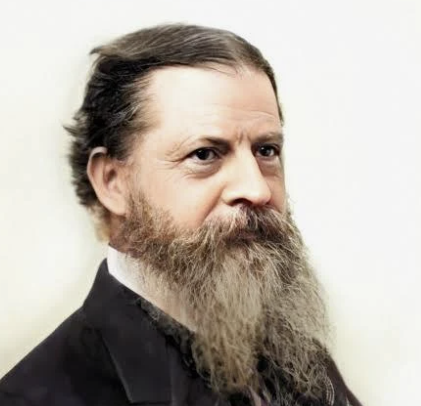
It has never been in my power to study anything, - mathematics, ethics, metaphysics, gravitation, thermodynamics, optics, chemistry, comparative anatomy, astronomy, psychology, phonetics, economics, the history of science, whist, men and women, wine, metrology, except as a study of semeiotic.
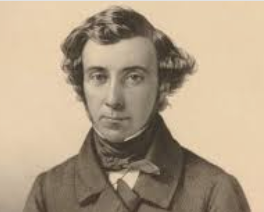
The power of the periodical press is second only to that of the people.
Tell me how you want to die, and I'll tell you who you are.
All the concessions we make to Eros are holes in our desire for the absolute.
When we are lulled into somnolence by lack of challenge every molehill tends to become a mountain, every minor inconvenience an intolerable imposition. For a self-chosen reality tends to become a prison. The factors that protect and insulate civilized man can easily end by suffocating him unless he possesses a high degree of self-discipline, the 'highly developed vital sense' that Shaw speaks of. And since clever and sensitive people are inclined to lack self-discipline, a high degree of culture usually involves a high degree of pessimism. This is what has happened to Western civilisation over the past two centuries. It explains why so many distinguished artists, writers and musicians have taken such a negative view of the human situation.
In cities men cannot be prevented from concerting together, and from awakening a mutual excitement which prompts sudden and passionate resolutions. Cities may be looked upon as large assemblies, of which all the inhabitants are members; their populace exercises a prodigious influence upon the magistrates, and frequently executes its own wishes without their intervention. Variant translation: In towns it is impossible to prevent men from assembling, getting excited together and forming sudden passionate resolves. Towns are like great meeting houses with all the inhabitants as members. In them the people wield immense influence over their magistrates and often carry their desires into execution without intermediaries.
It is not human nature we should accuse but the despicable conventions that pervert it.
The vitality of thought is in adventure. Ideas won't keep. Something must be done about them. When the idea is new, its custodians have fervor, live for it, and, if need be, die for it.
I am much more open about categories of gender, and my feminism has been about women's safety from violence, increased literacy, decreased poverty and more equality. I was never against the category of men. "As a Jew, I was taught it was ethically imperative to speak up" in Haaretz.
Few men have been admired by their own domestics.
God might grant us riches, honours, life, and even health, to our own hurt; for every thing that is pleasing to us is not always good for us. If he sends us death, or an increase of sickness, instead of a cure, Vvrga tua et baculus, tuus ipsa me consolata sunt. "Thy rod and thy staff have comforted me," he does it by the rule of his providence, which better and more certainly discerns what is proper for us than we can do; and we ought to take it in good part, as coming from a wise and most friendly hand.
People will tell us that without the consolations of religion they would be intolerably unhappy. So far as this is true, it is a coward's argument. Nobody but a coward would consciously choose to live in a fool's paradise. When a man suspects his wife of infidelity, he is not thought the better of for shutting his eyes to the evidence. And I cannot see why ignoring evidence should be contemptible in one case and admirable in the other.
It is a greatness not of mere body and gigantic bulk, but a rude greatness of soul. There is a sublime uncomplaining melancholy traceable in these old hearts. A great free glance into the very deeps of thought. They seem to have seen, these brave old Northmen, what Meditation has taught all men in all ages, That this world is after all but a show,-a phenomenon or appearance, no real thing. All deep souls see into that,-the Hindoo Mythologist, the German Philosopher,-the Shakspeare, the earnest Thinker, wherever he may be.
A mind does not receive truth as a chest receives jewels that are put into it, but as the stomach takes up food into the system. It is no longer food, but flesh, and is assimilated. The appetite and the power of digestion measure our right to knowledge. He has it who can use it. As soon as our accumulation overruns our invention or power to use, the evils of intellectual gluttony begin,- congestion of the brain, apoplexy, and strangulation.
If at times I have thought myself unfortunate, it is because of a confusion, an error. I have mistaken myself for someone else... Who am I really? I am the author of The World as Will and Representation, I am the one who has given an answer to the mystery of Being that will occupy the thinkers of future centuries. That is what I am, and who can dispute it in the years of life that still remain for me?
To call war the soil of courage and virtue is like calling debauchery the soil of love.
There is no wish more natural than the wish to know.
Man is essentially a dreamer, wakened sometimes for a moment by some peculiarly obtrusive element in the outer world, but lapsing again quickly into the happy somnolence of imagination. Freud has shown how largely our dreams at night are the pictured fulfilment of our wishes; he has, with an equal measure of truth, said the same of day-dreams; and he might have included the day-dreams which we call beliefs.
Scientists have pushed back the horizon of time from the biblical 6,000 years to 4,600,000,000 years for the age of Earth a 760,000-fold increase.
Does anyone bathe in a mighty little time? Don't say that he does it ill, but in a mighty little time. Does anyone drink a great quantity of wine? Don't say that he does ill, but that he drinks a great quantity. For, unless you perfectly understand the principle from which anyone acts, how should you know if he acts ill? Thus you will not run the hazard of assenting to any appearances but such as you fully comprehend.
The huge laugh is a most extreme expression of freedom.
CivilSimian.com created by AxiomaticPanic, CivilSimian, Kalokagathia