

6 months 2 days ago
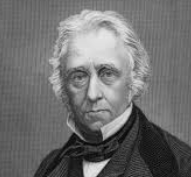
It is now time for us to pay a decent, a rational, a manly reverence to our ancestors, not by superstitiously adhering to what they, in other circumstances, did, but by doing what they, in our circumstances, would have done.
▼
Source
source
Speech in the House of Commons on the Reform Bill (2 March 1831), quoted in Speeches of the Right Honourable T. B. Macaulay, M.P. (1854), p. 8

7 months 1 week ago
Every political good carried to the extreme must be productive of evil.
▼
Source
source
The French Revolution, Bk. V, ch. 4
7 months 3 days ago
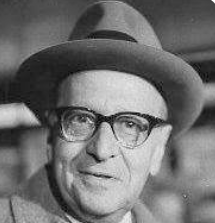
At present, when the prevailing forms of society have become hindrances to the free expression of human powers, it is precisely the abstract branches of science, mathematics and theoretical physics, which ... offer a less distorted form of knowledge than other branches of science which are interwoven with the pattern of daily life, and the practicality of which seemingly testifies to their realistic character.
▼
Source
source
p. 133.
4 months 3 weeks ago
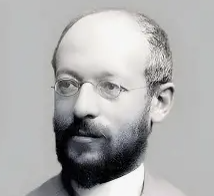
The social game has a deeper double meaning-that it is played not only in a society as its outward bearer but that with its help people actually "play" "society."
▼
Source
source
Sociability (1910) in On Individuality and Social Forms (1971), p. 134
4 months 4 weeks ago
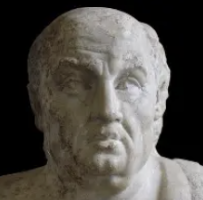
Two elements must therefore be rooted out once for all-the fear of future suffering, and the recollection of past suffering; since the latter no longer concerns me, and the former concerns me not yet.

7 months 2 weeks ago
Everything that makes diversity of kinds, of species, differences, properties... everything that consists in generation, decay, alteration and change is not an entity, but a condition and circumstance of entity and being, which is one, infinite, immobile, subject, matter, life, death, truth, lies, good and evil.
8 months 2 weeks ago
The best authorities are unanimous in saying that a war with H-bombs might possibly put an end to the human race. It is feared that if many H-bombs are used there will be universal death, sudden only for a minority, but for the majority a slow torture of disease and disintegration. Many warnings have been uttered by eminent men of science and by authorities in military strategy. None of them will say that the worst results are certain. What they do say is that these results are possible, and no one can be sure that they will not be realized. We have not yet found that the views of experts on this question depend in any degree upon their politics or prejudices. They depend only, so far as our researches have revealed, upon the extent of the particular expert's knowledge. We have found that the men who know most are the most gloomy.

4 months 1 week ago
What a stupendous, what an incomprehensible machine is man! Who can endure toil, famine, stripes, imprisonment and death itself in vindication of his own liberty, and the next moment, be deaf to all those motives whose powers supported him through his trial, and inflict on his fellow men a bondage, one hour of which is fraught with more misery than ages of that which he rose in rebellion to oppose.
▼
Source
source
Letter to Jean Nicholas Demeunier (24 January 1786) Bergh 17:103
8 months 1 week ago
The process of being brought up, however well it is done, cannot fail to offend.
7 months 1 week ago
We wish, in a word, equality - equality in fact as a corollary, or rather, as primordial condition of liberty. From each according to his faculties, to each according to his needs; that is what we wish sincerely and energetically.
▼
Source
source
As quoted in The Old Order and the New (1890) by J. Morris Davidson

5 months 2 weeks ago
The mass political movements of the 20th century were vehicles for myths inherited from religion, and it is no accident that religion is reviving now that these movements have collapsed.
7 months 1 week ago
For the first time in the revolutionary movement of 1848, for the first time since 1793, a nation surrounded by superior counter-revolutionary forces dares to counter the cowardly counter-revolutionary fury by revolutionary passion, the terreur blanche by the terreur rouge. For the first time after a long period we meet with a truly revolutionary figure, a man who in the name of his people dares to accept the challenge of a desperate struggle, who for his nation is Danton and Carnot in one person - Lajos Kossuth.
▼
Source
source
The Magyar Struggle in Neue Rheinische Zeitung (13 January 1849).

8 months 1 week ago
"Then those people are right who say that Heaven and Hell are only states of mind?" "Hush," he said sternly. "Do not blaspheme. Hell is a state of mind - ye never said a truer word. And every state of mind, left to itself, every shutting up of the creature within the dungeon of its own mind - is, in the end, Hell. But Heaven is not a state of mind. Heaven is reality itself. All that is fully real is Heavenly."
▼
Source
source
Ch. 9
7 months 2 weeks ago
Whoever hasn't yet arrived at the clear realization that there might be a greatness existing entirely outside his own sphere and for which he might have absolutely no feeling; whoever hasn't at least felt obscure intimations concerning the approximate location of this greatness in the geography of the human spirit: that person either has no genius in his own sphere, or else he hasn't been educated to the level of the classic.
▼
Source
source
Lucinde and the Fragments, P. Firchow, trans. (1991), "Critical Fragments," § 36

9 months 1 week ago
It is all too easy to forget that there are emotional motivations in history, as well as economic ones.
4 months 1 week ago
Our opinion here is that that place has been so deeply concerned in smuggling, that if it wants it is because it has illegally sent away what it ought to have retained for its own consumption.
▼
Source
source
Letter to Lieutenant Governor Levi Lincoln of Massachusetts (November 13, 1808) concerning a petition from the island of Nantucket for food during the American embargo.
7 months 2 weeks ago
You talk of Paine with more respect than he deserves: He is utterly incapable of comprehending his subject. He has not even a moderate portion of learning of any kind. He has learnd the instrumental part of literature, a style, and a method of disposing his ideas, without having ever made a previous preparation of Study or thinking-for the use of it. ... [Paine] possesses nothing more than what a man whose audacity makes him careless of logical consequences, and his total want of honour and morality makes indifferent as to political consequences, may very easily write. They indeed who seriously write upon a principle of levelling ought to be answerd by the Magistrate-and not by the Speculatist.
▼
Source
source
Letter to William Cusac Smith (22 July 1791), quoted in Alfred Cobban and Robert A. Smith (eds.), The Correspondence of Edmund Burke, Volume VI: July 1789-December 1791 (1967), pp. 303-304

8 months 3 weeks ago
Behold a God more powerful than I who comes to rule over me.
▼
Source
source
Chapter I (tr. Barbara Reynolds); of love.
4 months 3 days ago
Much reading after a certain age diverts the mind from its creative pursuits. Any man who reads too much and uses his own brain too little falls into lazy habits of thinking, just as the man who spends too much time in the theaters is apt to be content with living vicariously instead of living his own life.
4 months 1 week ago
Stir up thy mind, and recall thy wits again from thy natural dreams, and visions, and when thou art perfectly awoken, and canst perceive that they were but dreams that troubled thee, as one newly awakened out of another kind of sleep look upon these worldly things with the same mind as thou didst upon those, that thou sawest in thy sleep.
▼
Source
source
VI, 29
8 months 1 week ago
...the prisoner's dreams is the guard's spirituality.
▼
Source
source
p. 400
8 months 4 days ago
We appear to be faced with a general difficulty about psychophysical reduction. In other areas the process of reduction is a move in the direction of greater objectivity, toward a more accurate view of the real nature of things. ... The less it depends on a specifically human viewpoint, the more objective is our description. ...Experience itself, however, does not seem to fit the pattern. ... If the subjective character of experience is fully comprehensible only from one point of view, then any shift to greater objectivity - that is, less attachment to a specific viewpoint - does not take us nearer to the real nature of the phenomenon: it takes us further away from it.
▼
Source
source
p. 174.
4 months 4 weeks ago
Do I write out of love to men? No, I write because I want to procure for my thoughts an existence in the world; and, even if I foresaw that these thoughts would deprive you of your rest and your peace, even if I saw the bloodiest wars and the fall of many generations springing up from this seed of thought - I would nevertheless scatter it. Do with it what you will and can, that is your affair and does not trouble me.
▼
Source
source
Cambridge 1995, p. 262, 263
7 months 4 days ago
In all ranges of experience, externality of means defines the mechanical.
▼
Source
source
p. 206
7 months 1 week ago
How can a rational being be ennobled by anything that is not obtained by its own exertions?
▼
Source
source
Ch. 3
7 months 1 week ago
What is Nature? An encyclopedical, systematic Index or Plan of our Spirit. Why will we content us with the mere catalogue of our Treasures? Let us contemplate them ourselves, and in all ways elaborate and use them.
8 months 1 week ago
Shall I tell you the secret of the true scholar? It is this: Every man I meet is my master at some point, and in that, I learn of him.
▼
Source
source
Greatness
8 months 2 weeks ago
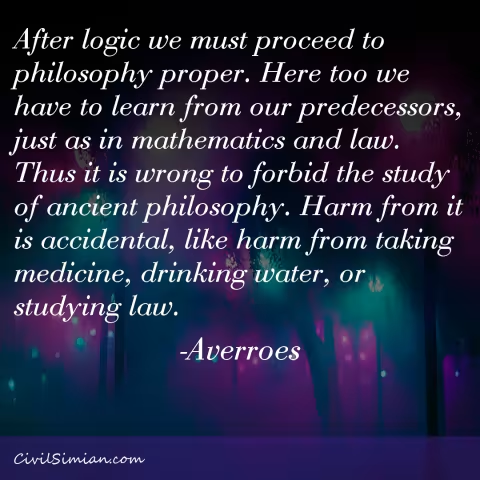
No greater mistake can be made than to imagine that what has been written latest is always the more correct; that what is written later on is an improvement on what was written previously; and that every change means progress. Men who think and have correct judgment, and people who treat their subject earnestly, are all exceptions only. Vermin is the rule everywhere in the world: it is always at hand and busily engaged in trying to improve in its own way upon the mature deliberations of the thinkers.

6 months 3 weeks ago
Those who will not worship at the shrine of money, need not hope for recognition. On the other hand, they will also not have to think other people's thoughts or wear other people's political clothes. They will not have to proclaim as true that which is false, nor praise that as humanitarian which is brutal.
4 months 3 weeks ago
The transformation of human consciousness through meditation is frustrated, as long as we think of it in terms as something that I, my self can bring about. because it leads to endless games of spiritual oneupmanship, and Guru competitions.
7 months 6 days ago
This mutual dependencies no longer the dialectical relationship between master and servant, which has been broken in the struggle for mutual recognition, but rather a vicious circle which encloses both the master and the servant. Do the technicians rule, or is their rule that of the others, who rely on the technicians as their planners and executors?
▼
Source
source
p. 33
8 months 1 week ago
I am to talk about Apologetics. Apologetics means of course Defence. The first question is - what do you propose to defend? Christianity, of course...
▼
Source
source
"Christian Apologetics" (1945), p. 89
7 months 6 days ago
The closed language does not demonstrate and explain-it communicates decision, dictum, command. Where it defines, the definition becomes "separation of good from evil;" it establishes unquestionable.
▼
Source
source
p. 101
8 months 2 weeks ago
We rarely hear, it has been said, of the combinations of masters, though frequently of those of the workman. But whoever imagines, upon this account, that masters rarely combine, is as ignorant of the world as of the subject.
▼
Source
source
Chapter VIII, p. 80.
7 months 5 days ago
Love is the extremely difficult realisation that something other than oneself is real. Love, and so art and morals, is the discovery of reality.
▼
Source
source
"The Sublime and the Good", in the Chicago Review, Vol. 13 Issue 3 (Autumn 1959) p. 51.
7 months 2 weeks ago
Now we were standing close to the summit's rim, gazing out into the endless East.
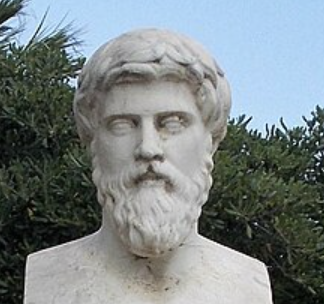
8 months ago
Lycurgus the Lacedæmonian brought long hair into fashion among his countrymen, saying that it rendered those that were handsome more beautiful, and those that were deformed more terrible. To one that advised him to set up a democracy in Sparta, "Pray," said Lycurgus, "do you first set up a democracy in your own house."
▼
Source
source
57 Lycurgus
6 months 3 weeks ago
Second, we make no distinction between man and nature: the human essence of nature and the natural essence of man become one within nature in the form of production or industry, just as they do within the life of man as a species. Industry is then no longer considered from the extrinsic point of view of utility, but rather from the point of view of its fundamental identity with nature as production of man and by man.
▼
Source
source
The Desiring Machine
6 months 1 week ago
Environments are invisible. Their groundrules, pervasive structure, and overall patterns elude easy perception.


9 months 1 week ago
When one plays for top prizes one must be prepared to pay top stakes.

8 months 4 weeks ago
Thou hast made us for Thyself, and the heart never resteth till it findeth rest in Thee.
▼
Source
source
p. 515
8 months 1 week ago
Self-reliance, the height and perfection of man, is reliance on God.
▼
Source
source
The Fugitive Slave Law, a lecture in NYC, March 7, 1854
6 months 3 weeks ago
People nowadays have such high hopes of America and the political conditions obtaining there that one might say the desires, at least the secret desires, of all enlightened Europeans are deflected to the west, like our magnetic needles.
▼
Source
source
G 2
CivilSimian.com created by AxiomaticPanic, CivilSimian, Kalokagathia