

8 months 2 weeks ago
Men fear thought as they fear nothing else on earth - more than ruin, more even than death. Thought is subversive and revolutionary, destructive and terrible; thought is merciless to privilege, established institutions, and comfortable habits; thought is anarchic and lawless, indifferent to authority, careless of the well-tried wisdom of the ages. Thought looks into the pit of hell and is not afraid. It sees man, a feeble speck, surrounded by unfathomable depths of silence; yet it bears itself proudly, as unmoved as if it were lord of the universe. Thought is great and swift and free, the light of the world, and the chief glory of man.
▼
Source
source
pp. 178-179
4 months 1 week ago
Let your occupations be few, says the sage, "if you would lead a tranquil life."
▼
Source
source
IV, 24

5 months 4 days ago
A man of Intellect, of real and not sham Intellect, is by the nature of him likewise inevitably a man of nobleness, a man of courage, rectitude, pious strength; who, even because he is and has been loyal to the Laws of this Universe, is initiated into discernment of the same; to this hour a Missioned of Heaven; whom if men follow, it will be well with them; whom if men do not follow, it will not be well. Human Intellect, if you consider it well, is the exact summary of Human Worth; and the essence of all worth-ships and worships is reverence for that same.
7 months 2 weeks ago
In no other country in the world is the love of property keener or more alert than in the United States, and nowhere else does the majority display less inclination toward doctrines which in any way threaten the way property is owned.
▼
Source
source
Book Three, Chapter XXI.
8 months 2 weeks ago
All poetry is misrepresentation.
▼
Source
source
An Aphorism attributed to him according to John Stuart Mill (see Mill's essay On Bentham and Coleridge in Utilitarianism edt. by Mary Warnock p. 123).
8 months 1 week ago
Man's urge for change and his need for stability have always balanced and checked each other, and our current vocabulary, which distinguishes between two factions, the progressives and the conservatives, indicates a state of affairs in which this balance has been thrown out of order. No civilization - the man-made artifact to house successive generations - would ever have been possible without a framework of stability, to provide the wherein for the flux of change. Foremost among the stabilizing factors, more enduring than customs, manners and traditions, are the legal systems that regulate our life in the world and our daily affairs with each other.
▼
Source
source
"Civil Disobedience"

8 months 4 weeks ago
The Apostle says: I make up in my flesh what is lacking to the sufferings of Christ (Col. 1:24). I make up, he tells us, not what is lacking to my sufferings, but what is lacking to the sufferings of Christ; not in Christ flesh, but in mine. not in Christ's flesh, but in mine. Christ is still suffering, not in His own flesh which He took with Him into heaven, but in my flesh, which is still suffering on earth.
▼
Source
source
p.423
8 months 2 weeks ago
Pure Mathematics is the class of all propositions of the form "p implies q," where p and q are propositions containing one or more variables, the same in the two propositions, and neither p nor q contains any constants except logical constants. And logical constants are all notions definable in terms of the following: Implication, the relation of a term to a class of which it is a member, the notion of such that, the notion of relation, and such further notions as may be involved in the general notion of propositions of the above form. In addition to these, mathematics uses a notion which is not a constituent of the propositions which it considers, namely the notion of truth.
▼
Source
source
Principles of Mathematics (1903), Ch. I: Definition of Pure Mathematics, p. 3
6 months 3 weeks ago
The poor, stupid, free American citizen! Free to starve, free to tramp the highways of this great country, he enjoys universal suffrage, and, by that right, he has forged chains about his limbs. The reward that he receives is stringent labor laws prohibiting the right of boycott, of picketing, in fact, of everything, except the right to be robbed of the fruits of his labor.

7 months 1 week ago
Born in a prison, with burdens on our shoulders and our thoughts, we could not reach the end of a single day if the possibilities of ending it all did not incite us to begin the next day all over again.
4 months 3 weeks ago
The introduction of numbers as coordinates by reference to the particular division scheme of the open one dimensional continuum is an act of violence whose only practical vindication is the special calculatory manageability of the ordinary number continuum with its four basic operations. The topological skeleton determines the connectivity of the manifold in the large.
▼
Source
source
Philosophy of Mathematics and Natural Science (1949), p. 90

5 months 2 weeks ago
The belief in unity that has fuelled so many utopian dreams is an effort to reconcile the irreconcilable that ends in repression. Berlin suggests we renounce this venerable faith, and learn how to live with intractable conflict.
▼
Source
source
'Isaiah Berlin: The Value of Decency' (p.106-7)
9 months 1 week ago
If one thing goes without saying, almost anything can.
4 months 4 weeks ago
The men of the future will yet fight their way to many a liberty that we do not even miss.
▼
Source
source
Cambridge 1995, p. 114
7 months 1 week ago
Affection requires a firmer foundation than sympathy, and few people have a principle of action sufficiently stable to produce rectitude of feeling; for in spite of all the arguments I have heard to justify deviations from duty, I am persuaded that even the most spontaneous sensations are more under the direction of principle than weak people are willing to allow.
▼
Source
source
Letter 17
4 months 4 weeks ago
Our minds must have relaxation: rested, they will rise up better and keener. Just as we must not force fertile fields (for uninterrupted production will quickly exhaust them), so continual labor will break the power of our minds. They will recover their strength, however, after they have had a little freedom and relaxation.
5 months 5 days ago
Tsze-Kung asked Confucius, saying, "Master, are you a sage?" Confucius answered him: "A sage is what I cannot rise to. I learn without satiety, and teach without being tired." Tsze-Kung said: "You learn without satiety: that shows your wisdom. You teach without being tired: that shows your benevolence. Benevolent and wise:- Master, you are a sage."
▼
Source
source
"Humility", no. 139
4 months 3 weeks ago
To what purpose, pray, exist all these things that be born? Whence come male and female? Whence the difference in kind of all things that be, amongst visible species, unless there be certain pre-existing and previously established Reasons and Causes subsisting beforehand, in the nature of a pattern? With regard to which, though we are dull of sight, yet let us strive to clear away the mist from the eyes of the soul.
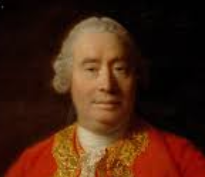
8 months 2 weeks ago
Morals excite passions, and produce or prevent actions. Reason of itself is utterly impotent in this particular. The rules of morality, therefore, are not conclusions of our reason.
▼
Source
source
Part 1, Section 1
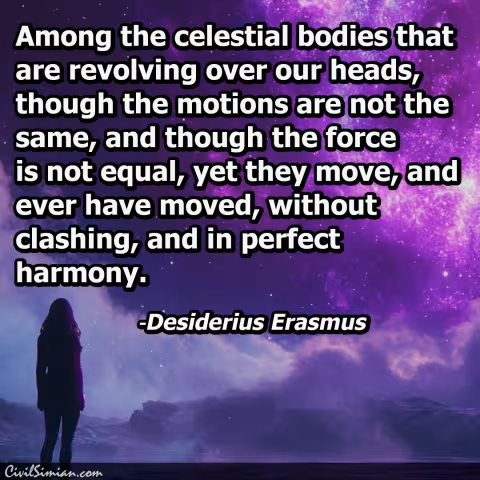
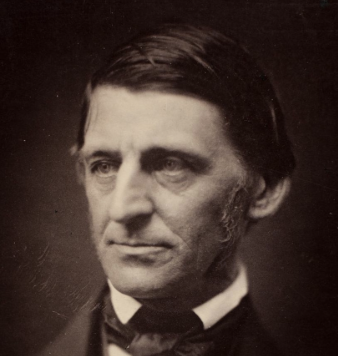
8 months 1 week ago
Born for success he seemed, With grace to win, with heart to hold, With shining gifts that took all eyes.
▼
Source
source
In Memoriam E. B. E.
7 months 2 weeks ago
The long habit of living indisposeth us for dying.
▼
Source
source
Chapter V
4 months 1 week ago
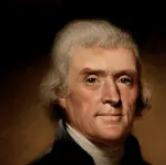
If ever there was a holy war, it was that which saved our liberties and gave us independence.
▼
Source
source
Letter to John W. Eppes (6 November 1813). Reported in Albert Ellery Bergh, The Writings of Thomas Jefferson (1907), p. 430
6 months 3 weeks ago
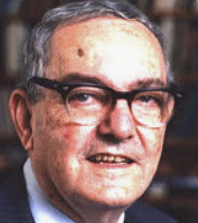
It is not my aim to surprise or shock you - but the simplest way I can summarize is to say that there are now in the world machines that think, that learn and that create. Moreover, their ability to do these things is going to increase rapidly until - in a visible future - the range of problems they can handle will be coextensive with the range to which the human mind has been applied.
▼
Source
source
Newell & Simon (1958), quoted in AI, by Daniel Crevier
7 months ago
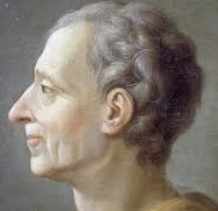
It is a paralogism to say, that the good of the individual should give way to that of the public; this can never take place, except when the government of the community, or, in other words, the liberty of the subject is concerned; this does not affect such cases as relate to private property, because the public good consists in everyone's having his property, which was given him by the civil laws, invariably preserved.
▼
Source
source
Book XXVI, Chapter 15.
6 months 1 week ago
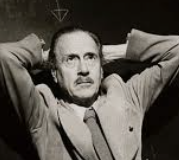
My main theme is the extension of the nervous system in the electric age, and thus, the complete break with five thousand years of mechanical technology. This I state over and over again. I do not say whether it is a good or bad thing. To do so would be meaningless and arrogant.
▼
Source
source
Letter to Robert Fulford, 1964. Letters of Marshall McLuhan (1987), p. 300
7 months 5 days ago
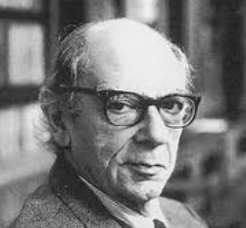
I am normally said to be free to the degree to which no man or body of men interferes with my activity. Political liberty in this sense is simply the area within which a man can act unobstructed by others. If I am prevented by others from doing what I could otherwise do, I am to that degree unfree; and if this area is contracted by other men beyond a certain minimum, I can be described as being coerced, or, it may be, enslaved. Coercion is not, however, a term that covers every form of inability. If I say that I am unable to jump more than ten feet in the air, or cannot read because I am blind, or cannot understand the darker pages of Hegel, it would be eccentric to say that I am to that degree enslaved or coerced. Coercion implies the deliberate interference of other human beings within the area in which I could otherwise act.
4 months 1 week ago
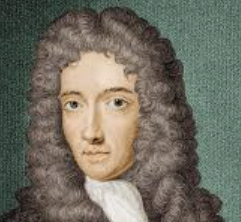
But for my part (Continues Carneades) what my Indignation at this Un-philosophical way of teaching Principles has now extorted from me, is meant chiefly to excuse my self, if I shall hereafter oppose any Particular Opinion or assertion, that some Follower of Paracelsus or any Eminent Artist may pretend not to be his Masters. For, as I told you long since, I am not Oblig'd to examine private mens writings, (which were a Labour as endless as unprofitable) being only engag'd to examine those Opinions about the Tria Prima, which I find those Chymists I have met with to agree in most: And I Doubt not but my Arguments against their Doctrine will be in great part easily enough applicable ev'n to those private Opinions, which they do not so directly and expresly oppose.
7 months 1 week ago
The sphere of consciousness shrinks in action; no one who acts can lay claim to the universal, for to act is to cling to the properties of being at the expense of being itself, to form a reality to reality's detriment.
7 months 2 weeks ago
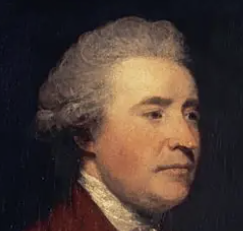
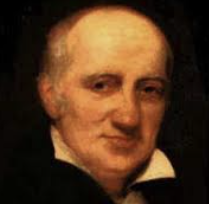
I assert, that the ancient Whigs held doctrines, totally different from those I have last mentioned. I assert, that the foundations laid down by the Commons, on the trial of Doctor Sacheverel, for justifying the revolution of 1688, are the very same laid down in Mr. Burke's Reflections; that is to say,-a breach of the original contract, implied and expressed in the constitution of this country, as a scheme of government fundamentally and inviolably fixed in King, Lords, and Commons.-That the fundamental subversion of this antient constitution, by one of its parts, having been attempted, and in effect accomplished, justified the Revolution. That it was justified only upon the necessity of the case; as the only means left for the recovery of that antient constitution, formed by the original contract of the British state; as well as for the future preservation of the same government. These are, the points to be proved.
▼
Source
source
p. 411
8 months 3 weeks ago
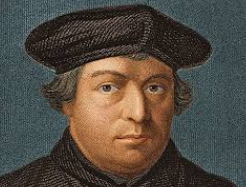
The hair is the finest ornament women have. . . . I like women to let their hair fall down their back, it is a most agreeable sight.
▼
Source
source
-- Table Talk, quoted in Luther On "Woman"
4 months 1 week ago
I sincerely rejoice at the acceptance of our new Constitution by nine States. It is a good canvas, on which some strokes only want retouching. What these are, I think are sufficiently manifested by the general voice from north to south, which calls for a bill of rights.
▼
Source
source
Letter to James Madison (July 31, 1788); reported in Memoir, correspondence, and miscellanies from the papers of Thomas Jefferson, Volumes 1-2 (1829), p. 343
7 months 1 week ago
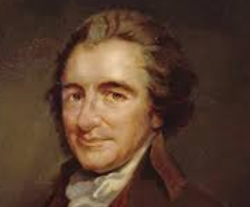
Anarchy, in its own nature, is an evil of short duration. The more horrible are the mischiefs it inflicts, the more does it hasten to a close.
▼
Source
source
Book 7, Ch. 5

6 months 4 weeks ago
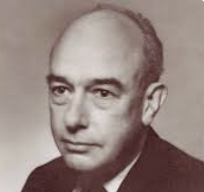
Even a statement very close to the periphery can be held true in the face of recalcitrant experience by pleading hallucination or by amending certain statements of the kind called logical laws. Conversely, by the same token, no statement is immune to revision. Revision even of the logical law of the excluded middle has been proposed as a means of simplifying quantum mechanics; and what difference is there in principle between such a shift and the shift whereby Kepler superseded Ptolemy, or Einstein Newton, or Darwin Aristotle?
▼
Source
source
"Two Dogmas of Empiricism"
8 months 2 weeks ago
They show as little Reason as Conscience who put the matter by with saying - "Men, in some cases, are lawfully made Slaves, and why may not these?" So men, in some cases, are lawfully put to death, deprived of their goods, without their consent; may any man, therefore, be treated so, without any conviction of desert? Nor is this plea mended by adding-"They are set forth to us as slaves, and we buy them without farther inquiry, let the sellers see to it." Such men may as well join with a known band of robbers, buy their ill-got goods, and help on the trade; ignorance is no more pleadable in one case than the other; the sellers plainly own how they obtain them. But none can lawfully buy without evidence that they are not concurring with Men-Stealers; and as the true owner has a right to reclaim his goods that were stolen, and sold; so the slave, who is proper owner of his freedom, has a right to reclaim it, however often sold.
9 months 1 week ago
In that daily effort in which intelligence and passion mingle and delight each other, the absurd man discovers a discipline that will make up the greatest of his strengths. The required diligence and doggedness and lucidity thus resemble the conqueror's attitude. To create is likewise to give a shape to one's fate. For all these characters, their work defines them at least as much as it is defined by them. The actor taught us this: There is no frontier between being and appearing.
7 months 2 weeks ago
Our patience will achieve more than our force.
8 months 1 week ago
Money appears as measure (in Homer, e.g. oxen) earlier than as medium of exchange,because in barter each commodity is still its own medium of exchange. But it cannot be its own or its own standard of comparison.
▼
Source
source
Notebook I, The Chapter on Money, p. 93.
8 months 2 weeks ago
Essentially, this war...is a great race-conflict, a conflict of Teuton and Slav, in which certain other nations, England, France and Belgium, have been led into cooperation with the Slav. ... The conflict of Germany and Russia has been produced not by this or that diplomatic incident, but by primitive passions expressing themselves in the temper of the two races.
▼
Source
source
War: The Offspring of Fear (1914), quoted in Ray Monk, Bertrand Russell: The Spirit of Solitude, 1872-1921 (1996), p. 373
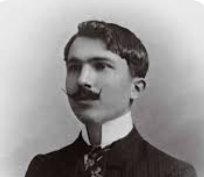
4 months 2 weeks ago
My entire soul is a cry, and all my work the commentary on that cry.
▼
Source
source
Author's Introduction, p. 15
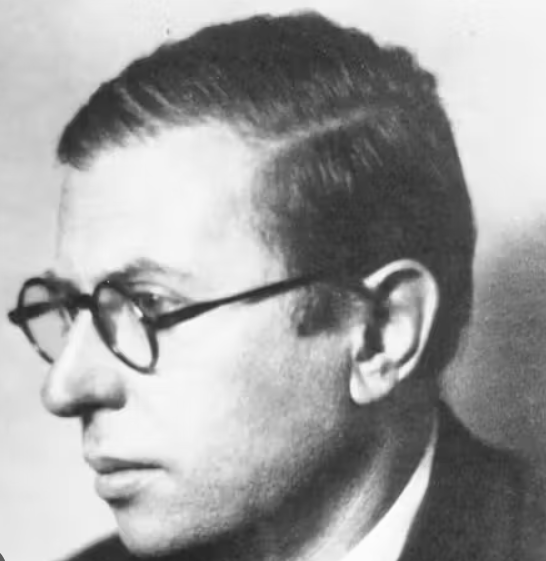
8 months 1 week ago
But when they have realized that it [society] rejects them forever, they themselves assume the ostracism of which they are victims so as not to leave the initiative to their oppressors.
▼
Source
source
p. 65-6
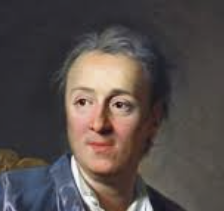
7 months 2 weeks ago
The blood of Jesus Christ can cover a multitude of sins, it seems to me.
7 months 1 week ago
As far as I am concerned, I resign from humanity. I no longer want to be, nor can still be, a man. What should I do? Work for a social and political system, make a girl miserable? Hunt for weaknesses in philosophical systems, fight for moral and aesthetic ideals? It's all too little. I renounce my humanity even though I may find myself alone. But am I not already alone in this world from which I no longer expect anything?
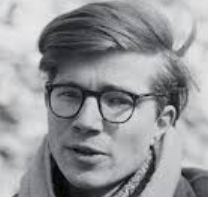
6 months 3 weeks ago
Now the basic impulse behind existentialism is optimistic, very much like the impulse behind all science. Existentialism is romanticism, and romanticism is the feeling that man is not the mere he has always taken himself for. Romanticism began as a tremendous surge of optimism about the stature of man. Its aim - like that of science - was to raise man above the muddled feelings and impulses of his everyday humanity, and to make him a god-like observer of human existence.
▼
Source
source
p. 96
CivilSimian.com created by AxiomaticPanic, CivilSimian, Kalokagathia