
2 months 1 week ago

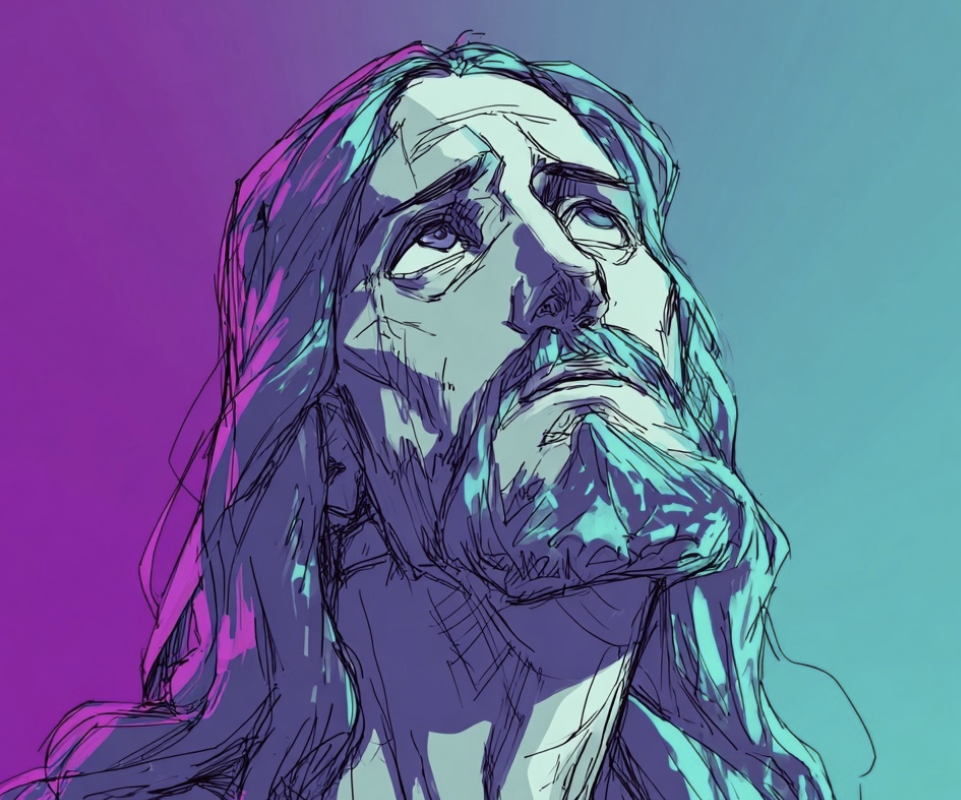
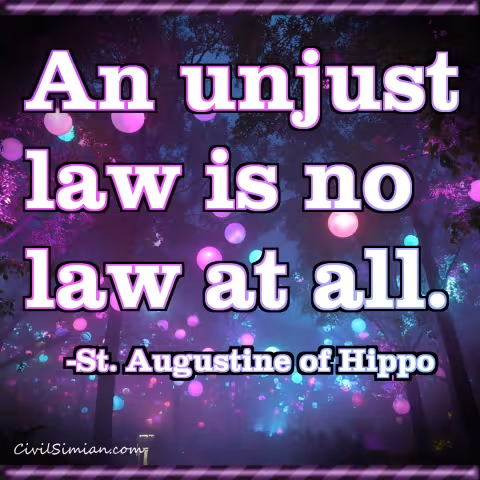
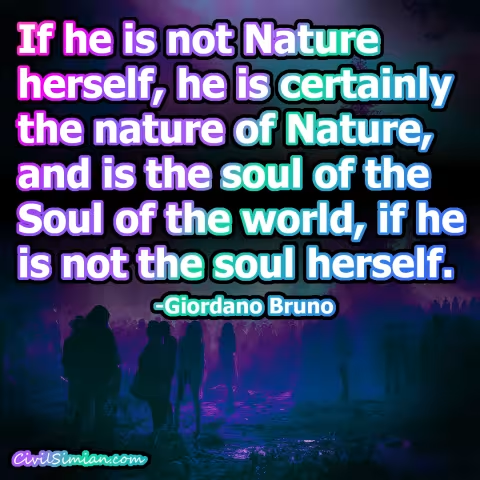
Gimp gradient, Affinity Liquify. I would like to enjoy the romantic nature of these quotes about "God", but, unfortunately religion has ruined the Truth about "God" so we can't even responsibly talk about it romantically. It's too dangerous to safety and peace. I'm not going to kill you guys with color...lol...I just get bored...

0
0
8 months 2 weeks ago

The means employed by Nature to bring about the development of all the capacities of men is their antagonism in society, so far as this is, in the end, the cause of a lawful order among men.

0
0
Source
source
Fourth Thesis
4 months 1 week ago

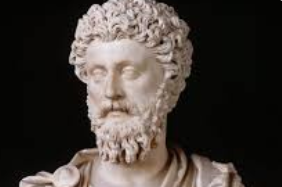
Marcus Aurelius wrote the following about Severus (a person who is not clearly identifiable according to the footnote): Through him I became acquainted with the conception of a community based on equality and freedom of speech for all, and of a monarchy concerned primarily to uphold the liberty of the subject.

0
0
Source
source
I. 14, trans. Maxwell Staniforth
4 months 1 week ago

FACULTY PSYCHOLOGY is getting to be respectable again after centuries of hanging around with phrenologists and other dubious types. By faculty psychology I mean, roughly , the view that many fundamentally different kinds of psychological mechanisms must be postulated in order to explain the facts of mental life . Faculty psychology takes seriously the apparent heterogeneity of the mental and is impressed by such prima facie differences as between, say, sensation and perception, volition and cognition, learning and remembering, or language and thought.

0
0
Source
source
p. 1
8 months 2 weeks ago

Where there is a lull of truth, an institution springs up. But the truth blows right on over it, nevertheless, and at length blows it down.

0
0
Source
source
p. 494
8 months 2 weeks ago

We may define "faith" as a firm belief in something for which there is no evidence. Where there is evidence, no one speaks of "faith". We do not speak of faith that two and two are four or that the earth is round. We only speak of faith when we wish to substitute emotion for evidence. The substitution of emotion for evidence is apt to lead to strife, since different groups substitute different emotions.

0
0
Source
source
p. 215

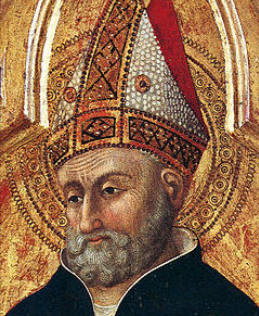
We are members of this Head, and this body cannot be decapitated. If the Head is in glory forever, so too are the members in glory forever, that Christ may be undivided forever.

0
0
Source
source
p.433
7 months 2 weeks ago

To prove cannot mean anything other than to bring the other person to my own conviction. The truth lies only in the unification of "I" and "You." The Other of pure thought, however, is the sensuous intellect in general. In the field of philosophy, proof therefore consists only in the fact that the contradiction between sensuous intellect and pure thought is disposed, so that thought is true not only for itself but also for its opposite.

0
0
Source
source
Z. Hanfi, trans., in The Fiery Brook (1972), p. 75
6 months 1 week ago

A moral point of view too often serves as a substitute for understanding in technological matters.

0
0
Source
source
(p. 245)
7 months ago

Philosophy ... should not imagine that specialized work in epistemological theory, or whatever else prides itself on being research, is actually philosophy. Yet a philosophy forswearing all of that must in the end be irreconcilably at odds with the dominant consciousness. Nothing else raises it above the suspicion of apologetics. Philosophy that satisfies its own intention, and does not childishly skip behind its own history and the real one, has its lifeblood in the resistance against the common practices of today and what they serve, against the justification of what happens to be the case.
0
0
Source
source
p. 6
8 months 2 weeks ago

No doubt, when modesty was made a virtue, it was a very advantageous thing for the fools, for everybody is expected to speak of himself as if he were one.

0
0
Source
source
Vol. 1, Ch. 3, Section 2: Pride
5 months 1 week ago

Art enlarges experience by admitting us to the inner life of others.

0
0
Source
source
Ch. IV: "The Golden Rule and After", p. 110.
7 months 1 week ago

All ye shall be offended because of me this night: for it is written, I will smite the shepherd, and the sheep of the flock shall be scattered abroad. But after I am risen again, I will go before you into Galilee.

0
0
Source
source
26:31-32 (KJV)
5 months 5 days ago

And wonderful it is to see how the Ideal or Soul, place it in what ugliest Body you may, will irradiate said Body with its own nobleness; will gradually, incessantly, mould, modify, new-form or reform said ugliest Body, and make it at last beautiful, and to a certain degree divine!

0
0
8 months 2 weeks ago

The retinue of a grandee in China or Indostan accordingly is, by all accounts, much more numerous and splendid than that of the richest subjects of Europe.

0
0
Source
source
Chapter XI, Part III, Third Period, p. 240.
7 months 1 week ago

The theory of transparency was set up in reaction to the theory of mental images, of an inner tableu which the perception of an object would leave in us. In imagination our gaze always goes outward, but imagination modifies and neutralizes the gaze: the real world appears in it as it were between parenthesis or quote marks.

0
0
Source
source
The Levinas reader by Levinas, Emmanuel p. 134
6 months 1 week ago

Newton, and 'proper scientific method' after him, conducted attention to 'continuous description' of experimental phenomena instead of to causes.

0
0
Source
source
p. 50
9 months 2 weeks ago

To one unnamed, whose name will one day be named, is dedicated, with this little work, the entire authorship, as it was from the beginning.

0
0
6 months 2 weeks ago

The Churches as Churches have always been and cannot fail to be institutions not only alien to, but directly hostile towards, Christ's teaching.

0
0
Source
source
Chapter III, Christianity Misunderstood by Believers
8 months 3 weeks ago

All the passages in the Holy Scriptures that mention assistance are they that do away with "free-will", and these are countless...For grace is needed, and the help of grace is given, because "free-will" can do nothing.

0
0
Source
source
p. 270
4 months 4 weeks ago

For this reason those who are tossed about at sea, who proceed uphill and downhill over toilsome crags and heights, who go on campaigns that bring the greatest danger, are heroes and front-rank fighters; but persons who live in rotten luxury and ease while others toil, are mere turtle-doves safe only because men despise them.

0
0
8 months 2 weeks ago

To think that because those who wield power in society wield in the end that of government, therefore it is of no use to attempt to influence the constitution of the government by acting on opinion, is to forget that opinion is itself one of the greatest active social forces. One person with a belief is a social power equal to ninety-nine who have only interests.

0
0
Source
source
Ch. I: To What Extent Forms of Government Are a Matter of Choice (p. 155)
8 months 3 weeks ago

There are and can be only two ways of searching into and discovering truth. The one flies from the senses and particulars to the most general axioms, and from these principles, the truth of which it takes for settled and immovable, proceeds to judgment and to the discovery of middle axioms. And this way is now in fashion. The other derives axioms from the senses and particulars, rising by a gradual and unbroken ascent, so that it arrives at the most general axioms last of all. This is the true way, but as yet untried.

0
0
Source
source
Aphorism 19
4 months 4 weeks ago

For sometimes it is an act of bravery even to live.

0
0
Source
source
Seneca, Ad Lucilium epistulae morales, transl. Richard M. Gummere, 1920 ed., Epistle LXXVIII, pp. 181-182
6 months 4 weeks ago

There continue to be complex debates about what Nietzsche understood truth to be. Quite certainly, he did not think, in pragmatist spirit, that beliefs are true if they serve our interests or welfare: we have just seen some of his repeated denials of this idea. The more recently fashionable view is that he was the first of the deniers, thinking that there is no such thing as truth, or that truth is what anyone thinks it is, or that it is a boring category that we can do without. This is also wrong, and more deeply so. Nietzsche did not think that the ideal of truthfulness went into retirement when its metaphysical origins were discovered, and he did not suppose, either, that truthfulness could be detached from a concern for the truth. Truthfulness as an ideal retains its power, and so far from his seeing truth as dispensable or malleable, his main question is how it can be made bearable.

0
0
Source
source
p. 16
8 months 1 week ago

Who can exhaust a man? Who knows a man's resources?

0
0
4 months 1 week ago

But though much may be said to Excuse the Chymists when they write Darkly, and Ænigmatically, about the Preparation of their Elixir, and Some few other grand Arcana, the divulging of which they may upon Grounds Plausible enough esteem unfit; yet when they pretend to teach the General Principles of Natural Philosophers, this Equivocall Way of Writing is not to be endur'd. For in such Speculative Enquiries, where the naked Knowledge of the Truth is the thing Principally aim'd at, what does he teach me worth thanks that does not, if he can, make his Notion intelligible to me, but by Mystical Termes, and Ambiguous Phrases darkens what he should clear up; and makes me add the Trouble of guessing at the sence of what he Equivocally expresses, to that of examining the Truth of what he seems to deliver.

0
0
8 months 2 weeks ago

I have lived in the pursuit of a vision, both personal and social. Personal: to care for what is noble, for what is beautiful, for what is gentle; to allow moments of insight to give wisdom at more mundane times. Social: to see in imagination the society that is to be created, where individuals grow freely, and where hate and greed and envy die because there is nothing to nourish them. These things I believe, and the world, for all its horrors, has left me unshaken.

0
0
5 months 5 days ago

I take the liberty of asserting that there is one valid reason, and only one, for either punishing a man or rewarding him in this world; one reason, which ancient piety could well define: That you may do the will and commandment of God with regard to him; that you may do justice to him. This is your one true aim in respect of him; aim thitherward, with all your heart and all your strength and all your soul, thitherward, and not elsewhither at all! This aim is true, and will carry you to all earthly heights and benefits, and beyond the stars and Heavens. All other aims are purblind, illegitimate, untrue; and will never carry you beyond the shop-counter, nay very soon will prove themselves incapable of maintaining you even there. Find out what the Law of God is with regard to a man; make that your human law, or I say it will be ill with you, and not well!

0
0
7 months 1 week ago

The slave is sold once and for all; the proletarian must sell himself daily and hourly. The individual slave, property of one master, is assured an existence, however miserable it may be, because of the master's interest. The individual proletarian, property as it were of the entire bourgeois class which buys his labor only when someone has need of it, has no secure existence. This existence is assured only to the class as a whole.

0
0
4 months 3 weeks ago

The basic problem is to understand that there are no such things as things; that is to say separate things, separate events. That is only a way of talking. What do you mean by a thing? A thing is a noun. A noun isn't a part of nature it's a part of speech. There are no nouns in the physical world. There are no separate things in the physical world either.

0
0
Source
source
Watts on Wiggles Waves, used in the Cosmosis track No Such Thing (2007).
4 months 3 weeks ago

I am of course confident that I will fulfil my tasks as a writer in all circumstances - from my grave even more successfully and more irrefutably than in my lifetime. No one can bar the road to truth, and to advance its cause I am prepared to accept even death. But may it be that repeated lessons will finally teach us not to stop the writer's pen during his lifetime? At no time has this ennobled our history.

0
0
Source
source
Open letter to the Fourth Soviet Writers' Congress (16 May 1967); as translated in Solzhenitsyn: A Documentary Record (1970) edited by Leopold Labedz
4 months 1 week ago

I do what is mine to do; the rest doesn't disturb me.

0
0
Source
source
(Hays translation) VI, 22
8 months 2 weeks ago

The film concludes with ... the most nauseatingly luscious, the most penetratingly vulgar mammy song that it has ever been my lot to hear. My flesh crept as the loud speaker poured out those sodden words, the greasy, sagging melody. I felt ashamed of myself for listening to such things, for even being a member of the species to which such things are addressed.

0
0
Source
source
"Silence is Golden," p. 62
6 months 2 weeks ago

The error arises from the learned jurists deceiving themselves and others, by asserting that government is not what it really is, one set of men banded together to oppress another set of men, but, as shown by science, is the representation of the citizens in their collective capacity.

0
0
Source
source
Chapter VI, Attitude of Men of the Present Day to War Variant translation: Government is an association of men who do violence to the rest of us.
4 months 2 weeks ago

I shall within a few days divest myself of the anxieties and the labors with which I have been oppressed, and retire with inexpressible delight to my family, my friends, my farms, and books. There I may indulge at length in that tranquillity and those pursuits from which I have been divorced by the character of the times in which I have lived, and which have forced me into the line of political life under a sense of duty and against a great and constant aversion to it.

0
0
Source
source
Letter to David Baillie Warden
5 months 1 week ago

I think I have already said somewhere that mathematics is the art of giving the same name to different things.

0
0
Source
source
Part I. Ch. 2 : The Future of Mathematics, p. 31
9 months 1 week ago

The absurd ... is an experience to be lived through, a point of departure, the equivalent, in existence of Descartes' methodical doubt. Absurdism, like methodical doubt, has wiped the slate clean. It leaves us in a blind alley. But, like methodical doubt, it can, by returning upon itself, open up a new field of investigation, and in the process of reasoning then pursues the same course. I proclaim that I believe in nothing and that everything is absurd, but I cannot doubt the validity of my proclamation and I must at least believe in my protest. The first and only evidence that is supplied me, within the terms of the absurdist experience, is rebellion ... Rebellion is born of the spectacle of irrationality, confronted with an unjust and incomprehensible condition.

0
0
8 months 2 weeks ago

That power should be exercised over any portion of mankind without any obligation of consulting them, is only tolerable while they are in an infantine, or a semi-barbarous state. In any civilized condition, power ought never to be exempt from the necessity of appealing to the reason, and recommending itself by motives which justify it to the conscience and feelings, of the governed.

0
0
Source
source
Thoughts on Parliamentary Reform (1859), p. 24
4 months 1 week ago

This is a fine saying of Plato: That he who is discoursing about men should look also at earthly things as if he viewed them from some higher place; should look at them... a mixture of all things and an orderly combination of contraries.

0
0
Source
source
VII, 48
9 months 4 days ago

All things are nourished together without their injuring one another. The courses of the seasons, and of the sun and moon, are pursued without any collision among them. The smaller energies are like river currents; the greater energies are seen in mighty transformations. It is this which makes heaven and earth so great.

0
0
7 months 1 week ago

The peoples' revolution .... will arrange its revolutionary organisation from the bottom up and from the periphery to the centre, in keeping with the principle of liberty.

0
0
5 months 1 week ago

All wars today tend to be netwars.

0
0
Source
source
55
6 months 3 weeks ago

Imagine a book of unexplained mysteries written by a contemporary of Shakespeare. It might include the mystery of the falling stars that sweep through the sky foretelling disaster; the mystery of the Kraken, the giant sea devil with 50-foot tentacles; the mystery of monster bones, sometimes found in caves or on beaches. Such a book would be a curious mixture of truth and absurdity, fact and legend. We would all feel superior as we turned its pages and murmured: "Of course, they didn't know about comets and giant squids and dinosaurs." If this book should happen to find its way into the hands of our remote descendants, they may smile pityingly and say: "It's incredible to think that they knew nothing about epsilon fields or multiple psychic feedback or cross gravitational energies. They didn't even know about the ineluctability of time." But let us hope that such a descendant is in a charitable mood, and might add: "And yet they managed to ask a few of the right questions."

0
0
Source
source
p. 142
7 months 1 day ago

The vain man is in like cause with the avaricious - he takes the mean for the end; forgetting the end he pursues the means for its own sake and goes no further. The seeming to be something, conducive to being it, ends by forming our objective. We need that others should believe in our superiority to them in order that we may believe in it ourselves, and upon their belief base our faith in our own persistence, or at least in the persistence of our fame. We are more grateful to him that congratulates us on the skill with which we defend a cause than we are to him who recognizes the truth or goodness of the cause itself. A rabid mania for originality is rife in the modern intellectual world and characterizes all individual effort. We would rather err with genius than hit the mark with the crowd.

0
0
8 months 1 week ago

I believe that the advance of science depends upon the free competition of thought, and thus upon freedom, and that it must come to an end if freedom is destroyed (though it may well continue for some time in some fields, especially in technology).

0
0
Source
source
Ch. 10 "Corroboration, or How a Theory Stands up to Tests", section 85: The Path of Science, p. 279, note 2.
8 months 4 days ago

He used to reason as follows: 'Everything belongs to the gods; the wise are friends of the gods; friends hold all things in common; ergo, everything belongs to the wise.'

0
0
Source
source
Diogenes Laërtius, vi. 37, as reported in Diogenes the Cynic: Sayings and Anecdotes as translated by Robin Hard (Oxford: 2012), p. 13
7 months 2 weeks ago

An act of the mind of which we are conscious, as such, is called freedom. An act without consciousness of action is called spontaneity. I by no means assume as necessary any immediate consciousness of the act, but merely, that on subsequent reflection thou shouldst perceive it to be an act. The higher question of what it is that prevents any such state of indecision, or any consciousness of the act, we may perhaps subsequently be able to solve. This act of the mind is called thought and it is said that thought is a spontaneous act, to distinguish it from sensation, in which the mind is merely receptive and passive.

0
0
Source
source
Jane Sinnett, trans 1846 p. 44

CivilSimian.com created by AxiomaticPanic, CivilSimian, Kalokagathia