

8 months 2 weeks ago
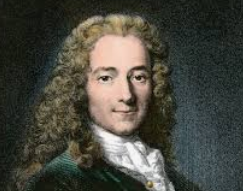
It is dangerous to be right in matters where established men are wrong.
▼
Source
source
Le Siècle de Louis XIV (1752) Fontenelle Note: The most frequently attributed variant of this quote is: It is dangerous to be right when the government is wrong.
9 months 5 days ago
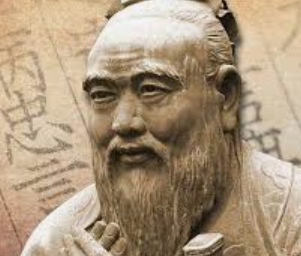
Perfect is the virtue which is according to the Mean! Rare have they long been among the people, who could practice it!
4 months 2 weeks ago
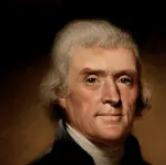
No experiment can be more interesting than that we are now trying, and which we trust will end in establishing the fact, that man may be governed by reason and truth. Our first object should therefore be, to leave open to him all the avenues to truth. The most effectual hitherto found, is the freedom of the press. It is, therefore, the first shut up by those who fear the investigation of their actions.
▼
Source
source
Letter to Judge John Tyler (June 28, 1804); in: The Writings of Thomas Jefferson, Memorial Edition (ME) (Lipscomb and Bergh, editors), 20 Vols., Washington, D.C., 1903-04, Volume 11, page 33
5 months 4 weeks ago
Only in growth, reform, and change, paradoxically enough, is true security to be found.
▼
Source
source
The Wave of the Future
7 months 2 weeks ago
Jews are angry and brutish people, vile and vulgar men, slaves worthy of the yoke [Talmudism] which you bear... Go, take back your books and remove yourselves from me. [ The Talmud ] taught the Jews to steal the goods of Christians, to regard them as savage beasts, to push them over the precipice... to kill them with impunity and to utter every morning the most horrible imprecations against them.
▼
Source
source
See The Jews: A History, Second Edition, by John Efron, Steven Weitzman and Matthias Lehmann
8 months 2 weeks ago
Compared with the greatest poets, he may be said to be the poet of unpoetical natures, possessed of quiet and contemplative tastes. But unpoetical natures are precisely those which require poetic cultivation. This cultivation Wordsworth is much more fitted to give, than poets who are intrinsically far more poets than he.
▼
Source
source
(p. 149)
7 months 2 days ago
In fact, for a voluntarist like Schopenhauer, a theory so sanely and cautiously empirical and rational as that of Darwin, left out of account the inward force, the essential motive, of evolution. For what is, in effect, the hidden force, the ultimate agent, which impels organisms to perpetuate themselves and to fight for their persistence and propagation? Selection, adaptation, heredity, these are only external conditions. This inner, essential force has been called will on the supposition that there exists also in other beings that which we feel in ourselves as a feeling of will, the impulse to be everything, to be others as well as ourselves yet without ceasing to be what we are.
8 months 2 weeks ago
Metaphysical fallacies contain the only clues we have to what thinking means to those who engage in it.
▼
Source
source
p. 12
8 months 2 weeks ago
One must care about a world one will not see.
▼
Source
source
Attributed to Russell in The Wordsworth Dictionary of Quotations (1997), p. 450, and in Robertson's Dictionary of Quotations (1998), p. 362, but no specific source is given.

5 months 1 week ago
From the point of view of the development of Marx's theories, his early journalistic writings are important for two main reasons. In his sharp attacks on the censorship law he spoke out unequivocally for the freedom of the Press, against the levelling effect of government restriction ('You don't expect a rose to smell like a violet; why then should the human spirit, the richest thing we have, exist only in a single form?'), and also expressed views concerning the whole nature of the state and the essence of freedom. Pointing out that the vagueness and ambiguity of the Press law placed arbitrary power in the hands of officials, Marx went on to argue that censorship was contrary not only to the purposes of the Press, but to the nature of the state as such.
▼
Source
source
(pp. 120-1)

5 months 6 days ago
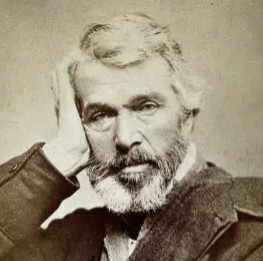
Sure enough, America is a great, and in many respects a blessed and hopeful phenomenon. Sure enough, these hardy millions of Anglo-Saxon men prove themselves worthy of their genealogy; and, with the axe and plough and hammer, if not yet with any much finer kind of implements, are triumphantly clearing out wide spaces, seedfields for the sustenance and refuge of mankind, arenas for the future history of the world; doing, in their day and generation, a creditable and cheering feat under the sun. But as to a Model Republic, or a model anything, the wise among themselves know too well that there is nothing to be said.
8 months 3 weeks ago
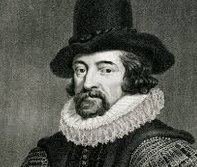
As we divided natural philosophy in general into the inquiry of causes, and productions of effects: so that part which concerneth the inquiry of causes we do subdivide according to the received and sound division of causes. The one part, which is physic, inquireth and handleth the material and efficient causes; and the other, which is metaphysic, handleth the formal and final causes.
▼
Source
source
Book VII, 3
8 months 1 week ago
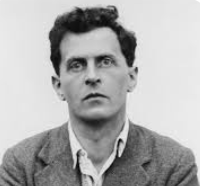
The less somebody knows and understands himself the less great he is, however great may be his talent. For this reason our scientists are not great.
▼
Source
source
p. 51e
7 months 1 week ago
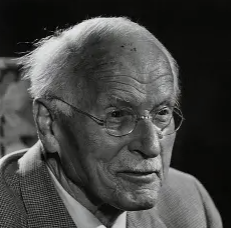
Every father is given the opportunity to corrupt his daughter's nature, and the educator, husband, or psychiatrist then has to face the music. For what has been spoiled by the father can only be made good by a father, just as what has been spoiled by the mother can only be repaired by a mother. The disastrous repetition of the family pattern could be described as the psychological original sin, or as the curse of the Atrides running through the generations.
▼
Source
source
Mysterium Coniunctionis (1955) CW 14: P. 232
8 months 2 weeks ago
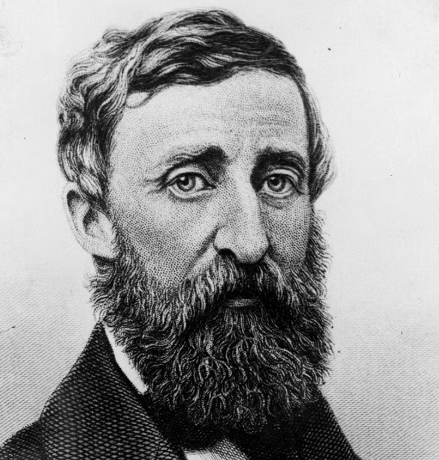
Perhaps I am more than usually jealous with respect to my freedom. I feel that my connection with and obligation to society are still very slight and transient. Those slight labors which afford me a livelihood, and by which it is allowed that I am to some extent serviceable to my contemporaries, are as yet commonly a pleasure to me, and I am not often reminded that they are a necessity. So far I am successful. But I foresee, that, if my wants should be much increased, the labor required to supply them would become a drudgery. If I should sell both my forenoons and afternoons to society, as most appear to do, I am sure, that, for me, there would be nothing left worth living for. I trust that I shall never thus sell my birthright for a mess of pottage.
▼
Source
source
p. 486
4 months 1 week ago
That then, that I wish for, as to systems, is this, that men, in the first place, would forbear to establish any theory, till they have consulted with (though not a fully competent number of experiments, such as may afford them all the phænomena to be explicated by that theory, yet) a considerable number of experiments, in proportion to the comprehensiveness of the theory to be erected on them. And, in the next place, I would have such kind of supestructures looked upon only as temporary ones; which though they may be preferred before any others, as being the least imperfect, or, if you please, the best in their kind that we yet have, yet are they not entirely to be acquiesced in, as absolutely perfect, or uncapable of improving alterations.
6 months 1 week ago
I don't want to sound callous. I mean, even if I have nothing to offer, that doesn't matter, because that still doesn't mean that what anybody else has to offer therefore has to be true.
6 months 4 weeks ago
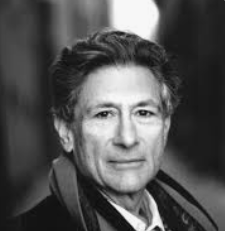
Theory is taught so as to make the student believe that he or she can become a Marxist, a feminist, an Afrocentrist, or a deconstructionist with about the same effort and commitment required in choosing items from a menu.
▼
Source
source
Chap 4, Sect 2
8 months 2 weeks ago
I resolved from the beginning of my quest that I would not be misled by sentiment and desire into beliefs for which there was no good evidence.
▼
Source
source
Fact and Fiction (1961), Part I, Ch. 6: "The Pursuit of Truth", p. 37

7 months 1 week ago
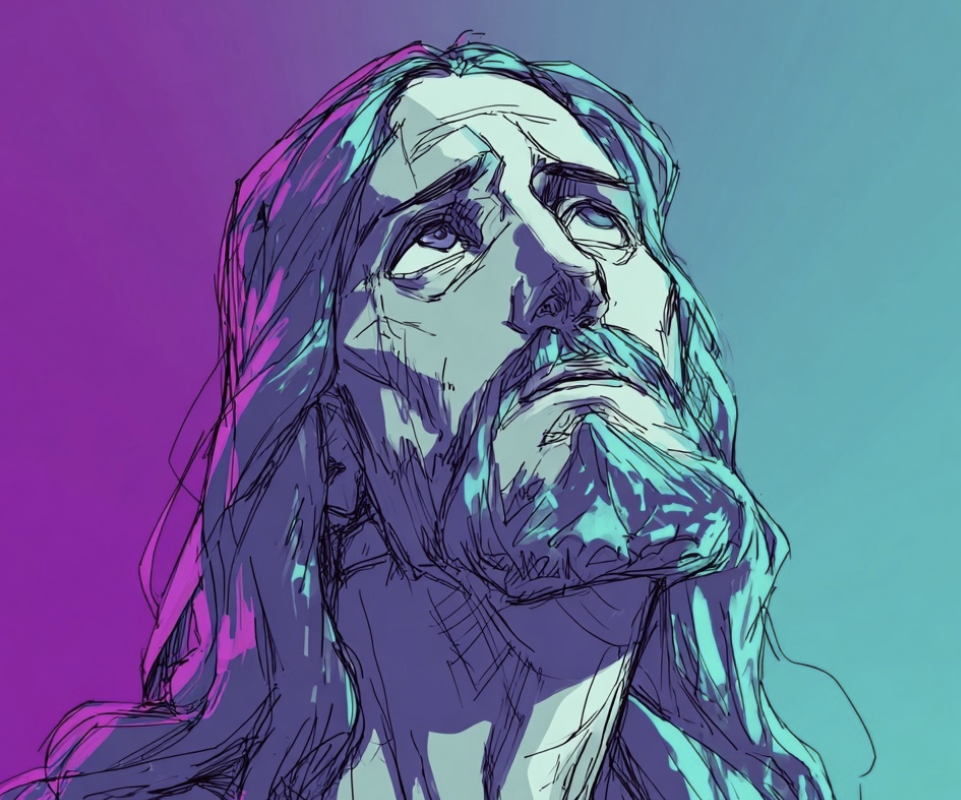
All which a man loves, for which he leaves everything else but that, is his god, thus the glutton and drunkard has for his idol his own flesh, the fornicator has for his idol the harlot and the greedy has for his idol silver and gold, and so the same for every other sinner.
▼
Source
source
Ch. 33
4 months 1 week ago
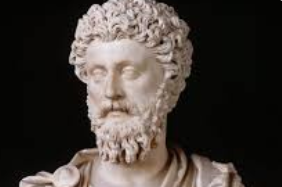
If man reflects on the changes and transformations which follow one another like wave after wave and their rapidity, he will despise everything which is perishable.
▼
Source
source
IX, 28
7 months 5 days ago
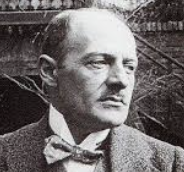
In ressentiment morality, love for the "small," the "poor," the "weak," and the "oppressed" is really disguised hatred, repressed envy, an impulse to detract, etc., directed against the opposite phenomena: "wealth," "strength," "power," "largesse." When hatred does not dare to come out into the open, it can be easily expressed in the form of ostensible love-love for something which has features that are the opposite of those of the hated object. This can happen in such a way that the hatred remains secret. When we hear that falsely pious, unctuous tone (it is the tone of a certain "socially-minded" type of priest), sermonizing that love for the "small" is our first duty, love for the "humble" inspirit, since God gives "grace" to them, then it is often only hatred posing as Christian love.
▼
Source
source
L. Coser, trans. (1961), pp. 96-97
4 months 1 week ago
How much time he gains who does not look to see what his neighbor says or does or thinks, but only at what he does himself, to make it just and holy.
▼
Source
source
IV, 18
7 months 1 week ago
The fear of your own solitude, of its vast surface and its infinity... Remorse is the voice of solitude. And what does this whispering voice say? Everything in us that is not human anymore.
7 months 1 week ago
To live in a saint's heart? I'm afraid of setting the sky ablaze.
7 months 1 day ago
The importance of the culture industry in the spiritual constitution of the masses is no dispensation for reflection on its objective legitimation, its essential being, least of all by a science which thinks itself pragmatic.
8 months 2 weeks ago
Music is a hidden arithmetic exercise of the soul, which does not know that it is counting.
▼
Source
source
Letter to Christian Goldbach, April 17, 1712.
6 months 1 week ago
A beautiful face is a silent commendation.
▼
Source
source
Maxim 283
6 months 1 week ago
Until writing was invented, man lived in acoustic space: boundless, directionless, horizonless, in the dark of the mind, in the world of emotion, by primordial intuition, terror. Speech is a social chart of this bog.
▼
Source
source
(p. 48)
8 months 2 weeks ago
As a general rule-never substitute the symbol for the thing signified, unless it is impossible to show the thing itself; for the child's attention is so taken up with the symbol that he will forget what it signifies.
8 months 2 weeks ago
Two things fill the mind with ever-increasing wonder and awe, the more often and the more intensely the mind of thought is drawn to them: the starry heavens above me and the moral law within me.
▼
Source
source
Translated by Lewis White Beck Two things fill the heart with renewed and increasing awe and reverence the more often and the more steadily that they are meditated on: the starry skies above me and the moral law inside me.
7 months 2 weeks ago
We have unmistakable proof that throughout all past time, there has been a ceaseless devouring of the weak by the strong.
▼
Source
source
Vol. I, Part III, Ch. 2 General Aspects of the Special-Creation-Hypothesis
8 months 5 days ago
Philosophy is the childhood of the intellect, and a culture that tries to skip it will never grow up.
▼
Source
source
p. 12.
7 months 2 days ago
There are pretenses which are very sincere, and marriage is their school.
▼
Source
source
Tres novelas ejemplares y un prólogo [Three Exemplary Novels and a Prologue] (1920); Two Mothers

6 months 4 weeks ago
Males learn to lie as a way of obtaining power, and females not only do the same but they also lie to pretend powerlessness.
▼
Source
source
Chapter 3, pg. 59
7 months 1 week ago
Eros is a superhuman power which, like nature herself, allows itself to be conquered and exploited as though it were impotent. But triumph over nature is dearly paid for. Nature requires no explanations of principle, but asks only for tolerance and wise measure. "Eros is a mighty daemon," as the wise Diotima said to Socrates. We shall never get the better of him, or only to our own hurt. He is not the whole of our inward nature, though he is at least one of its essential aspects.
▼
Source
source
Two Essays on Analytical Psychology, CW 7 (1957). "On the Psychology of the Unconscious" P.32f
6 months 1 week ago
The fact that life evolved out of nearly nothing, some 10 billion years after the universe evolved out of literally nothing, is a fact so staggering that I would be mad to attempt words to do it justice.
▼
Source
source
From tail to tale on the path of pilgrims in life, The Scotsman
8 months 2 weeks ago
Olympian bards who sung Divine ideas below, Which always find us young And always keep us so.
▼
Source
source
Ode to Beauty, st. 2
8 months 4 weeks ago
Tentative efforts lead to tentative outcomes. Therefore, give yourself fully to your endeavors. Decide to construct your character through excellent actions, and determine to pay the price for a worthy goal. The trials you encounter will introduce you to your strengths. Remain steadfast... and one day you will build something that endures, something worthy of your potential.
7 months 1 week ago
After all, why should ordinary people want to contemplate the End, especially when we see the condition of those who do?
7 months 2 days ago
The philosophy of Bergson, which is a spiritualist restoration, essentially mystical, medieval, Quixotesque, has been called a demi-mondaine philosophy. Leave out the demi; call it mondaine, mundane. Mundane - yes, a philosophy for the world and not for philosophers, just as chemistry ought to be not for chemists alone. The world desires illusion (mundus vult decipi) - either the illusion antecedent to reason, which is poetry, or the illusion subsequent to reason, which is religion. And Machiavelli has said that whosoever wishes to delude will always find someone willing to be deluded. Blessed are they who are easily befooled!
7 months 6 days ago
Freedom of thought and of expression are not mere rights to be claimed. They have their roots deep in the existence of individuals as developing careers in time. Their denial and abrogation is an abdication of individuality and a virtual rejection of time as opportunity.
6 months 1 week ago
Either be silent or say something better than silence.
▼
Source
source
Maxim 960
8 months 2 weeks ago
The Christian Religion not only was at first attended with miracles, but even at this day cannot be believed by any reasonable person without one. Mere reason is insufficient to convince us of its veracity: and whoever is moved by Faith to assent to it, is conscious of a continued miracle in his own person, which subverts all the principles of his understanding, and gives him a determination to believe what is most contrary to custom and experience.
▼
Source
source
Section 10 : Of Miracles Pt. 2
CivilSimian.com created by AxiomaticPanic, CivilSimian, Kalokagathia