

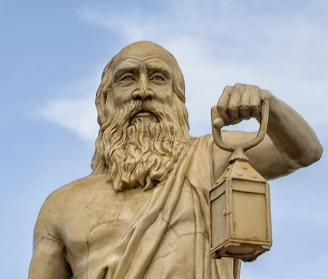
8 months 6 days ago
Other dogs bite only their enemies, whereas I bite also my friends in order to save them.
▼
Source
source
Stobaeus, iii. 13. 44

6 months 4 weeks ago
The vitality of the ordinary members of society is dependent on its Outsiders.
▼
Source
source
Chapter Three, The Romantic Outsider
6 months 2 weeks ago
The judge is condemned when the guilty is absolved.
▼
Source
source
Maxim 407 Adopted by the original Edinburgh Review magazine as its motto.
7 months 1 week ago
The rise of new science in the seventeenth century laid hold upon general culture in the next century. The enlightenment... testified to the widespread belief that at last light had dawned, that dissipation of ignorance, superstition, and bigotry was at hand, and the triumph of reason was assured -- for reason was counterpart in man of the laws of nature which science was disclosing. The reign of law in the natural world was to be followed by the reign of law in human affairs.
8 months 2 weeks ago
A man who is so exceedingly civil that for the sake of quietude and a peaceable name will silently see the community imposed upon, or their rights invaded, may, in his principles, be a good man, but cannot be stiled a useful one, neither does he come up to the full mark of his duty; for silence becomes a kind of crime when it operates as a cover or an encouragement to the guilty.
▼
Source
source
"To the People of America", Pennsylvania Packet, January 23, 1779
8 months 2 weeks ago
In a social order dominated by capitalist production even the non-capitalist producer is gripped by capitalist conceptions.
▼
Source
source
Vol. III, Ch. I, Cost Price and Profit, p. 39.


5 months 2 days ago
Look upon yourself as more powerful than they give you out for, and you have more power; look upon yourself as more, and you have more.
▼
Source
source
Cambridge 1995, p. 318

9 months 4 days ago
An ignorant doctor is the aide-de-camp of death.
7 months 1 week ago
I know every numbskull will babble on about "black man," "maneater," "chance," and "retrospective interpretation," in order to banish something terribly inconvenient that might sully the familiar picture of childhood innocence. Ah, these good, efficient, healthy-minded people, they always remind me of those optimistic tadpoles who bask in a puddle in the sun, in the shallowest of waters, crowding together and amiably wriggling their tails, totally unaware that the next morning the puddle will have dried up and left them stranded. On a phallic dream he had as a young child.
▼
Source
source
p. 14
8 months 2 weeks ago
Consider what you have in the smallest chosen library. A company of the wisest and wittiest men that could be picked out of all civil countries, in a thousand years, have set in best order the results of their learning and wisdom. The men themselves were hid and inaccessible, solitary, impatient of interruption, fenced by etiquette; but the thought which they did not uncover to their bosom friend is here written out in transparent words to us, the strangers of another age.
9 months 2 weeks ago
He who is punished is never he who performed the deed. He is always the scapegoat.
6 months 2 weeks ago
Fortune is like glass-the brighter the glitter, the more easily broken.
▼
Source
source
Maxim 280
8 months 2 weeks ago
It is remarkable, that almost all speakers and writers feel it to be incumbent on them, sooner or later, to prove or to acknowledge the personality of God. ... In reading a work on agriculture, we have to skip the author's moral reflections, and the words "Providence" and "He" scattered along the page, to come at the profitable level of what he has to say. What he calls his religion is for the most part offensive to the nostrils. ... There is more religion in men's science than there is science in their religion.
7 months 1 week ago
Nobody really thinks who does not abstract from that which is given, who does not relate the facts to the factors which have made them, who does not - in his mind - undo the facts. Abstractness is the very life of thought, the token of its authenticity.
▼
Source
source
p. 134
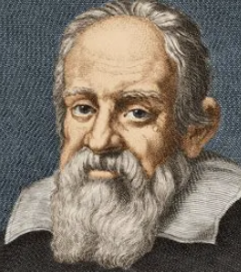
5 months 1 week ago
I cannot sufficiently admire the eminence of those men's wits, that have received and held it to be true, and with the sprightliness of their judgments offered such violence to their own senses, as that they have been able to prefer that which their reason dictated to them, to that which sensible experiments represented most manifestly to the contrary. ...I cannot find any bounds for my admiration, how that reason was able in Aristarchus and Copernicus, to commit such a rape on their senses, as in despite thereof to make herself mistress of their credulity.
▼
Source
source
Thomas Salusbury translation (1661) p. 301 as quoted by Edwin Arthur Burtt, The Metaphysical Foundations of Modern Physical Science
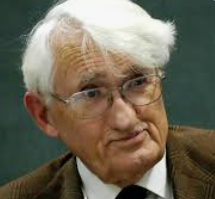
8 months 1 week ago
The task of universal pragmatics is to identify and reconstruct universal conditions of possible mutual understanding.
▼
Source
source
p. 21
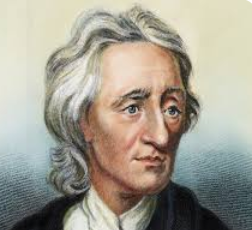
8 months 2 weeks ago
There cannot any one moral Rule be propos'd, whereof a Man may not justly demand a Reason.
▼
Source
source
Book I, Ch. 3, sec. 4
6 months 2 weeks ago
The ascription of an unconscious intentional phenomenon to a system implies that the phenomenon is in principle accessible to consciousness. A statement of the author's "connection principle."
▼
Source
source
"Consciousness, Explanatory Inversion, and Cognitive Science," The Behavioral and Brain Sciences 13, 4 (December 1990): 585-696.
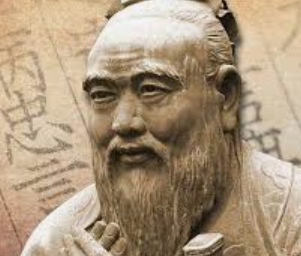
9 months 6 days ago
The superior man, even when he is not moving, has a feeling of reverence, and while he speaks not, he has the feeling of truthfulness.
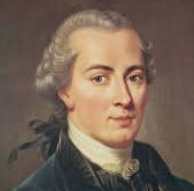
8 months 2 weeks ago
Since men in their endeavors behave, on the whole, not just instinctively, like the brutes, nor yet like rational citizens of the world according to some agreed-on plan, no history of man conceived according to a plan seems to be possible, as it might be possible to have such a history of bees or beavers. One cannot suppress a certain indignation when one sees men's actions on the great world-stage and finds, beside the wisdom that appears here and there among individuals, everything in the large woven together from folly, childish vanity, even from childish malice and destructiveness. In the end, one does not know what to think of the human race, so conceited in its gifts.
▼
Source
source
Introduction

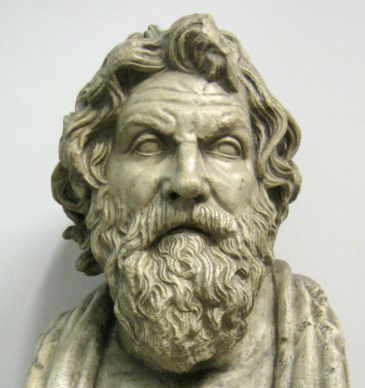
8 months 6 days ago
I have enough to eat till my hunger is stayed, to drink till my thirst is sated; to clothe myself withal; and out of doors not Callias there, with all his riches, is more safe than I from shivering; and when I find myself indoors, what warmer shirting do I need than my bare walls? what ampler greatcoat than the tiles above my head?
▼
Source
source
iv. 34
7 months 2 weeks ago
Superstition is the religion of feeble minds.
4 months 3 weeks ago
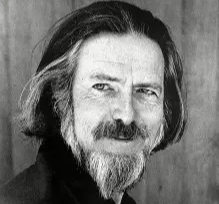
Speaking as of today, I do not consider it intellectually respectable to be a partisan in matters of religion. I see religion as I see such other basic fascinations as art and science, in which there is room for many different approaches, styles, techniques, and opinions. Thus I am not formally a committed member of any creed or sect and hold no particular religious view or doctrine as absolute. I deplore missionary zeal, and consider excessive dedication to and advocacy of any particular religion, as either the best or the only true way, an almost irreligious arrogance. Yet my work and my life are fully concerned with religion, and the mystery of being is my supreme fascination, though, as a shameless mystic, I am more interested in religion as feeling and experience than as conception and theory.
▼
Source
source
p. 61
8 months 3 weeks ago
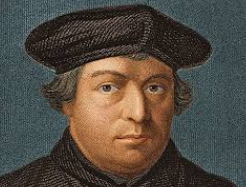
If it were art to overcome heresy with fire, the executioners would be the most learned doctors on earth.
▼
Source
source
To the Christian Nobility of the German States (1520), translated by Charles M. Jacobs, reported in rev. James Atkinson, The Christian in Society, I (Luther's Works, ed. James Atkinson, vol. 44), p. 207
8 months 2 weeks ago
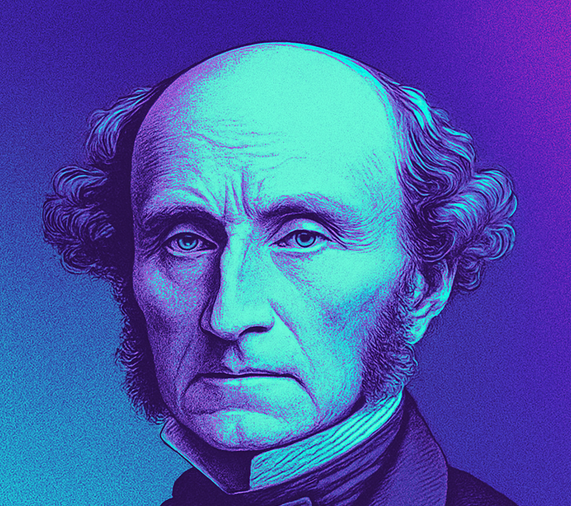
The tendency has always been strong to believe that whatever received a name must be an entity or thing, having an independent existence of its own; and if no real entity answering to the name could be found, men did not for that reason suppose that none existed, but imagined that it was something peculiarly abstruse and mysterious, too high to be an object of sense. The meaning of all general, and especially of all abstract terms, became in this way enveloped in a mystical base...
▼
Source
source
Note to Analysis of the Phenomena of the Human Mind (1829) by James Mill, edited with additional notes by John Stuart Mill, 1869
8 months 2 weeks ago
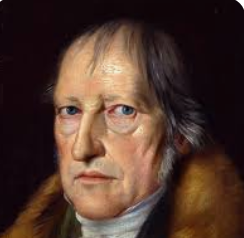
Every philosophy is complete in itself and, like a genuine work of art, contains the totality. Just as the works of Apelles and Sophocles, if Raphael and Shakespeare had known them, should not have appeared to them as mere preliminary exercises for their own work, but rather as a kindred force of the spirit, so, too reason cannot find in its own earlier forms mere useful preliminary exercises for itself.
▼
Source
source
Difference of the Fichtean and Schellingean System of Philosophy, cited in W. Kaufmann, Hegel (1966), p. 49

1 year 2 weeks ago
One should oppose the fascination with Hitler according to which Hitler was, of course, a bad guy, responsible for the death of millions — but he definitely had balls, he pursued with iron will what he wanted. … This point is not only ethically repulsive, but simply wrong: no, Hitler did not ‘have the balls’ to really change things; he did not really act, all his actions were fundamentally reactions, i.e., he acted so that nothing would really change, he stages a big spectacle of Revolution so that the capitalist order could survive.”
In this precise sense of violence, Gandhi was more violent than Hitler: Gandhi’s movement effectively endeavored to interrupt the basic functioning of the British colonial state.

8 months 3 weeks ago
Faith looks to the word and the promise; that is, to the truth. But hope looks to that which the word has promised, to the gift.
▼
Source
source
p. 221
8 months 4 days ago
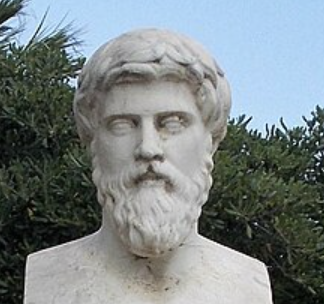
Phocion compared the speeches of Leosthenes to cypress-trees. "They are tall," said he, "and comely, but bear no fruit."
▼
Source
source
56 Phocion
8 months 2 weeks ago
Let a man take time enough for the most trivial deed, though it be but the paring of his nails. The buds swell imperceptibly, without hurry or confusion; as if the short spring days were an eternity.
▼
Source
source
Pearls of Thought (1881) p. 175
7 months 2 days ago
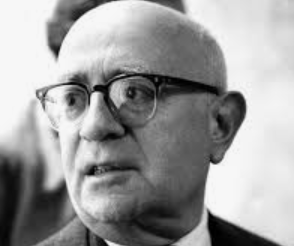
The jargon makes it seem that ... the pure attention of the expression to the subject matter would be a fall into sin.
▼
Source
source
p. 9
9 months 6 days ago
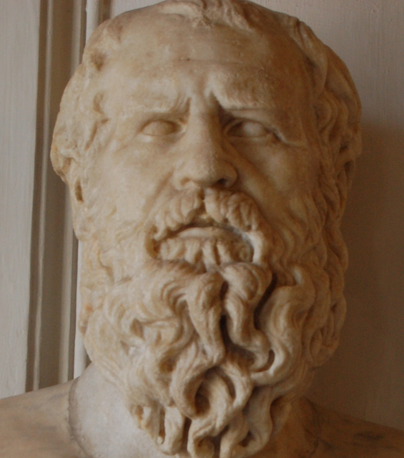
Men are at variance with the one thing with which they are in the most unbroken communion, the reason that administers the whole universe.
6 months 2 weeks ago
Applied knowledge in the Renaissance had to take the form of translation of the auditory into visual terms, of the plastic into retinal form.
▼
Source
source
(p. 180)
8 months 2 weeks ago
Criticism alone can sever the root of materialism, fatalism, atheism, free-thinking, fanaticism, and superstition, which can be injurious universally; as well as of idealism and skepticism, which are dangerous chiefly to the Schools, and hardly allow of being handed on to the public.
▼
Source
source
B xxxiv

6 months 4 weeks ago
Regardless of the present trend toward the strong-armed man, the totalitarian states, or the dictatorship from the left, my ideas have remained unshaken. In fact, they have been strengthened by my personal experience and the world events through the years. I see no reason to change, as I do not believe that the tendency of dictatorship can ever successfully solve our social problems. As in the past, so I do now insist that freedom is the soul of progress and essential to every phase of life. I consider this as near a law of social evolution as anything we can postulate. My faith is in the individual and in the capacity of free individuals for united endeavor.
5 months 1 week ago
For what gives my work its peculiar quality, and what is most remarkable in the present age, is this. Fortune has guided almost all the affairs of the world in one direction and has forced them to incline towards one and the same end; a historian should likewise bring before his readers under one synoptical view the operations by which she has accomplished her general purpose.
7 months 3 weeks ago
There are three successive states of morality answering to the three principal stages of human life; the personal, the domestic, and the social stage.
▼
Source
source
p. 104
4 months 3 weeks ago
We do not "come into" this world; we come out of it, as leaves from a tree. As the ocean "waves," the universe "peoples." Every individual is an expression of the whole realm of nature, a unique action of the total universe. This fact is rarely, if ever, experienced by most individuals. Even those who know it to be true in theory do not sense or feel it, but continue to be aware of themselves as isolated "egos" inside bags of skin.
▼
Source
source
Inside Information
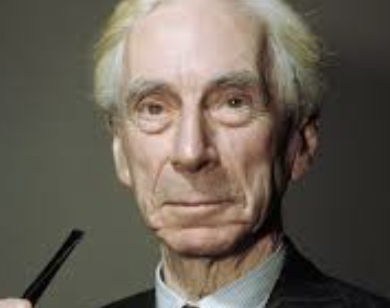
8 months 2 weeks ago
Without effort and change, human life cannot remain good. It is not a finished Utopia that we ought to desire, but a world where imagination and hope are alive and active.
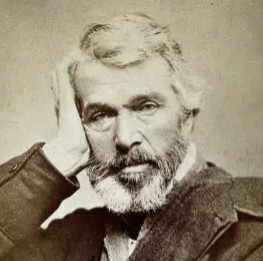
5 months 1 week ago
Wonder, indeed, is, on all hands, dying out: it is the sign of uncultivation to wonder.
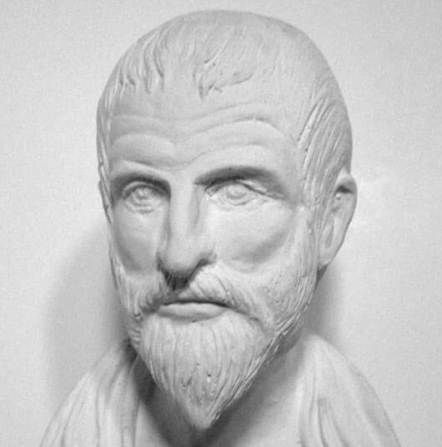
8 months ago
Not much younger than these (sc. Hermotimus of Colophon and Philippus of Mende) is Euclid, who put together the Elements, collecting many of Eudoxus' theorems, perfecting many of Theaetetus', and also bringing to irrefragable demonstration the things which were only somewhat loosely proved by his predecessors. This man lived in the time of the first Ptolemy. For Archimedes, who came immediately after the first (Ptolemy), makes mention of Euclid: and, further, they say that Ptolemy once asked him if there was in geometry any shorter way than that of the elements, and he answered that there was no royal road to geometry. He is then younger than pupils of Plato but older than Eratosthenes and Archimedes; for the latter were contemporary with one another, as Eratosthenes somewhere says.
▼
Source
source
As quoted by Sir Thomas Little Heath, The Thirteen Books of Euclid's Elements (1908) Vol.1 Introduction and Books I, II p.1, citing Proclus ed. Friedlein, p. 68, 6-20.

5 months 3 weeks ago
I may not be as unambiguously hostile to capitalism as many people are, but what I don't like about it is the commodification of personal experiences, it turns everyone into actors.
▼
Source
source
Quoted in Will Self, "John Gray: Forget everything you know," The Independent
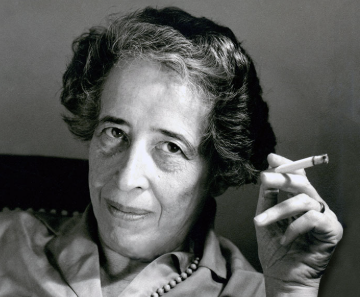
8 months 2 weeks ago
No one has the right to obey.
▼
Source
source
in a radio interview with Joachim Fest (9 November 1964)
4 months 2 weeks ago
I strive to discover how to signal my companions before I die, how to give them a hand, how to spell out for them in time one complete word at least, to tell them what I think this procession is, and toward what we go. And how necessary it is for all of us together to put our steps and hearts in harmony. To say in time a simple word to my companions, a password, like conspirators. Yes, the purpose of Earth is not life, it is not man. Earth has existed without these, and it will live on without them. They are but the ephemeral sparks of its violent whirling. Let us unite, let us hold each other tightly, let us merge our hearts, let us create - so long as the warmth of this earth endures, so long as no earthquakes, cataclysms, icebergs or comets come to destroy us - let us create for Earth a brain and a heart, let us give a human meaning to the superhuman struggle. This anguish is our second duty.
CivilSimian.com created by AxiomaticPanic, CivilSimian, Kalokagathia