

6 months 1 week ago
The river of my title is a river of DNA, and it flows through time, not space. It is a river of information, not a river of bones and tissues.
8 months 2 weeks ago
Scientific Method... is even less existent than some other non-existent subjects.
8 months 2 weeks ago
Nature offers nothing that can be called this man's rather than another's ; but, under nature, everything belongs to all - that is, they have authority to claim it for themselves. But, under dominion, where it is by common law determined what belongs to this man, and what to that, he is called just who has a constant will to render to every man his own, but he, unjust who strives, on the contrary, to make his own that which belongs to another.
▼
Source
source
Ch. 2, Of Natural Right
5 months 1 day ago
Do you seek Alcides' equal? None is, except himself.
▼
Source
source
line 84; (Juno)
8 months 3 weeks ago
Nay, number (itself) in armies, importeth not much, where the people is of weak courage; for (as Virgil saith) it never troubles the wolf how many the sheep be.
▼
Source
source
Essays or Counsels Civil and Moral (1597), XXIX: "Of the True Greatness of Kingdoms and Estates."
6 months 2 weeks ago
Whatever it may be, animals have always had, until our era, a divine or sacrificial nobility that all mythologies recount. Even murder by hunting is still a symbolic relation, as opposed to an experimental dissection. Even domestication is still a symbolic relation, as opposed to industrial breeding. One only has to look at the status of animals in peasant society. And the status of domestication, which presupposes land, a clan, a system of parentage of which the animals are a part, must not be confused with the status of the domestic pet-the only type of animals that are left to us outside reserves and breeding stations-dogs, cats, birds, hamsters, all packed together in the affection of their master. The trajectory animals have followed, from divine sacrifice to dog cemeteries with atmospheric music, from sacred defiance to ecological sentimentality, speaks loudly enough of the vulgarization of the status of man himself.
▼
Source
source
"The Animals: Territory and Metamorphoses," p. 134
6 months 2 weeks ago
The young are really the heirs to a generation of incompetence.
8 months 6 days ago
As we speak cruel time is fleeing. Seize the day, believing as little as possible in the morrow.
▼
Source
source
Book I, ode xi, line 7
8 months 3 weeks ago
Let us give Nature a chance; she knows her business better than we do.
▼
Source
source
Ch. 13
6 months 2 weeks ago
Pornography and obscenity...work by specialism and fragmentation. They deal with a figure without a ground -- situations in which the human factor is suppressed in favor of sensations and kicks.
▼
Source
source
Letter to Clare Westcott, November 26 1975. Letters of Marshall McLuhan, p. 514
8 months 2 weeks ago
Nothing is yet in its true form.
5 months 1 day ago
It is disgraceful, instead of proceeding ahead, to be carried along, and then suddenly, amid the whirlpool of events, to ask in a dazed way: "How did I get into this condition?"
4 months 3 weeks ago
Isolated material particles are abstractions, their properties being definable and observable only through their interaction with other systems.
▼
Source
source
"Atomic Physics and the Description of Nature"
8 months 2 weeks ago
I must before I die, find some way to say the essential thing that is in me, that I have never said yet - a thing that is not love or hate or pity or scorn, but the very breath of life, fierce and coming from far away, bringing into human life the vastness and fearful passionless force of non-human things...
▼
Source
source
p. 261
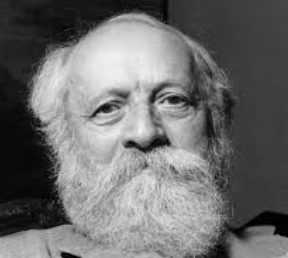
7 months 1 week ago
You do not attain to knowledge by remaining on the shore and watching the foaming waves, you must make the venture and cast yourself in, you must swim, alert and with all your force, even if a moment comes when you think you are losing consciousness; in this way, and in no other, do you reach anthropological insight.
▼
Source
source
p. 148
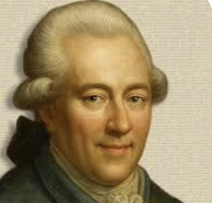
6 months 3 weeks ago
When a book and a head collide and a hollow sound is heard, must it always have come from the book?
▼
Source
source
D 66
6 months 3 weeks ago
Virtue by premeditation isn't worth much.
▼
Source
source
H 13
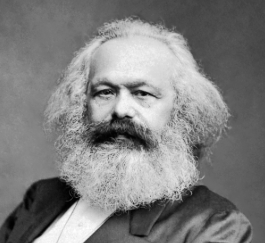
8 months 2 weeks ago
I pre-suppose, of course, a reader who is willing to learn something new and therefore to think for himself.
▼
Source
source
Author's prefaces to the First Edition.
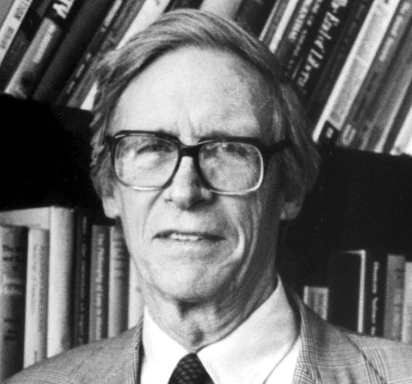
8 months 2 weeks ago
I am particularly grateful to Nozick for his unfailing help and encouragement during the last stages.
▼
Source
source
Preface, pg. xii


7 months 2 weeks ago
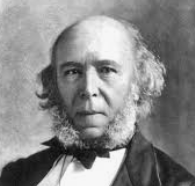
Should the believers in special creations consider it unfair thus to call upon them to describe how special creations take place, I reply that this is far less than they demand from the supporters of the Development Hypothesis. They are merely asked to point out a conceivable mode. On the other hand, they ask, not simply for a conceivable mode, but for the actual mode.
8 months 2 weeks ago
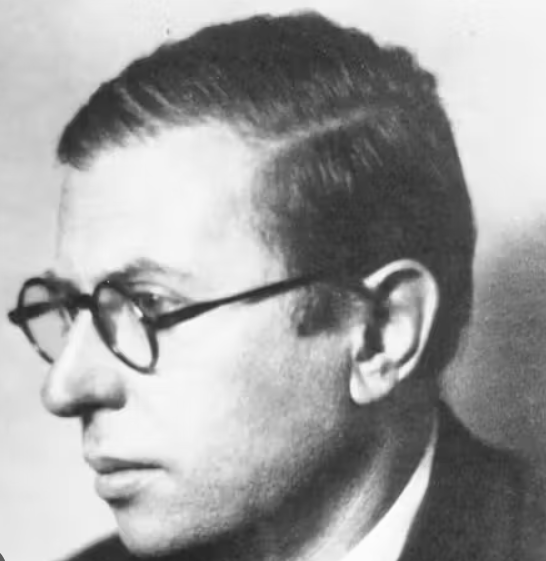
Politics is a science. You can demonstrate that you are right and that others are wrong.
▼
Source
source
Act 5, sc. 2
6 months 2 weeks ago
Chinese script is not visual but iconic and tactile. It does not disturb the tribal bonds.
▼
Source
source
(p. 72)
5 months 1 day ago
Fire tries gold, misfortune tries brave men.
▼
Source
source
De Providentia (On Providence), 5.9, translated by Aubrey Stewart Alternate translation: Fire is the test of gold; adversity, of strong men. (translator unknown).

7 months 1 week ago
Obviously God was a solution, and obviously none so satisfactory that will ever be found again.
7 months 4 weeks ago
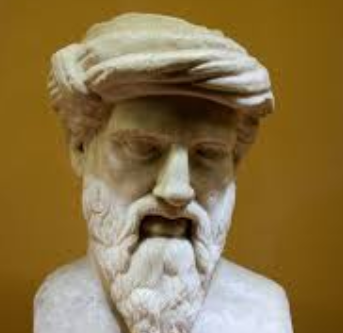
True and perfect Friendship is, to make one heart and mind of many hearts and bodies.
8 months 2 weeks ago
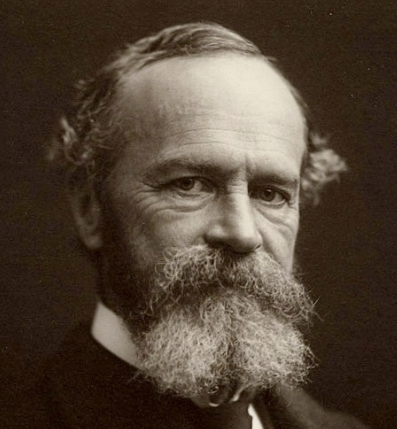
The normal process of life contains moments as bad as any of those which insane melancholy is filled with, moments in which radical evil gets its innings and takes its solid turn. The lunatic's visions of horror are all drawn from the material of daily fact. Our civilization is founded on the shambles, and every individual existence goes out in a lonely spasm of helpless agony. If you protest, my friend, wait till you arrive there yourself! ... Here on our very hearths and in our gardens the infernal cat plays with the panting mouse, or holds the hot bird fluttering in her jaws. Crocodiles and rattlesnakes and pythons are at this moment vessels of life as real as we are; their loathsome existence fills every minute of every day that drags its length along; and whenever they or other wild beasts clutch their living prey, the deadly horror which an agitated melancholiac feels is the literally right reaction on the situation.
▼
Source
source
Lectures VI and VII, "The Sick Soul"
6 months 5 days ago
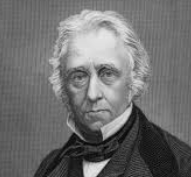
The gallery in which the reporters sit has become a fourth estate of the realm.
▼
Source
source
Hallam', The Edinburgh Review (September 1828), quoted in T. B. Macaulay, Critical and Historical Essays Contributed to The Edinburgh Review, Vol. I (1843), p. 210
7 months 1 week ago
How is it possible that the poorer classes can remain healthy and have a reasonable expectation of life under such conditions? What can one expect but that they should suffer from continual outbreaks of epidemics and an excessively low expectation of life? The physical condition of the workers shows a progressive deterioration.
9 months 2 weeks ago
In memory yet green, in joy still felt, The scenes of life rise sharply into view. We triumph; Life's disasters are undealt, And while all else is old, the world is new.
8 months 2 weeks ago
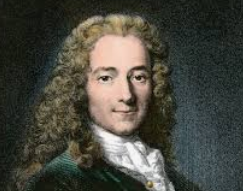
Go into the London Stock Exchange - a more respectable place than many a court - and you will see representatives from all nations gathered together for the utility of men. Here Jew, Mohammedan and Christian deal with each other as though they were all of the same faith, and only apply the word infidel to people who go bankrupt. Here the Presbyterian trusts the Anabaptist and the Anglican accepts a promise from the Quaker.
▼
Source
source
Letters on England, letter 6, "On the Presbyterians" as quoted in Trust and Tolerance, Richard H. Dees, Routledge, London and New York, (2004) p. 92, published first in English in 1733.

5 months 3 weeks ago
Darwinist thinkers such as Richard Dawkins and Daniel Dennett are militant opponents of Christianity. Yet their atheism and humanism are versions of Christian concepts. As a defender of Darwinism, Dawkins is committed to the view that humans are like other animal species in being 'gene machines' ruled by the laws of natural selection. He asserts nevertheless that humans, uniquely, can defy these natural laws: 'We, alone on earth, can rebel against the tyranny of the selfish replicators.' In affirming human uniqueness in this way, Dawkins relies on a Christian world-view.
▼
Source
source
Post-Apocalypse: After Secularism (pp. 265-6)
8 months 2 weeks ago
Men will always be mad, and those who think they can cure them are the maddest of all.
▼
Source
source
Letter to Louise Dorothea of Meiningen, duchess of Saxe-Gotha Madame, 30 January 1762
7 months 1 week ago
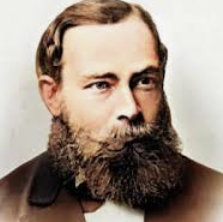
If the task of philosophy is to break the domination of words over the human mind, then my concept notation, being developed for these purposes, can be a useful instrument for philosophers. I believe the cause of logic has been advanced already by the invention of this concept notation.
▼
Source
source
Begriffsschrift (1879) Preface to the Begriffsschrift
6 months 2 weeks ago
Forgetting extermination is part of extermination, because it is also the extermination of memory, of history, of the social, etc. This forgetting is as essential as the event in any case unlocatable by us, inaccessible to us in its truth. This forgetting is still too dangerous, it must be effaced by an artificial memory (today, everywhere, it is artificial memories that effect the memory of man, that efface man in his own memory). This artificial memory will be the restaging of extermination-but late, much too late for it to be able to make real waves and profoundly disturb something, and especially, especially through medium that is itself cold, radiating forgetfulness, deterrence, and extermination in a still more systematic way, if that is possible, than the camps themselves.
▼
Source
source
"Holocaust," p. 49
8 months 3 weeks ago
The first law that ever God gave to man was a law of pure obedience; it was a commandment naked and simple, wherein man had nothing to inquire after, nor to dispute; forasmuch as to obey is the proper office of a rational soul, acknowledging a heavenly superior and benefactor.
▼
Source
source
Ch. 12, tr. Cotton, 1685
6 months 1 week ago
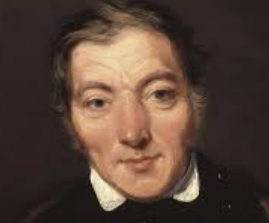
The advantage of pure, and the disadvantage of impure air are experienced each time we breathe, and all who understand the causes of disease know that an impure atmosphere is most unfavourable to the enjoyment of health, and an efficient cause to shorten human existence within the natural life of man. It is therefore most desirable that decisive measures should be devised and generally adopted to ensure to all a pure atmosphere, in which to live during their lives.
▼
Source
source
3rd Part
7 months 2 weeks ago
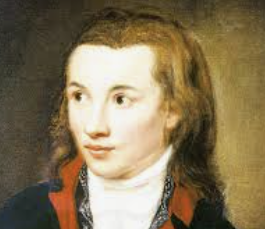
No one, of a surety, wanders farther from the mark than he who fancies to himself that he already understands this marvellous Kingdom, and can, in few words, fathom its constitution, and everywhere find the right path. To no one, who has broken off, and made himself an Island, will insight rise of itself, nor even without toilsome effort. Only to children, or childlike men, who know not what they do, can this happen. Long, unwearied intercourse, free and wise Contemplation, attention to faint tokens and indications; an inward poet-life, practised senses, a simple and devout spirit: these are the essential requisites of a true Friend of Nature; without these no one can attain his wish.
5 months 1 week ago
The regeneration of the inferior or bastard races by the superior ones is consistent with God's plans for humanity. The man of the people, in our countries, is always a fallen aristocrat; his hands are made to handle the sword rather than the laborer's tools. He prefers warring to working, that is, he returns to his original calling.
▼
Source
source
93, as translated by Asselin Charles, in "Colonial Discourse Since Christopher Columbus," Journal of Black Studies, Vol. 26, No. 2 (November 1995), 147
5 months 3 weeks ago
Rather than trying to escape violence, human beings more often become habituated to it. History abounds with long conflicts - the Thirty Years' War in early seventeenth-century Europe, the Time of Troubles in Russia, twentieth-century guerrilla conflicts - in which continuous slaughter has been accepted as normal. Famously adaptable, the human animal quickly learns to live with violence and soon comes to find satisfaction in it.
▼
Source
source
In the Puppet Theatre: Roof Gardens, Feathers and Human Sacrifice (p. 80)
7 months 1 week ago
No one is guiltless...But no one is beyond the pale of human existence, provided he pays for his guilt.
8 months 1 week ago
In France at least, the history of science and thought gives pride of place sciences, sciences of the necessary, all close to philosophy: one can observe in their history the almost uninterrupted emergence of truth and pure reason. The other disciplines, however - those, for example, that concern living beings, languages, or economic facts - are considered too tinged with empirical thought, too exposed to the vagaries of chance or imagery to age old traditions and external events, for it to be supposed that their history could be anything other irregular. At most, they are expected to provide evidence of a state of mind, an intellectual fashion, a mixture of archaism and bold conjecture, of intuition and blindness. But what if empirical knowledge, at a given time and in a given culture, did possess a well defined regularity.
▼
Source
source
Foreword to the English edition
8 months 3 weeks ago
Religion is not 'doctrinal knowledge,' but wisdom born of personal experience.
▼
Source
source
Holborn, Hajo; A HISTORY OF MODERN GERMANY: The Reformation; 1959/1982 Princeton university Press
8 months 2 weeks ago
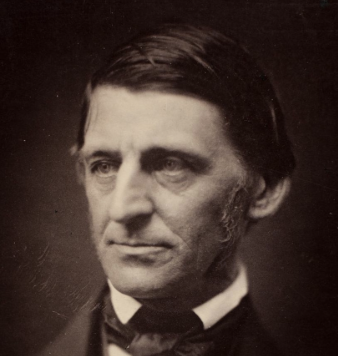
I regard it as the irresistible effect of the Copernican astronomy to have made the theological scheme of redemption absolutely incredible.
▼
Source
source
Quoted in Robert D. Richardson, Jr., Emerson, the Mind On Fire (Univ. of Calif Press 1995), p. 124
8 months 2 weeks ago
The merits of democracy are negative: it does not insure good government, but it prevents certain evils.
▼
Source
source
Ch. 18: The Taming of Power PT311 books.google
4 months 3 weeks ago
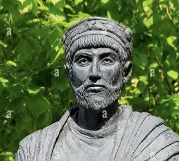
No wild beasts are such enemies to mankind as are most of the Christians in their deadly hatred of one another.
▼
Source
source
Reported in Ammianus, Res gestae, bk. 22, ch. 5, sec. 4
7 months 1 week ago
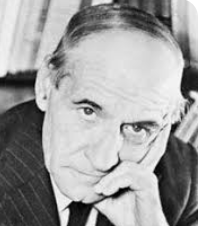
This grave dissociation of past and present is the generic fact of our time and the cause of the suspicion, more or less vague, which gives rise to the confusion characteristic of our present-day existence. We feel that we actual men have suddenly been left alone on the earth; that the dead did not die in appearance only but effectively; that they can no longer help us. Any remains of the traditional spirit have evaporated. Models, norms, standards are no use to us. We have to solve our problems without any active collaboration of the past, in full actuality, be they problems of art, science, or politics. The European stands alone, without any living ghosts by his side; like Peter Schlehmil he has lost his shadow. This is what always happens when midday comes.
▼
Source
source
"The Dehumanisation of Art"; Ortega y Gasset later used this passage in The Revolt of the Masses (1929), quoting it in Ch. III: The Height Of The Times
4 months 3 weeks ago
If the immediate creator of the universe be he who is proclaimed by Moses, then we hold nobler beliefs concerning him, inasmuch as we consider him to be the master of all things in general, but that there are besides national gods who are subordinate to him and are like viceroys of a king, each administering separately his own province; and, moreover, we do not make him the sectional rival of the gods whose station is subordinate to his. But if Moses first pays honour to a sectional god, and then makes the lordship of the whole universe contrast with his power, then it is better to believe as we do, and to recognise the God of the All, though not without apprehending also the God of Moses; this is better, I say, than to honour one who has been assigned the lordship over a very small portion, instead of the creator of all things.
5 months 3 weeks ago
If there is anything unique about the human animal it is that it has the ability to grow knowledge at an accelerating rate while being chronically incapable of learning from experience. Science and technology are cumulative, whereas ethics and politics deal with recurring dilemmas. Whatever they are called, torture and slavery are universal evils; but these evils cannot be consigned to the past like redundant theories in science. They return under different names: torture as enhanced interrogation techniques, slavery as human trafficking. Any reduction in universal evils is an advance in civilization. But, unlike scientific knowledge, the restraints of civilized life cannot be stored on a computer disc. They are habits of behaviour, which once broken are hard to mend. Civilization is natural for humans, but so is barbarism.
▼
Source
source
An Old Chaos: Humanism and Flying Saucers (p. 75)
CivilSimian.com created by AxiomaticPanic, CivilSimian, Kalokagathia