

8 months 2 weeks ago
I must before I die, find some way to say the essential thing that is in me, that I have never said yet - a thing that is not love or hate or pity or scorn, but the very breath of life, fierce and coming from far away, bringing into human life the vastness and fearful passionless force of non-human things...
▼
Source
source
p. 261
7 months 1 week ago
What I know wreaks havoc upon what I want.
8 months 2 weeks ago
After silence that which comes nearest to expressing the inexpressible is music.
▼
Source
source
"The Rest is Silence"
7 months 2 weeks ago
We are always on stage, even when we are stabbed in earnest at the end.
▼
Source
source
Act II.
8 months 2 weeks ago
We are speaking on this occasion, not as members of this or that nation, continent, or creed, but as human beings, members of the species Man, whose continued existence is in doubt.
7 months 3 days ago
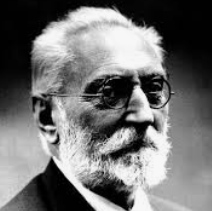
If consciousness is, as some inhuman thinker has said, nothing more than a flash of light between two eternities of darkness, then there is nothing more execrable than existence.
7 months 3 weeks ago
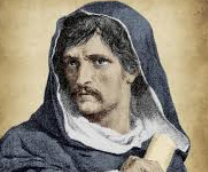
Nature is none other than God in things... Animals and plants are living effects of Nature; Whence all of God is in all things... Think thus, of the sun in the crocus, in the narcissus, in the heliotrope, in the rooster, in the lion.
▼
Source
source
As quoted in Elements of Pantheism (2004) by Paul A. Harrison
6 months 2 weeks ago
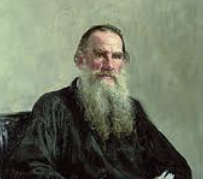
If you want to be happy, be.
▼
Source
source
Attributed in Wisdom for the Soul : Five Millennia of Prescriptions for Spiritual Healing (2006) by Larry Chang, p. 352
6 months 1 week ago
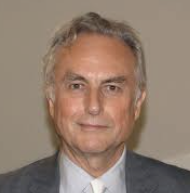
When the ricochets of atomic billiards chance to put together an object that has a certain, seemingly innocent property, something momentous happens in the universe. That property is an ability to self-replicate; that is, the object is able to use the surrounding materials to make exact copies of itself, including replicas of such minor flaws in copying as may occasionally arise. What will follow from this singular occurrence, anywhere in the universe, is Darwinian selection and hence the baroque extravaganza that, on this planet, we call life. Never were so many facts explained by so few assumptions. Not only does the Darwinian theory command superabundant power to explain. Its economy in doing so has a sinewy elegance, a poetic beauty that outclasses even the most haunting of the world's origin myths.
▼
Source
source
Preface
8 months 2 weeks ago
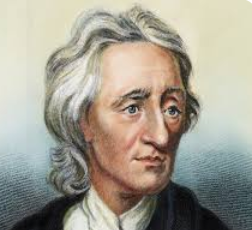
The three great things that govern mankind are reason, passion and superstition. The first governs a few, the two last share the bulk of mankind and possess them in their turns. But superstition most powerfully produces the greatest mischief.
▼
Source
source
Journal entry (16 May 1681), quoted in Maurice Cranston, John Locke: A Biography (1957; 1985), p. 200
8 months 2 weeks ago
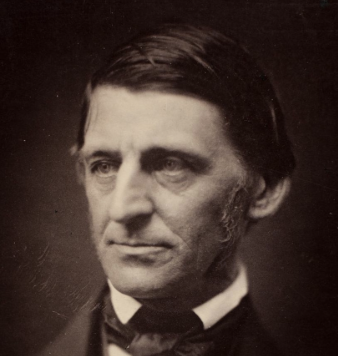
O tenderly the haughty day Fills his blue urn with fire; One morn is in the mighty heaven, And one in our desire.
▼
Source
source
Ode, st. 1
7 months 1 week ago
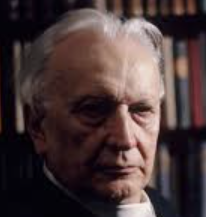
Reason is like an open secret that can become known to anyone at any time; it is the quiet space into which everyone can enter through his own thought.
▼
Source
source
As quoted in Philosophy for a Time of Crisis : An Interpretation, with Key Writings by Fifteen Great Modern Thinkers (1959) by Adrienne Koch, Ch. 18, "Karl Jaspers : A New Humanism"
5 months 1 week ago
These examples point to the third and most fundamental aspect of the incommensurability of competing paradigms. In a sense that I am unable to explicate further, the proponents of competing paradigms practice their trades in different worlds. One contains constrained bodies that fall slowly, the other pendulums that repeat their motions again and again. In one, solutions are compounds, in the other mixtures. One is embedded in a flat, the other in a curved, matrix of space. Practicing in different worlds, the two groups of scientists see different things when they look from the same point in the same direction. Again, that is not to say that they can see anything they please. Both are looking at the world, and what they look at has not changed. But in some areas they see different things, and they see them in different relations one to the other. That is why a law that cannot even be demonstrated to one group of scientists may occasionally seem intuitively obvious to another. p. 149

4 months 2 weeks ago
We cannot hope to be secure when our government has declared, by its readiness "to act alone," its willingness to be everybody's enemy.
4 months 2 weeks ago
Pain is not the only essence of our God, nor is hope in a future life or a life on this earth, neither joy nor victory. Every religion that holds up to worship one of these primordial aspects of God narrows our hearts and our minds. The essence of our God is STRUGGLE. Pain, joy, and hope unfold and labor within this struggle, world without end.
9 months 4 days ago
since our leading men think themselves in a seventh heaven, if there are bearded mullets in their fish-ponds that will come to hand for food, and neglect everything else, do not you think that I am doing no mean service if I secure that those who have the power, should not have the will, to do any harm?
▼
Source
source
Letters to Atticus, Book II, 1.
8 months 3 weeks ago
But by far the greatest hindrance and aberration of the human understanding proceeds from the dullness, incompetency, and deceptions of the senses; in that things which strike the sense outweigh things which do not immediately strike it, though they be more important. Hence it is that speculation commonly ceases where sight ceases; insomuch that of things invisible there is little or no observation.
▼
Source
source
Aphorism 50
7 months 3 days ago
When I contemplate the green serenity of the fields or look into the depths of clear eyes through which shines a fellow-soul, my consciousness dilates, I feel the diastole of the soul and am bathed in the flood of the life that flows about me, and I believe in my future; but instantly the voice of mystery whispers to me, "Thou shalt cease to be!" the angel of Death touches me with his wing, and the systole of the soul floods the depth of my spirit with the blood of divinity.
8 months 2 weeks ago
Men are by nature merely indifferent to one another; but women are by nature enemies.
▼
Source
source
Vol. 2 "On Women" as translated in Essays and Aphorisms (1970), as translated by R. J. Hollingdale
8 months 6 days ago
We know nothing accurately in reality, but only as it changes according to the bodily condition, and the constitution of those things that flow upon the body and impinge upon it.
▼
Source
source
Freeman (1948), p. 142

9 months 2 days ago
Singing is of a lover.
▼
Source
source
Variant translation: To sing is characteristic of the lover. 336
4 months 2 weeks ago
Look upon men and pity them. Look at yourself amid all men and pity yourself. In the obscure dusk of life we touch and fumble at each other, we ask questions, we listen, we shout for help.

7 months 3 weeks ago
The best laws cannot make a constitution work in spite of morals; morals can turn the worst laws to advantage. That is a commonplace truth, but one to which my studies are always bringing me back. It is the central point in my conception. I see it at the end of all my reflections.
▼
Source
source
De la supériorité des mœurs sur les lois (1831) Oeuvres complètes, vol. VIII, p. 286.
8 months 2 weeks ago
Nature has placed mankind under the governance of two sovereign masters, pain and pleasure. It is for them alone to point out what we ought to do, as well as to determine what we shall do. On the one hand the standard of right and wrong, on the other the chain of causes and effects, are fastened to their throne. They govern us in all we do, in all we say, in all we think: every effort we can make to throw off our subjection, will serve but to demonstrate and confirm it. In words a man may pretend to abjure their empire: but in reality he will remain subject to it all the while. The principle of utility recognizes this subjection, and assumes it for the foundation of that system, the object of which is to rear the fabric of felicity by the hands of reason and of law. Systems which attempt to question it, deal in sounds instead of sense, in caprice instead of reason, in darkness instead of light.
▼
Source
source
Ch. 1: Of the Principle of Utility
8 months 2 weeks ago
The beginning of religion, more precisely its content, is the concept of religion itself, that God is the absolute truth, the truth of all things, and subjectively that religion alone is the absolutely true knowledge.
9 months 2 days ago
He who created us without our help will not save us without our consent.
▼
Source
source
St. Augustine, Sermo 169, 11, 13: PL 38, 923 as quoted in Fr. Mitch Pacwa, S. J.. Saved: A Bible Study Guide for Catholics (p. 15). Our Sunday Visitor. Kindle Edition.
6 months 1 week ago
It would be deeply depressing if the only way children could get moral values was from religion. Either from scripture, and God knows we don't want them to get it from scripture, I mean, just look at scripture. Or, from being afraid of God, being intimidated by God. Anybody who is good for only those two reasons is not really being good at all. Why not teach children things like the Golden Rule, do as you would be done by, how would you like it if other children did that to you, so why do you do it to them... I think it's depressing that anybody should suggest that you actually need God in order to be moral. I would hope that our morals come from a better source than that, and therefore they are genuinely moral rather than based on outmoded scripture, or based on fear.
▼
Source
source
BBC,
8 months 3 weeks ago
So in all human affairs one notices, if one examines them closely, that it is impossible to remove one inconvenience without another emerging.
▼
Source
source
Book 1, Ch. 6 (as translated by LJ Walker and B Crick)

8 months 3 weeks ago
And to bring in a new word by the head and shoulders, they leave out the old one.
▼
Source
source
Book III, Ch. 5. Upon some Verses of Virgil
9 months 1 week ago
When the imagination sleeps, words are emptied of their meaning: a deaf population absent-mindedly registers the condemnation of a man. ... there is no other solution but to speak out and show the obscenity hidden under the verbal cloak.
7 months 2 weeks ago
Nor is prescription of government formed upon blind unmeaning prejudices-for man is a most unwise, and a most wise, being. The individual is foolish. The multitude, for the moment, is foolish, when they act without deliberation; but the species is wise, and when time is given to it, as a species it almost always acts right.
▼
Source
source
Speech in the House of Commons against William Pitt's motion for parliamentary reform (7 May 1782)
8 months 3 weeks ago
Whatever can be done another day can be done today.
▼
Source
source
Ch. 20. Of the Force of Imagination (tr. Donald M. Frame)
7 months 3 weeks ago
Are we not madder than those first inhabitants of the plain of Sennar? We know that the distance separating the earth from the sky is infinite, and yet we do not stop building our tower.
▼
Source
source
No. 4
7 months 1 week ago
Artist and perceiver alike begin with what may be called a total seizure, an inclusive qualitative whole not yet articulated, not distinguished into members.
▼
Source
source
p. 199
7 months 3 days ago
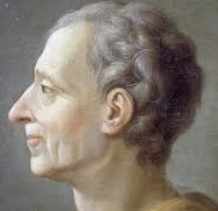
It is a paralogism to say, that the good of the individual should give way to that of the public; this can never take place, except when the government of the community, or, in other words, the liberty of the subject is concerned; this does not affect such cases as relate to private property, because the public good consists in everyone's having his property, which was given him by the civil laws, invariably preserved.
▼
Source
source
Book XXVI, Chapter 15.
5 months 6 days ago
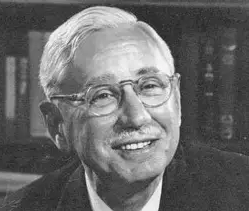
Childhood may be defined as the age of play; therefore some children are never young, and some adults are never old.
▼
Source
source
Ch. 1 : Our life begins
8 months 2 weeks ago
If the Russians still adhered to the Greek Orthodox religion, if they had instituted parliamentary government, and if they had a completely free press which daily vituperated us, then - provided they still had armed forces as powerful as they have now - we should still hate them if they gave us ground for thinking them hostile.

5 months 3 weeks ago
Instead of enabling humans to improve their lot, science degrades the natural environment in which humans must live. Instead of enabling death to be overcome, it produces ever more powerful technologies of mass destruction. None of this is the fault of science; what it shows is that science is not sorcery. The growth of knowledge enlarges what humans can do. It cannot reprieve them from being what they are.
▼
Source
source
Sweet Morality (p. 235)
9 months 2 weeks ago
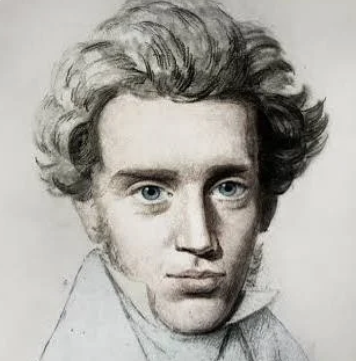
Happy is the one in whom there is true sorrow over his sin, so that the extreme unimportance to him of everything else is only the negative expression of the confirmation that one thing is unconditionally important to him, so that the unconditional unimportance to him of everything else is a deadly sickness that still is very far from being a sickness unto death but is precisely unto life, because the life is in this, that one thing is unconditionally important to him: to find forgiveness.
8 months 1 week ago
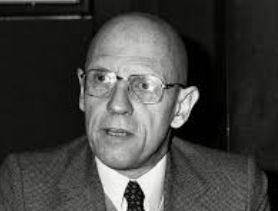
Do not ask who I am and do not ask me to remain the same: leave it to our bureaucrats and our police to see that our papers are in order. At least spare us their morality when we write.
▼
Source
source
The Archaeology of Knowledge (1972), tr. A. M. Sheridan Smith (New York: Pantheon)
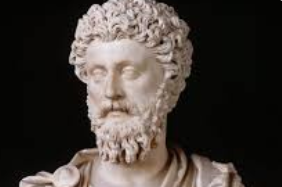
4 months 1 week ago
Disturbance comes only from within-from our own perceptions.
▼
Source
source
(Hays translation) IV, 4
7 months 1 week ago
Similarly a work of art vanishes from sight for a beholder who seeks in it nothing but the moving fate of John and Mary or Tristan and Isolde and adjusts his vision to this. Tristan's sorrows are sorrows and can evoke compassion only in so far as they are taken as real. But an object of art is artistic only in so far as it is not real. In order to enjoy Titian's portrait of Charles the Fifth on horseback we must forget that this is Charles the Fifth in person and see instead a portrait - that is, an image, a fiction. The portrayed person and his portrait are two entirely different things; we are interested in either one or the other. In the first case we "live" with Charles the Fifth, in the second we look at an object of art.
▼
Source
source
"The Dehumanization of Art"
4 months 3 weeks ago
For a country to have a great writer ... is like having another government. That's why no régime has ever loved great writers, only minor ones.
▼
Source
source
Innokenty, in Ch. 57
6 months 1 week ago
I am extremely pleased by Daniel Fincke's article, which says exactly what I SHOULD have said and, to my regret, didn't make sufficiently clear in my Reason Rally speech. The best way to summarise it would be to modify the quotation from Johann Hari. Johann said, "I respect you too much to respect your ridiculous beliefs". From now on, my version will be, "I respect you too much to accept that you really believe anything so ridiculous as you claim. Please either defend those beliefs and explain why they are not ridiculous, or else declare that you do not hold them and publicly disown the church to which you claim loyalty."
▼
Source
source
comment on Daniel Fincke (2 April 2012), "In Defense of Dawkins's Reason Rally Speech", RichardDawkins.net, retrieved on 1 May 2012
7 months 1 week ago
Intelligence flourishes only in the ages when belief withers.
8 months 3 weeks ago
The sun, which passeth through pollutions and itself remains as pure as before.
CivilSimian.com created by AxiomaticPanic, CivilSimian, Kalokagathia