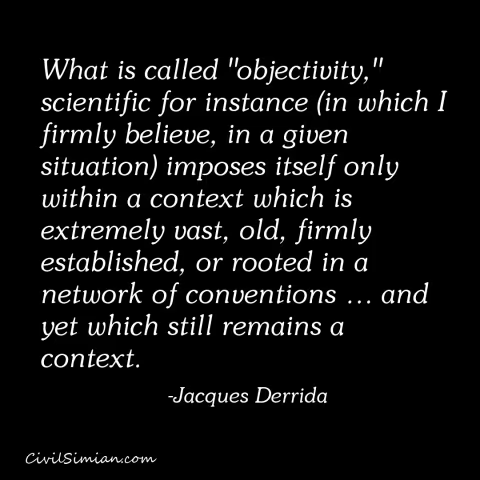
It's a context in the way that reality itself is context....


In most men, the conscious and the unconscious being hardly ever make contact; consequently the conscious aim is to make himself as comfortable as possible with as little effort as possible. But there are other men, whom we have been calling, for convenience, 'Outsiders', whose conscious and unconscious being keep in closer contact, and the conscious mind is forever aware of the urge to care about 'more abundant life', and care less about comfort and stability and the rest of the notions that are so dear to the bourgeois.
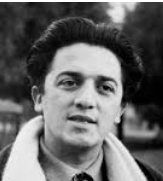
Experience is what you get while looking for something else.
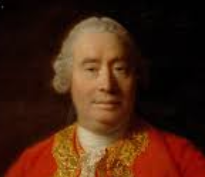
The more exquisite any good is, of which a small specimen is afforded us, the sharper is the evil, allied to it; and few exceptions are found to this uniform law of nature. The most sprightly wit borders on madness; the highest effusions of joy produce the deepest melancholy; the most ravishing pleasures are attended with the most cruel lassitude and disgust; the most flattering hopes make way for the severest disappointments. And, in general, no course of life has such safety (for happiness is not to be dreamed of) as the temperate and moderate, which maintains, as far as possible, a mediocrity, and a kind of insensibility, in every thing. As the good, the great, the sublime, the ravishing are found eminently in the genuine principles of theism; it may be expected, from the analogy of nature, that the base, the absurd, the mean, the terrifying will be equally discovered in religious fictions and chimeras.
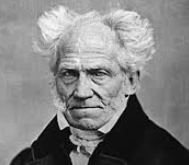
To free a man from error is to give, not to take away. Knowledge that a thing is false is a truth. Error always does harm; sooner or later it will bring mischief to the man who harbors it. Then give up deceiving people; confess ignorance of what you don't know, and leave everyone to form his own articles of faith for himself. Perhaps they won't turn out so bad, especially as they'll rub one another's corners down, and mutually rectify mistakes. The existence of many views will at any rate lay a foundation of tolerance. Those who possess knowledge and capacity may betake themselves to the study of philosophy, or even in their own persons carry the history of philosophy a step further.
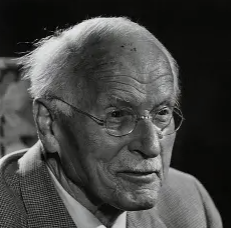
Your vision will become clear only when you can look into your own heart. Without, everything seems discordant; only within does it coalesce into unity. Who looks outside dreams; who looks inside awakes.
Particularly in the case of all professional of press-images which testify of the real events. In making reality, even the most violent, emerge to the visible, it makes the real substance disappear. It is like the Myth of Eurydice : when Orpheus turns around to look at her, she vanishes and returns to hell. That is why, the more exponential the marketing of images is growing the more fantastically grows the indifference towards the real world. Finally, the real world becomes a useless function, a collection of phantom shapes and ghost events. We are not far from the silhouettes on the walls of the cave of Plato.
The world's a bubble, and the life of man Less than a span.
In the temple of science are many mansions, and various indeed are they that dwell therein and the motives that have led them thither. Many take to science out of a joyful sense of superior intellectual power; science is their own special sport to which they look for vivid experience and the satisfaction of ambition; many others are to be found in the temple who have offered the products of their brains on this altar for purely utilitarian purposes. Were an angel of the Lord to come and drive all the people belonging to these two categories out of the temple, the assemblage would be seriously depleted, but there would still be some men, of both present and past times, left inside. Our Planck is one of them, and that is why we love him. I am quite aware that we have just now lightheartedly expelled in imagination many excellent men who are largely, perhaps chiefly, responsible for the buildings of the temple of science; and in many cases, our angel would find it a pretty ticklish job to decide. But of one thing I feel sure: if the types we have just expelled were the only types there were, the temple would never have come to be, any more than a forest can grow which consists of nothing but creepers. For these people any sphere of human activity will do if it comes to a point; whether they become engineers, officers, tradesmen, or scientists depends on circumstances.Now let us have another look at those who have found favor with the angel. Most of them are somewhat odd, uncommunicative, solitary fellows, really less like each other, in spite of these common characteristics, than the hosts of the rejected. What has brought them to the temple? That is a difficult question and no single answer will cover it.
"Relation" in its idiomatic usage denotes something direct and active, something dynamic and energetic. It fixes attention upon the way things bear upon one another, their clashings and unitings, the way they fulfill and frustrate, promote and retard, excite and inhibit one another. Intellectual relations subsist in propositions; they state the connection of terms with one another. In art, as in nature and in life, relations are modes of interaction.
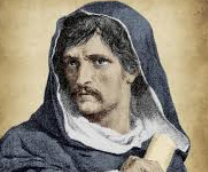
The wise soul feareth not death; rather she sometimes striveth for death, she goeth beyond to meet her. Yet eternity maintaineth her substance throughout time, immensity throughout space, universal form throughout motion.
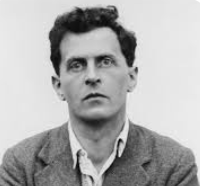
Knowledge is in the end based on acknowledgement.
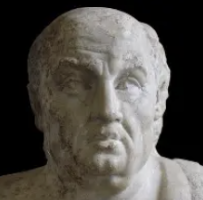
Do you ask me whom I have conquered? Neither the Persians, nor the far-off Medes, nor any warlike race that lies beyond the Dahae; not these, but greed, ambition, and the fear of death that has conquered the conquerors of the world.
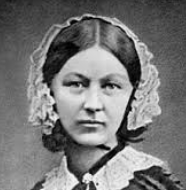
The "dreams of youth" have become a proverb. That organisations, early rich, fall far short of their promise has been repeated to satiety. But is it extraordinary that it should be so? For do we ever utilise this heroism? Look how it lives upon itself and perishes for lack of food. We do not know what to do with it. We had rather that it should not be there. Often we laugh at it. Always we find it troublesome. Look at the poverty of our life! Can we expect anything else but poor creatures to come out of it?
Nothing is too terrible to be true if it is consistent with the laws of nature.
I will tell you: that perfect man, who has attained virtue, never cursed his luck, and never received the results of chance with dejection; he believed that he was citizen and soldier of the universe, accepting his tasks as if they were his orders. Whatever happened, he did not spurn it, as if it were evil and borne in upon him by hazard; he accepted it as if it were assigned to be his duty. "Whatever this may be,"he says, "it is my lot; it is rough and it is hard, but I must work diligently at the task."
This is still the strangest thing in all man's travelling, that he should carry about with him incongruous memories.
We have been Godlike in our planned breeding of our domesticated plants and animals, but we have been rabbitlike in our unplanned breeding of ourselves.
Facts do not cease to exist because they are ignored.
It must be recognized that man in his limited and relative earthly life is capable of bringing about the beautiful and the valuable only when he believes in another life, unlimited, absolute, eternal. That is a law of his being. A contact with this mortal life exclusive of any other ends in the wearing-away of effective energy and a self-satisfaction that makes one useless and superficial. Only the spiritual man, striking his roots deep in infinite and eternal life, can be a true creator. But Humanism denied the spiritual man, handed over the eternal to the temporal, and took its stand by the natural man within the limited confines of the earth.
Man loves company - even if it is only that of a small burning candle.
By a lie a man throws away and, as it were, annihilates his dignity as a man. A man who himself does not believe what he tells another ... has even less worth than if he were a mere thing. ... makes himself a mere deceptive appearance of man, not man himself.
The souls of emperors and cobblers are cast in the same mold...The same reason that makes us wrangle with a neighbor creates a war betwixt princes.
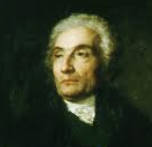
Men never respect what they have made themselves. This is why an elective king never possesses the moral power of a hereditary sovereign, because he is not noble enough, that is to say he does not possess that kind of greatness independent of men and that is the work of time.
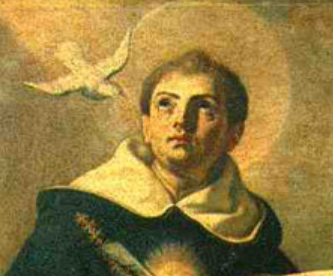
The highest manifestation of life consists in this: that a being governs its own actions. A being that is always subject to the direction of another is somewhat of a dead thing. Variant translation: Now slavery has a certain likeness to death, hence it is also called civil death. For life is most evident in a thing's moving itself, while what can only be moved by another, seems to be as if dead. But it is manifest that a slave is not moved by himself, but only at his master's command.
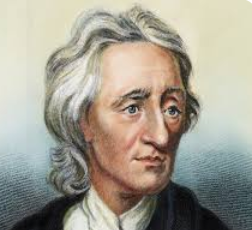
To love truth for truth's sake is the principal part of human perfection in this world, and the seed-plot of all other virtues.

In a quarrel for earth, turn not to earth.
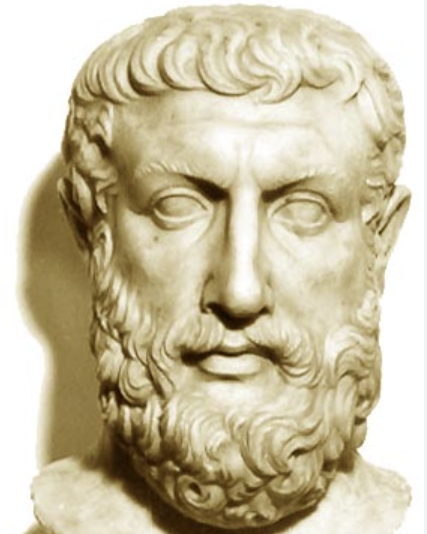
The only roads of enquiry there are to think of: one, that it is and that it is not possible for it not to be, this is the path of persuasion (for truth is its companion); the other, that it is not and that it must not be - this I say to you is a path wholly unknowable.
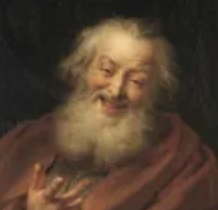
He who intends to enjoy life should not be busy about many things, and in what he does should not undertake what exceeds his natural capacity. On the contrary, he should have himself so in hand that even when fortune comes his way, and is apparently ready to lead him on to higher things, he should put her aside and not o'erreach his powers. For a being of moderate size is safer than one that bulks too big.
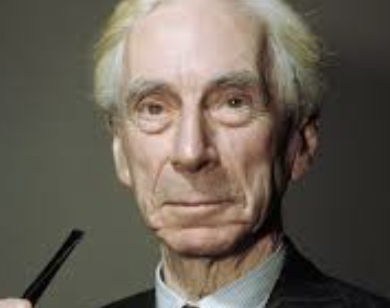
As geological time goes, it is but a moment since the human race began and only the twinkling of an eye since the arts of civilization were first invented. In spite of some alarmists, it is hardly likely that our species will completely exterminate itself. And so long as man continues to exist, we may be pretty sure that, whatever he may suffer for a time, and whatever brightness may be eclipsed, he will emerge sooner or later, perhaps strengthened and reinvigorated by a period of mental sleep. The universe is vast and men are but tiny specks on an insignificant planet. But the more we realize our minuteness and our impotence in the face of cosmic forces, the more astonishing becomes what human beings have achieved.
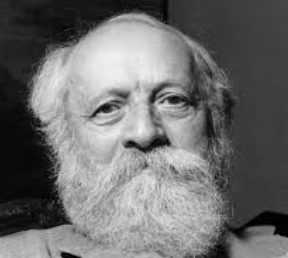
God ... demands everything, in order to give everything anew to him who loves Him, after that loving has truly given up all.
After it hath been seen how the obstinate and the ignorant of evil disposition are accustomed to dispute, it will further be shewn how disputes are wont to conclude; although others are so wary that without losing their composure, but with a sneer, a smile, a certain discreet malice, that which they have not succeeded in proving by argument - nor indeed can it be understood by themselves - nevertheless by these tricks of courteous disdain they pretend to have proven, endeavouring not only to conceal their own patently obvious ignorance but to cast it on to the back of their adversary. For they dispute not in order to find or even to seek Truth, but for victory, and to appear the more learned and strenuous upholders of a contrary opinion. Such persons should be avoided by all who have not a good breastplate of patience.
To revolt is a natural tendency of life. Even a worm turns against the foot that crushes it. In general, the vitality and relative dignity of an animal can be measured by the intensity of its instinct to revolt.
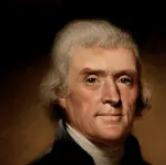
Every difference of opinion is not a difference of principle. We have called by different names brethren of the same principle. We are all Republicans, we are all Federalists.
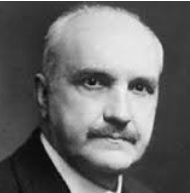
Injustice in this world is not something comparative; the wrong is deep, clear, and absolute in each private fate.
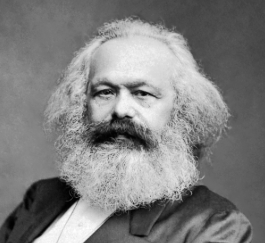
Exchange value forms the substance of money, and exchange value is wealth.
But ordinary language is all right.
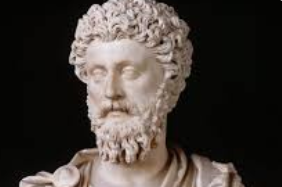
Thou art a little soul bearing about a corpse, as Epictetus used to say.
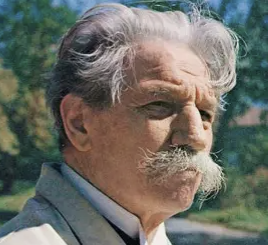
The way to true mysticism leads up through rational thought to deep experience of the world and of our will-to-live. We must all venture once more to be "thinkers," so as to reach mysticism, which is the only direct and the only profound world-view. We must all wander in the field of knowledge to the point where knowledge passes over into experience of the world. We must all, through thought, become religious.This rational thought must become the prevailing force among us, for all the valuable ideas that we need develop out of it. In no other fire than that of the mysticism of reverence for life can the broken sword of idealism be forged anew.
I want to block some common misunderstandings about "understanding": In many of these discussions one finds a lot of fancy footwork about the word "understanding."
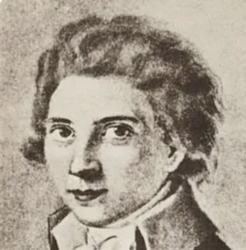
Expect nothing more from philosophy than a voice, language and grammar of the instinct for Godliness that lies at its origin, and, essentially, is philosophy itself.
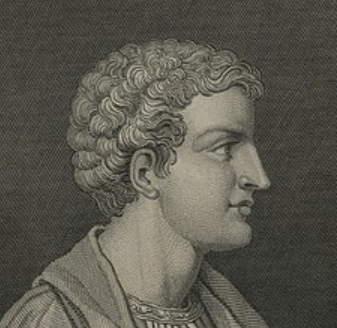
He is not poor who has enough of things to use. If it is well with your belly, chest and feet, the wealth of kings can give you nothing more.
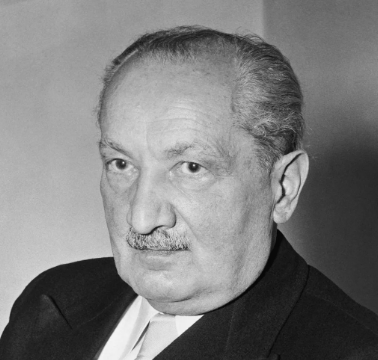
Everyone is the other, and no one is himself. The they, which supplies the answer to the who of everyday Da-sein, is the nobody to whom every Da-sein has always already surrendered itself, in its being-among-one-another.
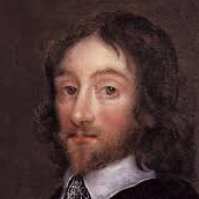
But the Quincunx of Heaven runs low, and 'tis time to close the five ports of knowledge. We are unwilling to spin out our awaking thoughts into the phantasmes of sleep, which often continueth præcogitations; making Cables of Cobwebbes and Wildernesses of handsome Groves. Beside Hippocrates hath spoke so little and the Oneirocriticall Masters, have left such frigid Interpretations from plants, that there is little encouragement to dream of Paradise it self. Nor will the sweetest delight of Gardens afford much comfort in sleep; wherein the dulnesse of that sense shakes hands with delectable odours; and though in the Bed of Cleopatra, can hardly with any delight raise up the ghost of a Rose.
If we look deeply into such ways of life as Buddhism and Taoism, Vedanta and Yoga, we do not find either philosophy or religion as these are understood in the West. We find something more nearly resembling psychotherapy. ... The main resemblance between these Eastern ways of life and Western psychotherapy is in the concern of both with bringing about changes of consciousness, changes in our ways of feeling our own existence and our relation to human society and the natural world. The psychotherapist has, for the most part, been interested in changing the consciousness of peculiarly disturbed individuals. The disciplines of Buddhism and Taoism are, however, concerned with changing the consciousness of normal, socially adjusted people.
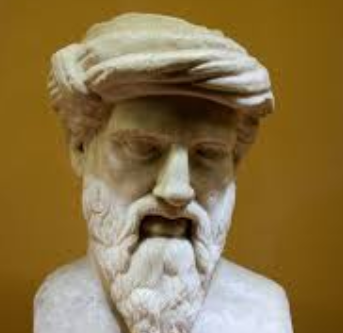
By the air which I breathe, and by the water which I drink, I will not endure to be blamed on account of this discourse.
There is no connection between the elements in an electric world, which is equivalent to being surrounded by the human unconscious.
CivilSimian.com created by AxiomaticPanic, CivilSimian, Kalokagathia