I have an embroidered patch on my work laptop bag that says, "Do nothing forever." Radical capitalists hate this one trick....


Democratic and aristocratic states are not in their own nature free. Political liberty is to be found only in moderate governments; and even in these it is not always found. It is there only when there is no abuse of power. But constant experience shows us that every man who has power is inclined to abuse it; he goes until he finds limits. Is it not strange, though true, to say that virtue itself has need of limits?.To prevent this abuse, it is necessary that, by the arrangement of things, power shall stop power. A government may be so constituted, as no man shall be compelled to do things to which the law does not oblige him, nor forced to abstain from things which the law permits.
The superior man, extensively studying all learning, and keeping himself under the restraint of the rules of propriety, may thus likewise not overstep what is right.
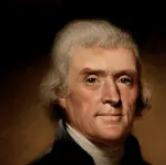
I have the consolation to reflect that during the period of my administration not a drop of the blood of a single fellow citizen was shed by the sword of war or of the law.
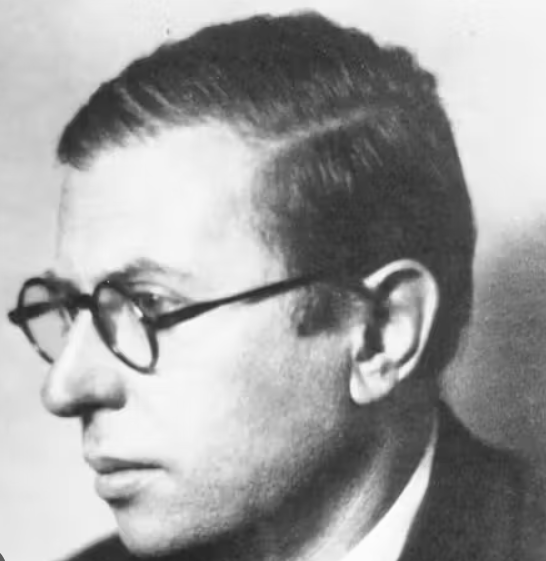
All-powerful god, who am I but the fear that I inspire in others?
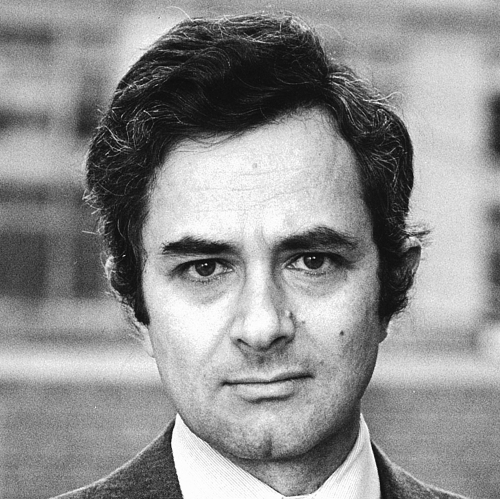
Any reductionist program has to be based on an analysis of what is to be reduced. If the analysis leaves something out, the problem will be falsely posed.

A whole from necessary substances is impossible. The whole, therefore, of substances is a whole of contingent things, and the world consists essentially of only contingent things.
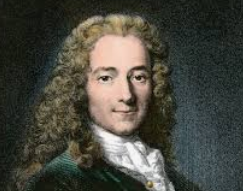
May we not return to those scoundrels of old, the illustrious founders of superstition and fanaticism, who first took the knife from the altar to make victims of those who refused to be their disciples?
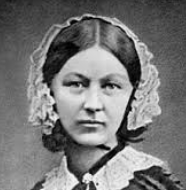
Asceticism is the trifling of an enthusiast with his power, a puerile coquetting with his selfishness or his vanity, in the absence of any sufficiently great object to employ the first or overcome the last.

The second failing of liberalism comes directly out of the fact that it attempts to lower the horizons of politics. Liberal societies do not want to tell you how to live. They do not want to define "the good life" because that is the source of conflict, but as a result liberal societies tend not to satisfy these very deep human cravings for community, because... there's something wrong with the basic liberal premise that we all start... as self-interested individuals. We're not self-interested individuals.
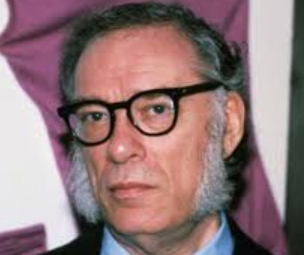
I wouldn't give an astrologer the time of day.
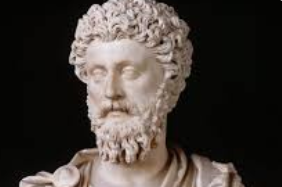
The mind which is free from passions is a citadel, for man has nothing more secure to which he can fly for refuge and for the future be inexpugnable. He then who has not seen this is an ignorant man: but he who has seen it and does not fly to this refuge is unhappy.
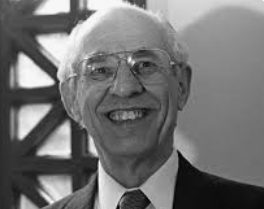
The problem with all this--the problem I discussed in the first lecture--is that if the causes/background conditions distinction is fundamentally subjective, not descriptive of the world in itself, then current philosophical explanations of the metaphysical nature of reference are bankrupt.
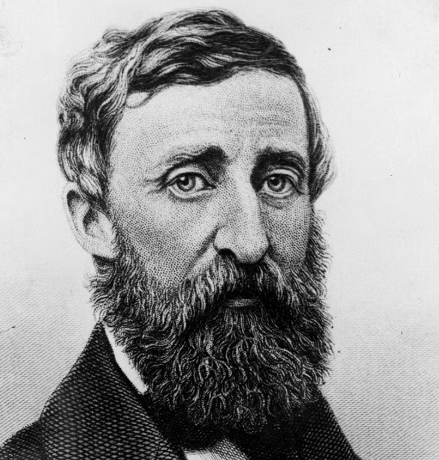
Men go to a fire for entertainment. When I see how eagerly men will run to a fire, whether in warm or in cold weather, by day or by night, dragging an engine at their heels, I'm astonished to perceive how good a purpose the level of excitement is made to serve.
At the parting of ways in the life-order, where the question is between the new creation or decay, that man will be decisive for new creation who is able on his own initiative to seize the helm and steer a course of his own choosing - even if that course be opposed to the will of the masses. Should the emergence of such persons become impossible a lamentable shipwreck will be inevitable.
Out of the crooked timber of humanity, no straight thing was ever made.
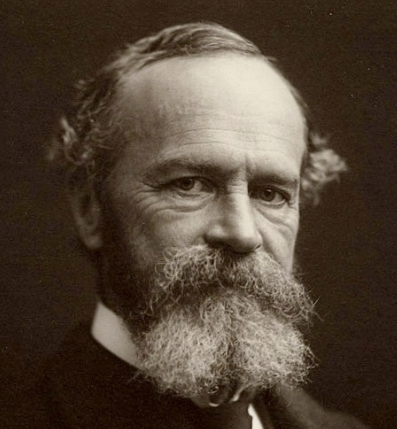
An act has no ethical quality whatever unless it be chosen out of several all equally possible.
It is satisfaction to a man to do the proper works of a man.
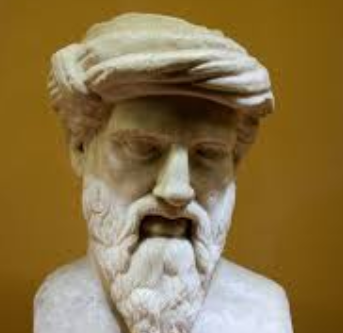
It is not proper either to have a blunt sword or to use freedom of speech ineffectually. Neither is the sun to be taken from the world, nor freedom of speech from erudition.
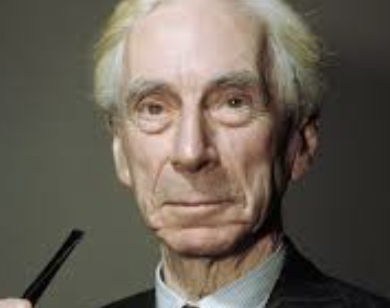
To those who inquire as to the purpose of mathematics, the usual answer will be that it facilitates the making of machines, the travelling from place to place, and the victory over foreign nations, whether in war or commerce. ... The reasoning faculty itself is generally conceived, by those who urge its cultivation, as merely a means for the avoidance of pitfalls and a help in the discovery of rules for the guidance of practical life.
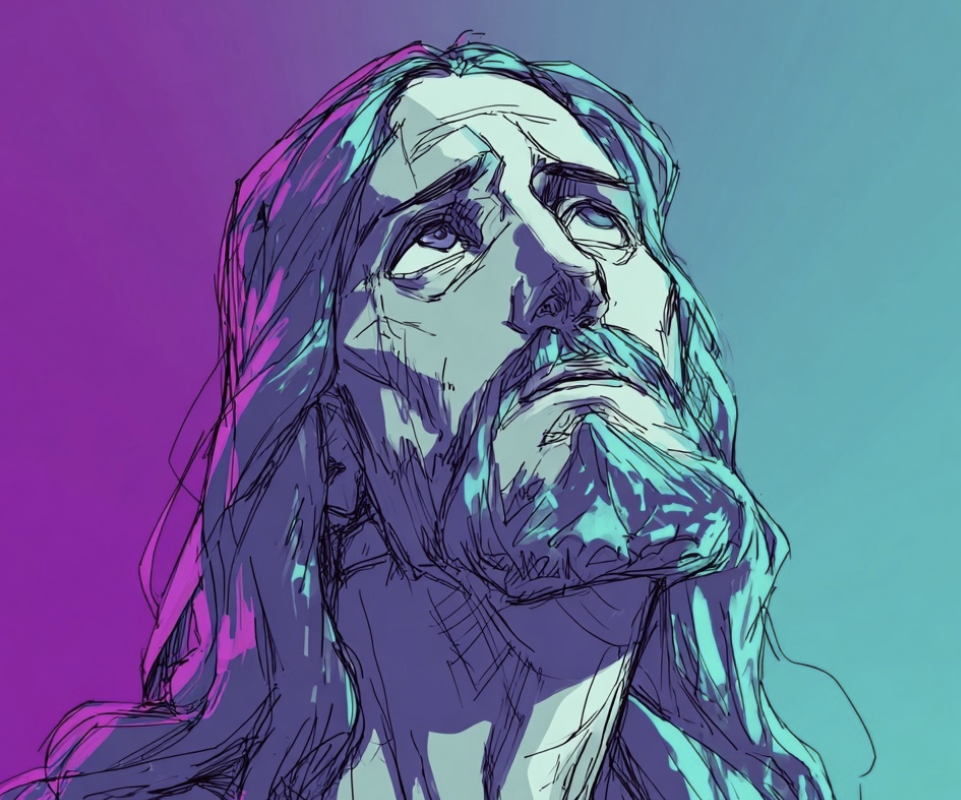
Thou hast said: nevertheless I say unto you, Hereafter shall ye see the Son of man sitting on the right hand of power, and coming in the clouds of heaven.
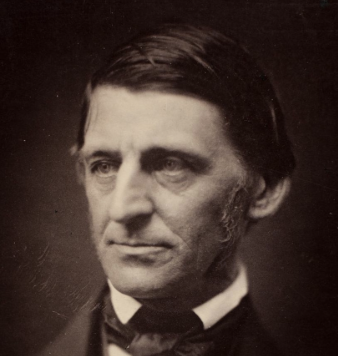
Thought is all light, and publishes itself to the universe. It will speak, though you were dumb, by its own miraculous organ. It will flow out of your actions, your manners, and your face. It will bring you friendships. It will impledge you to truth by the love and expectation of generous minds. By virtue of the laws of that Nature, which is one and perfect, it shall yield every sincere good that is in the soul, to the scholar beloved of earth and heaven.
Amid this life based on coercion, one and the same thought constantly emerged among different nations, namely, that in every individual a spiritual element is manifested that gives life to all that exists, and that this spiritual element strives to unite with everything of a like nature to itself, and attains this aim through love.

Knowledge, having irritated and stimulated our appetite for power, will lead us inexorably to our ruin.
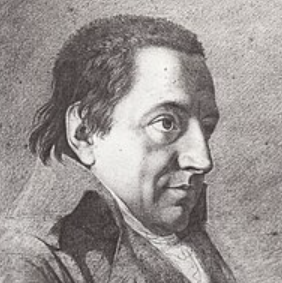
The new education must consist essentially in this, that it completely destroys freedom of will in the soil which it undertakes to cultivate, and produces on the contrary strict necessity in the decisions of the will, the opposite being impossible. Such a will can henceforth be relied on with confidence and certainty.
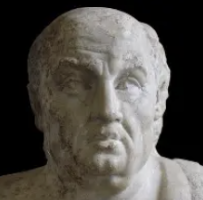
One crime has to be concealed by another.
Were I to pray for a taste which should stand me in stead under every variety of circumstances, and be a source of happiness and cheerfulness to me during life, and a shield against its ills, however things might go amiss and the world frown upon me, it would be a taste for reading... Give a man this taste, and the means of gratifying it, and you can hardly fail of making him a happy man; unless, indeed, you put into his hands a most perverse selection of books. You place him in contact with the best society in every period of history,-with the wisest, the wittiest, the tenderest, the bravest, and the purest characters who have adorned humanity. You make him a denizen of all nations, a contemporary of all ages. The world has been created for him.
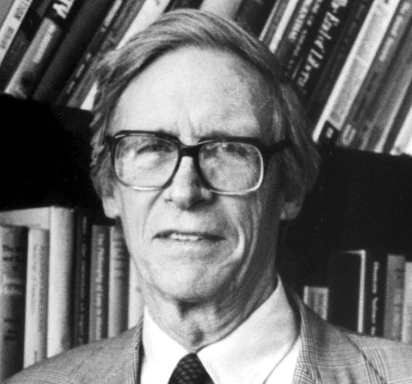
There are infinitely many variations of the initial situation and therefore no doubt indefinitely many theorems of moral geometry.
It is a proof that the state is not an arbitrary invention, but is established by nature and reason, when we actually find that, in places where men have lived together for a time and have become educated, states are erected, although the people in the one such place know not that the same thing has been done in other places. Each people, which does not live in a condition of nature, but has a government, no matter how constituted, has a right to compel its recognition from all adjoining states.
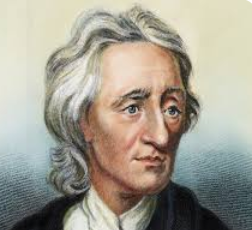
This I think is sufficiently evident, that children generally hate to be idle. All the care then is, that their busy humour should be constantly employ'd in something of use to them; which, if you will attain, you must make what you would have them do a recreation to them, and not a business.
By Hercules, the state would have sustained a great loss if you had not brought him forth from the oblivion to which his two splendid qualities, eloquence and independence, had consigned him: he is now read, is popular, is received into men's hands and bosoms, and fears no old age: but as for those who butchered him, before long men will cease to speak even of their crimes, the only things by which they are remembered.

There can be no question of holding forth on ethics. I have seen people behave badly with great morality and I note every day that integrity has no need of rules. There is but one moral code that the absurd man can accept, the one that is not separated from God: the one that is dictated. But it so happens that he lives outside that God. As for the others (I mean also immoralism), the absurd man sees nothing in them but justifications and he has nothing to justify. I start out here from the principle of his innocence. That innocence is to be feared. "Everything is permitted," exclaims Ivan Karamazov. That, too, smacks of the absurd. But on condition that it not be taken in a vulgar sense. I don't know whether or not it has been sufficiently pointed out that it is not an outburst of relief or of joy, but rather a bitter acknowledgment of a fact.
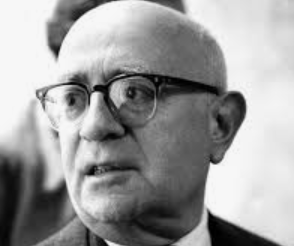
Hegel ... destroyed the illusion of the subject's being-in-itself and showed that the subject is itself an aspect of social objectivity. ... However, ... we must ask this question: is this objectivity which we have shown to be a necessary condition and which subsumes abstract subjectivity in fact the higher factor? Does it not rather remain precisely what Hegel reproached it with being in his youth, namely pure externality, the coercive collective? Does not the retreat to this supposedly higher authority signify the regression of the subject, which had earlier won its freedom only with the greatest efforts, with infinite pains?
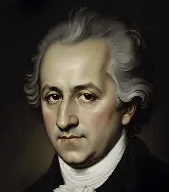
I have often felt a bitter sorrow at the thought of the German people, which is so estimable in the individual and so wretched in the generality. A comparison of the German people with other peoples arouses a painful feeling, which I try to overcome in every possible way.
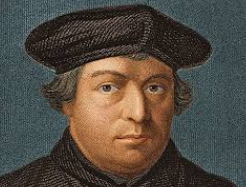
A faithful and good servant is a real godsend; but truly 'tis a rare bird in the land.
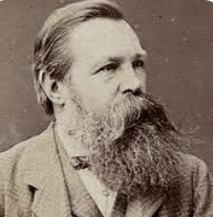
It makes unavoidably necessary an entirely new organization of society in which production is no longer directed by mutually competing individual industrialists but rather by the whole society operating according to a definite plan and taking account of the needs of all.
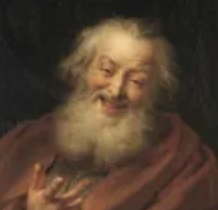
In a shared fish, there are no bones.
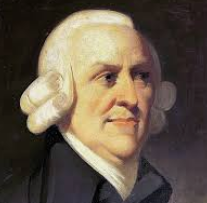
The violence and injustice of the rulers of mankind is an ancient evil, for which, I am afraid, the nature of human affairs can scarce admit a remedy.

You're either excluding the right people or including the wrong people.
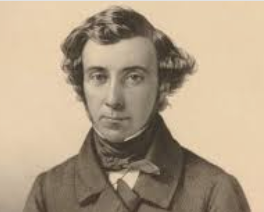
I have no hesitation in saying that although the American woman never leaves her domestic sphere and is in some respects very dependent within it, nowhere does she enjoy a higher station. And if anyone asks me what I think the chief cause of the extraordinary prosperity and growing power of this nation, I should answer that it is due to the superiority of their women.
Hasten to examine thy own ruling faculty and that of the universe and that of thy neighbor: thy own, that thy may make it just; and that of the universe, that thou mayst remember of what thou art a part; and that of thy neighbor, that thy mayst know whether he has acted ignorantly or with knowledge, and that thou mayst also consider that his ruling faculty is akin to thine.
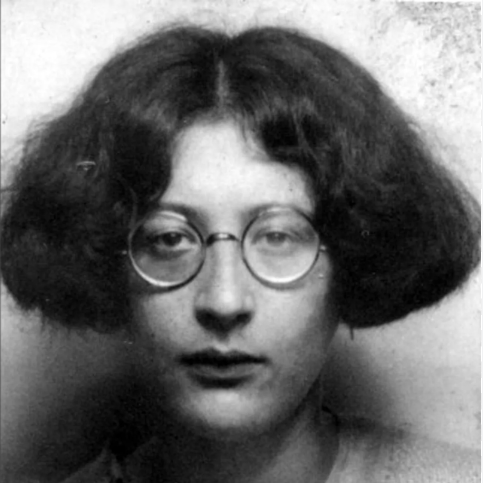
Above all our thought should be empty, waiting, not seeking anything, but ready to receive in its naked truth the object that is to penetrate it. All wrong translations, all absurdities in geometry problems, all clumsiness of style, and all faulty connection of ideas in compositions and essays, all such things are due to the fact that thought has seized upon some idea too hastily, and being thus prematurely blocked, is not open to the truth.
CivilSimian.com created by AxiomaticPanic, CivilSimian, Kalokagathia