

9 months 2 weeks ago
There is no version of primeval history, preceding the discoveries of modern science, that is as rational and as inspiring as that of the first eleven chapters of the Book of Genesis.
7 months 1 week ago
Ideas are refined and multiplied in the commerce of minds. In their splendor, images effect a very simple communion of souls.
▼
Source
source
Introduction, sect. 4
8 months 2 weeks ago
Whoever heard me assert that the grey cat playing just now in the yard is the same one that did jumps and tricks there five hundred years ago will think whatever he likes of me, but it is a stranger form of madness to imagine that the present-day cat is fundamentally an entirely different one.
▼
Source
source
Quoted by Jorge Luis Borges in his essay "A History of Eternity"
4 months 2 weeks ago
Let your brother work hard at the French poets. Let him learn them by heart, especially the incomparable Racine; never mind whether he understands him yet or not. I didn't understand him when my mother used to come repeating his verses by my bedside, and lulled me to sleep with her fine voice to the sound of that inimitable music. I knew hundreds of lines long before I knew how to read; and it is thus that my ears, accustomed betimes to this ambrosia, have never since been able to endure any sourer draught.
▼
Source
source
Letter to his daughter Constance de Maistre

6 months 1 week ago
Never in the history of the world have there been so many migrants. And almost all of them are migrating from regions where nationality is weak or non-existent to the established nation states of the West. They are not migrating because they have discovered some previously dormant feeling of love or loyalty towards the nations in whose territory they seek a home. On the contrary, few of them identify their loyalties in national terms and almost none of them in terms of the nation where they settle. They are migrating in search of citizenship which is the principal gift of national jurisdictions, and the origin of the peace, law, stability and prosperity that still prevail in the West.

7 months 1 week ago
I like thought which preserves a whiff of flesh and blood, and I prefer a thousand times an idea rising from sexual tension or nervous depression to empty abstraction.
7 months 2 weeks ago
They think of the philosopher as holding the ideal or subjective in one hand and the real or objective in the other and then have him strike the palms of his hands together so that one abrades the other. The product of this abrasion is the Absolute.
▼
Source
source
P. 12
5 months 3 weeks ago
An old fairy tale has it that science began with the rejection of superstition. In fact it was the rejection of rationalism that gave birth to scientific inquiry. Ancient and medieval thinkers believed the world could be understood by applying first principles. Modern science begins when observation and experiment come first, and the results are accepted even when what they show seems to be impossible.
▼
Source
source
Foreword: Two Attempts to Cheat Death (pp. 5-6)
9 months 2 weeks ago
Since... nature is a principle of motion and mutation... it is necessary that we should not be ignorant of what motion is... But motion appears to belong to things continuous; and the infinite first presents itself to the view in that which is continuous. ...Frequently ...those who define the continuous, employ the nature or the infinite, as if that which is divisible to infinity is continuous.
8 months 2 weeks ago
Separate an individual from society, and give him an island or a continent to possess, and he cannot acquire personal property. He cannot be rich. So inseparably are the means connected with the end, in all cases, that where the former do not exist the latter cannot be obtained. All accumulation, therefore, of personal property, beyond what a man's own hands produce, is derived to him by living in society; and he owes on every principle of justice, of gratitude, and of civilization, a part of that accumulation back again to society from whence the whole came.
▼
Source
source
Means by Which the Fund Is to Be Created
6 months 3 weeks ago
I believe that man is in the last resort so free a being that his right to be what he believes himself to be cannot be contested.
▼
Source
source
L 98
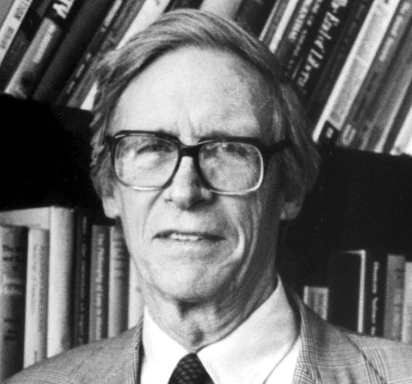
8 months 2 weeks ago
There are infinitely many variations of the initial situation and therefore no doubt indefinitely many theorems of moral geometry.
▼
Source
source
Chapter III, Section 21, pg. 126
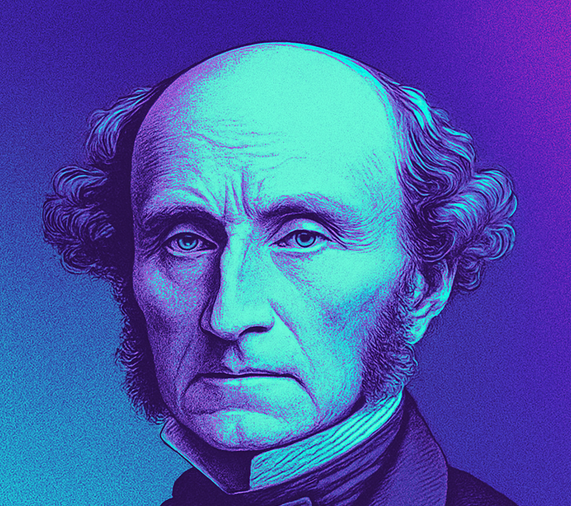
8 months 2 weeks ago
My father was as well aware as anyone that Christians do not, in general, undergo the demoralizing consequences which seem inherent in such a creed, in the manner or to the extent which might have been expected from it. The same slovenliness of thought, and subjection of the reason to fears, wishes, and affections, which enable them to accept a theory involving a contradiction in terms, prevents them from perceiving the logical consequences of the theory. Such is the facility with which mankind believe at one and the same time things inconsistent with one another, and so few are those who draw from what they receive as truths, any consequences but those recommended to them by their feelings, that multitudes have held the undoubting belief in an Omnipotent Author of Hell, and have nevertheless identified that being with the best conception they were able to form of perfect goodness.
▼
Source
source
(pp. 41-42)
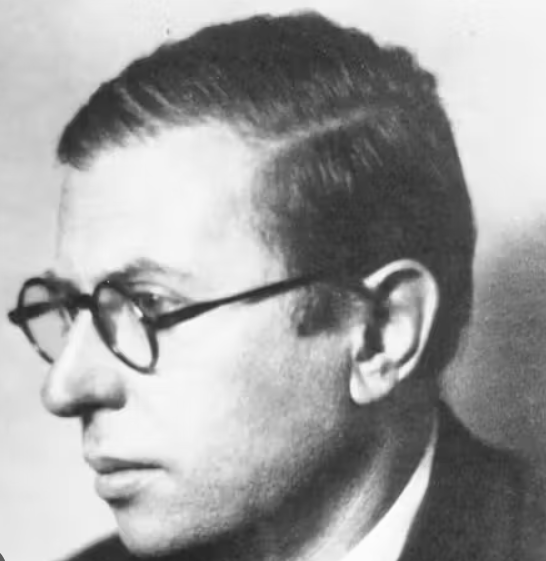
8 months 2 weeks ago
Be quiet! Anyone can spit in my face, and call me a criminal and a prostitute. But no one has the right to judge my remorse.
▼
Source
source
Act 1
8 months 3 weeks ago
God might grant us riches, honours, life, and even health, to our own hurt; for every thing that is pleasing to us is not always good for us. If he sends us death, or an increase of sickness, instead of a cure, Vvrga tua et baculus, tuus ipsa me consolata sunt. "Thy rod and thy staff have comforted me," he does it by the rule of his providence, which better and more certainly discerns what is proper for us than we can do; and we ought to take it in good part, as coming from a wise and most friendly hand.
▼
Source
source
Ch. 12
8 months 3 weeks ago
Like the body the soul can be healthy, youthful, and so on. It can undergo pain, thirst, and hunger. In this physical life, that is, in the visible world, we avoid whatever would defile or deform the body; how much more, then, ought we to avoid that which would tarnish the soul?
7 months 1 week ago
For thought and speech are of a thinking and speaking subject, and if the life of the latter depends on the performance of a superimposed function, it depends on fulfilling the requirements of this function - thus it depends on those who control these requirements.
▼
Source
source
p. 128
9 months 6 days ago
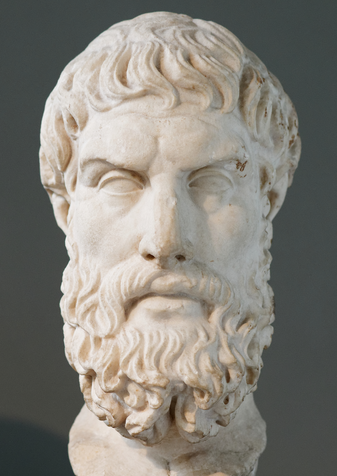
We must consider both the ultimate end and all clear sensory evidence, to which we refer our opinions; for otherwise everything will be full of uncertainty and confusion.
6 months 2 weeks ago
There are no passengers on Spaceship Earth. We are all crew.
▼
Source
source
Statement in 1965, in reference to Operating Manual for Spaceship Earth (1963) by Buckminster Fuller
8 months 3 weeks ago
You must acquire the best knowledge first, and without delay; it is the height of madness to learn what you will later have to unlearn.
▼
Source
source
Letter to Christian Northoff (1497), as translated in Collected Works of Erasmus (1974), p. 114
7 months 2 weeks ago
Man needed one moral constitution to fit him for his original state; he needs another to fit him for his present state; and he has been, is, and will long continue to be, in process of adaptation. And the belief in human perfectibility merely amounts to the belief that, in virtue of this process, man will eventually become completely suited to his mode of life. Progress, therefore, is not an accident, but a necessity. Instead of civilization being artificial, it is part of nature; all of a piece with the development of the embryo or the unfolding of a flower. The modifications mankind have undergone, and are still undergoing, result from a law underlying the whole organic creation; and provided the human race continues, and the constitution of things remains the same, those modifications must end in completeness.
▼
Source
source
Pt. I, Ch. 2 : The Evanescence of Evil, concluding paragraph
9 months 2 weeks ago
He who lives as children live who does not struggle for his bread and does not believe that his actions possess any ultimate significance remains childlike.
7 months 3 weeks ago
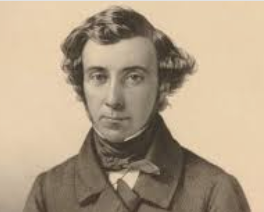
Despotism may govern without faith, but liberty cannot. How is it possible that society should escape destruction if the moral tie is not strengthened in proportion as the political tie is relaxed? And what can be done with a people who are their own masters if they are not submissive to the Deity?
▼
Source
source
Chapter XVII.
9 months 2 weeks ago
It's my belief that the Universe possesses, in its essence, fractal properties of a very complex sort and that the pursuit of science shares those properties. It follows that any part of the Universe that remains un-understood, and any part of scientific investigation that remains unresolved, however small that might be in comparison to what is understood and resolved, contains within it all the complexity of the original. Therefore, we'll never finish. No matter how far we go, the road ahead will be as long as it was at the start, and that's the secret of the Universe.
7 months 2 weeks ago
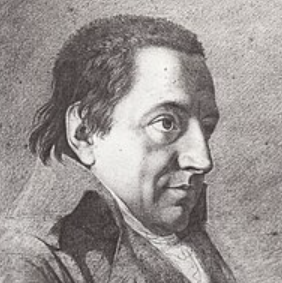
While all these are disturbed and divided by the multifarious objects to which their thoughts must be applied, the Philosopher pursues, in solitary silence and in unbroken concentration of mind, his single and undeviating course towards the Good, the Beautiful, and the True; and that is his daily labour, to which others can only resort at times for rest and refreshment after toil.
▼
Source
source
P. 17
7 months 3 weeks ago
For no one's authority ought to rank so high as to set a value on his words and terms even though nothing clear and determinate lies behind them.
▼
Source
source
Paragraph 1
4 months 1 week ago
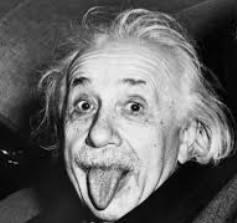
I am not an Atheist. I do not know if I can define myself as a Pantheist. The problem involved is too vast for our limited minds. May I not reply with a parable? The human mind, no matter how highly trained, cannot grasp the universe. We are in the position of a little child, entering a huge library whose walls are covered to the ceiling with books in many different tongues. The child knows that someone must have written those books. It does not know who or how. It does not understand the languages in which they are written. The child notes a definite plan in the arrangement of the books, a mysterious order, which it does not comprehend, but only dimly suspects. That, it seems to me, is the attitude of the human mind, even the greatest and most cultured, toward God. We see a universe marvelously arranged, obeying certain laws, but we understand the laws only dimly. Our limited minds cannot grasp the mysterious force that sways the constellations. I am fascinated by Spinoza's Pantheism. I admire even more his contributions to modern thought. Spinoza is the greatest of modern philosophers because he is the first philosopher who deals with the soul and the body as one, not as two separate things.
8 months 3 weeks ago
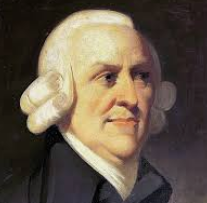
China is a much richer country than any part of Europe.
▼
Source
source
Chapter XI, Part III, (First Period) p. 221.
8 months 1 week ago
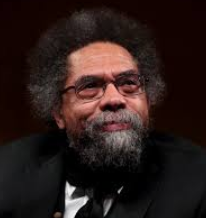
The blues is relevant today because when we look down through the corridors of time, the black American interpretation of tragicomic hope in the face of dehumanizing hate and oppression will be seen as the only kind of hope that has any kind of maturity in a world of overwhelming barbarity and bestiality. That barbarity is found not just in the form of terrorism but in the form of the emptiness of our lives - in terms of the wasted human potential that we see around the world. In this sense, the blues is a great democratic contribution of black people to world history.
▼
Source
source
(p20)
7 months 2 weeks ago
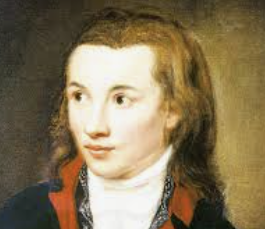
The first Man is the first Spirit-seer; all appears to him as Spirit. What are children, but first men? The fresh gaze of the Child is richer in significance than the forecasting of the most indubitable Seer.
8 months 2 weeks ago
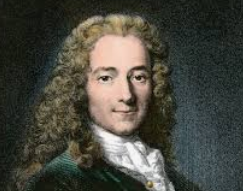
Man is free at the instant he wants to be.
▼
Source
source
Source Brutus, act II, scene I, 1730
8 months 1 week ago
Living a minimally acceptable ethical life involves using a substantial part of our spare resources to make the world a better place. Living a fully ethical life involves doing the most good we can.
▼
Source
source
Preface (p. vii)
6 months 3 weeks ago
Be wary of passing the judgment: obscure. To find something obscure poses no difficulty: elephants and poodles find many things obscure.
▼
Source
source
E 36
7 months 1 week ago
I define a Sign as anything which is so determined by something else, called its Object, and so determines an effect upon a person, which effect I call its Interpretant, that the latter is thereby mediately determined by the former.
▼
Source
source
Letter to Victoria, Lady Welby (1908) SS 80-81
8 months 2 weeks ago
Good nature is, of all moral qualities, the one that the world needs most, and good nature is the result of ease and security, not of a life of arduous struggle. Modern methods of production have given us the possibility of ease and security for all; we have chosen, instead, to have overwork for some and starvation for the others. Hitherto we have continued to be as energetic as we were before there were machines; in this we have been foolish, but there is no reason to go on being foolish for ever.
▼
Source
source
Ch. 1: In Praise of Idleness
6 months 4 weeks ago
And at once I saw with great clarity that human beings possess two bodies. One is the physical body, the other -- just as real, just as self-contained -- is the emotional body. Like the physical body, the emotional body reaches a certain level of growth, and then stops. But it stops rather sooner than the physical body. So most of us possess the emotional body of a retarded adolescent.
▼
Source
source
p. 23
7 months 3 weeks ago
Do not know the truth by the men, but know the truth, and then you will know who are truthful.
▼
Source
source
III. The Classes of Seekers, p. 29.
6 months 2 weeks ago
How good is it to remember one's insignificance: that of a man among billions of men, of an animal amid billions of animals; and one's abode, the earth, a little grain of sand in comparison with Sirius and others, and one's life span in comparison with billions on billions of ages. There is only one significance, you are a worker. The assignment is inscribed in your reason and heart and expressed clearly and comprehensibly by the best among the beings similar to you. The reward for doing the assignment is immediately within you. But what the significance of the assignment is or of its completion, that you are not given to know, nor do you need to know it. It is good enough as it is. What else could you desire?
▼
Source
source
Last Diaries (1979) edited by Leon Stilman, p. 77
9 months 1 week ago
I do not have much liking for the too famous existential philosophy, and, to tell the truth, I think its conclusions false.
8 months 1 week ago
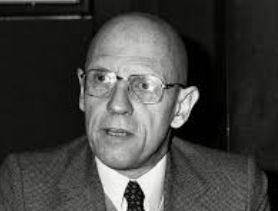
He who is subjected to a field of visibility, and who knows it, assumes responsibility for the constraints of power; he makes them play spontaneously upon himself; he inscribes in himself the power relation in which he simultaneously plays both roles; he becomes the principle of his own subjection.
▼
Source
source
Part Three, Panopticism
6 months 2 weeks ago
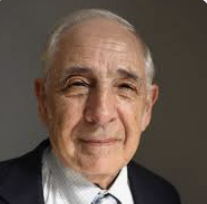
I once had a conversation with a famous French philosopher who's a friend of mine. And I said to him, "Why the hell do you write so badly? Pourquoi tu écris si mal?" ... And this was Michel Foucault. He was a very smart guy and wrote a lot of very good stuff but in general he just wrote badly. When you heard him give a lecture in Berkeley, it was perfectly clear, just as clear as I am. ... And he said, "Well, in France, it would be regarded as somewhat childish and naive if you wrote clearly. ... In France you've got to have 10% incomprehensible."
▼
Source
source
Otherwise people won't think it's deep. They won't think you're a profound thinker.
CivilSimian.com created by AxiomaticPanic, CivilSimian, Kalokagathia