

7 months 4 days ago
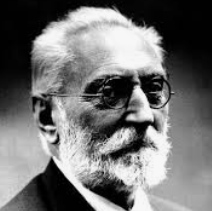
And what has Don Quixote left, do you ask? I answer, he has left himself, and a man, a living and eternal man, is worth all the theories and all the philosophies. Other peoples have left chiefly institutions, books; we have left souls; St. Teresa is worth any institution, any Critique of Pure Reason.
9 months 2 weeks ago
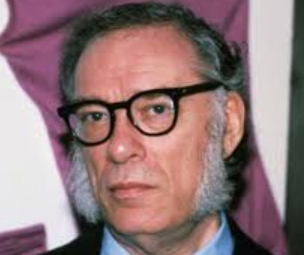
Predicting the future is a hopeless, thankless task, with ridicule to begin with and, all too often, scorn to end with.
5 months 2 days ago
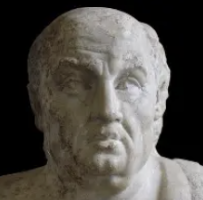
Valor withers without adversity.
▼
Source
source
De Providentia (On Providence), 2.4
4 months 2 weeks ago
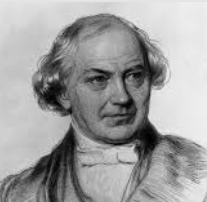
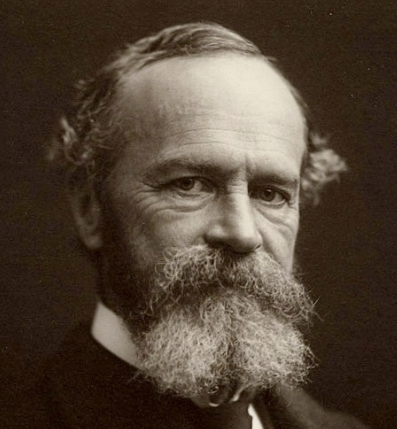
In Deductive Reasoning, we cannot have any truth in the conclusion which is not virtually contained in the premises.
8 months 2 weeks ago
The moral flabbiness born of the exclusive worship of the bitch-goddess SUCCESS. That - with the squalid cash interpretation put on the word success - is our national disease.
▼
Source
source
To H. G. Wells, 9/11/1906
6 months 2 days ago
The known is finite, the unknown infinite; intellectually we stand on an islet in the midst of an illimitable ocean of inexplicability. Our business in every generation is to reclaim a little more land, to add something to the extent and the solidity of our possessions.
8 months 1 week ago
You could attach prices to thoughts. Some cost a lot, some a little. And how does one pay for thoughts? The answer, I think, is: with courage.
▼
Source
source
p. 52e

4 months 2 weeks ago
The mind, like the body, has its contagious diseases and its scurvy. …We catch everything from those with whom we come in contact; their gestures, their accent, etc.
8 months 3 weeks ago
As to fidelity, there is no animal in the world so treacherous as man. Our histories have recorded the violent pursuits that dogs have made after the murderers of their masters.
▼
Source
source
Ch. 12, tr. Cotton, rev. W. Carew Hazlitt, 1877
8 months 2 weeks ago
When I was a child the atmosphere in the house was one of puritan piety and austerity. There were family prayers at eight o'clock every morning. Although there were eight servants, food was always of Spartan simplicity, and even what there was, if it was at all nice, was considered too good for children. For instance, if there was apple tart and rice pudding, I was only allowed the rice pudding. Cold baths all the year round were insisted upon, and I had to practice the piano from seven-thirty to eight every morning although the fires were not yet lit. My grandmother never allowed herself to sit in an armchair until the evening. Alcohol and tobacco were viewed with disfavor although stern convention compelled them to serve a little wine to guests. Only virtue was prized, virtue at the expense of intellect, health, happiness, and every mundane good.
▼
Source
source
p. 9
7 months 1 week ago
To live life well is to express life poorly; if one expresses life too well, one is living it no longer.
▼
Source
source
A Retrospective Glance at the Lifework of a Master of Books
7 months 2 weeks ago
Blessed be the hour in which I was first led to inquire into my own spiritual nature and destination! All my doubts are removed; I know what I can know, and have no fears for what I cannot know. I am satisfied; perfect clearness and harmony reign in my soul, and a new and more glorious existence begins for me. My entire destiny I cannot comprehend; what I am to become, exceeds my present power of conception. A part, which is concealed from me, is visible to the father of spirits. I know only that it is secure, everlasting and glorious. That part of it which is confided to me I know, for it is the root of all my other knowledge.
▼
Source
source
Jane Sinnett, trans 1846 p.120
7 months 3 weeks ago
As the past has ceased to throw its light upon the future, the mind of man wanders in obscurity. Variant translation: When the past no longer illuminates the future, the spirit walks in darkness.
▼
Source
source
Book Four, Chapter VIII
7 months 2 weeks ago
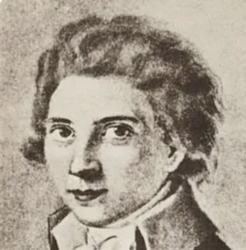
One has only as much morality as one has philosophy and poetry.
▼
Source
source
"Selected Ideas (1799-1800)", Dialogue on Poetry and Literary Aphorisms, Ernst Behler and Roman Struc, trans. (Pennsylvania University Press:1968) #62
6 months 2 weeks ago
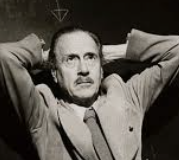
A theory of cultural change is impossible without knowledge of the changing sense ratios effected by various externalizations of our senses.
▼
Source
source
(p. 49)
4 months 2 weeks ago
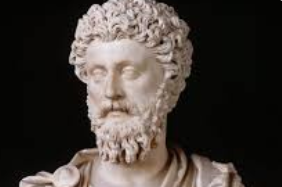
Is any man afraid of change? Why what can take place without change?
▼
Source
source
VII, 18
6 months 2 weeks ago
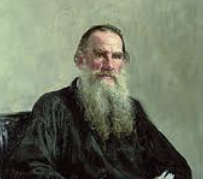
Art is a human activity consisting in this, that one consciously, by means of certain external symbols, conveys to others the feelings one has experienced, whereby people so infected by these feelings, also experience them.
8 months 2 weeks ago
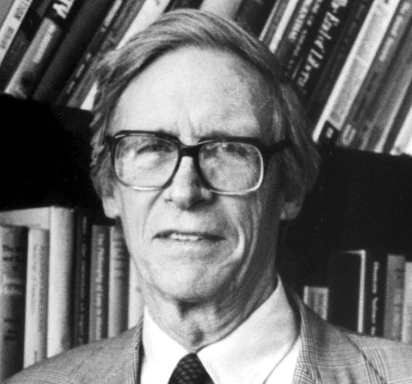
Inequalities are permissible when they maximize, or at least all contribute to, the long term expectations of the least fortunate group in society.
▼
Source
source
Chapter III, Section 26, pg. 151
8 months 2 weeks ago
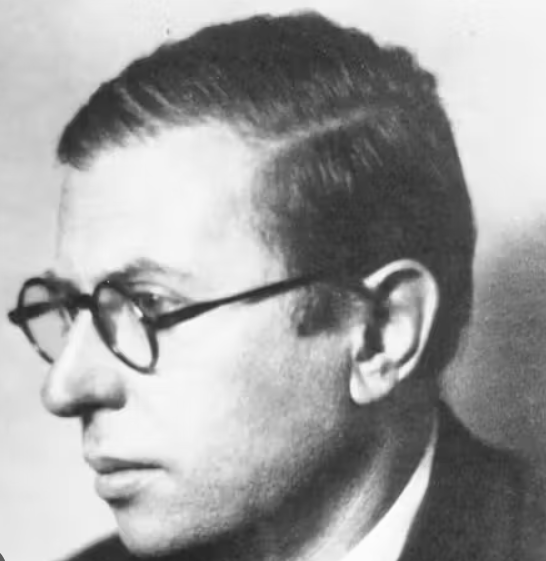
I wanted pure love: foolishness; to love one another is to hate a common enemy: I will thus espouse your hatred. I wanted Good: nonsense; on this earth and in these times, Good and Bad are inseparable: I accept to be evil in order to become good.
▼
Source
source
Act 11, sc. 2
5 months 2 days ago
Socrates was ennobled by the hemlock draught. Wrench from Cato's hand his sword, the vindicator of liberty, and you deprive him of the greatest share of his glory.
7 months 2 weeks ago
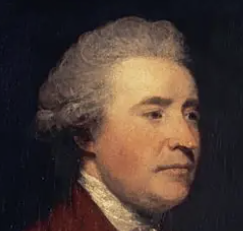
Frugality is founded on the principle that all riches have limits.

5 months 3 weeks ago
If we are to put interrogators to work in defence of liberal values, their role in the community must receive proper recognition. They will require intensive counselling to overcome the inevitable traumas that this difficult work involves. They must be enabled to see themselves as dedicated workers in the cause of progress. Psychotherapy must be available to help them avoid the negative self-image from which some torturers have suffered in the past.

7 months 3 weeks ago
All things are in the Universe, and the universe is in all things: we in it, and it in us; in this way everything concurs in a perfect unity.
8 months 2 weeks ago
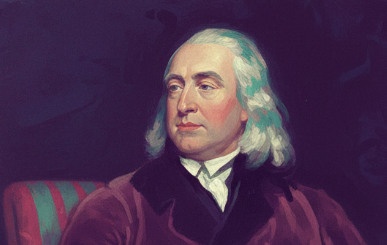
In principle and in practice, in a right track and in a wrong one, the rarest of all human qualities is consistency.
▼
Source
source
Ch. 1: Of the Principle of Utility
7 months 2 weeks ago
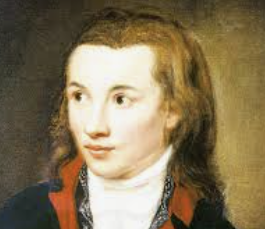
Not wise does it seem to attempt comprehending and understanding a Human World without full perfected Humanity. No talent must sleep; and if all are not alike active, all must be alert, and not oppressed and enervated. As we see a future Painter in the boy who fills every wall with sketches and variedly adds colour to figure; so we see a future Philosopher in him who restlessly traces and questions all natural things, pays heed to all, brings together whatever is remarkable, and rejoices when he has become master and possessor of a new phenomenon, of a new power and piece of knowledge.
8 months 2 weeks ago
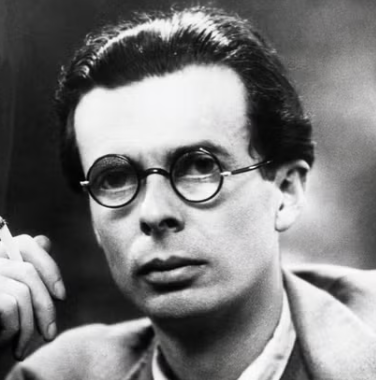
Music is an ocean, but the repertory is hardly even a lake; it is a pond.
▼
Source
source
Interview, Time magazine, December 1957

8 months 2 weeks ago
We think it also necessary to express our astonishment that a government, desirous of being called free, should prefer connection with the most despotic and arbitrary powers in Europe.
▼
Source
source
Address and Declaration at a Select Meeting of the Friends of Universal Peace and Liberty (August 20, 1791) p. 5
6 months 2 days ago
The great end of life is not knowledge but action.
▼
Source
source
"Technical Education"
8 months 2 weeks ago
The method of "postulating" what we want has many advantages; they are the same as the advantages of theft over honest toil.
▼
Source
source
Ch. 7: Rational, Real and Complex Numbers

9 months 2 days ago
You called and cried out loud and shattered my deafness. You were radiant and resplendent, you put to flight my blindness. You were fragrant, and I drew in my breath and now pant after you. I tasted you, and I feel but hunger and thirst for you. You touched me, and I am set on fire to attain the peace which is yours.

8 months 2 weeks ago
The "social contract," in the only sense in which it is not completely mythical, is a contract among conquerors, which loses its raison d'être if they are deprived of the benefits of conquest.
▼
Source
source
Ch. 12: Powers and forms of governments
6 months 2 weeks ago
We begin again to structure the primordial feelings...from which 3000 years of literacy divorced us. We begin again to live a myth.
▼
Source
source
(p. 17)
5 months 2 days ago
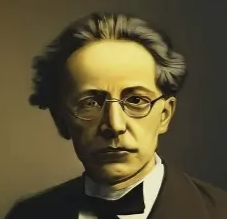
Criticism actually says: You must free your I so completely from all limitations that it becomes a human I. I say: Free yourself as far as you can, and you have done your part; because it is not given to everyone to break through all limits, or, more eloquently: that is not a limit for everyone which is one to the others. Consequently, don't exhaust yourself on the limits of others; it's enough if you tear down your own. Who has ever been able to break down even one limit for all people? Aren't countless people today, as at all times, running around with all the "limitations of humanity"? One who overturns one of his limits may have shown others the way and the means; the overturning of their limits remains their affair.
▼
Source
source
Landstreicher 2017, p. 97
9 months 2 weeks ago
The fact is that I've never called myself a genius, and I think the term has been cheapened by overuse into meaninglessness. If other people want to call me that, that's their problem.
4 months 4 weeks ago
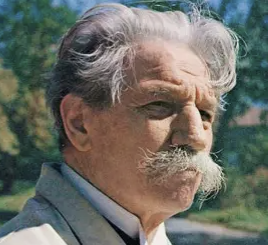
The only originality I claim is that for me this truth goes hand in hand with the intellectual certainty that the human spirit is capable of creating in our time a new mentality, an ethical mentality. Inspired by this certainty, I too proclaim this truth in the hope that my testimony may help to prevent its rejection as an admirable sentiment but a practical impossibility. Many a truth has lain unnoticed for a long time, ignored simply because no one perceived its potential for becoming reality.
5 months 1 day ago
It is true that every increase of knowledge may possibly render depravity more depraved, as well as it may increase the strength of virtue. It is in itself only power; and its value depends on its application.
▼
Source
source
"Female Education" (review of Thomas Broadhurst, Advice to Young Ladies on the Improvement of Mind, 1808), in The Edinburgh Review, No. 30 (January 1810), p. 314
7 months ago
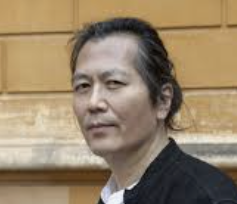
Eros and depression are opposites.

8 months 1 week ago
At one level, this movement on behalf of oppressed farm animals is emotional...Yet the movement is also the product of a deep intellectual ferment pioneered by the Princeton scholar Peter Singer...This idea popularized by Professor Singer - that we have ethical obligations that transcend our species - is one whose time appears to have come...What we're seeing now is an interesting moral moment: a grass-roots effort by members of one species to promote the welfare of others...animal rights are now firmly on the mainstream ethical agenda.
▼
Source
source
Nicholas Kristof, "Humanity Even for Nonhumans," in The New York Times (8 April 2009).
8 months 2 weeks ago
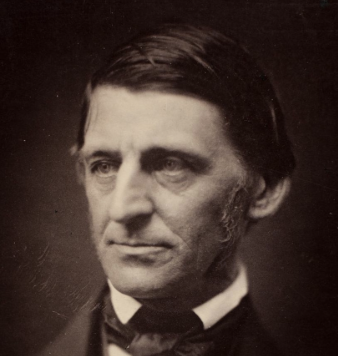
Wit makes its own welcome, and levels all distinctions. No dignity, no learning, and no force of character can make any stand against good wit.
▼
Source
source
The Comic
7 months 1 week ago
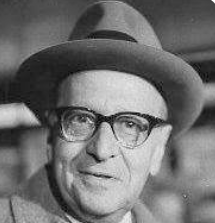
The characteristic activity of science is not construction, but induction. The more often something has occurred in the past, the more certain that it will in all the future. Knowledge relates solely to what is and to its recurrence. New forms of being, especially those arising from the historical activity of man, lie beyond empiricist theory. Thoughts which are not simply carried over from the prevailing pattern of consciousness, but arise from the aims and resolves of the individual, in short, all historical tendencies that reach beyond what is present and recurrent, do not belong to the domain of science.
▼
Source
source
p. 144.
9 months 2 weeks ago
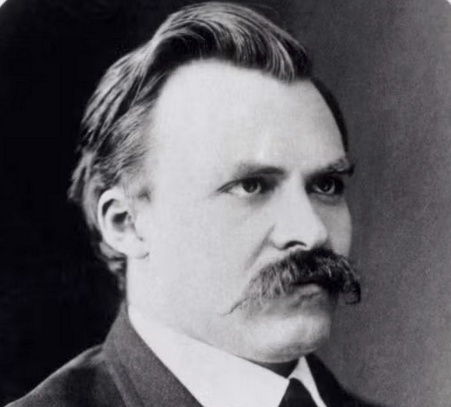
The pride connected with knowing and sensing lies like a blinding fog over the eyes and senses of men, thus deceiving them concerning the value of existence. For this pride contains within itself the most flattering estimation of the value of knowing. Deception is the most general effect of such pride, but even its most particular effects contain within themselves something of the same deceitful character.
5 months 4 weeks ago
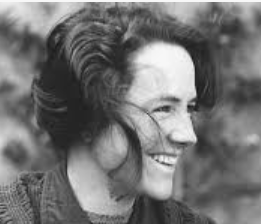
I must write it all out, at any cost. Writing is thinking. It is more than living, for it is being conscious of living.
▼
Source
source
Locked Rooms and Open Doors
8 months 2 weeks ago
The harm that is done by a religion is of two sorts, the one depending on the kind of belief which it is thought ought to be given to it, and the other upon the particular tenets believed. As regards the kind of belief: it is thought virtuous to have faith-that is to say, to have a conviction which cannot be shaken by contrary evidence. Or, if contrary evidence might induce doubt, it is held that contrary evidence must be suppressed.
▼
Source
source
preface xxiii
5 months 2 days ago
Religion is regarded by the common people as true, by the wise as false, and by rulers as useful.
▼
Source
source
As quoted in What Great Men Think About Religion (1945) by Ira D. Cardiff, p. 342.

7 months 3 weeks ago
"The will of the nation" is one of those expressions which have been most profusely abused by the wily and the despotic of every age.
▼
Source
source
Chapter IV.
8 months 2 weeks ago
Yes, I am so free. And what a superb absence is my soul.
▼
Source
source
Orestes, Act 1
7 months 1 week ago
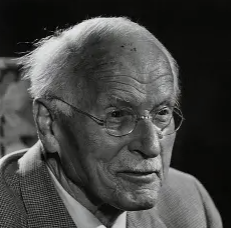
If there is anything that we wish to change in the child, we should first examine it and see whether it is not something that could better be changed in ourselves.
▼
Source
source
p. 285
8 months 4 days ago
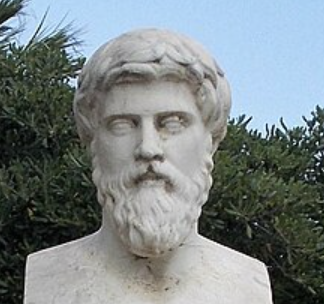
Cato requested old men not to add the disgrace of wickedness to old age, which was accompanied with many other evils.
▼
Source
source
Cato the Elder
CivilSimian.com created by AxiomaticPanic, CivilSimian, Kalokagathia