



6 months 3 weeks ago
A handful of soldiers is always better than a mouthful of arguments.
▼
Source
source
E 19

8 months 3 days ago
Commit no slander; so that infamy and wickedness may not happen unto thee.
▼
Source
source
(p. 59)

4 months 1 week ago
Only lay down true principles, and adhere to them inflexibly. Do not be frightened into their surrender by the alarms of the timid, or the croakings of wealth against the ascendency of the people.
4 months 1 week ago
Yet living and dying, honour and dishonour, pain and pleasure, riches and poverty, and so forth are equally the lot of good men and bad. Things like these neither elevate nor degrade; and therefore they are no more good than they are evil.
▼
Source
source
II, 11
4 months 1 week ago
I had rather be shut up in a very modest cottage with my books, my family and a few old friends, dining on simple bacon, and letting the world roll on as it liked, than to occupy the most splendid post, which any human power can give.
▼
Source
source
Letter to Alexander Donald

7 months 1 week ago
"Neither this world, nor the next, nor happiness are for the being abandoned to doubt." - This point in the Gita is my death sentence.
9 months 2 weeks ago
Most men are too concerned with themselves to be malicious.


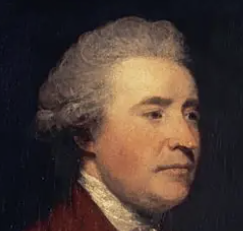
7 months 2 weeks ago
I am attached to Christianity at large; much from conviction; more from affection.
▼
Source
source
Letter to an unknown correspondent (26 January 1791), quoted in Alfred Cobban and Robert A. Smith (eds.), The Correspondence of Edmund Burke, Volume VI: July 1789-December 1791 (1967), p. 215
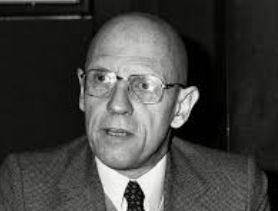
8 months 1 week ago
The constitution of madness as mental illness, at the end of the eighteenth century, bears witness to a rupture in a dialogue, gives the separation as already enacted, and expels from the memory all those imperfect words, of no fixed syntax, spoken falteringly, in which the exchange between madness and reason was carried out. The language of psychiatry, which is a monologue by reason about madness, could only have come into existence in such a silence.
▼
Source
source
Preface to 1961 edition
4 months 1 week ago
Truth will do well enough if left to shift for herself. She seldom has received much aid from the power of great men to whom she is rarely known & seldom welcome. She has no need of force to procure entrance into the minds of men. Error indeed has often prevailed by the assistance of power or force. Truth is the proper & sufficient antagonist to error.
▼
Source
source
Notes on Religion (October 1776), published in The Writings of Thomas Jefferson : 1816-1826 (1899) edited by Paul Leicester Ford, v. 2, p. 102
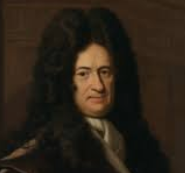
8 months 2 weeks ago
The love of God consists in an ardent desire to procure the general welfare, and reason teaches me that there is nothing which contributes more to the general welfare of mankind than the perfection of reason.
▼
Source
source
Closing sentence of the Preface to the general science (1677) (in P. Wiener (ed.), Leibniz Selections, Macmilland Press Ltd, 1951).
4 months 1 week ago
By a tranquil mind I mean nothing else than a mind well ordered.
▼
Source
source
IV, 3

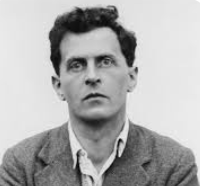
8 months 1 week ago
If someone is merely ahead of his time, it will catch up to him one day.
▼
Source
source
p. 8e
4 months 1 week ago
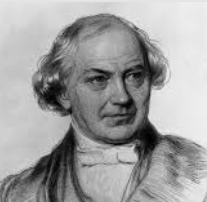
'The Law of Continuity' is this:-that a quantity cannot pass from one amount to another by any change of conditions, without passing through all intermediate magnitudes according to the intermediate conditions. It may often be employed to disprove distinctions which have no real foundation. 'The Method of Gradation' consists in taking a number of stages of a property in question, intermediate between two extreme cases which appear to be different. It is employed to determine whether the extreme cases are really distinct or not. 'The Method of Gradation', applied to decide the question, whether the existing phenomena arise from existing causes, leads to this result:-That the phenomena do appear to arise from existing causes, but that the action of existing causes have transgressed their recorded Limits of Intensity. 'The Method of Natural Classification' consists in classing cases, not according to any assumed definition, but according to the connexion of the facts themselves.
6 months 3 weeks ago
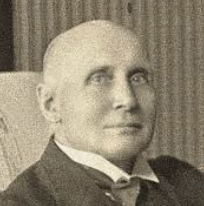
Education is the acquisition of the art of the utilisation of knowledge.

8 months 4 weeks ago
Thus, in this universal catastrophe, the sufferings of Christians have tended to their moral improvement, because they viewed them with eyes of faith.
▼
Source
source
I, 9

7 months 3 days ago
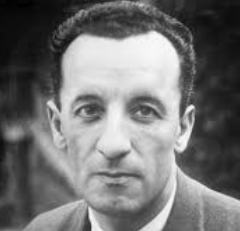
Hardness and softness, roughness and smoothness, moonlight and sunlight present themselves in our recollection not preeminently as sensory contents but as certain kinds of symbioses, certain ways outside has of invading us and certain ways we have of meets this invasion...
▼
Source
source
p. 317
4 months 4 weeks ago
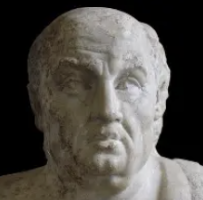
Or, if you enjoy living with Greeks also, spend your time with Socrates and with Zeno: the former will show you how to die if it be necessary; the latter how to die before it is necessary. Live with Chrysippus, with Posidonius: they will make you acquainted with things earthly and things heavenly; they will bid you work hard over something more than neat turns of language and phrases mouthed forth for the entertainment of listeners; they will bid you be stout of heart and rise superior to threats. The only harbour safe from the seething storms of this life is scorn of the future, a firm stand, a readiness to receive Fortune's missiles full in the breast, neither skulking nor turning the back.

9 months 1 week ago
The greatest saving one can make in the order of thought is to accept the unintelligibility of the world and to pay attention to man.

7 months 5 days ago
What is exalted among men is an abomination in the sight of God.
▼
Source
source
16:15 ESV
7 months 5 days ago
Miracles are propitious accidents, the natural causes of which are too complicated to be readily understood.
7 months 5 days ago
Christian Kings may erre in deducing a Consequence, but who shall Judge?
▼
Source
source
The Third Part, Chapter 43, p. 330

6 months 3 weeks ago
Since we live in a society that promotes faddism and temporary superficial adaptation of different values, we are easily convinced that changes have occurred in arenas where there has been little or no change.
9 months 2 weeks ago
The objective of all human arrangements is through distracting one's thoughts to cease to be aware of life.
9 months 1 week ago
Printing will tell you such useful things and such interesting things that not being able to read would be as bad as not being able to see.
6 months 3 weeks ago
Man loves company - even if it is only that of a small burning candle.
▼
Source
source
K 40
9 months 1 week ago
"My field," said Goethe, "is time." That is indeed the absurd speech. What, in fact, is the Absurd Man? He who, without negating it, does nothing for the eternal. Not that nostalgia is foreign to him. But he prefers his courage and his reasoning. The first teaches him to live without appeal and to get along with what he has; the second informs him of his limits. Assured of his temporally limited freedom, of his revolt devoid of future, and of his mortal consciousness, he lives out his adventure within the span of his lifetime.


4 months 1 week ago
I think we must be careful about too easily accepting, or being too easily grateful for, sacrifices made by others, especially if we have made none ourselves.
7 months 5 days ago
This mutual dependencies no longer the dialectical relationship between master and servant, which has been broken in the struggle for mutual recognition, but rather a vicious circle which encloses both the master and the servant. Do the technicians rule, or is their rule that of the others, who rely on the technicians as their planners and executors?
▼
Source
source
p. 33
4 months 1 week ago
He that dies in extreme old age will be reduced to the same state with him that is cut down untimely.
▼
Source
source
IX, 33
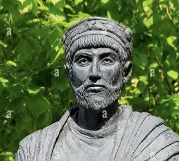
4 months 3 weeks ago
Who then is the Mother of the Gods? She is the Source of the Intelligible and Creative Powers, which direct the visible ones; she that gave birth to and copulated with the mighty Jupiter: she that exists as a great goddess next to the Great One, and in union with the Great Creator; she that is dispenser of all life; cause of all birth; most easily accomplishing all that is made; generating without passion; creating all that exists in concert with the Father; herself a virgin, without mother, sharing the throne of Jupiter, the mother in very truth of all the gods; for by receiving within herself the causes of all the intelligible deities that be above the world, she became the source to things the objects of intellect.
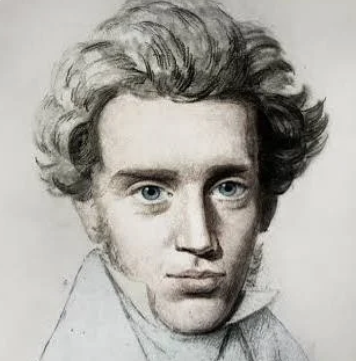
9 months 2 weeks ago
If the ethical, that is, social morality is the highest ... then no categories are needed other than the Greek philosophical categories.
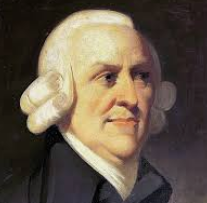
8 months 2 weeks ago
The value which the workmen add to the materials, therefore, resolves itself in this case into two parts, of which the one pays their wages, the other the profits of the employer upon the whole stock of materials and wages which he advanced.
▼
Source
source
Chapter VI, p. 58.

6 months 3 weeks ago
Silent listening unites a people and creates community without communication.
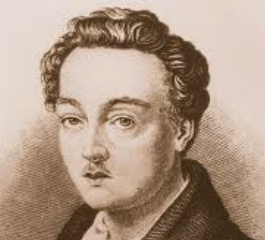
7 months 1 week ago
The death clock is ticking slowly in our breast, and each drop of blood measures its time, and our life is a lingering fever.
▼
Source
source
Act II.
9 months 1 week ago
This was her finest role and the hardest one to play. Choosing between heaven and a ridiculous fidelity, preferring oneself to eternity or losing oneself in God is the age-old tragedy in which each must play his part.
8 months 1 week ago
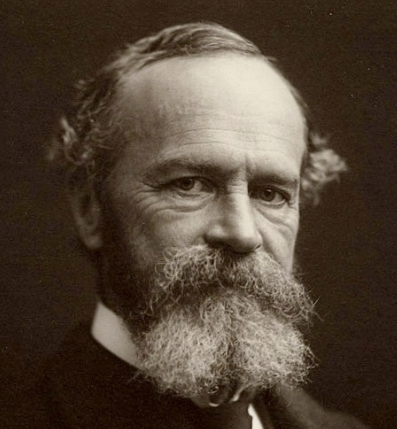
The practical consequence of such a[n individualistic] philosophy is the well-known democratic respect for the sacredness of individuality,-is, at any rate, the outward tolerance of whatever is not itself intolerant. These phrases are so familiar that they sound now rather dead in our ears. Once they had a passionate inner meaning. Such a passionate inner meaning they may easily acquire again if the pretension of our nation to inflict its own inner ideals and institutions vi et armis upon Orientals should meet with a resistance as obdurate as so far it has been gallant and spirited. Religiously and philosophically, our ancient national doctrine of live and let live may prove to have a far deeper meaning than our people now seem to imagine it to possess.
▼
Source
source
"Preface"
8 months 2 weeks ago
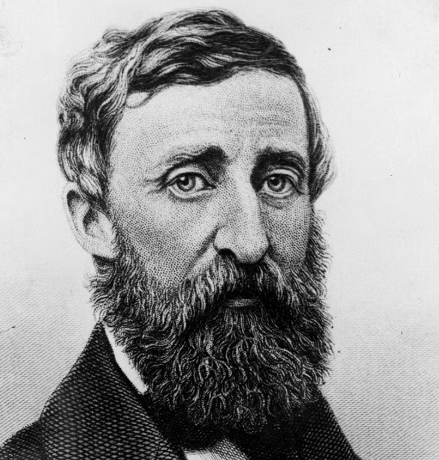
Let a man take time enough for the most trivial deed, though it be but the paring of his nails. The buds swell imperceptibly, without hurry or confusion; as if the short spring days were an eternity.
▼
Source
source
Pearls of Thought (1881) p. 175
8 months 1 week ago
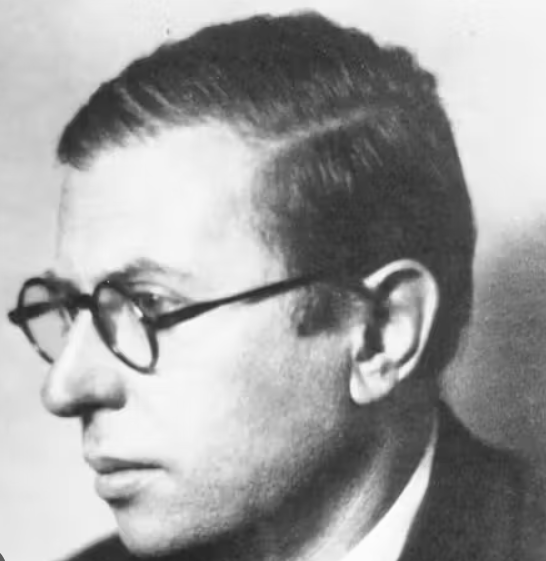
I exist, that is all, and I find it nauseating.
7 months 2 weeks ago
The arbitrary rule of a just and enlightened prince is always bad. His virtues are the most dangerous and the surest form of seduction: they lull a people imperceptibly into the habit of loving, respecting, and serving his successor, whoever that successor may be, no matter how wicked or stupid.
▼
Source
source
Refutation of Helvétius
8 months 2 weeks ago
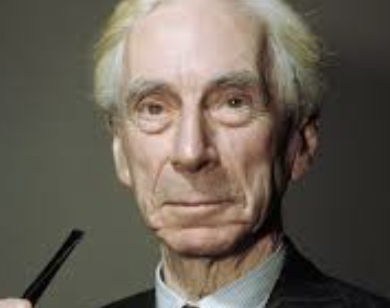
The instinctive foundation of the intellectual life is curiosity, which is found among animals in its elementary forms. Intelligence demands an alert curiosity, but it must be of a certain kind. The sort that leads village neighbours to try to peer through curtains after dark has no very high value. The widespread interest in gossip is inspired, not by a love of knowledge but by malice: no one gossips about other people's secret virtues, but only about their secret vices. Accordingly most gossip is untrue, but care is taken not to verify it. Our neighbour's sins, like the consolations of religion, are so agreeable that we do not stop to scrutinise the evidence closely.
▼
Source
source
On Education, Especially in Early Childhood (1926), Ch. 2: The Aims of Education, p. 50
6 months 1 week ago
Poetry and the arts can't exist in America. Mere exposure to the arts does nothing for a mentality which is incorrigibly dialectical. The vital tensions and nutritive action of ideogram remain inaccessible to this state of mind.
▼
Source
source
Letter to Ezra Pound
7 months 5 days ago
The precarious ontological link between Logos and Eros is broken, and scientific rationality emerges as essentially neutral.
▼
Source
source
p. 147
CivilSimian.com created by AxiomaticPanic, CivilSimian, Kalokagathia