

4 months 1 week ago
I must confess (sayes Eleutherius) I have, in the reading of Paracelsus and other Chymical Authors, been troubled to find, that such hard Words and Equivocal Expressions, as You justly complain of, do even when they treat of Principles, seem to be studiously affected by those Writers; whether to make themselves to be admir'd by their Readers, and their Art appear more Venerable and Mysterious, or, (as they would have us think) to conceal from them a Knowledge themselves judge inestimable.
7 months 2 weeks ago
Frugality is founded on the principle that all riches have limits.
7 months 1 week ago
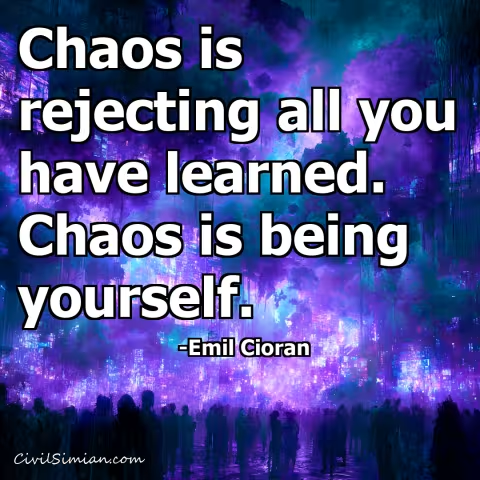
To think that so many have succeeded in dying!
4 months 2 weeks ago
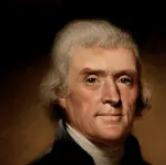
The two principles on which our conduct towards the Indians should be founded, are justice and fear. After the injuries we have done them, they cannot love us....
▼
Source
source
Letter to Benjamin Hawkins (13 August 1786) Lipscomb & Bergh ed. 5:390
8 months 2 weeks ago
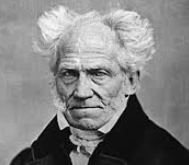
In the sphere of thought, absurdity and perversity remain the masters of the world, and their dominion is suspended only for brief periods.
▼
Source
source
"The Art of Controversy" as translated by T. Bailey Saunders
8 months 2 weeks ago
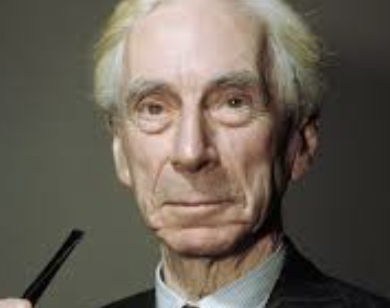
It is, of course, clear that a country with a large foreign population must endeavour, through its schools, to assimilate the children of immigrants. It is, however, unfortunate that a large part of this process should be effected by means of a somewhat blatant nationalism.
▼
Source
source
Ch. 10: Modern Homogeneity
9 months ago
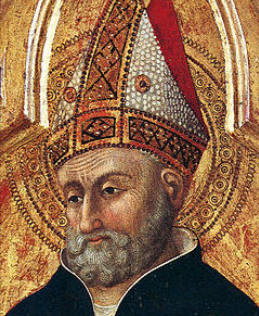
Even then [at the time of Peter's speech in Acts 2] it was the last days; how much more so now, when there must still be as much time till the end of the world as has passed since the ascension of the Lord! We do not know the end of the world, because it is not for us to know the times or the seasons that the Father has set in his power; but we know that, like the apostles, we live in the last times, in the last days, in the last hour. Those who lived after the apostles and before us were more in what we call the last times, and we ourselves are in them even more than they; those who will come after us will be so much more, till one gets to those who will be, if one may say so, the last of the last, and finally till that day, the very last, of which the Lord means to speak when he said, "And I will raise him up on the last day". How far are we from that day? That is an impenetrable secret.

6 months 3 weeks ago
Considered as a whole, Hesse's achievement can hardly be matched in modern literature; it is the continually rising trajectory of an idea, the fundamentally religious idea of how to 'live more abundantly'. Hesse has little imagination in the sense that Shakespeare or Tolstoy can be said to have imagination, but his ideas have a vitality that more than makes up for it. Before all, he is a novelist who used the novel to explore the problem: What should we do with our lives? The man who is interested to know how he should live instead of merely taking life as it comes, is automatically an Outsider.
▼
Source
source
p. 77
8 months 2 weeks ago
In Mohammedanism the narrow principle of the Jews is expanded into universality and thereby overcome. Here, God is no longer, as in the Far East, regarded as existent in an immediately sensory way but is conceived as the one infinite power elevated above all the multiplicity of the world. Mohammedanism is, therefore, in the strictest sense of the word, the religion of sublimity.
▼
Source
source
Hegel, Philosophy of Mind (quoted by W. Wallace & A. V. Miller in Philosophy of Mind, Oxford 2010; also quoted in other words by Slavoj Žižek in A Glance into the Archives of Islam, Lacan dot com, 1997).
7 months 1 week ago
I like to walk about amidst the beautiful things that adorn the world; but private wealth I should decline, or any sort of personal possessions, because they would take away my liberty.
▼
Source
source
"The Irony of Liberalism"
7 months 1 week ago
On fact, the whole machinery of our intelligence, our general ideas and laws, fixed and external objects, principles, persons, and gods, are so many symbolic, algebraic expressions. They stand for experience; experience which we are incapable of retaining and surveying in its multitudinous immediacy. We should flounder hopelessly, like the animals, did we not keep ourselves afloat and direct our course by these intellectual devices.
▼
Source
source
Theory helps us to bear our ignorance of fact. Pt. III, Form; § 30: "The average modified in the direction of pleasure.", p. 125
7 months 1 week ago
For such Truth as opposeth no man's profit nor pleasure is to all men welcome.
▼
Source
source
Review and Conclusion, p. 396, (Last text line)
4 months 1 week ago
In a word, the mass of the people counts for nothing in every political creation. A people even respects a government only because it is not its own creation. This feeling is engraved on its heart in profound characters. It submits to sovereignty because it senses that it is something sacred it can neither create nor destroy. If, as a consequence of corruption and perfidious suggestions, this preventive sentiment is somehow effaced, if it has the misfortune of believing itself called as a body to reform the State, all is lost. This is why, even in free States, it is extremely important that the men who govern be separated from the mass of the people by that personal respect stemming from birth and wealth.
▼
Source
source
p. 73
8 months 2 weeks ago
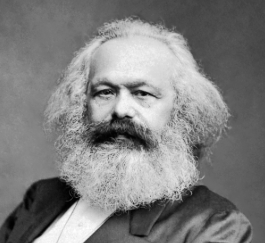
We see then, commodities are in love with money, but "the course of true love never did run smooth".
▼
Source
source
Vol. I, Ch. 3, Section 2, pg. 121.
6 months 2 weeks ago
A king is history's slave.
▼
Source
source
Bk. IX, ch. 1
8 months 2 weeks ago
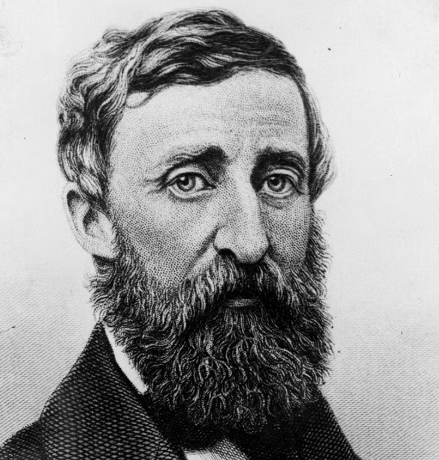
Let us not underrate the value of a fact; it will one day flower in a truth.
▼
Source
source
"Natural History of Massachusetts". The Dial (July 1842) p. 39
6 months 1 week ago
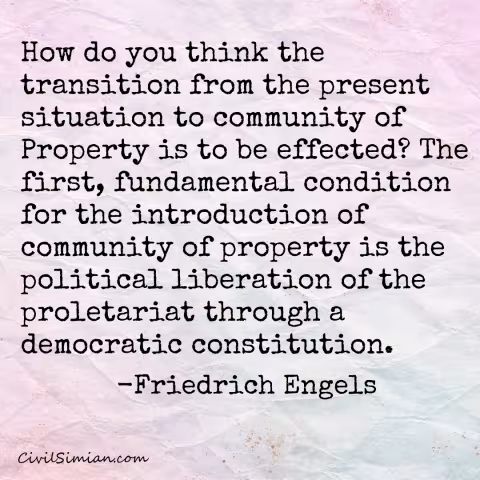
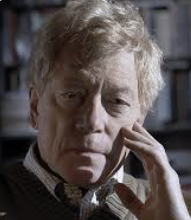
There is no doubt in my mind that, from the third-person point of view, monarchy is the most reasonable form of government. By embodying the state in a fragile human person, it captures the arbitrariness and the givenness of political allegiance, and so transforms allegiance into affection.
▼
Source
source
The Meaning of Conservatism: Third Edition (2001), p. 193
8 months 2 weeks ago
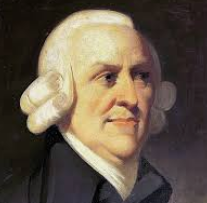
Every man is, no doubt, by nature, first and principally recommended to his own care; and as he is fitter to take care of himself than of any other person, it is fit and right that it should be so.
▼
Source
source
Section II, Chap. II.
7 months 1 week ago
What a judgment upon the living, if it is true, as has been maintained, that what dies has never existed!
7 months 1 week ago
Life creates itself in delirium and is undone in ennui.
7 months 2 weeks ago
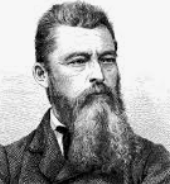
Religion is the dream of the human mind. But even in dreams we do not find ourselves in emptiness or in heaven, but on earth, in the realm of reality; we only see real things in the entrancing splendor of imagination and caprice, instead of in the simple daylight of reality and necessity.
▼
Source
source
Preface to Second Edition
4 months 1 week ago
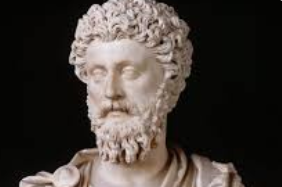
Another may be more expert in casting [throwing] his opponent; but he is not more social, nor more modest, nor better disciplined to meet all that happens, nor more considerate with respect to the faults of his neighbors.
▼
Source
source
VII, 52
8 months 2 weeks ago
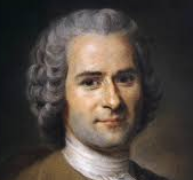
As a general rule-never substitute the symbol for the thing signified, unless it is impossible to show the thing itself; for the child's attention is so taken up with the symbol that he will forget what it signifies.
8 months 5 days ago
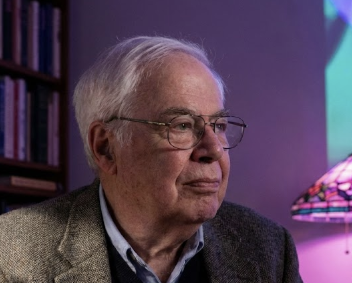
When the individual finds in her conscience beliefs that are relevant to public policy but incapable of the defense on the basis of beliefs common to her fellow citizens, she must sacrifice her conscience on the altar of public expediency.
5 months 5 days ago
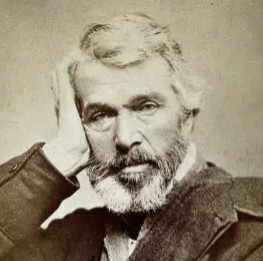
All that Mankind has done, thought, gained or been: it is lying as in magic preservation in the pages of Books.
9 months 1 week ago
By 1204, the only place where the entire body of Greek learning existed, still intact, was Constantinople. As a result of the crusaders' conquest, however, Constantinople was ruthlessly pillaged and destroyed and almost all the great treasures of ancient Greek learning were lost forever. It is because of that sack, for instance, that we have only seven plays left out of the better than one hundred written by Sophocles. The tragedy of 1204 can never be undone and for all of time, only bits and pieces of the marvelous Greek world can be known to us.
4 months 2 weeks ago
The heart unites whatever the mind separates, pushes on beyond the arena of necessity and transmutes the struggle into love.
4 months 3 weeks ago
We came to a tree which was still bare, and on which the birds were singing out gaily in the morning, without any fear of us. Then stooping over like an Indian on the hunt, my companion placed a pebble in the leather of his sling and stretched it. Obeying his peremptory glance I did the same, with frightful twinges of conscience, vowing firmly that I would shoot when he did. At that very moment the church bells began to sound, mingling with the song of the birds in the sunshine. It was the warning bell that came a half-hour before the main bell. For me it was a voice from heaven. I threw the sling down, scaring the birds away, so that they were safe from my companion's sling, and fled home. And ever afterwards when the bells of Holy Week ring out amidst the leafless trees in the sunshine I remember with moving gratitude how they rang into my heart at that time the commandment: Thou shalt not kill.
6 months 3 weeks ago
It is almost impossible to bear the torch of truth through a crowd without singeing somebody's beard.
▼
Source
source
4 Variant translations: It is almost impossible to carry the torch of wisdom through a crowd without singeing someone's beard. It is virtually impossible to carry the torch of truth through a crowd, without singeing someone's beard
9 months 3 days ago
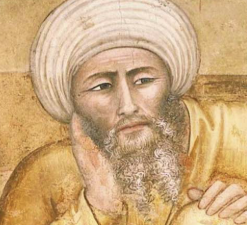
It is quite clear to you that all the people see that lower kinds of creation could have been made in a different way from that in which they really are, and as they see this lower degree in many things they think that they must have been made by chance.
6 months 3 weeks ago
A on his lips and not-A in his heart.
▼
Source
source
E 95
8 months 2 weeks ago
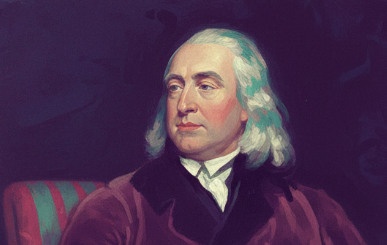
In looking over the catalogue of human actions (says a partizan of this principle) in order to determine which of them are to be marked with the seal of disapprobation, you need but to take counsel of your own feelings: whatever you find in yourself a propensity to condemn, is wrong for that very reason. For the same reason it is also meet for punishment: in what proportion it is adverse to utility, or whether it be adverse to utility at all, is a matter that makes no difference. In that same proportion also is it meet for punishment: if you hate much, punish much: if you hate little, punish little: punish as you hate. If you hate not at all, punish not at all: the fine feelings of the soul are not to be overborne and tyrannized by the harsh and rugged dictates of political utility.
▼
Source
source
Ch. 2: Of Principles Adverse to That of Utility
8 months 2 days ago
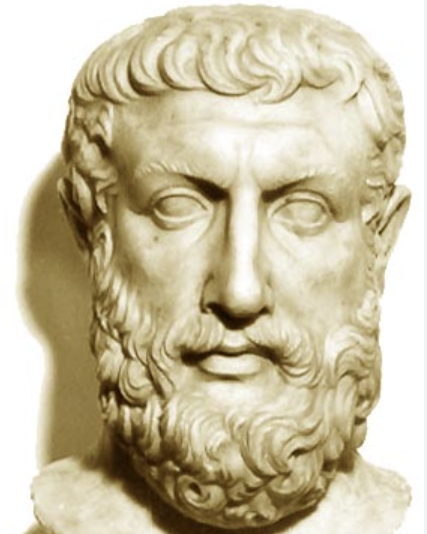
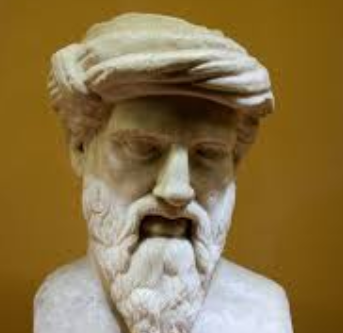
There is one story left, one road: that it is. And on this road there are very many signs that, being, is uncreated and imperishable, whole, unique, unwavering, and complete.
▼
Source
source
Frag. B 8.1-4, quoted by Simplicius, Commentary on the Physics, 144
7 months ago
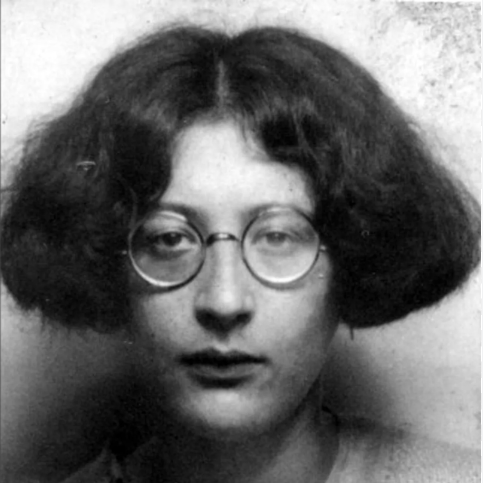
Religion in so far as it is a source of consolation is a hindrance to true faith; and in this sense atheism is a purification. I have to be an atheist with that part of myself which is not made for God. Among those in whom the supernatural part of themselves has not been awakened, the atheists are right and the believers wrong.
▼
Source
source
"Faiths of Meditation; Contemplation of the divine" as translated in The Simone Weil Reader (1957) edited by George A. Panichas, p. 417
6 months 3 weeks ago
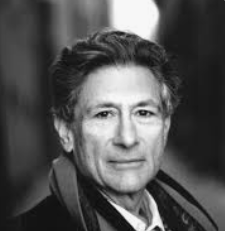
The central fact for me is, I think, that the [role of the] intellectual ... cannot be played without a sense of being someone whose place it is publicly to raise embarrassing questions, to confront orthodoxy and dogma (rather than to produce them), to be someone who cannot easily be co-opted by governments or corporations, and whose raison d'être is to represent all those people and issues that are routinely forgotten or swept under the rug. Representation of the Intellectual
▼
Source
source
1994

4 months 1 week ago
It's not about telling people how to be, outside of supporting ideals that teach us what to avoid.
4 months 1 week ago
I have often wondered how it should come to pass, that every man loving himself best, should more regard other men's opinions concerning himself than his own.
▼
Source
source
XII, 3
4 months 2 weeks ago
There are extraordinary situations which require extraordinary interposition. An exasperated people, who feel that they possess power, are not easily restrained within limits strictly regular.
7 months 3 weeks ago
Tell not abroad what thou intendest to do; for if thou speed not, thou shalt be mocked!
5 months 5 days ago
Europe has made much; great cities, great empires, encyclopaedias, creeds, bodies of opinion and practice: but it has made little of the class of Dante's Thought.
7 months 1 week ago
Progress is the injustice each generation commits with regard to its predecessor.
8 months 1 week ago
100 per cent of us die, and the percentage cannot be increased.
7 months 3 weeks ago
Honor Wisdom; and deny it not to them that would learn; and shew it unto them that dispraise it! Sow not the sea fields!
4 months 2 weeks ago
The Ambassador answered us that it was founded on the laws of their Prophet; that it was written in their Koran; that all nations who should not have acknowledged their authority were sinners; that it was their right and duty to make war upon them wherever they could be found, and to make slaves of all they could take as prisoners; and that every Mussulman who was slain in battle was sure to go to Paradise. He said, also, that the man who was the first to board a vessel had one slave over and above his share, and that when they sprang to the deck of an enemy's ship, every sailor held a dagger in each hand and a third in his mouth; which usually struck such terror into the foe that they cried out for quarter at once. That it was a law that the first who boarded an Enemy's Vessell should have one slave.
▼
Source
source
Concerning an interview in London with the ambassador from Tripoli, Sidi Haji Abdul Rahman Adja.
6 months 3 weeks ago
Man should possess an infinite appetite for life. It should be self-evident to him, all the time, that life is superb, glorious, endlessly rich, infinitely desirable. At present, because he is in a midway position between the brute and the truly human, he is always getting bored, depressed, weary of life. He has become so top-heavy with civilisation that he cannot contact the springs of pure vitality. Control of the prefrontal cortex will change all of this. He will cease to cast nostalgic glances towards the womb, for he will realise that death is no escape. Man is a creature of life and the daylight; his destiny lies in total objectivity.
▼
Source
source
pp. 317-318
CivilSimian.com created by AxiomaticPanic, CivilSimian, Kalokagathia