




7 months 2 weeks ago
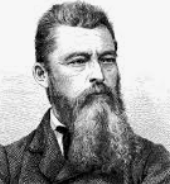
The first philosophers were astronomers. The heavens remind man ... that he is destined not merely to act, but also to contemplate.
▼
Source
source
Introduction, Z. Hanfi, trans., in The Fiery Brook (1972), pp. 101-102
6 months 4 weeks ago
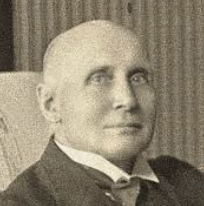
Buddhism is the most colossal example in the history of applied metaphysics.
▼
Source
source
in Verhoeven, Martin J. 2001. "Buddhism and Science: Probing the Boundaries Of Faith and Reason." Religion East and West (1): 77-97.
9 months 2 weeks ago
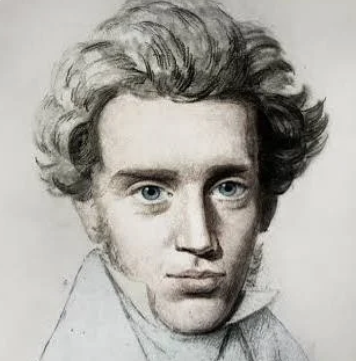
The person who is going to preach ought to live in the Christian thoughts and ideas: they ought to be his daily life. If so, this is the view of Christianity, then you, too, will have eloquence enough and precisely that which is needed when you speak extemporaneously without specific preparation. However, it is fallacious eloquence if someone, without otherwise occupying himself with, without living in these thoughts, once in a while sits down and laboriously collects such thoughts, perhaps in the field of literature, and then works them into a well-composed discourse, which is then committed to memory and delivered superbly, with respect both to voice and diction and gestures.

9 months 2 weeks ago
Spontaneous love can reach the point of despair, shows that it is in despair, that even when it is happy it loves with the power of despair.
8 months 4 days ago
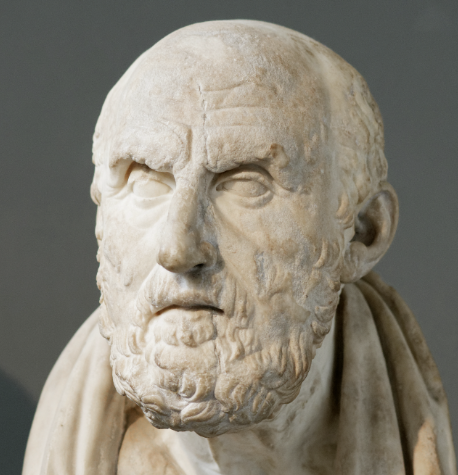
He who is running a race ought to endeavor and strive to the utmost of his ability to come off victor; but it is utterly wrong for him to trip up his competitor, or to push him aside. So in life it is not unfair for one to seek for himself what may accrue to his benefit; but it is not right to take it from another.
▼
Source
source
As quoted in De Officiis by Cicero, iii. 10.
7 months 2 weeks ago
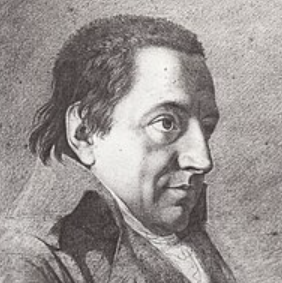
Who am I? Subject and object in one - contemplating and contemplated, thinking and thought of. As both must I have become what I am.
▼
Source
source
Jane Sinnett, trans 1846 p. 71
7 months 1 week ago
Since it is difficult to approve the reasons people invoke, each time we leave one of our 'fellow men', the question which comes to mind is invariably the same: how does he keep from killing himself?
7 months 1 week ago
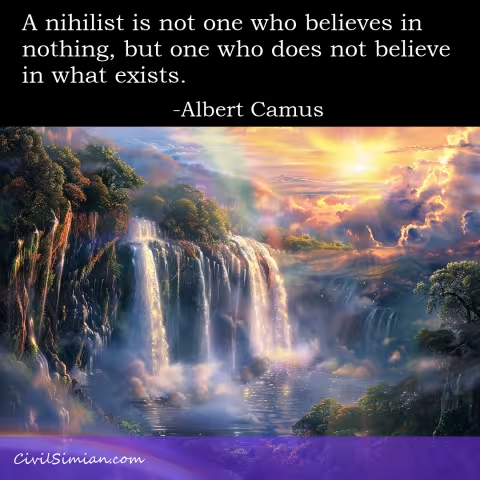
In theory, it matters little to me whether I live as whether I die; in practice, I am lacerated by every anxiety which opens an abyss between life and death.
5 months ago
The proof of a theory is in its reasoning, not in its sponsorship.
6 months 1 week ago
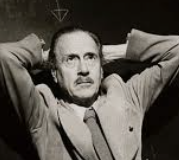
The sculptural qualities of the image dim down the purely personal identity.
▼
Source
source
(p. 369)
8 months 2 weeks ago
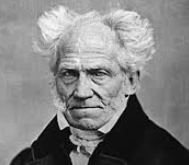
For a work to become immortal it must possess so many excellences that it will not be easy to find a man who understands and values them all; so that there will be in all ages men who recognise and appreciate some of these excellences; by this means the credit of the work will be retained throughout the long course of centuries and ever-changing interests, for, as it is appreciated first in this sense, then in that, the interest is never exhausted.

6 months 3 weeks ago
Logos is powerless without the force of eros.
9 months 4 days ago
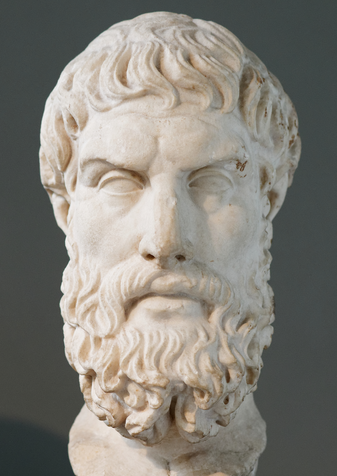
It is impossible for someone to dispel his fears about the most important matters if he doesn't know the nature of the universe but still gives some credence to myths. So without the study of nature there is no enjoyment of pure pleasure.
4 months 4 weeks ago
No man has ever been so far advanced by Fortune that she did not threaten him as greatly as she had previously indulged him.
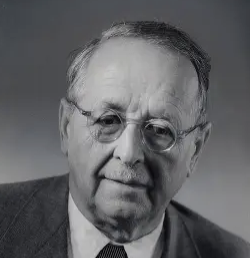
4 months 3 weeks ago
The rapid development of science... has, as it were, burst its old shell, now become too narrow.
▼
Source
source
Introduction
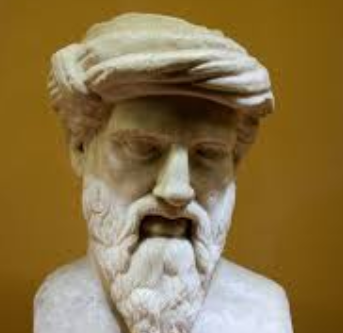
7 months 3 weeks ago
Choose always the way that seems the best, however rough it may be; custom will soon render it easy and agreeable.
▼
Source
source
As quoted in A Dictionary of Thoughts: Being a Cyclopedia of Laconic Quotations from the Best Authors of the World, both Ancient and Modern (1908) by Tyron Edwards, p. 101
7 months 1 week ago
What surrounds us we endure better for giving it a name - and moving on.
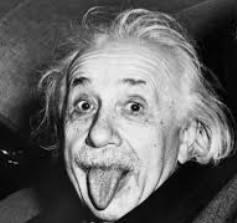
4 months 4 days ago
The most simple picture one can form about the creation of an empirical science is along the lines of an inductive method. Individual facts are selected and grouped together such that their lawful connection becomes clearly apparent. ... The truly great advances in our understanding of nature originated in a manner almost diametrically opposed to induction. The intuitive grasp of the essentials or a large complex of facts leads the scientist to the postulation of a hypothetical basic law, or several such basic laws. From the basic laws (system of axioms) he derives his conclusions as completely as possible in a purely logically deductive manner. These conclusions, derived from the basic laws (and often only after time-consuming developments and calculations), can then be compared to experience, and in this manner provide criteria for the justification of the assumed basic law.
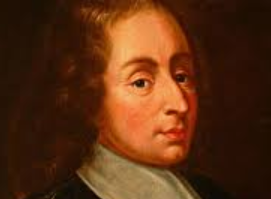
8 months 3 weeks ago
Mahomet established a religion by putting his enemies to death; Jesus Christ, by commanding his followers to lay down their own lives.
▼
Source
source
Thoughts on Religion and Philosophy (W. Collins, 1838), Ch. XVI, p. 202
6 months 1 week ago
By simply moving information and brushing information against information, any medium whatever creates vast wealth.
8 months 1 week ago
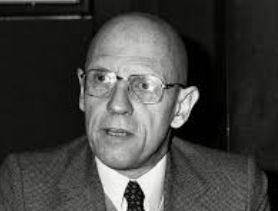
In France at least, the history of science and thought gives pride of place sciences, sciences of the necessary, all close to philosophy: one can observe in their history the almost uninterrupted emergence of truth and pure reason. The other disciplines, however - those, for example, that concern living beings, languages, or economic facts - are considered too tinged with empirical thought, too exposed to the vagaries of chance or imagery to age old traditions and external events, for it to be supposed that their history could be anything other irregular. At most, they are expected to provide evidence of a state of mind, an intellectual fashion, a mixture of archaism and bold conjecture, of intuition and blindness. But what if empirical knowledge, at a given time and in a given culture, did possess a well defined regularity.
▼
Source
source
Foreword to the English edition
4 months 1 week ago
Relativism is a product of the modern historical-sociological procedure which is based on the recognition that all historical thinking is bound up with the concrete position in life of the thinker [Standortsgebundenheit des Denkers]. But relativism combines this historical-sociological insight with an older theory of knowledge which was as yet unaware of the interplay between conditions of existence and modes of thought, and which modelled its knowledge after static prototypes such as might be exemplified by the proposition 2 x 2 = 4. This older type of thought, which regarded such examples as the model of all thought, was necessarily led to the rejection of all those forms of knowledge which were dependent upon the subjective standpoint and the social situation of the knower, and which were, hence, merely "relative".
7 months 2 weeks ago
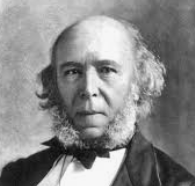
Evolution is definable as a change from an incoherent homogeneity to a coherent heterogeneity, accompanying the dissipation of motion and integration of matter.
▼
Source
source
Pt. II, The Knowable; Ch. XV, The Law of Evolution (continued)
8 months 1 week ago
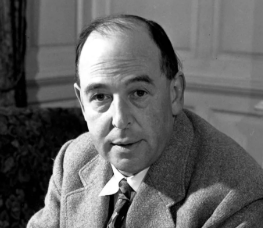
Friendship is the greatest of worldly goods. Certainly to me it is the chief happiness of life. If I had to give a piece of advice to a young man about a place to live, I think I shd. say, 'sacrifice almost everything to live where you can be near your friends.
▼
Source
source
Letter to Arthur Greeves (29 December 1935) - in They Stand Together: The Letters of C. S. Lewis to Arthur Greeves (1914-1963) (1979), p. 477
7 months 2 weeks ago
Impenetrable in their dissimulation, cruel in their vengeance, tenacious in their purposes, unscrupulous as to their methods, animated by profound and hidden hatred for the tyranny of man - it is as though there exists among them an ever-present conspiracy toward domination, a sort of alliance like that subsisting among the priests of every country.
▼
Source
source
"On Women" (1772), as translated in Selected Writings (1966) edited by Lester G. Crocker

5 months 4 weeks ago
Instead of water belonging to millions of local communities, water too is to be controlled by five or six global water giants. These are recipes that use economic systems to appropriate for the few the base of survival of the majority.

4 months 2 weeks ago
I hope we shall... crush in it's birth the aristocracy of our monied corporations which dare already to challenge our government to a trial of strength and bid defiance to the laws of our country.
▼
Source
source
Letter to George Logan, 1816
9 months 1 week ago
The Autarch maintained his indifferent calm, but a certain lack of certainty was gathering, and he did not like to experience a lack of certainty. He liked nothing which made him aware of limitations. An Autarch should have no limitations, and on Lingane he had none that natural law did not impose.
6 months 3 weeks ago
It is thought pretty to say that "Women have no passion." If passion is excitement in the daily social intercourse with men, women think about marriage much more than men do; it is the only event of their lives. It ought to be a sacred event, but surely not the only event of a woman's life, as it is now. Many women spend their lives in asking men to marry them, in a refined way. Yet it is true that women are seldom in love. How can they be?
9 months 1 week ago
The saddest aspect of life right now is that science gathers knowledge faster than society gathers wisdom.
8 months 3 weeks ago
The middle sort of historians (of which the most part are) spoil all; they will chew our meat for us.
▼
Source
source
Book II, Ch. 10. Of Books

7 months 5 days ago
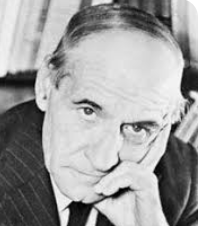
Every living creature is happy when he fulfills his destiny, that is, when he realizes himself, when he is being that which in truth he is. For this reason, Schlegel, inverting the relationship between pleasure and destiny, said, "We have a genius for what we like." Genius, man's superlative gift for doing something, always carries a look of supreme pleasure.
▼
Source
source
pp. 16-17
8 months 1 week ago
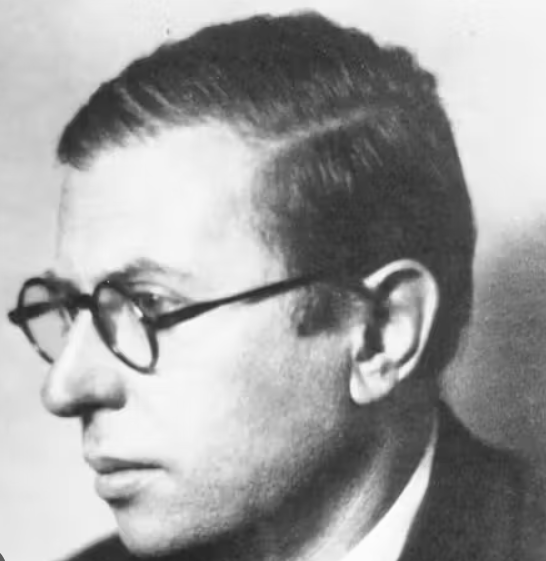
This inner revolution is realistic because it maintains itself deliberately within the framework of existing institutions; the oppressed reckon with the real situation.
▼
Source
source
p. 66
8 months 2 weeks ago
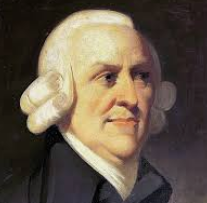
It appears, accordingly, from the experience of all ages and nations, I believe, that the work done by freemen comes cheaper in the end than that performed by slaves.
▼
Source
source
Chapter VIII.
8 months 4 days ago
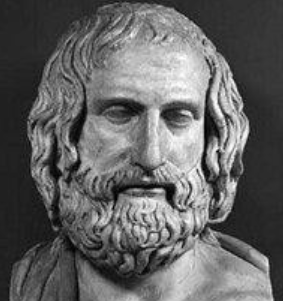
Mind is infinite and self-ruled, and is mixed with nothing, but is alone itself by itself.
▼
Source
source
Frag. B 12, quoted in John Burnet's Early Greek Philosophy, (1920), Chapter 6.
7 months 2 weeks ago
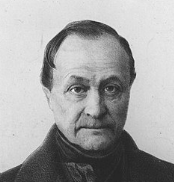
The principal means of realizing it will be the formation of an alliance between philosophers and the working classes, for which both are alike prepared by the negative and positive progress of the last five centuries. The direct object of their combined action will be to set in motion the force of Public Opinion.
▼
Source
source
p. 153
5 months 1 week ago
A specter haunts the world and it is the specter of migration.
▼
Source
source
213
5 months 5 days ago
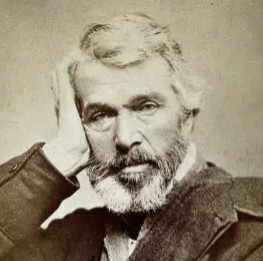
No nation ever had so bad a neighbour as Germany has had in France for the last 400 years; bad in all manner of ways; insolent, rapacious, insatiable, unappeasable, continually aggressive. ... Germany, after 400 years of ill-usage, and generally ill-fortune, from that neighbour, has had at last the great happiness to see its enemy fairly down in this manner; and Germany, I do clearly believe, would be a foolish nation not to think of raising up some secure boundary-fence between herself and such a neighbour now that she has the chance.
▼
Source
source
Letter to The Times on the Franco-Prussian War and Germany's annexation of Alsace-Lorraine (18 November 1870), p. 8
6 months 3 weeks ago
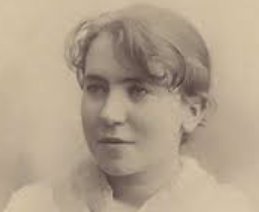
Forty years ago Germany proclaimed the slogan: "Germany above everything. Germany for the Germans, first, last and always. We want peace; therefore we must prepare for war. Only a well armed and thoroughly prepared nation can maintain peace, can command respect, can be sure of its national integrity." And Germany continued to prepare, thereby forcing the other nations to do the same. The terrible European war is only the culminating fruition of the hydra-headed gospel, military preparedness.
8 months 4 days ago
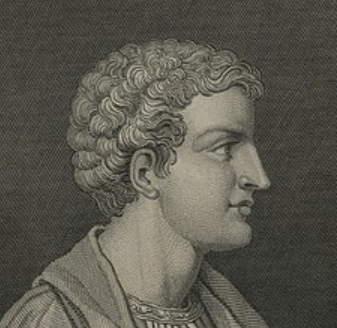
O Fortune, cruellest of heavenly powers, why make such game of this poor life of ours?
▼
Source
source
Book II, satire viii, line 61 (trans. Conington)
8 months 2 weeks ago
Whenever the legislature attempts to regulate the differences between masters and their workmen, its counsellors are always the masters. When the regulation, therefore, is in favor of the workmen, it is always just and equitable; but it is sometimes otherwise when in favor of the masters.
▼
Source
source
Chapter x, Part II, p. 168.
6 months 2 weeks ago
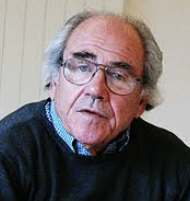
Yet there is a certain solitude like no other - that of the man preparing his meal in public on a wall, or on the hood of his car, or along a fence, alone. You see that all the time here. It is the saddest sight in the world. Sadder than destitution, sadder than the beggar is the man who eats alone in public. Nothing more contradicts the laws of man or beast, for animals always do each other the honour of sharing or disputing each other's food. He who eats alone is dead (but not he who drinks alone. Why is this?).
▼
Source
source
New York (p. 15)
8 months 2 weeks ago
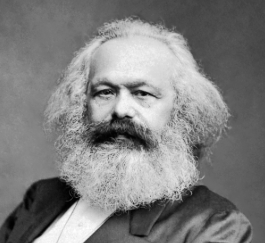
What's sauce for the gander is sauce for the goose.
▼
Source
source
Introduction, p. 37.
CivilSimian.com created by AxiomaticPanic, CivilSimian, Kalokagathia