


8 months 6 days ago
At times the world sees straight, but many times the world goes astray.
▼
Source
source
Book II, epistle i, line 63
4 months 2 weeks ago
The two principles on which our conduct towards the Indians should be founded, are justice and fear. After the injuries we have done them, they cannot love us....
▼
Source
source
Letter to Benjamin Hawkins (13 August 1786) Lipscomb & Bergh ed. 5:390
7 months 1 week ago
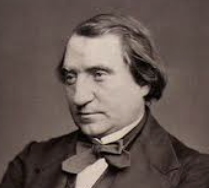
Everything is nothing, including the consciousness of nothing.
5 months 1 week ago
To rule the imperial population, behold our vocation.
▼
Source
source
94
4 months 2 weeks ago
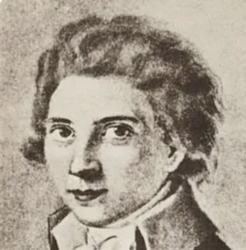
Every man should be protected in his lawful acts, and be certain that no ex post facto law shall punish or endamage him for them. ...The sentiment that ex post facto laws are against natural right, is so strong in the United States, that few, if any, of the State constitutions have failed to proscribe them. The federal constitution indeed interdicts them in criminal cases only; but they are equally unjust in civil as in criminal cases, and the omission of a caution which would have been right, does not justify the doing what is wrong. Nor ought it to be presumed that the legislature meant to use a phrase in an unjustifiable sense, if by rules of construction it can be ever strained to what is just.
7 months 2 weeks ago
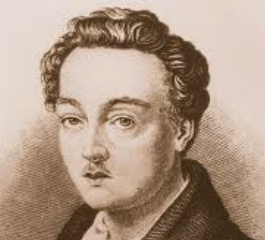
The romantic poetry is a progressive universal poetry.
▼
Source
source
Progressive Universalpoesie (1798)
7 months 2 weeks ago
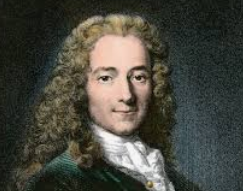
The state is therefore everyone; the rules within the state are laws which safeguard the welfare of all and which must originate from the welfare of all.
8 months 2 weeks ago
Such then is the human condition, that to wish greatness for one's country is to wish harm to one's neighbors.
▼
Source
source
"Fatherland", 1764
7 months 2 days ago
What one needs to do at every moment of one's life is to put an end to the old world and to begin a new world.
8 months 2 weeks ago
A philosophical attempt to work out a universal history according to a natural plan directed to achieving the civic union of the human race must be regarded as possible and, indeed, as contributing to this end of Nature.
▼
Source
source
Ninth Thesis
5 months 1 week ago
Tell me what kind of man governs a People, you tell me, with much exactness, what the net sum-total of social worth in that People has for some time been.
8 months 2 weeks ago
There are two laws discrete Not reconciled, Law for man, and law for thing.
▼
Source
source
Ode: Inscribed to W. H. Channing, st. 9
6 months 3 weeks ago
Even Darwin's natural selection only predicts that survivors will be fit enough, that is, fitter than their losing competitors; it postulates satisficing, not optimizing.
▼
Source
source
p. 166; As cited in Ronald J. Baker (2010, p. 122).
5 months 6 days ago
It might have been supposed that the building of 30,000 miles of railways would have brought a measure of prosperity to India. But these railways were built not for India but for England; not for the benefit of the Hindu, but for the purposes of the British army and British trade... The railroads are entirely in European hands, and the Government refuse to appoint even one Hindu to the Railway Board. The railways lose money year after year, and are helped by the Government out of the revenues of the people. All the loses are borne by the people, all the gains are gathered by the trader.
5 months 3 weeks ago
Don't judge the future of a person based on his present conditions, because time has the power to change black coal to shiny diamond.
8 months 2 weeks ago
The government of an exclusive company of merchants is, perhaps, the worst of all governments for any country whatever.
▼
Source
source
Chapter VII, Part Second, p. 619.
7 months 2 weeks ago
An act of the mind of which we are conscious, as such, is called freedom. An act without consciousness of action is called spontaneity. I by no means assume as necessary any immediate consciousness of the act, but merely, that on subsequent reflection thou shouldst perceive it to be an act. The higher question of what it is that prevents any such state of indecision, or any consciousness of the act, we may perhaps subsequently be able to solve. This act of the mind is called thought and it is said that thought is a spontaneous act, to distinguish it from sensation, in which the mind is merely receptive and passive.
▼
Source
source
Jane Sinnett, trans 1846 p. 44
7 months 1 week ago
Here and there it happened in my practice that a patient grew beyond himself because of unknown potentialities, and this became an experience of prime importance to me. I had learned in the meanwhile that the greatest and most important problems of life are all in a certain sense insoluble. They must be so because they express the necessary polarity inherent in every self-regulating system. They can never be solved, but only outgrown.
▼
Source
source
The Secret of the Golden Flower, ibid.
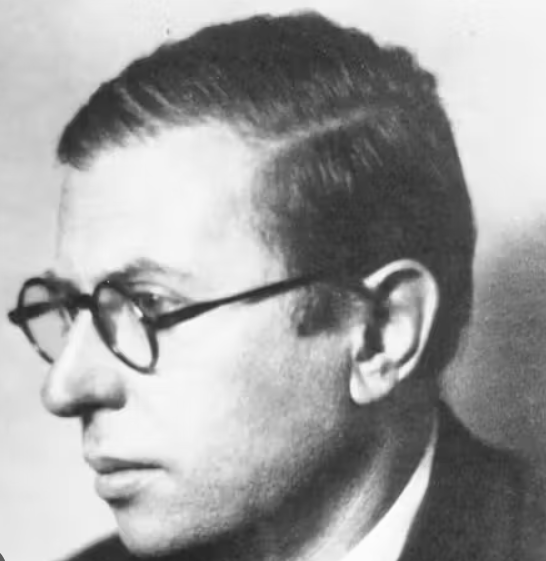
8 months 2 weeks ago
You must be afraid, my son. That is how one becomes an honest citizen.
▼
Source
source
Mother to her young son, Act 1
7 months 1 week ago
In theory, it matters little to me whether I live as whether I die; in practice, I am lacerated by every anxiety which opens an abyss between life and death.
7 months 1 week ago
The present stage redefines the possibilities of man and nature in accordance with the new means available for their realization.
▼
Source
source
p. 65
9 months 6 days ago
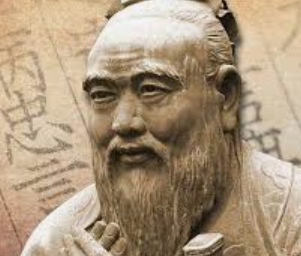
The man of virtue makes the difficulty to be overcome his first business, and success only a subsequent consideration: this may be called perfect virtue.
9 months 2 weeks ago
I wouldn't give an astrologer the time of day.
6 months 1 week ago
There is only one way to defeat the enemy, and that is to write as well as one can. The best argument is an undeniably good book.
▼
Source
source
Quoted by Granville Hicks in The Living Novel: A Symposium (Macmillan, 1957; digitized version in 2006), p. ix
7 months 2 weeks ago
If not reason, then the devil.
8 months 2 weeks ago
It is likely that America will be more important during the next century or two, but after that it may well be the turn of China.
▼
Source
source
Letter to Rachel Gleason Brooks, May 5, 1930
8 months 2 weeks ago
The whole conception of God is a conception derived from the ancient Oriental despotisms. It is a conception quite unworthy of free men. When you hear people in church debasing themselves and saying that they are miserable sinners, and all the rest of it, it seems contemptible and not worthy of self-respecting human beings. We ought to stand up and look the world frankly in the face. We ought to make the best we can of the world, and if it is not so good as we wish, after all it will still be better than what these others have made of it in all these ages. A good world needs knowledge, kindliness, and courage; it does not need a regretful hankering after the past, or a fettering of the free intelligence by the words uttered long ago by ignorant men.
▼
Source
source
"What We Must Do"
7 months 3 days ago
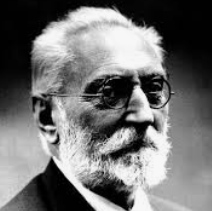
And here, facing this supreme religious sacrifice, we reach the summit of the tragedy, the very heart of it - the sacrifice of our own individual consciousness upon the alter of the perfected Human Consciousness, of the Divine Consciousness. But is there really a tragedy? ...if we could succeed in understanding and feeling that we were going to enrich Christ, should we hesitate for a moment in surrendering ourselves to Him? Would the stream that flows into the sea, and feels in the freshness of its waters the bitterness of the salt of the ocean, wish to flow back to its source? would it wish to return to the cloud which drew it life from the sea? is it not joy to feel itself absorbed?
8 months 2 weeks ago
I have been merely oppressed by the weariness and tedium and vanity of things lately: nothing stirs me, nothing seems worth doing or worth having done: the only thing that I strongly feel worth while would be to murder as many people as possible so as to diminish the amount of consciousness in the world. These times have to be lived through: there is nothing to be done with them.
▼
Source
source
Letter to Gilbert Murray, March 21, 1903
6 months 4 weeks ago
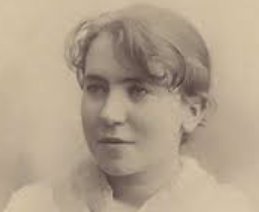
A young delicate tree, that is being clipped and cut by the gardener in order to give it an artificial form, will never reach the majestic height and the beauty as when allowed to grow in nature and freedom.
6 months 4 weeks ago
Our institutions and conditions rest upon deep-seated ideas. To change those conditions and at the same time leave the underlying ideas and values intact means only a superficial transformation, one that cannot be permanent or bring real betterment. It is a change of form only, not of substance, as so tragically proven by Russia.

8 months 1 week ago
To be honest, I was somewhat disappointed... It's had effects around the margins, of course, but they have mostly been minor. When I wrote it, I really thought the book would change the world. I know it sounds a little grand now, but at the time the sixties still existed for us. It looked as if real changes were possible, and I let myself believe that this would be one of them. All you have to do is walk around the corner to McDonald's to see how successful I have been.
▼
Source
source
Quoted by Michael Specter on the impact of the book Animal Liberation, "The Dangerous Philosopher", The New Yorker, 6 September 1999.
7 months 2 weeks ago
Thus then does the Doctrine of Knowledge, which in its substance is the realisation of the absolute Power of intelligising which has now been defined, end with the recognition of itself as a mere Schema in a Doctrine of Wisdom, although indeed a necessary and indispensable means to such a Doctrine: - a Schema, the sole aim of which is, with the knowledge thus acquired, - by which knowledge alone a Will, clear and intelligible to itself and reposing upon itself without wavering or perplexity, is possible, - to return wholly into Actual Life; - not into the Life of blind and irrational Instinct which we have laid bare in all its nothingness, but into the Divine Life which shall become visible to us.
7 months 1 week ago
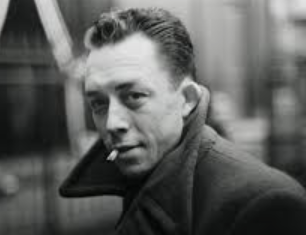
I have no ideas, only obsessions. Anybody can have ideas. Ideas have never caused anybody's downfall.
9 months 1 week ago
Happiness implied a choice, and within that choice a concerted will, a lucid desire.
9 months 2 weeks ago
Self-preservation has frequently knuckled under to that tremendous yearning to get even.
4 months 2 weeks ago
God forbid we should ever be twenty years without such a rebellion. The people cannot be all, and always, well informed. The part which is wrong will be discontented, in proportion to the importance of the facts they misconceive. If they remain quiet under such misconceptions, it is lethargy, the forerunner of death to the public liberty. What country before ever existed a century and half without a rebellion? And what country can preserve its liberties if their rulers are not warned from time to time that their people preserve the spirit of resistance? Let them take arms. The remedy is to set them right as to facts, pardon and pacify them. What signify a few lives lost in a century or two? The tree of liberty must be refreshed from time to time with the blood of patriots and tyrants. It is its natural manure.
▼
Source
source
Letter to William Stephens Smith (13 November 1787). Manuscript at the Library of Congress.
9 months 1 week ago
A fate is not a punishment.
6 months 1 week ago
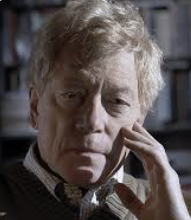
We are not born free, nor do we come into this world with a self-identity and autonomy of our own. We achieve those things, through the conflict and cooperation that weave us into the social fabric.
▼
Source
source
Where We Are: The State of Britain Now
8 months 2 weeks ago
I hate the world and almost all the people in it. I hate the Labour Congress and the journalists who send men to be slaughtered, and the fathers who feel a smug pride when their sons are killed, and even the pacifists who keep saying human nature is essentially good, in spite of all the daily proofs to the contrary. I hate the planet and the human race - I am ashamed to belong to such a species.
▼
Source
source
Letter to Colette, December 28, 1916
4 months 2 weeks ago
When speaking of the new testament that you should read all the histories of Christ, as well of those whom a council of ecclesiastics have decided for us to be Pseudo-evangelists, as those they named Evangelists. Because these Pseudo-evangelists pretended to inspiration as much as the others, and you are to judge their pretensions by your own reason, & not by the reason of those ecclesiastics. Most of these are lost. There are some however still extant, collected by Fabricius which I will endeavor to get & send you.
8 months 1 week ago
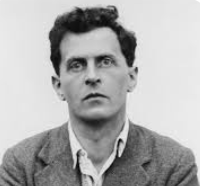
Philosophy is like trying to open a safe with a combination lock: each little adjustment of the dials seems to achieve nothing, only when everything is in place does the door open.
▼
Source
source
Philosophical Occasions 1912-1951 (1993) edited by James Carl Klagge and Alfred Nordmann
8 months 2 weeks ago
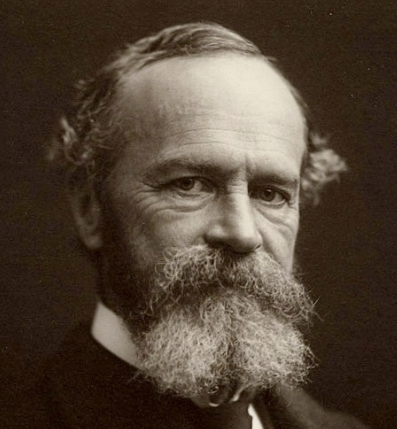
There must be something solemn, serious, and tender about any attitude which we denominate religious. If glad, it must not grin or snicker; if sad, it must not scream or curse. It is precisely as being solemn experiences that I wish to interest you in religious experiences. ... The divine shall mean for us only such a primal reality as the individual feels impelled to respond to solemnly and gravely, and neither by a curse nor a jest.
▼
Source
source
Lecture II, "Circumscription of the Topic"
9 months 2 weeks ago
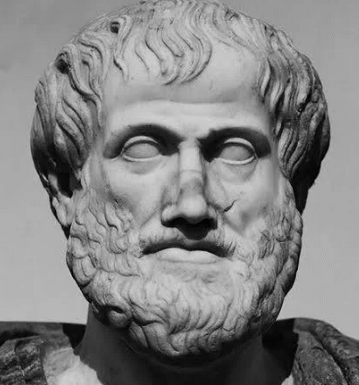
The vices respectively fall short of or exceed what is right in both passions and actions, while virtue both finds and chooses that which is intermediate.
CivilSimian.com created by AxiomaticPanic, CivilSimian, Kalokagathia