

8 months 2 weeks ago
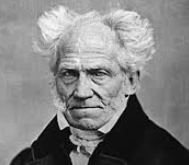
As the strata of the earth preserve in succession the living creatures of past epochs, so the shelves of libraries preserve in succession the errors of the past and their expositions, which like the former were very lively and made a great commotion in their own age but now stand petrified and stiff in a place where only the literary palaeontologist regards them.
▼
Source
source
Vol. 2 "On Books and Writing" as translated in Essays and Aphorisms (1970), as translated by R. J. Hollingdale

5 months 1 week ago
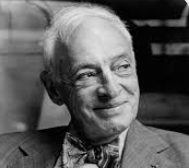
Fundamentally we are highly social creatures. We feel a big sense of anomie and discomfort when we are isolated from our fellow human beings. …We seek community in different ways. There's a right wing... and... a left wing version of this.
▼
Source
source
15:58

6 months ago
Right and wrong are the same in Palestine as anywhere else. What is peculiar about the Palestine conflict is that the world has listened to the party that has committed the offence and has turned a deaf ear to the victims.
▼
Source
source
Foreword to The Transformation of Palestine
7 months 2 weeks ago
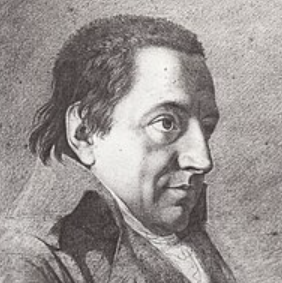
This tendency towards a Christian-European Universal Monarchy has shown itself successively in the several States which could make pretensions to such a dominion, and, since the fall of the Papacy, it has become the sole animating principle of our History. We by no means seek to determine whether this notion of Universal Monarchy has ever been distinctly entertained as a definite plan .... Thus each State either strives to attain this Universal Christian Monarchy, or at least to acquire the power of striving after it;-to maintain the Balance of Power when it is in danger of being disturbed by another; and, in secret, for power, that it may eventually disturb it itself.
▼
Source
source
P. 213-214
5 months 2 days ago
Every rock in the ocean where a cormorant can perch is occupied by our troops - has a governor, deputy-governor, storekeeper, and deputy-storekeeper - and will soon have an archdeacon and a bishop. Military colleges, with thirty-four professors, educating seventeen ensigns per annum, being half an ensign for each professor, with every species of nonsense, athletic, sartorial, and plumigerous.
▼
Source
source
Catholics, published in The Edinburgh Review (1827). See The Works of the Rev. Sydney Smith. 2. 1859. p. 123.
6 months 1 week ago
There are evils, as someone has pointed out, that have the ability to survive identification and go on for ever - money, for instance, or war.
▼
Source
source
The Dean's December (1982) [Penguin Classics, 1998, ISBN 0-140-18913-0], ch. 13, p. 140



9 months 3 days ago
Christ's whole body groans in pain. Until the end of the world, when pain will pass away, this man groans and cries to God. And each one of us has part in the cry of that whole body. Thou didst cry out in thy day, and thy days have passed away; another took thy place and cried out in his day. Thou here, he there, and another there. The body of Christ ceases not to cry out all the day, one member replacing the other whose voice is hushed. Thus there is but one man who reaches unto the end of time, and those that cry are always His members.
▼
Source
source
p.423
8 months 3 weeks ago
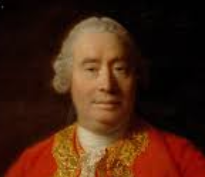
Art may make a suit of clothes; but nature must produce a man.
▼
Source
source
Part I, Essay 15: The Epicurean

8 months 2 weeks ago
Where danger shews it self, apprehension cannot, without stupidity, be wanting; where danger is, sense of danger should be; and so much fear as should keep us awake, and excite our attention, industry, and vigour; but not to disturb the calm use of our reason, nor hinder the execution of what that dictates.
▼
Source
source
Sec. 115
7 months 4 days ago
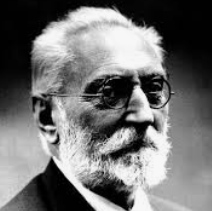
Egoism you say? There is nothing more universal than the individual, for what is the property of each is the property of all. Each man is worth more than the whole of humanity, nor will it do to sacrifice each to all save in so far as all sacrifice themselves to each. That which we call egoism is the principle of psychic gravity, the necessary postulate. "Love thy neighbor as thyself," we are told, the presupposition being that each man loves himself; and it is not said "Love thyself." And nevertheless, we do not know how to love ourselves.

7 months 1 week ago
We are all of us in error, the humorists excepted. They alone have discerned, as though in jest, the inanity of all that is serious and even of all that is frivolous.
5 months 1 week ago
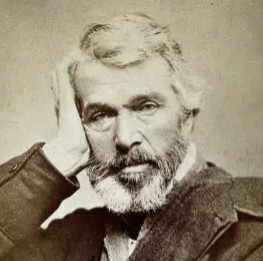
For the Scepticism, as I said, is not intellectual only; it is moral also; a chronic atrophy and disease of the whole soul. A man lives by believing something; not by debating and arguing about many things.
6 months 3 weeks ago
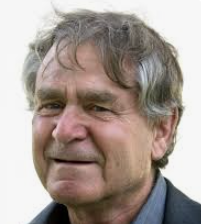
There are two ways in which a science develops; in response to problems which is itself creates, and in response to problems that are forced on it from the outside.
▼
Source
source
Chapter 1, An Absent Family Of Ideas, p. 4.
8 months 2 weeks ago
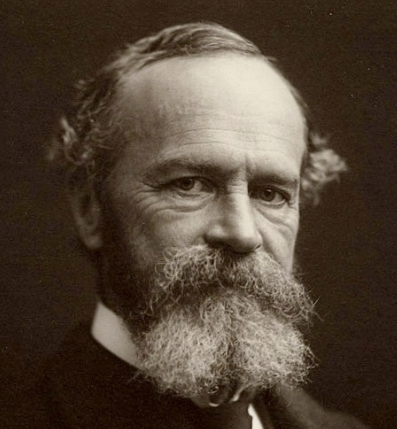
Objective evidence and certitude are doubtless very fine ideals to play with, but where on this moonlit and dream-visited planet are they found?
▼
Source
source
"The Will to Believe" p. 14
5 months 2 weeks ago
The totalitarian states, whether of the fascist or the communist persuasion, are more than superficially alike as dictatorships, in the suppression of dissent, and in operating planned and directed economies. They are profoundly alike.
▼
Source
source
Ch. V: "The Totalitarian Regimes", §7, p. 89
8 months 2 weeks ago
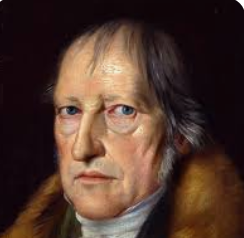
History, is a conscious, self-mediating process - Spirit emptied out into Time; but this externalization, this kenosis, is equally an externalization of itself; the negative is the negative of itself. ... Thus absorbed in itself, it is sunk in the night of its self-consciousness; but in that night its vanished outer existence is perserved, and this transformed existence - the former one, but now reborn of the Spirit's knowledge - is the new existence, a new world and a new shape of Spirit.
6 months 1 week ago
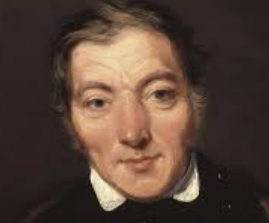
I was forced, through seeing the error of their foundation, to abandon all belief in every religion which had been taught to man. But my religious feelings were immediately replaced by the spirit of universal charity - not for a sect, or a party, or for a country or a colour - but for the human race, and with a real and ardent desire to do good.
▼
Source
source
Life of Robert Owen (1857) his autobiography, as quoted by Jim Herrick, in "Bradlaugh and Secularism: 'The Province of the Real'"

8 months 3 weeks ago
The Idols of the Cave are the idols of the individual man. For everyone (besides the errors common to human nature in general) has a cave or den of his own, which refracts and discolors the light of nature, owing either to his own proper and peculiar nature; or to his education and conversation with others; or to the reading of books, and the authority of those whom he esteems and admires; or to the differences of impressions, accordingly as they take place in a mind preoccupied and predisposed or in a mind indifferent and settled; or the like. So that the spirit of man (according as it is meted out to different individuals) is in fact a thing variable and full of perturbation, and governed as it were by chance. Whence it was well observed by Heraclitus that men look for sciences in their own lesser worlds, and not in the greater or common world.
▼
Source
source
Aphorism 42
8 months 2 weeks ago
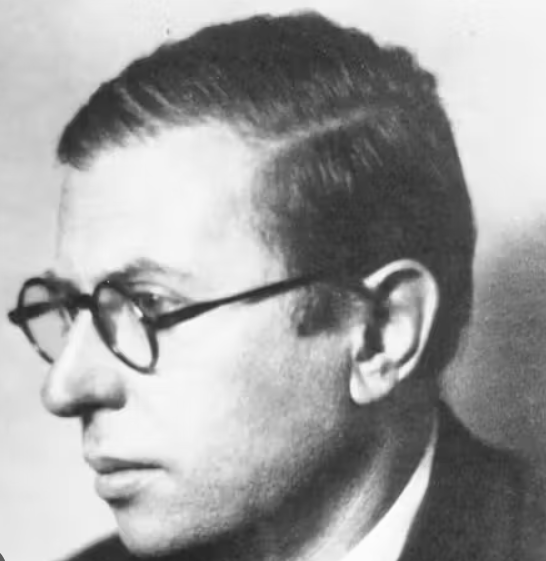
I respect orders but I respect myself too and I do not obey foolish rules made especially to humiliate me.
▼
Source
source
Hugo to Slick and Georges, Act 3, sc. 2
7 months 1 week ago
The happy consciousness is shaky enough-a thin surface over fear, frustration, and disgust.
▼
Source
source
p. 76
8 months 1 week ago
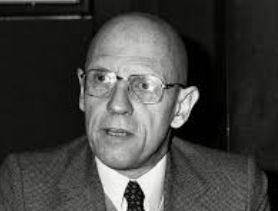
Meaning created links so numerous, so rich and involved that only esoteric knowledge could possibly have the necessary key. Objects became so weighed down with attributes, connections and associations that they lost their own original face. Meaning was no longer read in an immediate perception, and accordingly objects ceased to speak directly: between the knowledge that animated the figures of objects and the forms they were transformed into, a divide began to appear, opening the way for a symbolism more often associated with the world of dreams.
▼
Source
source
Part One: 1. Stultifera Navis
8 months 1 week ago
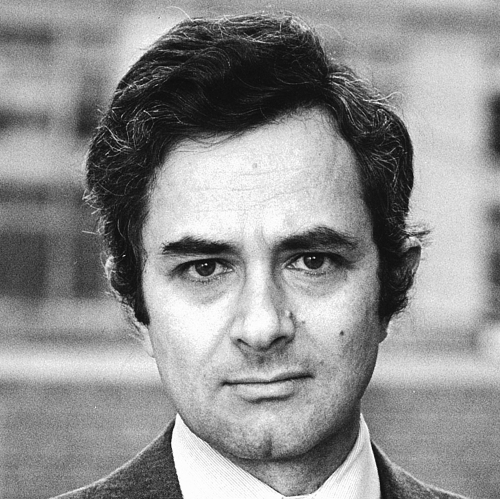
Eventually, I believe, current attempts to understand the mind by analogy with man-made computers that can perform superbly some of the same external tasks as conscious beings will be recognized as a gigantic waste of time.
▼
Source
source
p. 16.


5 months 1 week ago
A noble person attracts noble people, and knows how to hold on to them.
▼
Source
source
Torquato Tasso, Act I, sc. i
6 months 1 week ago
Sanity itself is a kind of convention.
▼
Source
source
The Hunter's Family
7 months 4 weeks ago
Rejoice not in another man's misfortune!

6 months 2 weeks ago
One reason an egalitarian approach to the value of life is important is that it draws from ideals of radical democracy at the same time that it enters into ethical considerations about how best to practice nonviolence. The institutional life of violence will not be brought down by a prohibition, but only by a counter-institutional ethos and practice.
▼
Source
source
p. 61
5 months 1 week ago
It is truly a lordly spectacle how this great soul takes in all kinds of men and objects, a Falstaff, an Othello, a Juliet, a Coriolanus; sets them all forth to us in their round completeness; loving, just, the equal brother of all. Novum Organum, and all the intellect you will find in Bacon, is of a quite secondary order; earthy, material, poor in comparison with this. Among modern men, one finds, in strictness, almost nothing of the same rank. Goethe alone, since the days of Shakspeare, reminds me of it. Of him too you say that he saw the object; you may say what he himself says of Shakspeare: 'His characters are like watches with dial-plates of transparent crystal; they show you the hour like others, and the inward mechanism also is all visible.'.
9 months 2 weeks ago
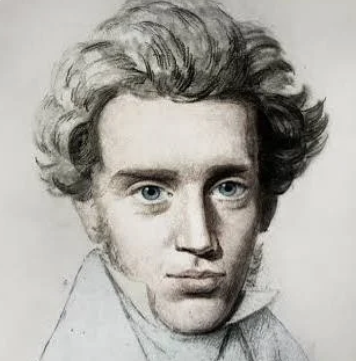
Be attentive therefore, according to the instruction of the Gospel, to learn obedience from the lily and the bird. Be not affrighted, do no despair, when thou comparest thy life with these teachers. There is nothing to despair about, for indeed thou shalt learn from them; and the Gospel first comforts thee by telling thee that God is the God of patience, and then it adds: 'Thou shalt learn from the lilies and the birds, learn to be absolutely obedient like the lilies and the birds, learn not to serve two masters; for no man can serve two masters, he must either ... or.

5 months 1 week ago
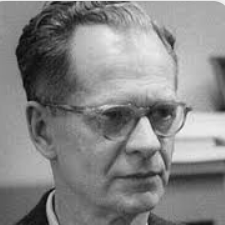
It is a mistake to suppose that the whole issue is how to free man. The issue is to improve the way in which he is controlled.
▼
Source
source
"I have been misunderstood" An interview with B.F.Skinner, Center Magazine (March/April 1972), pp. 63
7 months 1 week ago
The words of the world want to make sentences.
▼
Source
source
Ch. 5, sect. 4
5 months 1 week ago
On the dust of our heroic ancestors we too sit ballot-boxing, saying to one another, It is well, it is well! By inheritance of their noble struggles, we have been permitted to sit slothful so long. By noble toil, not by shallow laughter and vain talk, they made this English Existence from a savage forest into an arable inhabitable field for us; and we, idly dreaming it would grow spontaneous crops forever,-find it now in too questionable a state.

9 months ago
No one is ignorant that there are two avenues by which opinions are received into the soul, which are its two principal powers: the understanding and the will.
8 months 1 week ago
A critique is not a matter of saying that things are not right as they are. It is a matter of pointing out on what kinds of assumptions, what kinds of familiar, unchallenged, unconsidered modes of thought the practices that we accept rest.
▼
Source
source
"Practicing criticism, or, is it really important to think?", interview by Didier Eribon, May 30-31, 1981, in Politics, Philosophy, Culture, ed. L. Kriztman (1988), p. 155
7 months 1 week ago
Historians of ideas, however scrupulous and minute they may feel it necessary to be, cannot avoid perceiving their material in terms of some kind of pattern.

4 months 2 weeks ago
Nothing is troublesome that we do willingly.

9 months 2 weeks ago
The welfare of the people in particular has always been the alibi of tyrants, and it provides the further advantage of giving the servants of tyranny a good conscience. It would be easy, however, to destroy that good conscience by shouting to them: if you want the happiness of the people, let them speak out and tell what kind of happiness they want and what kind they don't want! But, in truth, the very ones who make use of such alibis know they are lies; they leave to their intellectuals on duty the chore of believing in them and of proving that religion, patriotism, and justice need for their survival the sacrifice of freedom.
4 months 2 weeks ago
The God who gave us life, gave us liberty at the same time; the hand of force may destroy, but cannot disjoin them.
▼
Source
source
Summary View of the Rights of British America (1774); The Writings of Thomas Jefferson (19 Vols., 1905) edited by Andrew A. Lipscomb and Albert Ellery Bergh, Vol. 1, p. 211
8 months 3 weeks ago
Do not wonder, if the common people speak more truly than those of high rank; for they speak with more safety.
▼
Source
source
Exempla Antithetorum, IX. Laus, Existimatio (Pro.)
8 months 2 weeks ago
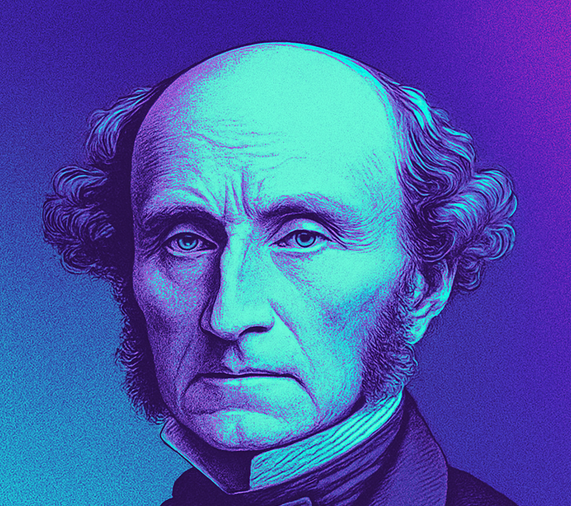
For I now saw, or thought I saw, what I had always before received with incredulity-that the habit of analysis has a tendency to wear away the feelings: as indeed it has, when no other mental habit is cultivated, and the analysing spirit remains without its natural complements and correctives.
▼
Source
source
(p. 137)

7 months 2 weeks ago
I'll know how to die with courage; that is easier than living.
▼
Source
source
Act II.
4 months 4 weeks ago
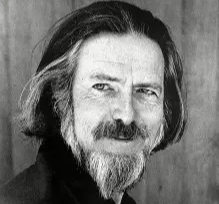
Unbelievably, there is still here [in Los Angeles] one of my most favorite places-the home of Henry and Ruth Denison at the very top of the hill, at the end of a road going nowhere, hanging above a reservoir-lake surrounded with pines. They have a sundeck under a eucalyptus tree where I have slept some memorably deep sleeps, and awakened very early in the morning, before sunrise, with stars still showing through the branches. In this house I have made some of my greatest friendships, so much so that I cannot think of it without that curious pleasure-pain which the Japanese call aware-the sense of echoes in the courtyards of the mind after the sun has left and the people have gone their ways forever.
▼
Source
source
p. 224
CivilSimian.com created by AxiomaticPanic, CivilSimian, Kalokagathia