
4 months 1 week ago
We must progress to the stage of doing all the right things for all the right reasons instead of doing all the right things for all the wrong reasons.
4 months 1 week ago
[Everything] ideal has a natural basis and everything natural an ideal development.
4 months 1 week ago
Why, what is weeping and sighing? A judgement. What is misfortune? A judgement. What are strife, disagreement, fault-finding, accusing, impiety, foolishness? They are all judgements.
▼
Source
Book III, ch. 3, § 18–19.
4 months 1 week ago
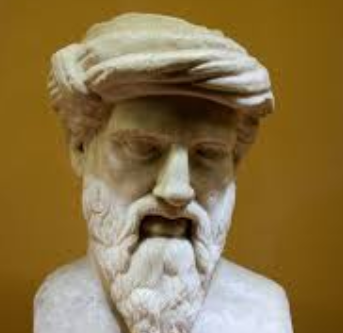
No one will deny that the soul of Pythagoras was sent to mankind from Apollo's domain, having either been one of his attendants, or more intimate associates, which may be inferred both from his birth, and his versatile wisdom.
▼
Source
Iamblichus of Chalcis, Life of Pythagoras translated by Thomas Taylor; Ch. 2: Youth, Education, Travels
4 months 1 week ago
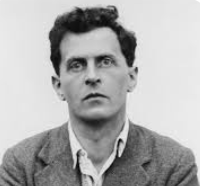
A serious and good philosophical work could be written consisting entirely of jokes.
▼
Source
As quoted in "A View from the Asylum" in Philosophical Investigations from the Sanctity of the Press (2004), by Henry Dribble, p. 87
4 months 1 week ago
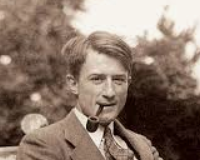
Poetry is a sort of truancy, a dream within the dream of life, a wild flower planted among our wheat.
4 months 1 week ago
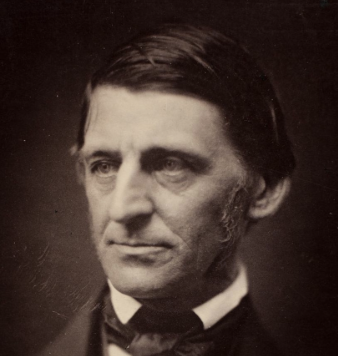
The value of a principle is the number of things it will explain; and there is no good theory of disease which does not at once suggest a cure.
▼
Source
p. 212
4 months 1 week ago
The comprehensiveness of OR’s aim is an example of a ‘systems’ approach, since ‘system’ implies an interconnected complex of functionally related components.
▼
Source
p. 7; cited in (2004, p. 210)
4 months 1 week ago
No system would have ever been framed if people had been simply interested in knowing what is true, whatever it may be. What produces systems is the interest in maintaining against all comers that some favourite or inherited idea of ours is sufficient and right. ** p. 49
4 months 1 week ago
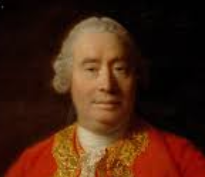
What may at first occur on this head, is, that as nothing can be contrary to truth or reason, except what has a reference to it, and as the judgments of our understanding only have this reference, it must follow, that passions can be contrary to reason only so far as they are accompany'd with some judgment or opinion. According to this principle, which is so obvious and natural, `tis only in two senses, that any affection can be call'd unreasonable. First, When a passion, such as hope or fear, grief or joy, despair or security, is founded on the supposition or the existence of objects, which really do not exist. Secondly, When in exerting any passion in action, we chuse means insufficient for the design'd end, and deceive ourselves in our judgment of causes and effects. Where a passion is neither founded on false suppositions, nor chuses means insufficient for the end, the understanding can neither justify nor condemn it. `Tis not contrary to reason to prefer the destruction of the whole world to the scratching of my finger. `Tis not contrary to reason for me to chuse my total ruin, to prevent the least uneasiness of an Indian or person wholly unknown to me. `Tis as little contrary to reason to prefer even my own acknowledge'd lesser good to my greater, and have a more ardent affection for the former than the latter. A trivial good may, from certain circumstances, produce a desire superior to what arises from the greatest and most valuable enjoyment; nor is there any thing more extraordinary in this, than in mechanics to see one pound weight raise up a hundred by the advantage of its situation. In short, a passion must be accompany'd with some false judgment. in order to its being unreasonable; and even then `tis not the passion, properly speaking, which is unreasonable, but the judgment.
▼
Source
Part 3, Section 3
4 months 1 week ago
No man is free who is not master of himself.
▼
Source
Fragment 35 ([https://en.wikisource.org/wiki/Epictetus,_the_Discourses_as_reported_by_Arrian,_the_Manual,_and_Fragments/Fragments Oldfather translation])
4 months 1 week ago
Pythagoras was a man of the most various accomplishments, and appears to have penetrated in different directions into the depths of human knowledge. He sought wisdom in its retreats of fairest promise, in Egypt and other distant countries. In this investigation he employed the earlier period of his life, probably till he was forty, and devoted the remainder to such modes of proceeding, as appeared to him the most likely to secure the advantage of what he had acquired to a late posterity. He founded a school, and delivered his acquisitions by oral communication to a numerous body of followers. He divided his pupils into two classes, the one neophytes, to whom was explained only the most obvious and general truths, the other who were admitted into the entire confidence of the master. These last he caused to throw their property into a common stock, and to live together in the same place of resort. He appears to have spent the latter half of his life in that part of Italy, called Magna Graecia, so denominated in some degree from the numerous colonies of Grecians by whom it was planted, and partly perhaps from the memory of the illustrious things which Pythagoras achieved there.
4 months 1 week ago
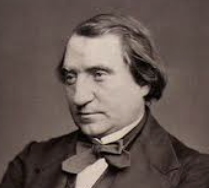
A Muslim who knows French will never be a dangerous Muslim.
▼
Source
quoted in Arvidsson, Stefan (2006), Aryan Idols: Indo-European Mythology as Ideology and Science, translated by Sonia Wichmann, Chicago and London: The University of Chicago Press.'(107)
4 months 1 week ago
144. The child learns to believe a host of things. I.e. it learns to act according to these beliefs. Bit by bit there forms a system of what is believed, and in that system some things stand unshakeably fast and some are more or less liable to shift. What stands fast does so, not because it is intrinsically obvious or convincing; it is rather held fast by what lies around it.
4 months 1 week ago
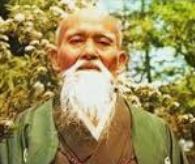
In our techniques we enter completely into, blend totally with, and control firmly an attack. Strength resides where one's ki is concentrated and stable; confusion and maliciousness arise when ki stagnates.
4 months 1 week ago
England laughed at American authorship and we sent her Emerson...
▼
Source
Frederick Douglass, [http://teachingamericanhistory.org/library/document/self-made-men/ "Self-Made Men"] (1872)
4 months 1 week ago
To conceive of knowledge as a collection of information seems to rob the concept of all of its life. Knowledge resides in the user and not in the collection. It is how the user reacts to a collection of information that matters.
▼
Source
p. 10; cited in Daniel J. Power (2004) Decision Support Systems: Frequently Asked Questions, p. 23
4 months 1 week ago
All living souls welcome whatsoever they are ready to cope with; all else they ignore, or pronounce to be monstrous and wrong, or deny to be possible.
▼
Source
Ch. 3, P. 62
4 months 1 week ago
From the comparison of theism and idolatry, we may form some other observations, which will also confirm the vulgar observation that the corruption of the best things gives rise to the worst.
▼
Source
Part X - With regard to courage or abasement
4 months 1 week ago
Nicomachus... mentions the customary Pythagorean divisions of quantum and the science that deals with each. Quantum is either discrete or continuous. Discrete quantum in itself considered, is the subject of Arithmetic; if in relation, the subject of Music. Continuous quantum, if immovable, is the subject of Geometry; if movable, of Spheric (Astronomy). These four sciences formed the of the Pythagoreans. With the (which Nicomachus does not mention) of Grammar, Logic, and Rhetoric, they composed the seven liberal arts taught in the schools of the Roman Empire.
▼
Source
George Johnson, [https://books.google.com/books?id=FIpNAAAAMAAJ The Arithmetical Philosophy of Nicomachus of Gersa] (1916)
4 months 1 week ago
A teacher who can show good, or indeed astounding results while he is teaching, is still not on that account a good teacher, for it may be that, while his pupils are under his immediate influence, he raises them to a level which is not natural to them, without developing their own capacities for work at this level, so that they immediately decline again once the teacher leaves the schoolroom.
▼
Source
p. 43e
4 months 1 week ago
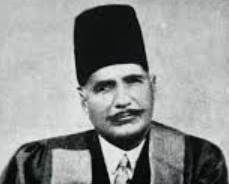
The tyranny of imperialism struts abroad, covering its face under the masks of Democracy, Nationalism, Communism, Fascism and heaven knows what else besides. Under these masks, in every corner of the earth, the spirit of freedom and the dignity of man are being trampled underfoot in a way to which not even the darkest period of human history presents a parallel. The so-called statesmen to whom government and leadership of men was entrusted have proved demons of bloodshed, tyranny and oppression. ... After subjugating and establishing their dominion over weaker peoples, they have robbed them of their possessions, of their religions, their morals, of their cultural traditions and their literatures.
▼
Source
New Year's message broadcast on All-India Radio, 1938. Quoted in [https://www.google.com/books/edition/The_Political_Philosophy_of_Muhammad_Iqb/VrItm_F6wncC?hl=en The Political Philosophy of Muhammad Iqbal], p. 199.
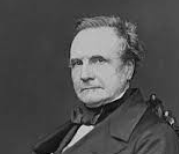
4 months 1 week ago
The errors which arise from the absence of facts are far more numerous and more durable than those which result from unsound reasoning respecting true data.
▼
Source
p. 156. Ch. 17 "Of Price as Measured by Money"
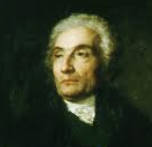
4 months 1 week ago
The wiser nations are, the more public spirit they possess, the more perfect their political constitution, the fewer constitutional laws they have, for these laws are only props, and a building only needs props when it has become out of plumb or when it has been violently shaken by an external force. The most perfect constitution of antiquity was without contradiction that of Sparta, and Sparta has not left us a single line of its public law. It justly boasted of having written its laws only in the hearts of its children.
▼
Source
p. 84
4 months 1 week ago
It was a fixed maxim in this reign, as well as in some of the subsequent, that no native of the island should ever be advanced to any dignity, ecclesiastical, civil, or military. The king therefore, upon Stigand's deposition, promoted Lanfranc, a Milanese monk, celebrated for his learning and piety, to the vacant see. This prelate was rigid in defending the prerogatives of his station; and after a long process before the pope, he obliged Thomas, a Norman monk, who had been appointed to the see of York, to acknowledge the primacy of the archbishop of Canterbury. Where ambition can be so happy as to cover its enterprizes, even to the person himself, under the appearance of principle, it is the most incurable and inflexible of all human passions. Hence Lanfranc's zeal in promoting the interests of the papacy, by which he himself augmented his own authority, was indefatigable; and met with proportionable success. The devoted attachment to Rome continually encreased in England; and being favoured by the sentiments of the conquerors, as well as by the monastic establishments formerly introduced by Edred and by Edgar, it soon reached the same height, at which it had, during some time, stood in France and Italy. It afterwards went much farther; being favoured by that very remote situation, which had at first obstructed its progress; and being less checked by knowledge and a liberal education, which were still somewhat more common in the southern countries.
▼
Source
Volume I, Part IV : William the Conqueror
4 months 1 week ago
Human beings have a physical need to tell themselves when at work: “Let’s have done with it now,” and it's having constantly to go on thinking in the face of this need when philosophizing that makes this work so strenuous.
▼
Source
p. 86e
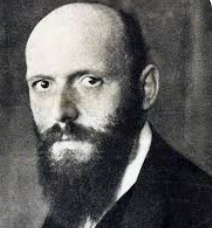
4 months 1 week ago
Overcoming magic often takes the form of theology. From animals and ancestors the path leads to all kinds of spirits. The hypothesis (which already appeared in the magical age) of the little man alongside man, the “soul', and of the special being, 'God', more and more often seeks a parallel process 'behind' processes. Whereas in the magical age, empirically given facts were linked with each other on the basis of primitive theories without the introduction of uncontrollable elements, now their introduction becomes essential.
▼
Source
p. 322
4 months 1 week ago
We may say most aptly that the Analytical Engine weaves algebraical patterns just as the Jacquard-loom weaves flowers and leaves.
▼
Source
Ada Lovelace, Notes on the Analytical Engine invented by Charles Babbage
4 months 1 week ago
The vices are very justly man's executioners.
▼
Source
Chapter X, p. 85
4 months 1 week ago
Prescription, then, is for Burke the most solid rock on which mundane rights can be based; it gives a title having for its sanction the eternal order of things; it is the master and not the creature of positive law, it is the decree of nature, it is the law of God. Hume had stated the theory rather differently, but though Burke introduces a theological connotation, it is difficult not to suspect him of some debt to the earlier thinker. "Time and custom", wrote Hume, "give authority to all forms of government, and all successions of princes; and that power, which at first was founded only on injustice and violence, becomes in time legal and obligatory." Burke, too, holds that prescription is the most solid title to property and to government and so the principal base on which States are founded.
▼
Source
Alfred Cobban, Edmund Burke and the Revolt against the Eighteenth Century: A Study of the Political and Social Thinking of Burke, Wordsworth, Coleridge and Southey (1929), pp. 79-80
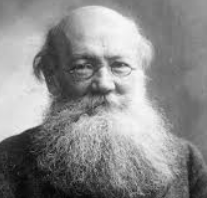
4 months 1 week ago
How is it that men who only yesterday were complaining quietly of their lot as they smoked their pipes, and the next moment were humbly saluting the local guard and gendarme whom they had just been abusing, — how is it that these same men a few days later were capable of seizing their scythes and their iron-shod pikes and attacking in his castle the lord who only yesterday was so formidable? By what miracle were these men, whose wives justly called them cowards, transformed in a day into heroes, marching through bullets and cannon balls to the conquest of their rights? How was it that words, so often spoken and lost in the air like the empty chiming of bells, were changed into actions? The answer is easy. Action, the continuous action, ceaselessly renewed, of minorities brings about this transformation. Courage, devotion, the spirit of sacrifice, are as contagious as cowardice, submission, and panic. What forms will this action take? All forms, — indeed, the most varied forms, dictated by circumstances, temperament, and the means at disposal. Sometimes tragic, sometimes humorous, but always daring; sometimes collective, sometimes purely individual, this policy of action will neglect none of the means at hand, no event of public life, in order to keep the spirit alive, to propagate and find expression for dissatisfaction, to excite hatred against exploiters, to ridicule the government and expose its weakness, and above all and always, by actual example, to awaken courage and fan the spirit of revolt.
4 months 1 week ago
Let us never forget, as all conventional history of philosophy conspires to make us forget, what the ‘great thinkers’ really are: proper objects, indeed, of pity, but even more, of horror.
▼
Source
[https://https://web.maths.unsw.edu.au/~jim/wrongthoughts.html The Plato Cult and Other Philosophical Follies], 1991. Page 185.
4 months 1 week ago
Religious beauty is superior to ideal beauty, since it is the ideal of the ideal.
▼
Source
p. 287
4 months 1 week ago
If, being duke and peer, you would not be contented with my standing uncovered before you, but should also wish that I should esteem you, I should ask you to show me the qualities that merit my esteem. If you did this, you would gain it, and I could not refuse it to you with justice; but if you did not do it, you would be unjust to demand it of me; and assuredly you would not succeed, were you the greatest prince in the world.
4 months 1 week ago
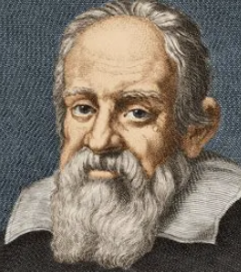
About ten months ago a report reached my ears that a certain Fleming had constructed a spyglass by means of which visible objects, though very distant from the eye of the observer, were distinctly seen as if nearby. Of the truly remarkable effect several experiences were related, to which some persons gave credence while others denied them. A few days later a report was confirmed to me in a letter from a noble Frenchman in Paris, Jacques Badovere, which caused me to apply myself wholeheartedly to inquire into means by which I might arrive at the invention of a similar instrument. This I did shortly afterwards, my basis being the theory of refraction. First I prepared a tube of lead, at the ends I fitted two glass lenses, both plane on one side while on the other side one was spherically convex and the other concave. Then placing my eye near the concave lens I perceived objects satisfactorily large and near, for they appeared three times closer and nine times larger than when seen with the naked eye alone. Next I constructed another one, more accurate, which represented objects as enlarged more than sixty times. Finally, sparing neither labor nor expense, I succeeded in constructing for myself so excellent an instrument that objects seen by means of it appeared nearly one thousand times larger and over thirty times closer than when regarded with our natural vision.
▼
Source
Translation by Stillman Drake in Discoveries and Opinions of Galileo (1957)
4 months 1 week ago
If every Socialist will carry his thoughts back to an earlier date, he will no doubt remember the host of prejudices aroused in him when, for the first time, he came to the idea that abolishing the capitalist system and private appropriation of land and capital had become an historical necessity.The same feelings are today produced in the man who for the first time hears that the abolition of the State, its laws, its entire system of management, governmentalism and centralization, also becomes an historical necessity: that the abolition of the one without the abolition of the other is materially impossible. Our whole education — made, be it noted, by Church and State, in the interests of both — revolts at this conception.Is it less true for that? And shall we allow our belief in the State to survive the host of prejudices we have already sacrificed for our emancipation?
4 months 1 week ago
He said that there was one only good, namely, knowledge; and one only evil, namely, ignorance.
▼
Source
Socrates, 14.
4 months 1 week ago
These eight rules [above] contain all the precepts for solid and immutable proofs.
4 months 1 week ago
See now the power of truth; the same experiment which at first glance seemed to show one thing, when more carefully examined, assures us of the contrary.
▼
Source
Salviati, Third Day. Naturally Accelerated Motion
4 months 1 week ago
Our elucidations of the preliminary concept of phenomenology show that its essential character does not consist in its actuality as a philosophical "movement." Higher than actuality stands possibility. We can understand phenomenology solely by seizing upon it as a possibility.
▼
Source
Introduction: The Exposition of the Question of the Meaning of Being (Stambaugh translation)
4 months 1 week ago
Education still remains the privilege of a small minority, for it is idle to talk of education when the workman’s child is forced at the age of thirteen, to go down in to the mine or to help his father on the farm. It is idle to talk of studies to the worker, who comes home in the evening crushed by excessive toil with its brutalizing atmosphere. Society is thus bound to remain divided into two hostile camps, and in such conditions, freedom is a vain word. The Radical begins by demanding a greater extension of political rights, but he soon sees the at breath of liberty leads to the uplifting of the proletariat, and then he turns round, changes his opinions, and reverts to repressive legislation and government by the sword.
▼
Source
Ch. 1 : Our Riches, p. 60
4 months 1 week ago
It was a saying of his that education was an ornament in prosperity and a refuge in adversity.
▼
Source
Aristotle, 9.
4 months 1 week ago
The origin of things, considered not as leading to anything, but in itself, contains the idea of First, the end of things that of Second, the process mediating between them that of Third. A philosophy which emphasises the idea of the One, is generally a dualistic philosophy in which the conception of Second receives exaggerated attention: for this One (though of course involving the idea of First) is always the other of a manifold which is not one. The idea of the Many, because variety is arbitrariness and arbitrariness is repudiation of any Secondness, has for its principal component the conception of First. In psychology Feeling is First, Sense of reaction Second, General conception Third, or mediation. In biology, the idea of arbitrary sporting is First, heredity is Second, the process whereby the accidental characters become fixed is Third. Chance is First, Law is Second, the tendency to take habits is Third. Mind is First, Matter is Second, Evolution is Third.
4 months 1 week ago
Form displays the relation [to beings] itself as the state of original comportment toward beings, the festive state in which the being itself in its essence is celebrated and thus for the first time placed in the open.
▼
Source
p. 119
4 months 1 week ago
All we can say now is, that, even now, 600 persons could easily live on a square mile; and that... 1,000 human beings—not idlers—living on 1,000 acres could easily, without... overwork, obtain... a luxurious vegetable and animal food, as well as the , wool, silk and hides necessary for their clothing. As to what may be obtained under still more perfect methods—also known but not yet tested on a large scale—is better to abstain from any forecast: so unexpected are the recent achievements of intensive culture.
4 months 1 week ago
One of the sophisms of Chrysippus was, "If you have not lost a thing, you have it."
▼
Source
Chrysippus, 11.
4 months 1 week ago
The historical world, in so far as it is built, organized, and shaped by the conscious activity of thinking subjects, is a realm of mind. But the mind is fully realized and exists in its true form only when it indulges in its proper activity, namely, in art, religion, and philosophy. P. 87

4 months 1 week ago
As a violin string or a harpsichord key vibrates and gives forth sound, so the cerebral fibres, struck by waves of sound, are stimulated to render or repeat the words that strike them.
4 months 1 week ago
But no mental action seems necessary or invariable in its character. In whatever manner the mind has reacted under a given sensation, in that manner it is the more likely to react again; were this, however, an absolute necessity, habits would become wooden and ineradicable, and no room being left for the formulation of new habits, intellectual life would come to a speedy close. Thus, the uncertainty of the mental law is no mere defect of it, but is on the contrary of its essence. The truth is, the mind is not subject to "law," in the same rigid sense that matter is. It only experiences gentle forces which merely render it more likely to act a given way than it otherwise would be. There always remains a certain amount of arbitrary spontaneity in its action, without which it would be dead.
4 months 1 week ago
We ought not to judge of men's merits by their qualifications, but by the use they make of them.
▼
Source
p. 556 (Wisdom)
CivilSimian.com created by AxiomaticPanic, CivilSimian, Kalokagathia