
4 months 1 week ago
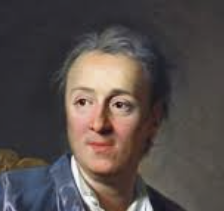
If you want me to believe in God, you must make me touch him.
▼
Source
Portraying a fictional conversation of Nicholas Saunderson with a priest, in ' Lettre sur les aveugles [Letter about the Blind] (1749), as quoted in Diderot and the Encyclopædists (1897) by John Morley, p. 92. Publication of this work resulted in Diderot
4 months 1 week ago
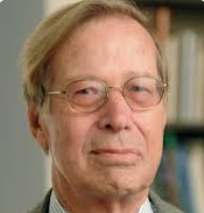
Perhaps MacKinnon should reflect on these suggestions that the censorship issue is not so simple-minded, so transparently gender-against-gender, as she insists. She should stop calling names long enough to ask whether personal sensationalism, hyperbole, and bad arguments are really what the cause of sexual equality now needs.
▼
Source
"Pornography: An Exchange", response to Catharine MacKinnon, New York Review of Books 41(5), March 3, 1994.
4 months 1 week ago
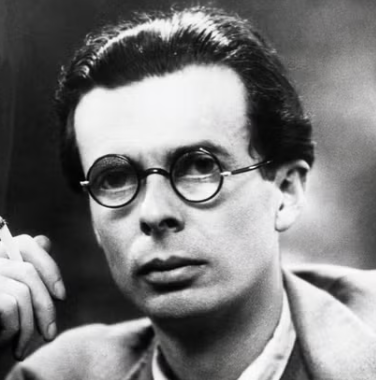
And suddenly I had an inkling of what it must feel like to be mad.
4 months 1 week ago
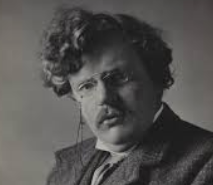
For my part, I should be inclined to suggest that the chief object of education should be to restore simplicity. If you like to put it so, the chief object of education is not to learn things; nay, the chief object of education is to unlearn things.
▼
Source
"An Essay on Two Cities"
4 months 1 week ago
Superstition is more injurious to God than atheism.
4 months 1 week ago
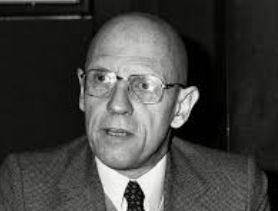
What all these people are doing is not aggressive; they are inventing new possibilities of pleasure with strange parts of their body — through the eroticization of the body. I think it's ... a creative enterprise, which has as one of its main features what I call the desexualization of pleasure.
▼
Source
In reference to Sadism and Masochism, as quoted in Who's Who in Contemporary Gay & Lesbian History: From World War II to the Present Day (2001) by Robert Aldrich and Gary Wotherspoon
4 months 1 week ago
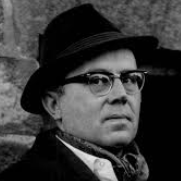
Conservatives respect the wisdom of their ancestors; they are dubious of wholesale alteration. They think society is a spiritual reality, possessing an eternal life but a delicate constitution: it cannot be scrapped and recast as if it were a machine.
4 months 1 week ago
By means of ever more effective methods of mind-manipulation, the democracies will change their nature; the quaint old forms— elections, parliaments, Supreme Courts and all the rest—will remain. The underlying substance will be a new kind of non-violent totalitarianism. All the traditional names, all the hallowed slogans will remain exactly what they were in the good old days. Democracy and freedom will be the theme of every broadcast and editorial—but democracy and freedom in a strictly Pickwickian sense. Meanwhile the ruling oligarchy and its highly trained elite of soldiers, policemen, thought-manufacturers and mind-manipulators will quietly run the show as they see fit.
▼
Source
Chapter 3, p. 25
4 months 1 week ago
The central idea of poetry is the idea of guessing right, like a child.
▼
Source
Ch I: The Victorian Compromise and Its Enemies (p. 24)
4 months 1 week ago
In any country where talent and virtue produce no advancement, money will be the national god. Its inhabitants will either have to possess money or make others believe that they do. Wealth will be the highest virtue, poverty the greatest vice. Those who have money will display it in every imaginable way. If their ostentation does not exceed their fortune, all will be well. But if their ostentation does exceed their fortune they will ruin themselves. In such a country, the greatest fortunes will vanish in the twinkling of an eye. Those who don't have money will ruin themselves with vain efforts to conceal their poverty. That is one kind of affluence: the outward sign of wealth for a small number, the mask of poverty for the majority, and a source of corruption for all.
4 months 1 week ago
It was an important moment. The old partners of the spectacle of punishment, the body and the blood, gave way. A new character came of the scene, masked. It was the end of a certain kind of tragedy; comedy began, with shadow play, faceless voices, impalpable entities. The apparatus of punitive justice must now bite into this bodiless reality.
▼
Source
pp. 17

4 months 1 week ago
The Communists, following Hegel, speak of humanity and its future as of some monolithic individuality. I was attacking this illusion.
▼
Source
On her work All Men are Mortal in Force of Circumstances (1963), p. 73
4 months 1 week ago
Above all, it is to my husband that I owe my deepest thanks. At times, when intensely absorbed by a new idea, I would enthusiastically jot it down in an English that was not very English. His harshest criticism then would be, "Stop a minute-your English is getting just a little too eccentric!" There was never criticism without advice; there was always that extraordinary feeling of good will which is constantly present in him and of which, on this occasion, he gave with particular abundance.
▼
Source
Laura Archera Huxley Acknowledgements for You are not the Target (1963)
4 months 1 week ago
The cold queen of England is looking in the glass; The shadow of the Valois is yawning at the Mass.
▼
Source
Lepanto
4 months 1 week ago
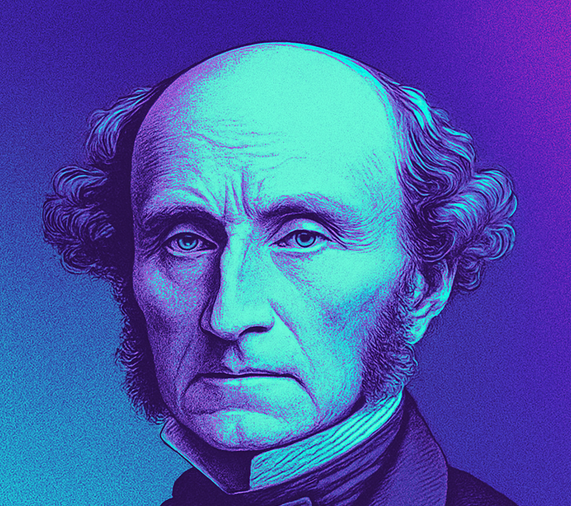
Everybody knows that the same sum of money is of much greater value to a poor man that to a rich one. Give £10 a year to the man who has but £10 a year, you double his income, and you nearly double his enjoyments. Add £10 more, you do not add to his enjoyments so much as you did by the first £10. The third £10 is less valuable than the second, and the fourth less valuable than the third. To the possessor of £1,000 a year the addition of £10 would be scarcely perceptible; to the possessor of £10,000 it would not be worth slooping for.The richer a man is the less he is benefited by any further addition to his income. The man of £4,000 a year has four times the income of the man who has but £1,000; but does anybody suppose that he has four times the happiness?
▼
Source
John Stuart Mill, Primogeniture, in The Collected Works of John Stuart Mill, Toronto, 1988, vol. 26, p. 336
4 months 1 week ago
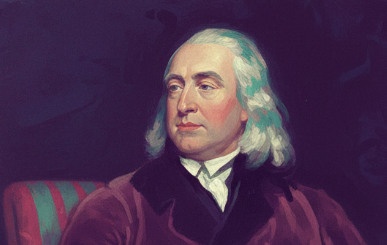
Rights are, then, the fruits of the law, and of the law alone. There are no rights without law—no rights contrary to the law—no rights anterior to the law. Before the existence of laws there may be reasons for wishing that there were laws—and doubtless such reasons cannot be wanting, and those of the strongest kind;—but a reason for wishing that we possessed a right, does not constitute a right. To confound the existence of a reason for wishing that we possessed a right, with the existence of the right itself, is to confound the existence of a want with the means of relieving it. It is the same as if one should say, everybody is subject to hunger, therefore everybody has something to eat.
▼
Source
Pannomial Fragments (c. 1831), quoted in The Works of Jeremy Bentham, Vol. III (1838), p. 221
4 months 1 week ago
The man described for us, whom we are invited to free, is already in himself the effect of a subjection much more profound than himself. A 'soul' inhabits him and brings him to existence...the soul is the effect and instrument of political anatomy; the soul is the prison of the body.
4 months 1 week ago
If you live long enough, you'll see that every victory turns into a defeat.
4 months 1 week ago
An artist will betray himself by some sort of sincerity.
4 months 1 week ago
The utilitarian morality does recognise in human beings the power of sacrificing their own greatest good for the good of others. It only refuses to admit that the sacrifice is itself a good. A sacrifice which does not increase, or tend to increase, the sum total of happiness, it considers as wasted. The only self-renunciation which it applauds, is devotion to the happiness, or to some of the means of happiness, of others; either of mankind collectively, or of individuals within the limits imposed by the collective interests of mankind.
▼
Source
Ch. 2
4 months 1 week ago
[T]he function of parrhesia... has the function of criticism: criticism of the interlocutor or of the speaker...
4 months 1 week ago
Each of us is responsible for everything and to every human being.
▼
Source
Fyodor Dostoevsky in The Brothers Karamazov; this was used as an epigraph in The Blood of Others, and is sometimes attributed to de Beauvoir
4 months 1 week ago
Being is - or should be - necessary.
4 months 1 week ago
There is no author to whom my father thought himself more indebted for his own mental culture, than Plato, or whom he more frequently recommended to young student. I can bear similar testimony in regard to myself. The Socratic method, of which the Platonic dialogues are the chief example, is unsurpassed as a discipline for correcting the errors, and clearing up the confusions incident to the intellectus sibi permissus...
▼
Source
([https://archive.org/details/autobiography01mill/page/21/mode/1up pp. 21–22])
4 months 1 week ago
Were art to redeem man, it could do so only by saving him from the seriousness of life and restoring him to an unexpected boyishness. The symbol of art is seen again in the magic flute of the Great God Pan which makes the young goats frisk at the edge of the grove. All modern art begins to appear comprehensible and in a way great when it is interpreted as an attempt to instill youthfulness into an ancient world.
▼
Source
"Art a Thing of No Consequence"
4 months 1 week ago
Foucault's achievement in so quickly building such an enthralling account of the operation of power in society is all the more remarkable when one remembers the dominant hold that Marxist and neo-Marxist accounts had in the Anglophone academy in the 1970s and even into the 1980s. The key to his success probably lies in the fact that he did not initially present his insights in abstract terms but instead allowed them to emerge from his painstaking histories of various knowledge endeavours, or sciences, particularly psychiatry, psychology, penology, and sexology. Without bludgeoning his readers, Foucault allowed them to see mostly power where others would see mostly science.
▼
Source
Gary Wickham, "Foucault and the Promise of Power without Dogma", in Routledge International Handbook of Contemporary Social and Political Theory (2011) edited by Gerard Delanty and Stephen P. Turner
4 months 1 week ago
If the knowledge which we acquired before birth was lost to us at birth, and afterwords by the use of the senses we recovered that which we previously knew, will not that which we call learning be a process of recovering our knowledge, and may not this be rightly termed recollection by us? ...Then, Simmias, our souls must have existed before they were in the form of man—without bodies, and must have had intelligence.

4 months 1 week ago
Tragedy is all about losing. And humor is all about gaining perspective. Humour returns our gladness. And with gladness comes generosity. Humor returns us to the light and makes us light—it kills grudges, buries bodies–buries revenge—buries blame and guilt—fear and dread. Laughter, like hiccups and sneezes and farts and burps, relieves us of severity.
▼
Source
On the power of humor.[https://monkeybicycle.net/category/interviews/page/16/] (Monkey Bicycle, August 23, 2013)
4 months 1 week ago
Like Coleridge, he might plead as a set-off that he had been to many persons, through his conversation, a source not only of much instruction but of great elevation of character. On me his influence was most salutary. It was moral in the best sense. He took a sincere and kind interest in me, far beyond what could have been expected towards a mere youth from a man of his age, standing, and what seemed austerity of character. There was in his conversation and demeanour a tone of high-mindedness which did not show itself so much, if the quality existed as much, in any of the other persons with whom at that time I associated. My intercourse with him was the more beneficial, owing to his being of a different mental type from all other intellectual men whom I frequented...
▼
Source
([https://archive.org/details/autobiography01mill/page/75/mode/1up pp. 75-76])
4 months 1 week ago
That Marxism should triumph in Russia, where there is no industry, would be the greatest contradiction that Marxism could undergo. But there is no such contradiction, for there is no such triumph. Russia is Marxist more or less as the Germans of the Holy Roman Empire were Romans.
▼
Source
Chapter XIV: Who Rules The World?
4 months 1 week ago
The grand discoveries which scientific experiment yielded at and about the turn of the century, in which investigators in many countries took an eminent part and which were destined all unexpectedly to give us a fresh insight into the structure of atoms, were due in the first instance, as all are aware, to the work of the great investigators of the English school, Sir Joseph Thomson and Sir Ernest Rutherford, who have inscribed their names on the tablets of the history of scientific research as distinguished witnesses to the truth that imagination and acumen are capable of penetrating the crowded mass of registered experience and of revealing Nature's simplicity to our gaze.
▼
Source
Niels Bohr's speech at the Nobel Banquet in Stockholm (December 10, 1922)
4 months 1 week ago
If the immortal is also imperishable, the soul when attacked by death cannot perish; for the preceding argument shows that the soul will not admit of death, or even be dead, any more than three or the odd number will admit of the even...
4 months 1 week ago
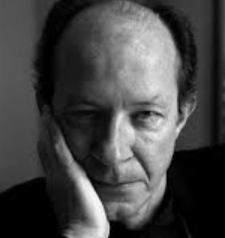
Antoine Meillet also noted that imperatives in European languages are typically the morphological root of the verb, and hypothesised that the imperative was the primitive form of a verb: “walk!” precedes “to walk” or “he walks”. This opens up the possibility of an alternative ontology, or pre-ontology, based on commandment rather than assertion, on “be!” rather than “is”. While philosophical or scientific statements would fall under the ordinary “is”-based ontology, fields like law, religion or magic would operate in the imperative mode: “let there be…”
▼
Source
Giorgio Agamben, [http://bat020.com/2011/03/30/giorgio-agamben-what-is-a-commandment/ "What is a commandment?"] March 28, 2011
4 months 1 week ago
It was the period of my mental progress which I have now reached that I formed the friendship which has been the honour and chief blessing of my existence, as well as the source of a great part of all that I have attempted to do, or hope to effect hereafter, for human improvement. My first introduction to the lady who, after a friendship of twenty years, consented to become my wife, was in 1830, when I was in my twenty-fifth and she in her twenty-third year.
▼
Source
([https://archive.org/details/autobiography01mill/page/184/mode/1up p. 184])
4 months 1 week ago
Every living creature is happy when he fulfills his destiny, that is, when he realizes himself, when he is being that which in truth he is. For this reason, Schlegel, inverting the relationship between pleasure and destiny, said, “We have a genius for what we like.” Genius, man’s superlative gift for doing something, always carries a look of supreme pleasure.
▼
Source
pp. 16-17
4 months 1 week ago
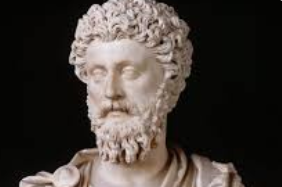
The lot assigned to every man is suited to him, and suits him to itself.
▼
Source
III, 4
4 months 1 week ago
One of the favorite maxims of my father was the distinction between the two sorts of truths, profound truths recognized by the fact that the opposite is also a profound truth, in contrast to trivialities where opposites are obviously absurd.
▼
Source
Hans Henrik Bohr, writing about his father in "My father" in Niels Bohr - His Life and Work As Seen By His Friends and Colleagues (1967), S. Rozental, ed.

4 months 1 week ago
Let us consider first the view that it is always wrong to take an innocent human life. We may call this the “sanctity of life” view. People who take this view oppose abortion and euthanasia. They do not usually, however, oppose the killing of nonhuman animals—so perhaps it would be more accurate to describe this view as the “sanctity of human life” view. The belief that human life, and only human life, is sacrosanct is a form of speciesism.
▼
Source
Ch. 1: All Animals Are Equal
4 months 1 week ago
If we are to use women for the same things as the men, we must also teach them the same things.
▼
Source
Socrates, as quoted by Bettany Hughes: [http://www.telegraph.co.uk/women/womens-life/11785181/Feminism-started-with-the-Buddha-and-Confucius-25-centuries-ago.html "Feminism started with the Buddha and Confucius 25 centuries ago"].
4 months 1 week ago
Since governmental activity may be deemed a service which is useful to society, society should consent to pay for this service.
4 months 1 week ago
He was a friend of my parents, and I didn't know him through that because my parents died when I was quite tiny; but nevertheless it made me know he existed, and so I read his books. And, well, they were the sort of books that would appeal to me. They were empiricist and liberal and humane. And I liked him very much.
▼
Source
Bertrand Russell, in an [http://www.russellsocietylibrary.com/SUSSKIND.PDF interview] with David Susskind (10 June 1962).
4 months 1 week ago
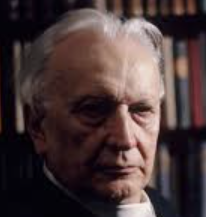
Reason is like an open secret that can become known to anyone at any time; it is the quiet space into which everyone can enter through his own thought.
▼
Source
As quoted in Philosophy for a Time of Crisis : An Interpretation, with Key Writings by Fifteen Great Modern Thinkers (1959) by Adrienne Koch, Ch. 18, "Karl Jaspers : A New Humanism"
4 months 1 week ago
You have a mind? —Yes. Well, why not use it?
▼
Source
(Hays translation)
4 months 1 week ago
One common strategy on which we should all be able to agree is to take steps to reduce the risk of human extinction when those steps are also highly effective in benefiting existing sentient beings. For example, eliminating or decreasing the consumption of animal products will benefit animals, reduce greenhouse gas emissions, and lessen the chances of a pandemic resulting from a virus evolving among the animals crowded into today’s factory farms, which are an ideal breeding ground for viruses. That therefore looks like a high-priority strategy.
▼
Source
Chapter 15: Preventing Human Extinction (p. 177)
4 months 1 week ago
Engage people with what they expect; it is what they are able to discern and confirms their projections. It settles them into predictable patterns of response, occupying their minds while you wait for the extraordinary moment — that which they cannot anticipate.
4 months 1 week ago
Whenever conscience speaks with a divided, uncertain, and disputed voice, it is not yet the voice of God. Descend still deeper into yourself, until you hear nothing but a clear and undivided voice, a voice which does away with doubt and brings with it persuasion, light and serenity.
▼
Source
6 April 1851
4 months 1 week ago
At dawn, when you have trouble getting out of bed, tell yourself: ‘I have to go to work – as a human being. What do I have to complain of, if I’m going to do what I was born for – the things I was brought into the world to do? Or is this what I was created for? To huddle under the blankets and stay warm?’
▼
Source
At dawn of day, when you dislike being called, have this thought ready: "I am called to man's labour; why then do I make a difficulty if I am going out to do what I was born to do and what I was brought into the world for?(Farquharson translation) | Ὄρθρο
4 months 1 week ago
My principal motive is the belief that we can still make admirable sense of our lives even if we cease to have … "an ambition of transcendence."
▼
Source
Introduction to Objectivity, Relativism, and Truth: Philosophical Papers, Volume I (1991).

4 months 1 week ago
Dear brothers and sisters, St Teresa of Jesus is a true teacher of Christian life for the faithful of every time. In our society, which all too often lacks spiritual values, St Teresa teaches us to be unflagging witnesses of God, of his presence and of his action. She teaches us truly to feel this thirst for God that exists in the depths of our hearts, this desire to see God, to seek God, to be in conversation with him and to be his friends.This is the friendship we all need that we must seek anew, day after day. May the example of this Saint, profoundly contemplative and effectively active, spur us too every day to dedicate the right time to prayer, to this openness to God, to this journey, in order to seek God, to see him, to discover his friendship and so to find true life; indeed many of us should truly say: “I am not alive, I am not truly alive because I do not live the essence of my life”.Therefore time devoted to prayer is not time wasted, it is time in which the path of life unfolds, the path unfolds to learning from God an ardent love for him, for his Church, and practical charity for our brothers and sisters.
▼
Source
Benedict XVI, General Audience Address, 2 February 2011.

4 months 1 week ago
The shortest and surest way of arriving at real knowledge is to unlearn the lessons we have been taught, to mount the first principles, and take nobody's word about them.
▼
Source
As quoted in Treasury of Wisdom, Wit and Humor, Odd Comparisons and Proverbs (1891) by Adam Woolever
CivilSimian.com created by AxiomaticPanic, CivilSimian, Kalokagathia