
4 months 1 week ago
Morality must be the heart of our existence, if it is to be what it wants to be for us. ... The highest form of philosophy is ethics. Thus all philosophy begins with “I am.” The highest statement of cognition must be an expression of that fact which is the means and ground for all cognition, namely, the goal of the I.
▼
Source
Fichte Studies § 556
4 months 1 week ago
I've seen proof, black on white, that Herr Dr. Förster has not yet severed his connection with the anti-Semitic movement. ... Since then I've had difficulty coming up with any of the tenderness and protectiveness I've so long felt toward you. The separation between us is thereby decided in really the most absurd way. Have you grasped nothing of the reason why I am in the world? ... Now it has gone so far that I have to defend myself hand and foot against people who confuse me with these anti-Semitic canaille; after my own sister, my former sister, and after Widemann more recently have given the impetus to this most dire of all confusions. After I read the name Zarathustra in the anti-Semitic Correspondence my forbearance came to an end. I am now in a position of emergency defense against your spouse's Party. These accursed anti-Semite deformities shall not sully my ideal!!
▼
Source
[http://www.thenietzschechannel.com/correspondence/eng/nlett-1887.htm Draft for a letter] to his sister Elisabeth Förster-Nietzsche (December 1887).
4 months 1 week ago
Do not resist the evil-doer and take no part in doing so, either in the violent deeds of the administration, in the law courts, the collection of taxes, or above all in soldiering, and no one in the world will be able to enslave you.
▼
Source
V. "Do not resist the evil-doer" is an allusion to the words of Jesus Christ in Matthew 5:39.
4 months 1 week ago
My object in adopting this arrangement is that the truths should be at one time apparent and at another time concealed. Thus we shall not be in opposition to the Divine Will (from which it is wrong to deviate) which has withheld from the multitude the truths required for the knowledge of God, according to the words, "The secret of the Lord is with them that fear Him." (Psalm 25:14)
4 months 1 week ago
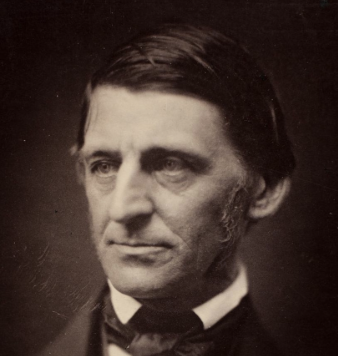
I wish that life should not be cheap, but sacred. I wish the days to be as centuries, loaded, fragrant.
▼
Source
Considerations by the Way
4 months 1 week ago
We speak erroneously of "artificial" materials, "synthetics", and so forth. The basis for this erroneous terminology is the notion that Nature has made certain things which we call natural, and everything else is "man-made", ergo artificial. But what one learns in chemistry is that Nature wrote all the rules of structuring; man does not invent chemical structuring rules; he only discovers the rules. All the chemist can do is find out what Nature permits, and any substances that are thus developed or discovered are inherently natural. It is very important to remember that.
▼
Source
"The Comprehensive Man", Ideas and Integrities: A Spontaneous Autobiographical Disclosure (1963), 75-76.
4 months 1 week ago
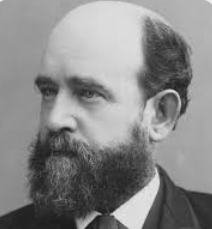
I propose in this inquiry to take nothing for granted, but to bring even accepted theories to the test of first principles, and should they not stand the test, freshly to interrogate facts in the endeavor to discover their law. I propose to beg no question, to shrink from no conclusion, but to follow truth wherever it may lead. Upon us is the responsibility of seeking the law, for in the very heart of our civilization to-day women faint and little children moan. But what that law may prove to be is not our affair. If the conclusions that we reach run counter to our prejudices, let us not flinch; if they challenge institutions that have long been deemed wise and natural, let us not turn back.
▼
Source
Introductory : The Problem
4 months 1 week ago
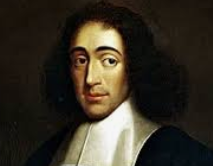
I had hoped that out of so many stories you would at least have produced one or two, which could hardly be questioned, and which would clearly show that ghosts or spectres exist. The case you relate... seems to me laughable. In like manner it would be tedious here to examine all the stories of people, who have written on these trifles. To be brief, I cite the instance of Julius Caesar, who, as Suetonius testifies, laughed at such things and yet was happy. ...And so should all who reflect on the human imagination, and the effects of the emotions, laugh at such notions; whatever Lavater and others, who have gone dreaming with him in the matter, may produce to the contrary.
▼
Source
Letter to Hugo Boxel (October 1674) [https://books.google.com/books?id=Nz1kRKDMbUMC The Chief Works of Benedict de Spinoza] (1891) Tr. R. H. M. Elwes, Vol. 2, Letter 58 (54).
4 months 1 week ago
No one, of a surety, wanders farther from the mark than he who fancies to himself that he already understands this marvellous Kingdom, and can, in few words, fathom its constitution, and everywhere find the right path. To no one, who has broken off, and made himself an Island, will insight rise of itself, nor even without toilsome effort. Only to children, or childlike men, who know not what they do, can this happen. Long, unwearied intercourse, free and wise Contemplation, attention to faint tokens and indications; an inward poet-life, practised senses, a simple and devout spirit: these are the essential requisites of a true Friend of Nature; without these no one can attain his wish.
4 months 1 week ago
It is only necessary to make war with five things; with the maladies of the body, the ignorances of the mind, with the passions of the body, with the seditions of the city and the discords of families.
▼
Source
As quoted in [http://books.google.com/books?id=aJ8CAAAAQAAJ&pg=RA1-PA331&dq=%22only+necessary+to+make+war+with+five+things%22&ei=8jG1SZKiIIGklQTL0KHHDg The Biblical Museum: A Collection of Notes Explanatory, Homiletic, and Illustrative on the Holy Scriptu
4 months 1 week ago
The individual itself as a struggle between parts (for food, space, etc.): its evolution tied to the victory or predominance of individual parts, to an atrophy, a "becoming an organ" of other parts. ... The aristocracy in the body, the majority of the rulers (struggle between cells and tissues). ... Slavery and division of labor: the higher type possible only through the subjugation of the lower, so that it becomes a function.
▼
Source
Sec. 660 : The Body as a Political Structure
4 months 1 week ago
If Mormonism is able to endure, unmodified, until it reaches the third and fourth generation, it is destined to become the greatest power the world has ever known.
▼
Source
This quote originates in Thomas J. Yates, "Count Tolstoi and the 'American Religion' ", Improvement Era (February 1939): [https://archive.org/details/improvementera4202unse/page/94/mode/2up 94]. According to Yates, American diplomat Andrew Dickson Wh
4 months 1 week ago
Some consider... all wants of the body as shame, disgrace, and defect to which they are compelled to attend; this is chiefly the case with the sense of touch, which is a disgrace to us according to Aristotle, and which is the cause of our desire for eating, drinking, and sensuality. Intelligent persons must, as much as possible, reduce these wants, guard against them, abstain from speaking of them, discussing them, and attending to them in company of others. Man must have control over all these desires, reduce them as much as possible, and only retain of them as much as is indispensable. His aim must be the aim of man as man, viz., the formation of ideas, and nothing else. The best and sublimest among them is the idea which man forms of God, angels, and the rest of the creation according to his capacity. Such men are always with God, and of them it is said, "Ye are princes, and all of you are children of the Most High." (Ps. lxxxii. 6) This is man's task and purpose.
▼
Source
Ch.8
4 months 1 week ago
Nor mourn the unalterable Days That Genius goes and Folly stays.
▼
Source
In Memoriam E. B. E., st. 9
4 months 1 week ago
It is one of our most exciting discoveries that local discovery leads to a complex of further discoveries. Corollary to this we find that we no sooner get a problem solved than we are overwhelmed with a multiplicity of additional problems in a most beautiful payoff of heretofore unknown, previously unrecognized, and as-yet unsolved problems.
4 months 1 week ago
To feel most beautifully alive means to be reading something beautiful, ready always to apprehend in the flow of language the sudden flash of poetry.
▼
Source
A Retrospective Glance at the Lifework of a Master of Books
4 months 1 week ago
The respect for authority, the presumption in favor of those who have won intellectual reputation, is within reasonable limits, both prudent and becoming. But it should not be carried too far, and there are some things especially as to which it behooves us all to use our own judgment and to maintain free minds. For not only does the history of the world show that undue deference to authority has been the potent agency through which errors have been enthroned and superstitions perpetuated, but there are regions of thought in which the largest powers and the greatest acquirements cannot guard against aberrations or assure deeper insight. One may stand on a box and look over the heads of his fellows, but he no better sees the stars. The telescope and the microscope reveal depths which to the unassisted vision are closed. Yet not merely do they bring us no nearer to the cause of suns and animal-cula, but in looking through them the observer must shut his eyes to what lies about him. That intension is at the expense of extension is seen in the mental as in the physical sphere. A man of special learning may be a fool as to common relations. And that he who passes for an intellectual prince may be a moral pauper there are examples enough to show.
▼
Source
Introduction : The Reason for the Examination
4 months 1 week ago
Goethe is an altogether practical Poet. He is in his works what the English are in their wares: highly simple, neat, convenient and durable. He has done in German Literature what Wedgwood did in English Manufacture. He has, like the English, a natural turn for Economy, and a noble Taste acquired by Understanding. Both these are very compatible, and have a near affinity in the chemical sense.
4 months 1 week ago
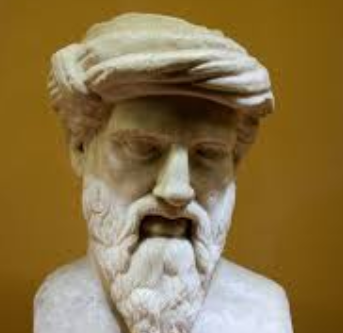
Work at these things, practice them, these are the things you ought to desire; they are what will put you on the path of divine virtue — yes, by the one who entrusted our soul with the tetraktys, source of ever-flowing nature. Pray to the gods for success and get to work.
▼
Source
As quoted in Divine Harmony: The Life and Teachings of Pythagoras by John Strohmeier and Peter Westbrook. (1999)
4 months 1 week ago
Nobody is more inferior than those who insist on being equal.
▼
Source
Often attributed to Nietzsche especially on social media, but no citation is ever given, and the only source I can find that states Nietzche said this was a mock interview by Richard Marshall.
4 months 1 week ago
Schopenhauer, Arthur: The World as Will and Representation
4 months 1 week ago
That which is produced with intention has passed over from non-existence to existence.
▼
Source
Ch.13
4 months 1 week ago
Men love to wonder, and that is the seed of our science.
▼
Source
Works and Days; sometimes misquoted as "Men love to wonder, and that is the seed of science."
4 months 1 week ago
Humanity is moving ever deeper into a crisis which has no precedent. It is a crisis brought about by evolution being intent on completely integrating differently colored, differently cultured, and intercommunicating humanity, and by evolution being intent on making integrated humanity able to live sustainedly at a higher standard of living for all than has ever been experienced by any. Probably ninety-nine percent of humanity does not know that we have the option to make it ; we do. It can only be accomplished, however, through a Design Science Revolution. Those in supreme power, politically and economically, aren't yet convinced that our Planet Earth has anywhere nearly enough life support for all humanity. They assume it has to be either you or me, that there is not enough for both. Those with financial advantage reason that selfishness is necessary and fortify themselves even further.
4 months 1 week ago
It is surely a pure delight to know, how and by what processes this earth is clothed with verdure and life, how the clouds, mists and rain are formed, what causes all the changes of this terrestrial system of things, and by what divine laws order is preserved amidst apparent confusion. It is a sublime occupation to investigate the cause of the tempest and the volcano, and to point out their use in the economy of things, — to bring the lightning from the clouds and make it subservient to our experiments, — to produce as it were a microcosm in the laboratory of art, and to measure and weigh those invisible atoms, which, by their motions and changes according to laws impressed upon them by the Divine Intelligence, constitute the universe of things. The true chemical philosopher sees good in all the diversified forms of the external world. Whilst he investigates the operations of infinite power guided by infinite wisdom, all low prejudices, all mean superstitions disappear from his mind. He sees man an atom amidst atoms fixed upon a point in space; and yet modifying the laws that are around him by understanding them; and gaining, as it were, a kind of dominion over time, and an empire in material space, and exerting on a scale infinitely small a power seeming a sort of shadow or reflection of a creative energy, and which entitles him to the distinction of being made in the image of God and animated by a spark of the divine mind. Whilst chemical pursuits exalt the understanding, they do not depress the imagination or weaken genuine feelings; whilst they give the mind habits of accuracy, by obliging it to attend to facts, they likewise extend its analogies; and, though conversant with the minute forms of things, they have for their ultimate end the great and magnificent objects of nature. They regard the formation of a crystal, the structure of a pebble, the nature of a clay or earth; and they apply to the causes of the diversity of our mountain chains, the appearances of the winds, thunder-storms, meteors, the earthquake, the volcano, and all those phenomena which offer the most striking images to the poet and the painter. They keep alive that inextinguishable thirst after knowledge, which is one of the greatest charactics of our nature; — for every discovery opens a new field for investigation of facts, shows us the imperfection of our theories. It has justly been said, that the greater the circle of light, the greater the boundary of darkness by which it is surrounded.
▼
Source
Consolations in Travel, or The Last Days of a Philosopher, 3rd ed. (London: John Murray, 1831) dialogue V, p. 229
4 months 1 week ago
The King that followeth Truth, and ruleth according to Justice, shall reign quietly: but he that doth the contrary, seeketh another to reign for him.
4 months 1 week ago
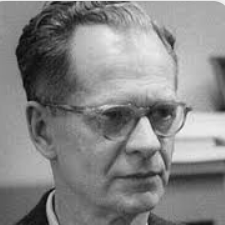
Today behaviourists like Skinner imprison the very concept of man within the limits of what they conclude from their artificial tests with animals.
▼
Source
John Berger, [https://books.google.com/books?id=u-rYLIF7H20C&pg=PA14 About Looking (1980), "Why Look at Animals?", p. 14]
4 months 1 week ago
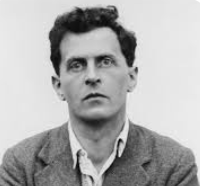
The World and Life are one. Physiological life is of course not "Life". And neither is psychological life. Life is the world. Ethics does not treat of the world. Ethics must be a condition of the world, like logic. Ethics and Aesthetics are one.
▼
Source
Journal entry (24 July 1916), p. 77e
4 months 1 week ago
Now I wonder what our knowledge has in common with God's knowledge according to those who treat God's knowledge... Is there anything else common to both besides the mere name? ...there is an essential distinction between His knowledge and ours, like the distinction between the substance of the heavens and that of the earth.
▼
Source
Ch.20
4 months 1 week ago
A good symbol is the best argument and is a missionary to persuade thousands.
▼
Source
Poetry and Imagination
4 months 1 week ago
That's the basis of all politics: it has to be you or me, there's not enough for both of us. Survival of the fittest.
4 months 1 week ago
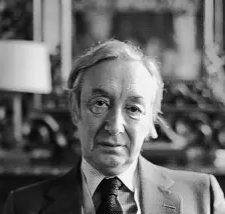
There never comes a point where a theory can be said to be true. The most that one can claim for any theory is that it has shared the successes of all its rivals and that it has passed at least one test which they have failed.
▼
Source
Philosophy in the Twentieth Century (1982) p. 133.
4 months 1 week ago
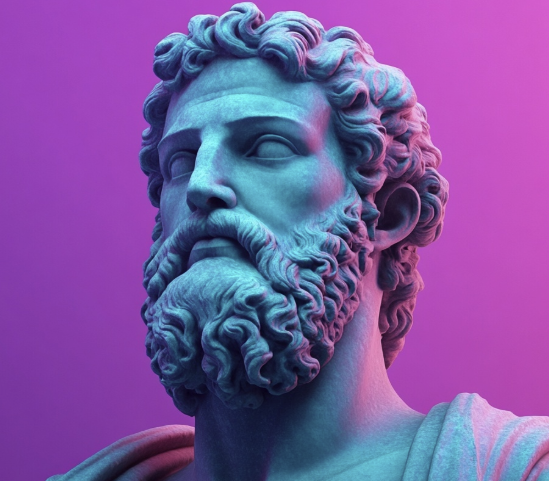
It is unlikely that the good of a snail should reside in its shell: so is it likely that the good of a man should?
▼
Source
Book I, ch. 20, § 17.
4 months 1 week ago
Ten is the very nature of number. All Greeks and all barbarians alike count up to ten, and having reached ten revert again to the unity. And again, Pythagoras maintains, the power of the number 10 lies in the number 4, the tetrad. This is the reason: if one starts at the unit (1) and adds the successive number up to 4, one will make up the number 10 (1+2+3+4 = 10). And if one exceeds the tetrad, one will exceed 10 too.... So that the number by the unit resides in the number 10, but potentially in the number 4. And so the Pythagoreans used to invoke the Tetrad as their most binding oath: "By him that gave to our generation the Tetractys, which contains the fount and root of eternal nature..."
▼
Source
Aëtius of Antioch Aëtius (I. 3.8)
4 months 1 week ago
Tell them I've had a wonderful life.
▼
Source
Last words, to his doctor's wife (28 April 1951)–as quoted in Ludwig Wittgenstein : A Memoir (1966) by Norman Malcolm, p. 100
4 months 1 week ago
It is namely distinctly stated in Scripture and handed down by tradition that the first commandments communicated to us did not include any law at all about burnt offering and sacrifice.
▼
Source
Ch.32
4 months 1 week ago
I read your piece on Plato. Holmes, when you strike at a king, you must kill him.
▼
Source
Said to a young Oliver Wendell Holmes, Jr., who had written a piece critical of Plato in response to his earlier conversation with Emerson, as reported by Felix Frankfurter in Harlan Buddington Phillips, Felix Frankfurter Reminisces (1960), p. 59
4 months 1 week ago
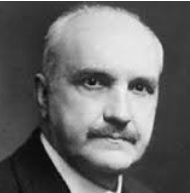
We must progress to the stage of doing all the right things for all the right reasons instead of doing all the right things for all the wrong reasons.
4 months 1 week ago
[Everything] ideal has a natural basis and everything natural an ideal development.
4 months 1 week ago
Why, what is weeping and sighing? A judgement. What is misfortune? A judgement. What are strife, disagreement, fault-finding, accusing, impiety, foolishness? They are all judgements.
▼
Source
Book III, ch. 3, § 18–19.
4 months 1 week ago
No one will deny that the soul of Pythagoras was sent to mankind from Apollo's domain, having either been one of his attendants, or more intimate associates, which may be inferred both from his birth, and his versatile wisdom.
▼
Source
Iamblichus of Chalcis, Life of Pythagoras translated by Thomas Taylor; Ch. 2: Youth, Education, Travels
4 months 1 week ago
A serious and good philosophical work could be written consisting entirely of jokes.
▼
Source
As quoted in "A View from the Asylum" in Philosophical Investigations from the Sanctity of the Press (2004), by Henry Dribble, p. 87
4 months 1 week ago
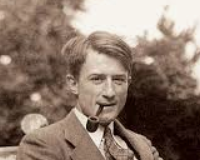
Poetry is a sort of truancy, a dream within the dream of life, a wild flower planted among our wheat.
4 months 1 week ago
The value of a principle is the number of things it will explain; and there is no good theory of disease which does not at once suggest a cure.
▼
Source
p. 212
4 months 1 week ago
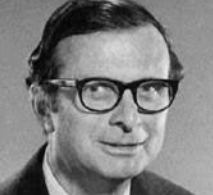
The comprehensiveness of OR’s aim is an example of a ‘systems’ approach, since ‘system’ implies an interconnected complex of functionally related components.
▼
Source
p. 7; cited in (2004, p. 210)
4 months 1 week ago
No system would have ever been framed if people had been simply interested in knowing what is true, whatever it may be. What produces systems is the interest in maintaining against all comers that some favourite or inherited idea of ours is sufficient and right. ** p. 49
4 months 1 week ago
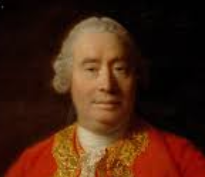
What may at first occur on this head, is, that as nothing can be contrary to truth or reason, except what has a reference to it, and as the judgments of our understanding only have this reference, it must follow, that passions can be contrary to reason only so far as they are accompany'd with some judgment or opinion. According to this principle, which is so obvious and natural, `tis only in two senses, that any affection can be call'd unreasonable. First, When a passion, such as hope or fear, grief or joy, despair or security, is founded on the supposition or the existence of objects, which really do not exist. Secondly, When in exerting any passion in action, we chuse means insufficient for the design'd end, and deceive ourselves in our judgment of causes and effects. Where a passion is neither founded on false suppositions, nor chuses means insufficient for the end, the understanding can neither justify nor condemn it. `Tis not contrary to reason to prefer the destruction of the whole world to the scratching of my finger. `Tis not contrary to reason for me to chuse my total ruin, to prevent the least uneasiness of an Indian or person wholly unknown to me. `Tis as little contrary to reason to prefer even my own acknowledge'd lesser good to my greater, and have a more ardent affection for the former than the latter. A trivial good may, from certain circumstances, produce a desire superior to what arises from the greatest and most valuable enjoyment; nor is there any thing more extraordinary in this, than in mechanics to see one pound weight raise up a hundred by the advantage of its situation. In short, a passion must be accompany'd with some false judgment. in order to its being unreasonable; and even then `tis not the passion, properly speaking, which is unreasonable, but the judgment.
▼
Source
Part 3, Section 3
4 months 1 week ago
No man is free who is not master of himself.
▼
Source
Fragment 35 ([https://en.wikisource.org/wiki/Epictetus,_the_Discourses_as_reported_by_Arrian,_the_Manual,_and_Fragments/Fragments Oldfather translation])
4 months 1 week ago
Pythagoras was a man of the most various accomplishments, and appears to have penetrated in different directions into the depths of human knowledge. He sought wisdom in its retreats of fairest promise, in Egypt and other distant countries. In this investigation he employed the earlier period of his life, probably till he was forty, and devoted the remainder to such modes of proceeding, as appeared to him the most likely to secure the advantage of what he had acquired to a late posterity. He founded a school, and delivered his acquisitions by oral communication to a numerous body of followers. He divided his pupils into two classes, the one neophytes, to whom was explained only the most obvious and general truths, the other who were admitted into the entire confidence of the master. These last he caused to throw their property into a common stock, and to live together in the same place of resort. He appears to have spent the latter half of his life in that part of Italy, called Magna Graecia, so denominated in some degree from the numerous colonies of Grecians by whom it was planted, and partly perhaps from the memory of the illustrious things which Pythagoras achieved there.
4 months 1 week ago
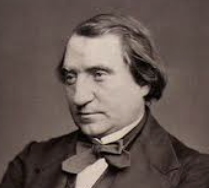
A Muslim who knows French will never be a dangerous Muslim.
▼
Source
quoted in Arvidsson, Stefan (2006), Aryan Idols: Indo-European Mythology as Ideology and Science, translated by Sonia Wichmann, Chicago and London: The University of Chicago Press.'(107)
CivilSimian.com created by AxiomaticPanic, CivilSimian, Kalokagathia