
4 months 1 week ago
If someone incessantly drops the word "life," you know he's a sick man.
4 months 1 week ago
The Register of Knowledge of Fact is called History.
▼
Source
The First Part, Chapter 9, p. 40
4 months 1 week ago
Insurrection, never so necessary, is a most sad necessity; and governors who wait for that to instruct them are surely getting into the fatalest courses,—proving themselves sons of Nox and Chaos, of blind Cowardice, not of seeing Valour! How can there be any remedy in insurrection? It is a mere announcement of the disease,—visible now even to sons of Night. Insurrection usually gains little; usually wastes how much. One of its worst kinds of waste, to say nothing of the rest, is that of irritating and exasperating men against each other, by violence done, which is always sure to be injustice done; for violence does even justice unjustly.
▼
Source
Book I, Chap. III
4 months 1 week ago
The hopes of the right-minded may be realized, those of fools are impossible.
4 months 1 week ago
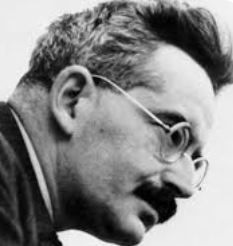
Treatises may be didactic in tone, but essentially they lack the conclusiveness of an instruction which could be asserted, like doctrine, by virtue of its own authority. ... Tirelessly the process of thinking makes new beginnings, returning in a roundabout way to its original object. This continual pausing for breath is the mode most proper to the process of contemplation. For by pursuing different levels of meaning in its examination of one single object it receives both the incentive to begin again and the justification for its irregular rhythm.
▼
Source
p. 28
4 months 1 week ago
The Spanish Inquisition sought to avoid direct responsibility for the burning of heretics by handing them over to the secular arm; to burn them itself, it piously explained, would be wholly inconsistent with its Christian principles. Few of us would allow the Inquisition thus easily to wipe its hands clean of bloodshed; it knew quite well what would happen. Equally, where the technological application of scientific discoveries is clear and obvious — as when a scientist works on nerve gases — he cannot properly claim that such applications are "none of his business," merely on the ground that it is the military forces, not scientists, who use the gases to disable or kill. This is even more obvious when the scientist deliberately offers help to governments, in exchange for funds.If a scientist, or a philosopher, accepts funds from some such body as an office of naval research, then he is cheating if he knows his work will be useless to them and must take some responsibility for the outcome if he knows that it will be useful. He is subject, properly subject, to praise or blame in relation to any innovations which flow from his work.
▼
Source
As quoted in The Demon-Haunted World: Science as a Candle in the Dark (1995) by Carl Sagan.
4 months 1 week ago
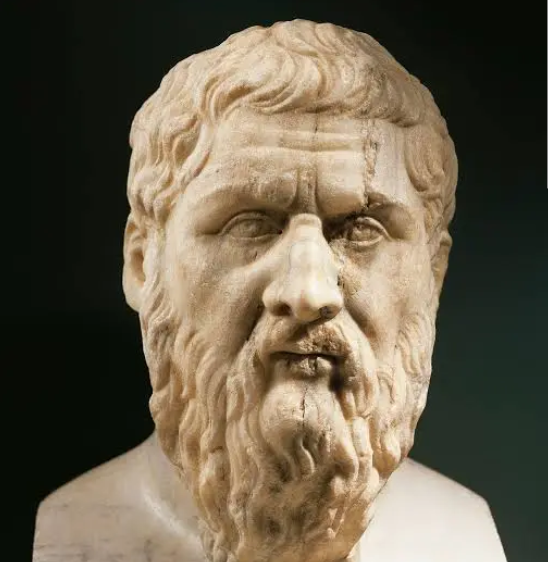
Parmenides: If the one is not, nothing is. Then, and we may add, whether the one is or is not, the one and the others in relation to themselves and to each other all in every way are and are not and appear and do not appear.
▼
Source
166c
4 months 1 week ago
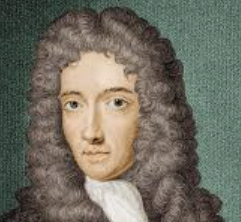
Those hypotheses do not a little hinder the progress of Humane knowledge, that introduce Morals and Politicks into the Explications of Corporeal Nature, where all things are indeed transacted according to Laws Mechanical.
▼
Source
[https://archive.org/details/experimentsnotes00boyl/page/n266/mode/1up Reflections upon the Hypothesis of Alcali and Acidum] (1675) [https://archive.org/details/experimentsnotes00boyl/page/n298/mode/1up p. 33.]
4 months 1 week ago
The sphere of consciousness shrinks in action; no one who acts can lay claim to the universal, for to act is to cling to the properties of being at the expense of being itself, to form a reality to reality's detriment.
4 months 1 week ago
The Interpretation of the Laws of Nature in a Common-wealth, dependeth not on the books of Moral Philosophy. The Authority of writers, without the Authority of the Commonwealth, maketh not their opinions Law, be they never so true.
▼
Source
The Second Part, Chapter 26, p. 143
4 months 1 week ago
In brief, all this Mammon-Gospel, of Supply-and-demand, Competition, Laissez-faire, and Devil take the hindmost, begins to be one of the shabbiest Gospels ever preached on Earth; or altogether the shabbiest.

4 months 1 week ago
A lot of people recoil from the word "drugs" - which is understandable given today's noxious street drugs and their uninspiring medical counterparts. Yet even academics and intellectuals in our society typically take the prototypical dumb drug, ethyl alcohol. If it's socially acceptable to take a drug that makes you temporarily happy and stupid, then why not rationally design drugs to make people perpetually happier and smarter? Presumably, in order to limit abuse-potential, one would want any ideal pleasure drug to be akin - in one limited but important sense - to nicotine, where the smoker's brain finely calibrates its optimal level: there is no uncontrolled dose-escalation.
▼
Source
"[https://www.abolitionist.com/ The Abolitionist Project]", Talks given at the FHI (Oxford University) and the Charity International Happiness Conference, 2007
4 months 1 week ago
The instincts of man are so earth-bound that they shrewdly sense it whenever the approach of logic threatens them.
▼
Source
Chapter Five, Christian sources, p. 87
4 months 1 week ago
Knowledge and progress are the fruits of action.
4 months 1 week ago
So when the universe was quickened with soul, God was well pleased; and he bethought him to make it yet more like its type. And whereas the type is eternal and nought that is created can be eternal, he devised for it a moving image of abiding eternity, which we call time. And he made days and months and years, which are portions of time; and past and future are forms of time, though we wrongly attribute them also to eternity. For of eternal Being we ought not to say 'it was', 'it shall be', but 'it is' alone: and in like manner we are wrong in saying 'it is' of sensible things which become and perish; for these are ever fleeting and changing, having their existence in time.
▼
Source
37c–38b, as quoted by R. D. Archer-Hind, [https://books.google.com/books?id=q2YMAAAAIAAJ The Timaeus of Plato] (1888)
4 months 1 week ago
Now a man need not be very conversant in the writings of Chymists to observe, in how Laxe, Indefinite, and almost Arbitrary Senses they employ the Terms of Salt, Sulphur and Mercury; of which I could never find that they were agreed upon any certain Definitions or setled Notions; not onely differing Authors, but not unfrequently one and the same, and perhaps in the same Book, employing them in very differing senses.
4 months 1 week ago
Knowledge, having irritated and stimulated our appetite for power, will lead us inexorably to our ruin.
4 months 1 week ago
Foremost among his friends stands Francis Bacon, who 'loved to converse with him,' and employed him on the translation of some of the famous Essays... into Latin. This connection can be shown to belong to the years 1621-6 when Bacon, after his political disgrace, was devoting himself entirely to scientific work... The influence of Bacon, however, has left no trace on Hobbes's own matured thought. He... has no place for 'Baconian induction' in his own conception of scientific method. Bacon's zeal for experiment, the redeeming feature in an otherwise chaotic scheme of thought, is entirely alien to the essentially deductive and systematic spirit of the Hobbian philosophy.
▼
Source
Alfred Edward Taylor, Thomas Hobbes (1908)
4 months 1 week ago
And so in City after City, street-barricades are piled, and truculent, more or less murderous insurrection begins; populace after populace rises, King after King capitulates or absconds; and from end to end of Europe Democracy has blazed up explosive, much higher, more irresistible and less resisted than ever before; testifying too sadly on what a bottomless volcano, or universal powder-mine of most inflammable mutinous chaotic elements, separated from us by a thin earth-rind, Society with all its arrangements and acquirements everywhere, in the present epoch, rests! The kind of persons who excite or give signal to such revolutions—students, young men of letters, advocates, editors, hot inexperienced enthusiasts, or fierce and justly bankrupt desperadoes, acting everywhere on the discontent of the millions and blowing it into flame,—might give rise to reflections as to the character of our epoch. Never till now did young men, and almost children, take such a command in human affairs.
4 months 1 week ago
More controversially, technology can accelerate the transition from harming to helping free-living sentient beings: mankind's fitfully expanding "circle of compassion". The civilising process needn't be species-specific but instead extend to free-living dwellers in tomorrow's wildlife parks. Every cubic metre of the biosphere will soon be computationally accessible to surveillance, micro-management and control. Fertility regulation via immunocontraception can replace Darwinian ecosystems governed by starvation and predation. Any species of obligate carnivore we choose to preserve can be genetically and behaviourally tweaked into harmlessness. Asphyxiation, disembowelling, and agonies of being eaten alive can pass into the dustbin of history.
▼
Source
"[https://www.hedweb.com/transhumanism/neojainism.html High-tech Jainism]", The World Transformed, Jul. 2014
4 months 1 week ago
The socialist has always believed that the necessary knowledge is at hand, so there is no need for competition in the marketplace. The economy needs only to be directed by a rational planner who will dictate the transactions that are to proceed for everyone’s benefit. The capitalist, on the other hand, has understood this proposal to be nothing but a conceit, a product of human arrogance and folly—because in reality there is no human being, and no group of human beings, that possesses the necessary powers of reason and the necessary knowledge to correctly dictate how an entire economy should proceed for everyone’s benefit. Instead, the capitalist argues, from a skeptical and empirical point of view, that we should permit many independent economic actors and allow them freely to compete in developing and providing economic products and services. It is understood that because each of these competing business enterprises pursues a different set of aims, and is organized in a manner that is different from the others, some will succeed and some will fail. But those that succeed will do so in ways that no rational planner could have predicted in advance, and their discoveries will then be available for the imitation and refinement of others. In this way, the economy as a whole flourishes from this competition.
4 months 1 week ago
Leisure stands in a perpendicular position with respect to the working process — in just the same way as the "simple gaze" of intellectus does not consist in the "duration" (so to speak) of ratios working-out process, but instead cuts through it at the perpendicular (the ancients compared the ratio with time, the intellectus with the "always now" of eternity).
▼
Source
p. 34
4 months 1 week ago
We speak of a clock as an instrument for measuring time. In Plato and Aristotle's scheme of things, time (χρόνος) is itself a kind of clock, not just the passage of events, but a standard by which that passage can be measured. At one point Plato notes ...'men scarcely realize that the journeyings of these planets are time.' ...time is to be actually identified with the planetary motions.
▼
Source
W. K. C. Guthrie, A History of Greek Philosophy Vol. 1, "The Earlier Presocratics and the Pythagoreans" (1962)
4 months 1 week ago
To reckon on anything at all, here or elsewhere, is to afford proofs that we are still burdened with chains. The reprobate aspires to paradise; this aspiration disparages, compromises him. To be free is to rid yourself forever of the notion of reward, it is to expect nothing of men or gods, it is to renounce not only this world and all worlds but salvation itself—it is to destroy even the notion of it, that chain among chains.
4 months 1 week ago
Literature, the strange entity so called,—that indeed is here. If Literature continue to be the haven of expatriated spiritualisms, and have its Johnsons, Goethes and true Archbishops of the World, to show for itself as heretofore, there may be hope in Literature. If Literature dwindle, as is probable, into mere merry-andrewism, windy twaddle, and feats of spiritual legerdemain, analogous to rope-dancing, opera-dancing, and street-fiddling with a hat carried round for halfpence, or for guineas, there will be no hope in Literature.
4 months 1 week ago
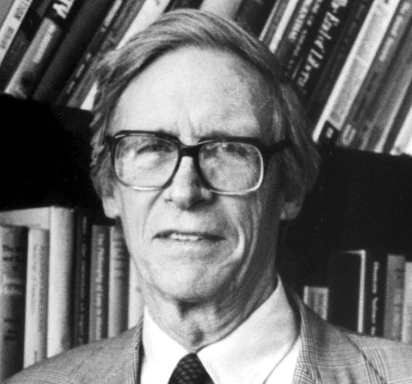
I am particularly grateful to Nozick for his unfailing help and encouragement during the last stages.
▼
Source
Preface, pg. xii
4 months 1 week ago
To the virtue of temperance as the preserving and defending realization of man's inner order, the gift of beauty is particularly co-ordinated. Not only is temperance beautiful in itself, it also renders men beautiful. Beauty, however, must here be understood in its original meaning: as the glow of the true and the good irradiating from every ordered state of being, and not in the patent significance of immediate sensual appeal. The beauty of temperance has a more spiritual, more austere, more virile aspect. It is of the essence of this beauty that it does not conflict with true virility, but rather has an affinity to it. Temperance, as the wellspring and premise of fortitude, is the virtue of mature manliness. The infantile disorder of intemperance, on the other hand, not only destroys beauty, it also makes man cowardly; intemperance more than any other thing renders man unable and unwilling to 'take heart' against the wounding power of evil in the world
4 months 1 week ago
To get up in the morning, wash and then wait for some unforeseen variety of dread or depression. I would give the whole universe and all of Shakespeare for a grain of ataraxy.
4 months 1 week ago
In several respects, I consider my father as one of the most interesting men I have known. He was a man of perhaps the very largest natural endowment of any it has been my lot to converse with. None of us will ever forget that bold glowing style of his, flowing free from his untutored soul, full of metaphors (though he knew not what a metaphor was) with, all manner of potent words which he appropriated and applied with a surprising accuracy you often would not guess whence; brief, energetic, and which I should say conveyed the most perfect picture — definite, clear, not in ambitious colors, but in full white sunliglit — of all the dialects I have ever listened to. Nothing did I ever hear him undertake to render visible which, did not become almost ocularly so. Never shall we again hear such speech as that was. The whole district knew of it and laughed joyfully over it, not knowing how other-wise to express the feeling it gave them; emphatic I have heard him beyond all men. In anger he had no need of oaths, his words were like sharp arrows that smote into the very heart. The fault was that he exaggerated (which tendency I also inherit), yet only in description and for the sake chiefly of humorous effect.
4 months 1 week ago
We must not be enticed by mathematically attractive assumptions into pretending that the contingencies of men's social positions and the asymmetries of their situations somehow even out in the end. Rather we must choose our conception of justice fully recognizing that this is not and cannot be the case.
▼
Source
Chapter III, Section 28, pg. 171
4 months 1 week ago
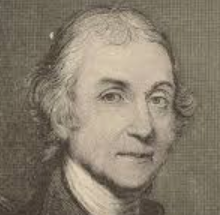
I married a daughter of Mr. Isaac Wilkinson, an ironmaster, near Wrexham, in Wales, with whose family I had become acquainted, in consequence of having the youngest son, William, at my school at Nantwich. This proved a very suitable and happy connexion, my wife being a woman of an excellent understanding, much improved by reading, of great fortitude and strength of mind, and of a temper in the highest degree affectionate and generous; feeling strongly for others, and little for herself. Also, greatly excelling in every thing relating to household affairs, she entirely relieved me of all concern of that kind, which allowed me to give all my time to the prosecution of my studies, and the other duties of my station.
▼
Source
Memoirs of the Rev. Dr. Joseph Priestly (1809), p. 41
4 months 1 week ago
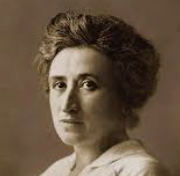
The Utopianism of the standpoint which expects an era of peace and retrenchment of militarism in the present social order is plainly revealed in the fact that it is having recourse to project making. For it is typical of Utopian strivings that, in order to demonstrate their practicability, they hatch "practical" recipes with the greatest possible details. To this also belongs the project of the "United States of Europe" as a basis for the limitation of international militarism.
4 months 1 week ago
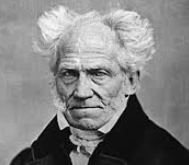
The method of viewing things which proceeds in accordance with the principle of sufficient reason is the rational method, and it alone is valid and of use in practical life and in science. The method which looks away from the content of this principle is the method of genius, which is only valid and of use in art.
▼
Source
Die dem Satz vom Grunde nachgehende ist die vernünftige Betrachtungsart, welche im praktischen Leben, wie in der Wissenschaft, allein gilt und hilft: die vom Inhalt jenes Satzes wegsehende ist die geniale Betrachtungsart, welche in der Kunst allein gilt u
4 months 1 week ago
The real, the unique misfortune: to see the light of day. A disaster which dates back to aggressiveness, to the seed of expansion and rage within origins, to the tendency to the worst which first shook them up.
4 months 1 week ago
He came and spoke a word, and the chatter of rationalism stopped, and the sums would no longer work out and be ended. He was a breath of Nature turning in her sleep under the load of civilisation, a stir in the very stillness of God to tell us He was still there.
▼
Source
G. K. Chesterton in Twelve Types: A Collection of Mini-Biographies
4 months 1 week ago
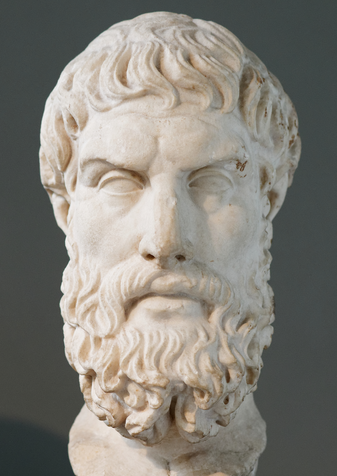
Luxurious food and drinks, in no way protect you from harm. Wealth beyond what is natural, is no more use than an overflowing container. Real value is not generated by theaters, and baths, perfumes or ointments, but by philosophy.
▼
Source
From the esplanade wall at Oenoanda, now in Turkey, as recorded by Diogenes of Oenoanda
4 months 1 week ago
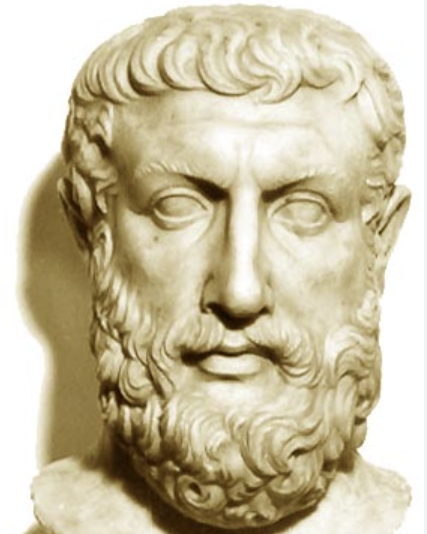
One cannot say that the case for Parmenides is proved. If it is accepted, it is a strange freak of history that so fundamental a discovery should have been made by one for whom the whole physical world was an unreal show.
▼
Source
W. K. C. Guthrie, in A History of Greek Philosophy (1981), Vol II. p. 65
4 months 1 week ago
Rawls's work, for better or worse, is not inspired by this kind of epic ambition. His very modesty and lack of speculative curiosity are what exclude him from the ranks of the great philosophers. Rawls is not an Isaiah Berlin with his anguished sense of the conflict of goods which besets human life; nor is he a Leo Strauss with his vivid awareness of the forces of persecution with which philosophy has always to contend; nor is he a Michael Oakeshott with his diagnosis of the dangers posed by excessive rationalism to the goals of a free society. Rawls is a philosopher for our time. His desire is to render both theoretically and practically legitimate the redistributivist policies of the prosperous North Atlantic welfare states. There is already more than a whiff of nostalgia about this project. This is by no means a contemptible goal, but it is well to remember that this project of rationalization is one — but only one — way in which philosophy can be practiced.
▼
Source
Steven M. Smith, "The Philosopher of Our Times", The New York Sun (May 11, 2007)
4 months 1 week ago
I am sorry... to have occasion to admonish Mr. Gibbon, that he should have distinguished better than he has done between christianity itself, and the corruptions of it. ...He should not have taken it for granted, that the doctrine of three persons in one God, or the doctrine of atonement for the sins of all mankind, by the death of one man, were any parts of the christian system; when, if he had read the New Testament for himself, he must have seen the doctrine of the proper unity of God, and also that of his free mercy to the penitent, in almost every page of it.
▼
Source
General Conclusions, Part I : Containing Considerations addressed to Unbelievers and especially to Mr. Gibbon
4 months 1 week ago
Do there exist many worlds, or is there but a single world? This is one of the most noble and exalted questions in the study of Nature.
▼
Source
Attributed to Albertus Magnus in: R.C. Bless (1996) Discovering the cosmos. p. 686.
4 months 1 week ago
No difference of rank, position, or birth, is so great as the gulf that separates the countless millions who use their head only in the service of their belly, in other words, look upon it as an instrument of the will, and those very few and rare persons who have the courage to say: No! my head is too good for that; it shall be active only in its own service; it shall try to comprehend the wondrous and varied spectacle of this world and then reproduce it in some form, whether as art or as literature, that may answer to my character as an individual.
▼
Source
On Genius, Parerga and Paralipomena, Chapter III,
4 months 1 week ago
Progress is the injustice each generation commits with regard to its predecessor.
4 months 1 week ago
I have read – nay, I have bought! – Carlyle's Latter Day Pamphlets, and look on my eight shillings as very much thrown away. To me, it appears that the grain of sense is so smothered up in a sack of the sheerest trash, that the former is valueless. He does not himself know what he wants. He has one idea – a hatred of spoken and acted falsehood; and on that he harps through the whole eight pamphlets. I look on him as a man who was always in danger of going mad in literature and who has now done so.
▼
Source
Anthony Trollope, Letter to Frances Trollope, 1850/51, in The Letters of Anthony Trollope, ed. Bradford Allen Booth (1951)
4 months 1 week ago
The cheapest sort of pride is national pride; for if a man is proud of his own nation, it argues that he has no qualities of his own of which he can be proud; otherwise he would not have recourse to those which he shares with so many millions of his fellowmen. The man who is endowed with important personal qualities will be only too ready to see clearly in what respects his own nation falls short, since their failings will be constantly before his eyes. But every miserable fool who has nothing at all of which he can be proud adopts, as a last resource, pride in the nation to which he belongs; he is ready and glad to defend all its faults and follies tooth and nail, thus reimbursing himself for his own inferiority.
▼
Source
Vol. 1, Ch. 3, Section 2: Pride
4 months 1 week ago
Self-knowledge — the bitterest knowledge of all and also the kind we cultivate least: what is the use of catching ourselves out, morning to night, in the act of illusion, pitilessly tracing each act back to its root, and losing case after case before our own tribunal?
4 months 1 week ago
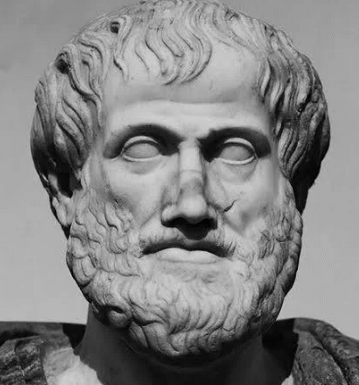
It is impossible for motion to subsist without place, and void, and time.
▼
Source
Book III, Ch. I, p. 136.
4 months 1 week ago
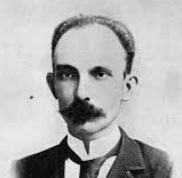
One must have faith in the best in men and distrust the worst. One must allow the best to be shown so that it reveals and prevails over the worst. Nations should have a pillory for whoever stirs up useless hate, and another for whoever fails to tell them the truth in time.

4 months 1 week ago
Justice is closely connected to respect for rights. Modern writers discuss both subjects together with no suggestion that one might discuss one with the other. It was not always so. Greek political theory and Roman Law had sophisticated ideas about justice in its various aspects, but did not embrace our conception of individual rights. This may seem counter-intuitive. How could a society recognize someone as the owner of a piece of property without acknowledging an individual right? How does legitimate one-man rule, monarchy, differ from its illegitimate parody, tyranny, unless the lawful king has a right to the authority he exercises that the tyrant does not?The answer is that property and authority were defined by law rather than our notion of individual rights. To own property was to be the person to whom the law accorded the privileges and immunities that locally defined ownership. To be a legitimate ruler was to be the person the law designated to rule. It is a commonplace that ancient notions of law accorded far more power over property to the family and other groups than modern notions of private property do. Even under the Roman Law, where ownership had an 'absolute' and sovereign character, property was not understood in the modern way; when the law told the judge to give a man his ius, this primarily meant that he should be treated as the law required. The 'subjective' understanding of rights, whereby the right-holder may stand on his rights or not as he chooses, was not a Roman notion.
4 months 1 week ago
Truth that has been merely learned is like an artificial limb, a false tooth, a waxen nose; at best, like a nose made out of another's flesh; it adheres to us only because it is put on. But truth acquired by thinking of our own is like a natural limb; it alone really belongs to us. This is the fundamental difference between the thinker and the mere man of learning. The intellectual attainments of a man who thinks for himself resemble a fine painting, where the light and shade are correct, the tone sustained, the colour perfectly harmonised; it is true to life. On the other hand, the intellectual attainments of the mere man of learning are like a large palette, full of all sorts of colours, which at most are systematically arranged, but devoid of harmony, connection and meaning.
▼
Source
Vol. 2, Ch. 22, § 261
4 months 1 week ago
We must suffer to the end, to the moment when we stop believing in suffering.
CivilSimian.com created by AxiomaticPanic, CivilSimian, Kalokagathia