
4 months 1 week ago
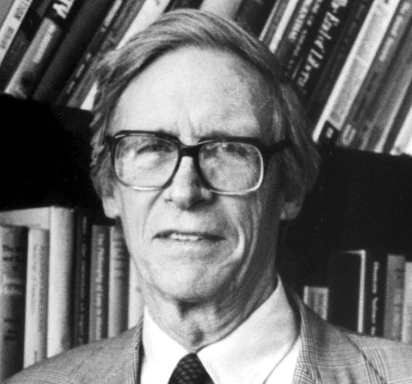
Properly understood, then, the desire to act justly derives in part from the desire to express most fully what we are or can be, namely free and equal rational beings with the liberty to choose.
▼
Source
Chapter IV, Section 40, p. 256
4 months 1 week ago
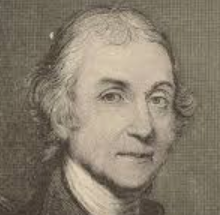
In his Opus Majus he demonstrates, that if a transparent body, interposed between the eye and an object, be convex towards the eye, the object will appear magnified. This observation our author certainly had from Alhazen... this writer [Bacon] gives us figures, representing the progress of rays of light through his spherical segment, as well as endeavours to give reasons why objects are magnified... From the writings of Alhazen and these observations and experiments of Bacon together, it is not improbable that some monks gradually hit upon the construction of spectacles, to which Bacon's lesser segment, not withstanding his mistake concerning it, was a nearer approach than Alhazen's... Whoever they were that pursued the discoveries of Bacon, they probably observed, that a very small convex glass, when held at a greater distance from a book, would magnify the letters more than when it was placed close to them, in which position only Bacon seemed to have used it. In the next place, they might try whether two of these small segments of a sphere placed together, or a glass convex on both sides, would not magnify more than one of them. They would then find, that two of these glasses, one for each eye, would answer the purpose of reading better than one; and lastly they might find, that different degrees of convexity, suited different persons. It is certain that spectacles were well known in the 13th century, and not long before. ...It would certainly have been a great satisfaction to us to have been able to trace the actual steps in the progress of this most useful invention, without which most persons who have a taste for reading must have had the melancholy prospect of passing a very dull and joyless old age; and must have been deprived of the pleasure of entertaining themselves by conversing with the absent and the dead, when they were no longer capable of acting their part among the living. Telescopes and microscopes are to be numbered among the superfluities of life when compared to spectacles, which may now be ranked almost among the necessities of it; since the arts of reading and writing are almost universal.
▼
Source
Period I To the Revival of Letters in Erope
4 months 1 week ago
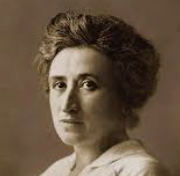
Lenin's thesis is that the party Central Committee should have the privilege of naming all the local committees of the party. It should have the right to appoint the effective organs of all local bodies from Geneva to Liege, from Tomsk to Irkutsk. It should also have the right to impose on all of them its own ready-made rules of party conduct. It should have the right to rule without appeal on such questions as the dissolution and reconstitution of local organizations. This way, the Central Committee could determine, to suit itself, the composition of the highest party organs. The Central Committee would be the only thinking element in the party. All other groupings would be its executive limbs.
4 months 1 week ago
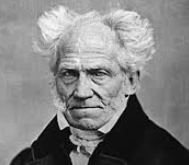
Consider the Koran... this wretched book was sufficient to start a world-religion, to satisfy the metaphysical need of countless millions for twelve hundred years, to become the basis of their morality and of a remarkable contempt for death, and also to inspire them to bloody wars and the most extensive conquests. In this book we find the saddest and poorest form of theism. Much may be lost in translation, but I have not been able to discover in it one single idea of value.
▼
Source
E. Payne, trans., Vol. II, Ch. XVII: On Man's Need for Metaphysics
4 months 1 week ago
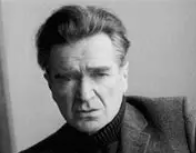
If we could sleep twenty-four hours a day, we would soon return to the primordial slime, the beatitude of that perfect torpor before Genesis-the dream of every consciousness sick of itself.
4 months 1 week ago
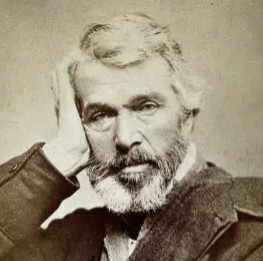
About that age [16], or perhaps a year later, a friend sent me Sartor Resartus, and one of the most abiding remembrances of those days is the attic in which I used to read by the light only of my collier's lamp whilst going through Carlyle's most impressive book. I felt I was in the presence of some great power, the meaning of which I could only dimly guess at. I mark the reading of Sartor, however, as a real turning point, and went through the book three times in succession until the spirit of it somewhat entered into me. Since then I have learned much of the human failings and weaknesses of Carlyle, but I still remain a worshipper at his shrine. He was, indeed, to me in those days a hero, more particularly when Past and Present and the French Revolution followed in the wake of Sartor.
▼
Source
Keir Hardie, contribution to 'Character Sketches. I—The Labour Party And The Books That Helped To Make It', The Review of Reviews, Vol. XXXIII (June 1906), pp. 570-571
4 months 1 week ago
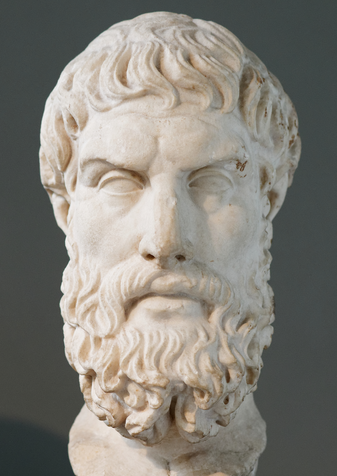
Of our desires some are natural and necessary, others are natural but not necessary; and others are neither natural nor necessary, but are due to groundless opinion.
4 months 1 week ago
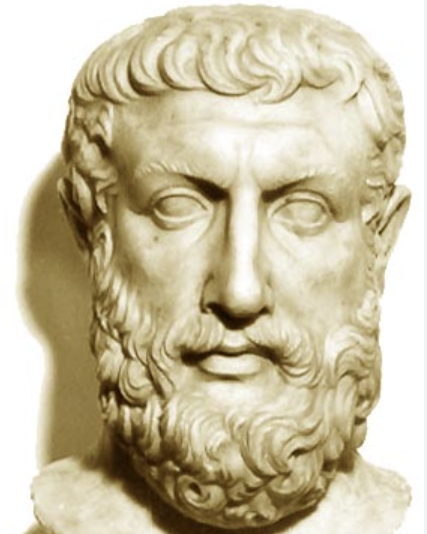
The path of speech (mythos odoio) (by Parmenides) contains within itself the path of day and that of night. It is no coincidence that Parmenides' poem comprises two parts. What exactly the second part contains and why it is so is an ancient philological and exegetical problem that we will not address here and which Plato already denounced in its ambiguity. In fact, it is not possible to separate being and speech without identifying them, and it is not possible to identify them without, ipso facto, separating them. The “simulation” (the simul) is immediate and structural. Human beings are simulators precisely because they are beings of truth. They cannot tell the truth without lying and vice versa. In this sense, they are beings of mediation, beings that stand in the middle, as you happily recall, that is, beings that ‘work’ to translate immediate experience into knowledge, or into a transferential process. God and nature do not work, but human beings do, first and foremost in naming the fruit of sexuality; it then places humans in the relational milieu of parents and children, brothers and sisters, offered, either really or symbolically, in sacrifice to God, that is, to the community of speakers. [...] The 20th century cannot exist without Sigmund Freud, psychoanalysis cannot exist without philosophy, at least in my opinion.
▼
Source
Carlo Sini, quoted in Giorgio Bubbolini, [https://www.spiweb.it/libri/con-autore/intervista-a-carlo-sini/ Intervista a Carlo Sini], Spiweb.it, 17 November 2009.
4 months 1 week ago
Man needs to suffer. When he does not have real griefs he creates them. Griefs purify and prepare him.
▼
Source
"Adúltera" [Adulterous Thoughts] (1883)
4 months 1 week ago
This world is such an abode that if those present here Have their wits entire, they will never weep for the absent ones.
▼
Source
1. 142
4 months 1 week ago
The cheapest sort of pride is national pride; for if a man is proud of his own nation, it argues that he has no qualities of his own of which he can be proud; otherwise he would not have recourse to those which he shares with so many millions of his fellowmen. The man who is endowed with important personal qualities will be only too ready to see clearly in what respects his own nation falls short, since their failings will be constantly before his eyes. But every miserable fool who has nothing at all of which he can be proud adopts, as a last resource, pride in the nation to which he belongs; he is ready and glad to defend all its faults and follies tooth and nail, thus reimbursing himself for his own inferiority.
▼
Source
Vol. 1, Ch. 3, Section 2: Pride
4 months 1 week ago
Self-knowledge — the bitterest knowledge of all and also the kind we cultivate least: what is the use of catching ourselves out, morning to night, in the act of illusion, pitilessly tracing each act back to its root, and losing case after case before our own tribunal?
4 months 1 week ago
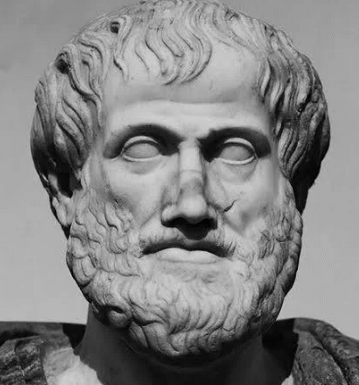
It is impossible for motion to subsist without place, and void, and time.
▼
Source
Book III, Ch. I, p. 136.
4 months 1 week ago
One must have faith in the best in men and distrust the worst. One must allow the best to be shown so that it reveals and prevails over the worst. Nations should have a pillory for whoever stirs up useless hate, and another for whoever fails to tell them the truth in time.

4 months 1 week ago
Justice is closely connected to respect for rights. Modern writers discuss both subjects together with no suggestion that one might discuss one with the other. It was not always so. Greek political theory and Roman Law had sophisticated ideas about justice in its various aspects, but did not embrace our conception of individual rights. This may seem counter-intuitive. How could a society recognize someone as the owner of a piece of property without acknowledging an individual right? How does legitimate one-man rule, monarchy, differ from its illegitimate parody, tyranny, unless the lawful king has a right to the authority he exercises that the tyrant does not?The answer is that property and authority were defined by law rather than our notion of individual rights. To own property was to be the person to whom the law accorded the privileges and immunities that locally defined ownership. To be a legitimate ruler was to be the person the law designated to rule. It is a commonplace that ancient notions of law accorded far more power over property to the family and other groups than modern notions of private property do. Even under the Roman Law, where ownership had an 'absolute' and sovereign character, property was not understood in the modern way; when the law told the judge to give a man his ius, this primarily meant that he should be treated as the law required. The 'subjective' understanding of rights, whereby the right-holder may stand on his rights or not as he chooses, was not a Roman notion.
4 months 1 week ago
Truth that has been merely learned is like an artificial limb, a false tooth, a waxen nose; at best, like a nose made out of another's flesh; it adheres to us only because it is put on. But truth acquired by thinking of our own is like a natural limb; it alone really belongs to us. This is the fundamental difference between the thinker and the mere man of learning. The intellectual attainments of a man who thinks for himself resemble a fine painting, where the light and shade are correct, the tone sustained, the colour perfectly harmonised; it is true to life. On the other hand, the intellectual attainments of the mere man of learning are like a large palette, full of all sorts of colours, which at most are systematically arranged, but devoid of harmony, connection and meaning.
▼
Source
Vol. 2, Ch. 22, § 261
4 months 1 week ago
We must suffer to the end, to the moment when we stop believing in suffering.
4 months 1 week ago
How many people ruin themselves by laying out money on trinkets of frivolous utility? What pleases these lovers of toys is not so much the utility, as the aptness of the machines which are fitted to promote it. All their pockets are stuffed with little conveniences. They contrive new pockets, unknown in the clothes of other people, in order to carry a greater number. They walk about loaded with a multitude of baubles, in weight and sometimes in value not inferior to an ordinary Jew's-box, some of which may sometimes be of some little use, but all of which might at all times be very well spared, and of which the whole utility is certainly not worth the fatigue of bearing the burden.
▼
Source
Chap. I.
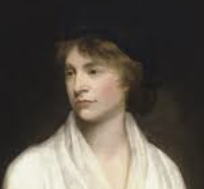
4 months 1 week ago
How can a rational being be ennobled by anything that is not obtained by its own exertions?
▼
Source
Ch. 3
4 months 1 week ago
Normal science, the puzzle-solving activity we have just examined, is a highly cumulative enterprise, eminently successful in its aim, the steady extension of the scope and precision of scientific knowledge. In all these respects it fits with great precision the most usual image of scientific work. Yet one standard product of the scientific enterprise is missing. Normal science does not aim at novelties of fact or theory and, when successful, finds none.
▼
Source
p. 52
4 months 1 week ago
The result of toppling tyranny in divided countries is usually civil war and ethnic cleansing.
▼
Source
[http://www.guardian.co.uk/commentisfree/2007/jul/31/comment.politics1 "The death of this crackpot creed is nothing to mourn,"] The Guardian (2007-07-31)
4 months 1 week ago
And surely to know what this good is, is of great importance for the conduct of life, for in that case we shall be like archers shooting at a definite mark, and shall be more likely to do what is right. But, if this is the case, we must try to comprehend, in outline at least, what it is and to which of the sciences it belongs.
▼
Source
(Bk I, Ch I)
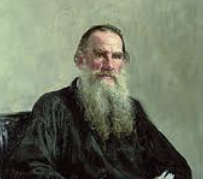
4 months 1 week ago
I sit on a man's back, choking him, and making him carry me, and yet assure myself and others that I am very sorry for him and wish to ease his lot by any means possible, except getting off his back.
▼
Source
Writings on Civil Disobedience and Nonviolence (1886)
4 months 1 week ago
Just as he who gives his life to serve a great idea is admirable, he who avails himself of a great idea to serve his personal hopes of glory and power is abominable, even if he too risks his life. To give one's life is a right only when one gives it unselfishly.
4 months 1 week ago
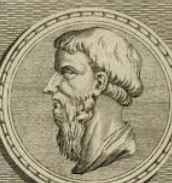
The forum is an established place for men to cheat one another, and behave covetously.
▼
Source
As quoted in The Lives and Opinions of Eminent Philosophers by Diogenes Laërtius, as translated by C. D. Yonge (1853), "Anacharsis" sect. 5, p. 48
4 months 1 week ago
Every man takes the limits of his own field of vision for the limits of the world.
▼
Source
"Psychological Observations"
4 months 1 week ago
One disgust, then another — to the point of losing the use of speech and even of the mind...The greatest exploit of my life is to be still alive.
4 months 1 week ago
A man must always live by his work, and his wages must at least be sufficient to maintain him. They must even upon most occasions be somewhat more, otherwise it would be impossible for him to bring up a family, and the race of such workmen could not last beyond the first generation.
▼
Source
Chapter VIII, p. 81.
4 months 1 week ago
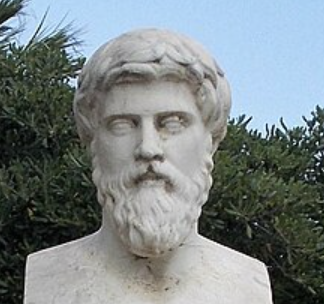
Thrasyllus the Cynic begged a drachm of Antigonus. "That," said he, "is too little for a king to give." "Why, then," said the other, "give me a talent." "And that," said he, "is too much for a Cynic (or, for a dog) to receive."
▼
Source
45 Antigonus I
4 months 1 week ago
The repression of liberty that took place in the countries in which Communist regimes were established cannot be adequately explained as a product of backwardness, or of errors in the application of Marxian theory. It was the result of a resolute attempt to realize an Enlightenment utopia - a condition of society in which no serious form of conflict any longer exists.
▼
Source
'Isaiah Berlin: The Value of Decency' (p.99)
4 months 1 week ago
What it lies in our power to do, it lies in our power not to do.
▼
Source
Book III, 5
4 months 1 week ago
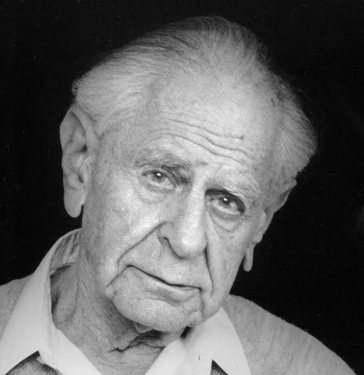
Bold ideas, unjustified anticipations, and speculative thought, are our only means for interpreting nature: our only organon, our only instrument, for grasping her. And we must hazard them to win our prize. Those among us who are unwilling to expose their ideas to the hazard of refutation do not take part in the scientific game.
▼
Source
Ch. 10 "Corroboration, or How a Theory Stands up to Tests", section 85: The Path of Science, p. 280.
4 months 1 week ago
The young Princess Bolkónskaya had brought some work in a gold-embroidered velvet bag. Her pretty little upper lip, on which a delicate dark down was just perceptible, was too short for her teeth, but it lifted all the more sweetly, and was especially charming when she occasionally drew it down to meet the lower lip. As is always the case with a thoroughly attractive woman, her defect—the shortness of her upper lip and her half-open mouth—seemed to be her own special and peculiar form of beauty. Everyone brightened at the sight of this pretty young woman, so soon to become a mother, so full of life and health, and carrying her burden so lightly. Old men and dull dispirited young ones who looked at her, after being in her company and talking to her a little while, felt as if they too were becoming, like her, full of life and health. All who talked to her, and at each word saw her bright smile and the constant gleam of her white teeth, thought that they were in a specially amiable mood that day.
▼
Source
Bk. I, Ch. II
4 months 1 week ago
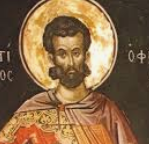
Virtue, who was of squalid look and dress, said, if you obey me you will adorn yourself not with ornament nor beauty that passes away and perishes, but with everlasting and precious graces. And we are persuaded that everyone who flees from what is superficially good and follows what is reckoned hard and foolish finds happiness awaiting him. For Vice, veiling her actions in the beauties which properly belong to Virtue and are genuine, enslaves groveling people.
▼
Source
Second Apology, in Readings in World Christian History (2013), p. 42
4 months 1 week ago
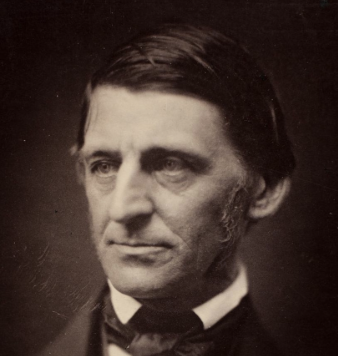
The clergy are as like as peas.
▼
Source
"The Preacher", in The Index: A Weekly Paper (Feb. 5, 1880) pp. 62–3. Originally written as a parlor-lecture to some Divinity students, in 1867; afterwards enlarged from earlier writings, and read in its present form at the Divinity Chapel, Cambridge, MA,

4 months 1 week ago
It goes without saying that the police would be unable to set into motion their racist machinery were they not sanctioned and supported by the judicial system. The courts not only consistently abstain from prosecuting criminal behavior on the part of the police, but they convict, on the basis of biased police testimony, countless Black men and women.
4 months 1 week ago
He speaks to me as no other philosopher does, direct and in his own human voice, a fellow spirit, a penetratingly perceptive friend, with a hand on my elbow and a twinkle in his eye. Although I frequently do not agree with what he says, I always listen to him.
▼
Source
Bryan Magee, in Confessions of a Philosopher: A Personal Journey through Western Philosophy from Plato to Popper (1999), p. 373
4 months 1 week ago
When you love someone, you hope — the more closely to be attached — that a catastrophe will strike your beloved.
4 months 1 week ago
It is the highest impertinence and presumption, therefore, in kings and ministers, to pretend to watch over the economy of private people, and to restrain their expence, either by sumptuary laws, or by prohibiting the importation of foreign luxuries. They are themselves always, and without any exception, the greatest spendthrifts in the society. Let them look well after their own expence, and they may safely trust private people with theirs. If their own extravagance does not ruin the state, that of their subjects never will.
▼
Source
Chapter III, p. 381.
4 months 1 week ago
To one commending an orator for his skill in amplifying petty matters, Agesilaus said, "I do not think that shoemaker a good workman that makes a great shoe for a little foot."
▼
Source
Of Agesilaus the Great
4 months 1 week ago
As the Genesis story teaches, knowledge cannot save us from ourselves. If we know more than before, it means only that we have greater scope to enact our fantasies. But – as the Genesis myth also teaches – there is no way we can rid ourselves of what we know. If we try to regain a state of innocence, the result can only be a worse madness. The message of Genesis is that in the most vital areas of human life there can be no progress, only an unending struggle with our own nature.
▼
Source
An Old Chaos: Humanism and Flying Saucers (pp. 79-80)
4 months 1 week ago
The aim of art is to represent not the outward appearance of things, but their inward significance.
▼
Source
Source: Will Durant, The Story of Philosophy: The Lives and Opinions of the World's Greatest Philosophers (1926), reprinted in Simon & Schuster/Pocket Books, 1991, ], Ch. II: Aristotle and Greek Science; part VI: Psychology and the Nature of Art: "Artisti
4 months 1 week ago
If I were to give a simple formula or recipe for distinguishing between what I consider to be admissible plans for social reform and inadmissible Utopian blueprints, I might say: Work for the elimination of concrete evils rather than for the realization of abstract goods. Do not aim at establishing happiness by political means. Rather aim at the elimination of concrete miseries.
▼
Source
p. 385
4 months 1 week ago
Stephan Arkadievich chose neither his attitudes nor his opinions, no, the attitudes and opinions came to him on their own, just as he chose neither the style of his hat nor of his coats but got what people were wearing.
▼
Source
Part 1, Chapter 3
4 months 1 week ago
It is of the essence of traditions that they cover or conceal their humble foundations by erecting impressive edifices on them.
▼
Source
p. 31
4 months 1 week ago
If I made laws for Shakers or a school, I should gazette every Saturday all the words they were wont to use in reporting religious experience, as "spiritual life," "God," "soul," "cross," etc., and if they could not find new ones next week, they might remain silent.
▼
Source
June 15, 1844
4 months 1 week ago
While jails and prisons have been dominant institutions for the control of men, mental institutions have served a similar purpose for women. That is, deviant men have been constructed as criminal, while deviant women have been constructed as insane.
▼
Source
Chapter Four
4 months 1 week ago
Never unreal, Pain is a challenge to the universal fiction. What luck to be the only sensation granted a content, if not a meaning!
4 months 1 week ago
The violence and injustice of the rulers of mankind is an ancient evil, for which, I am afraid, the nature of human affairs can scarce admit a remedy.
▼
Source
Chapter III, Part II, p. 531.
4 months 1 week ago
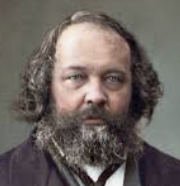
Unity is the great goal toward which humanity moves irresistibly. But it becomes fatal, destructive of the intelligence, the dignity, the well-being of individuals and peoples whenever it is formed without regard to liberty, either by violent means or under the authority of any theological, metaphysical, political, or even economic idea. That patriotism which tends toward unity without regard to liberty is an evil patriotism, always disastrous to the popular and real interests of the country it claims to exalt and serve. Often, without wishing to be so, it is a friend of reaction – an enemy of the revolution, i.e., the emancipation of nations and men.
CivilSimian.com created by AxiomaticPanic, CivilSimian, Kalokagathia