
4 months 1 week ago
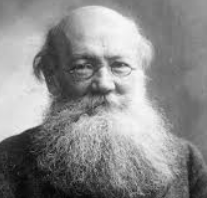
Not only has a coercive system contributed and powerfully aided to create all the present economical, political and social evils, but it has given proof of its absolute impotence to raise the moral level of societies; it has not been even able to maintain it at the level it had already reached. If a benevolent fairy could only reveal to our eyes all the crimes that are committed every day, every minute, in a civilized society under cover of the unknown, or the protection of law itself, — society would shudder at that terrible state of affairs.
4 months 1 week ago
Once Diogenes, who was washing vegetables, ridiculed him as he passed by, and said, "If you had learnt to eat these vegetables, you would not have been a slave in the palace of a tyrant." But Aristippus replied, "And you, if you had known how to behave among men, would not have been washing vegetables."
▼
Source
Aristippus, 4.
4 months 1 week ago
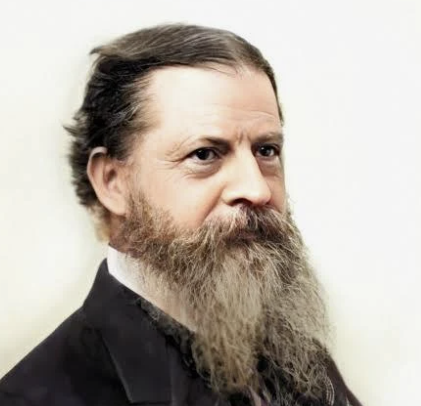
It has never been in my power to study anything, — mathematics, ethics, metaphysics, gravitation, thermodynamics, optics, chemistry, comparative anatomy, astronomy, psychology, phonetics, economics, the history of science, whist, men and women, wine, metrology, except as a study of semeiotic.
▼
Source
Letter to Victoria (23 December 1908)
4 months 1 week ago
The method of not erring is sought by all the world. The logicians profess to guide it, the geometricians alone attain it, and apart from science, and the imitations of it, there are no true demonstrations.
4 months 1 week ago
Wine is a mixture of moisture and light.
▼
Source
As quoted in Lorenzo Magalotti's Scientific and Scholarly Letter (1721)
4 months 1 week ago
There is no information about the thingness of the thing without knowledge of the kind of truth in which the thing stands. But there is no information about this truth of the thing without knowledge of the thingness of the thing whose truth is in question. Where are we to get a foothold? The ground slips away under us. Perhaps we are already close to falling into the well. At any rate the housemaids are already laughing. p. 27
4 months 1 week ago
It is absolutely incomprehensible to us that intelligent men — and such are not wanting in the collectivist party — can remain partisans of national or municipal parliaments after all the lessons history has given them — in France, in England, in Germany, or in the United States.
▼
Source
Ch. 13 : The Collectivist Wages System
4 months 1 week ago
"Bury me on my face," said Diogenes; and when he was asked why, he replied, "Because in a little while everything will be turned upside down."
▼
Source
Diogenes, 6.

4 months 1 week ago
It is not enough for a wise man to study nature and truth; he should dare state truth for the benefit of the few who are willing and able to think.
4 months 1 week ago
In fact, this infinitesimally spread-out consciousness is a direct feeling of its contents as spread out. In an infinitesimal interval we directly perceive the temporal sequence of its beginning, middle, and end... Now upon this interval follows another, whose beginning is the middle of the former, and whose middle is the end of the former. Here we have an immediate perception of the temporal sequence of its beginning, middle and end, or say, of the second, third, and fourth instants.
4 months 1 week ago
Ask professional philosophers of today to name the five most significant philosophers of the twentieth century and, whether they love him or loathe him, most will include Heidegger on the list.
▼
Source
Stephen Hicks, Nietzsche and the Nazis (2007), Occam's Razor, p. 10
4 months 1 week ago
Mutual aid, even though it may represent one of the factors of evolution, covers nevertheless one aspect only of human relations; that by the side of this current, powerful though it may be, there is, and always has been, the other current — the self-assertion of the individual, not only in its efforts to attain personal or caste superiority, economical, political, and spiritual, but also in its much more important although less evident function of breaking through the bonds, always prone to become crystallized, which the tribe, the village community, the city, and the State impose upon the individual. In other words, there is the self-assertion of the individual taken as a progressive element. It is evident that no review of evolution can be complete, unless these two dominant currents are analyzed. However, the self-assertion of the individual or of groups of individuals, their struggles for superiority, and the conflicts which resulted therefrom, have already been analyzed, described, and glorified from time immemorial. In fact, up to the present time, this current alone has received attention from the epical poet, the annalist, the historian, and the sociologist. History, such as it has hitherto been written, is almost entirely a description of the ways and means by which theocracy, military power, autocracy, and, later on, the richer classes' rule have been promoted, established, and maintained.
4 months 1 week ago
If appearances are deceitful, then they do not deserve any confidence when they assert what appears to them to be true.
▼
Source
Pyrrho, 11.
4 months 1 week ago
Marx explains the alienation of labor as exemplified in, first, the relation of the worker to the product of his labor and, second, the relation of the worker to his own activity. P. 276
4 months 1 week ago
As a friend, he may have been obliging and self-sacrificing; as an enemy, he was, as in particular had to experience, malicious and low in the choice of his means.
4 months 1 week ago
Be it understood, then, that what we have to do, as students of phenomenology, is simply to open our mental eyes and look well at the phenomenon and say what are the characteristics that are never wanting in it, whether that phenomenon be something that outward experience forces upon our attention, or whether it be the wildest of dreams, or whether it be the most abstract and general of the conclusions of science. The faculties which we must endeavor to gather for this work are three. The first and foremost is that rare faculty, the faculty of seeing what stares one in the face, just as it presents itself, unreplaced by any interpretation, unsophisticated by any allowance for this or for that supposed modifying circumstance. This is the faculty of the artist who sees for example the apparent colors of nature as they appear. When the ground is covered by snow on which the sun shines brightly except where shadows fall, if you ask any ordinary man what its color appears to be, he will tell you white, pure white, whiter in the sunlight, a little greyish in the shadow. But that is not what is before his eyes that he is describing; it is his theory of what ought to be seen. The artist will tell him that the shadows are not grey but a dull blue and that the snow in the sunshine is of a rich yellow. That artist's observational power is what is most wanted in the study of phenomenology. The second faculty we must strive to arm ourselves with is a resolute discrimination which fastens itself like a bulldog upon the particular feature that we are studying, follows it wherever it may lurk, and detects it beneath all its disguises. The third faculty we shall need is the generalizing power of the mathematician who produces the abstract formula that comprehends the very essence of the feature under examination purified from all admixture of extraneous and irrelevant accompaniments.
▼
Source
Lecture II : The Universal Categories, § 1 : Presentness, CP 5.41 - 42
4 months 1 week ago
The reason I cannot really say that I positively enjoy nature is that I do not quite realize what it is that I enjoy. A work of art, on the other hand, I can grasp. I can — if I may put it this way — find that Archimedian point, and as soon as I have found it, everything is readily clear for me. Then I am able to pursue this one main idea and see how all the details serve to illuminate it.
▼
Source
Journals of Søren Kierkegaard 1A 8, 1834
4 months 1 week ago
May we not say that, in the fortuitous combination of the productions of Nature, since only those creatures could survive in whose organizations a certain degree of adaptation was present, there is nothing extraordinary in the fact that such adaptation is actually found in all these species which now exist? Chance, one might say, turned out a vast number of individuals; a small proportion of these were organized in such a manner that the animals' organs could satisfy their needs. A much greater number showed neither adaptation nor order; these last have all perished.... Thus the species which we see today are but a small part of all those that a blind destiny has produced.
▼
Source
Essai de cosmologie (1750), qtd, in
4 months 1 week ago
Piety is the tinfoil of pretense.
▼
Source
[http://books.google.com/books?id=Y4lHAAAAYAAJ&q="Piety+is+the+tin-foil+of+pretense"&pg=RA1-PA115#v=onepage The Philistine] (September 1908)
4 months 1 week ago
The spontaneous reproduction of superimposed needs by the individual does not establish autonomy; it only testifies to the efficacy of the control.
▼
Source
p. 8
4 months 1 week ago
The particular conception of ideology operates primarily with a psychology of interests, while the total conception uses a more formal functional analysis, without any reference to motivations, confining itself to an objective description of the structural differences in minds operating in different social settings. The former assumes that this or that interest is the cause of a given lie or deception. The latter presupposes simply that there is a correspondence between a given social situation and a given perspective, point of view, or apperception mass. In this case, while an analysis of constellations of interests may often be necessary it is not to establish causal connections but to characterize the total situation. Thus interest psychology tends to be displaced by an analysis of the correspondence between the situation to be known and the forms of knowledge.
4 months 1 week ago
Our whole past experience is continually in our consciousness, though most of it sunk to a great depth of dimness. I think of consciousness as a bottomless lake, whose waters seem transparent, yet into which we can clearly see but a little way.
▼
Source
Vol. VII, par. 547
4 months 1 week ago
In physical reality one cause does not produce a given effect, but a multitude of distinct causes contribute to produce it, without our having any means of discriminating the part of each of them. ...Causes which have produced a certain effect will never be reproduced except approximately.
4 months 1 week ago
Death cannot explain itself. The earnestness consists precisely in this, that the observer must explain it to himself.
▼
Source
Pap VI B 120:13 1845
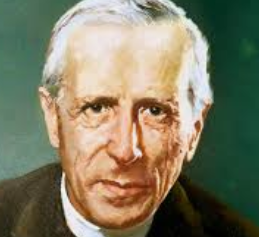
4 months 1 week ago
We only have to look around us to see how complexity and psychic temperature are still rising: and rising no longer on the scale of the individual but now on that of the planet. This indication is so familiar to us that we cannot but recognize the objective, experiential, reality of a transformation of the planet as a whole.
▼
Source
The Heart of Matter (1950)
4 months 1 week ago
An idea that is not dangerous is not worthy of being called an idea at all.
4 months 1 week ago
Society … can afford to grant more than before because its interests have become the innermost drives of its citizens.
▼
Source
p. 72
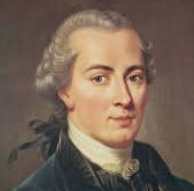
4 months 1 week ago
I come now to another part of my system, and because it suggests a lofty idea of the plan of creation, it appears to me as the most seductive. The sequence of ideas that led us to it is very simple and natural. They are as follows: let us imagine a system of stars gathered together in a common plane, like those of the Milky Way, but situated so far away from us that even with the telescope we cannot distinguish the stars composing it; let us assume that its distance, compared to that separating us from the stars of the Milky Way, is the same proportion as the Milky Way is to the distance from the earth to the sun; such a stellar world will appear to the observer, who contemplates it at so enormous a distance, only as a little spot feebly illumined and subtending a very small angle; its shape will be circular, if its plane is perpendicular to the line of sight, elliptical, if it is seen obliquely. The faintness of its light, its form, and its appreciable diameter will obviously distinguish such a phenomenon from the isolated stars around it.We do not need to seek far in the observations of astronomers to meet with such phenomena. They have been seen by various observers, who have wondered at their strange appearance, have speculated about them, and have suggested some times the most amazing explanations, sometimes theories which were more rational, but which had no more foundation than the former. We refer to the nebulæ, or, more precisely, to a particular kind of celestial body which M. de Maupertius describes as follows:"These are small luminous patches, only slightly more brilliant than the dark background of the sky; they have this in common, that their shapes are more or less open elipses; and their light is far more feeble than that of any other objects to be perceived in the heavens."...It is much more natural and reasonable to assume that a nebula is not a unique and solitary sun, but a system of numerous suns, which appear crowded, because of their distance, into a space so limited that their light, which would be imperceptible were each of them isolated, suffices, owing to their enormous numbers, to give a pale and uniform luster. Their analogy with our own system of stars; their form, which is precisely what it should be according to our theory; the faintness of their light, which denotes an infinite distance; all are in admirable accord and lead us to consider these elliptical spots as systems of the same order as our own—in a word, to be Milky Ways similar to the one whose constitution we have explained. And if these hypotheses, in which analogy and observation consistently lend mutual support, have the same merit as formal demonstrations, we must consider the existence of such systems as demonstrated...We see that scattered through space out to infinite distances, there exist similar systems of stars [nebulous stars, nebulæ], and that creation, in the whole extent of its infinite grandeur, is everywhere organized into systems whose members are in relation with one another.... A vast field lies open to discoveries, and observations alone will give the key.
▼
Source
Free translation, as quoted by Edwin Powell Hubble, The Realm of the Nebulae (1936)
4 months 1 week ago
Not merely in the realm of commerce but in the world of ideas as well our age is organizing a regular clearance sale. Everything is to be had at such a bargain that it is questionable whether in the end there is anybody who will want to bid. Every speculative price-fixer who conscientiously directs attention to the significant march of modern philosophy, every Privatdocent, tutor, and student, every crofter and cottar goes further. Perhaps it would be untimely and ill-timed to ask them where they are going.
▼
Source
Preface

4 months 1 week ago
2) "the a of différance also recalls that spacing is temporization, the detour and postponement by means of which intuition, perception, consummation - in a word, the relationship to the present, the reference to a present reality, to a being - are always deferred. Deferred by virtue of the very principle of difference which holds that an element functions and signifies, takes on or conveys meaning, only by referring to another past or future element in an economy of traces. This economic aspect of différance, which brings into play a certain not conscious calculation in a field of forces, is inseparable from the more narrowly semiotic aspect of différance.
▼
Source
p. 28
4 months 1 week ago
At the heart of our universe, each soul exists for God, in our Lord.
▼
Source
The Divinisation of Our Activities, p. 56
4 months 1 week ago
A friend is someone who knows all about you and still loves you.
▼
Source
Attributed to Hubbard on social media, but this sentiment is also reflected in biblical teachings, such as Proverbs 17:17, which states, “A friend loves at all times”.
4 months 1 week ago
The supremacy of thought (consciousness) also pronounces the impotence of thought in an empirical world which philosophy transcends and corrects — in thought. The rationality in the name of which philosophy passed its judgments obtained that abstract and general purity” which made it immune against the world in which one had to live. With the exception of the materialistic “heretics,” philosophic thought was rarely afflicted by the afflictions of human existence. Paradoxically, it is precisely the critical intent in philosophic thought which leads to the idealistic purifications critical intent which aims at the empirical world as a whole, and not merely at certain modes of thinking or behaving within it. Defining its concepts in terms of potentialities which are of an essentially different order of thought and existence, the philosophic critique finds itself blocked by the reality from which it dissociates itself, and proceeds to construct a realm of Reason purged from empirical contingency. The two dimensions of thought — that of the essential and that of — the apparent truths — no longer interfere with each other, and their concrete dialectical relation becomes an abstract epistemological or ontological relation. The judgments passed on the given reality are replaced by propositions defining the general forms of thought, objects of thought, and relations between thought and its objects. The subject of thought becomes the pure and universal form of subjectivity, from which all particulars are removed.
▼
Source
pp. 135-136
4 months 1 week ago
The guardians who have kindly undertaken the supervision will see to it that by far the largest part of mankind, including the entire "beautiful sex," should consider the step into maturity, not only as difficult but as very dangerous. After having made their domestic animals dumb and having carefully prevented these quiet creatures from daring to take any step beyond the lead-strings to which they have fastened them, these guardians then show them the danger which threatens them, should they attempt to walk alone.
4 months 1 week ago
Is there anything we cannot contrive to call the demands of the times, and is there anything that does not acquire a certain prestige by being the demand of the times? But for decisive religious categories to become the demand for the times is eo ipso a contradiction. “The times” is too abstract a category to be able as claimant to demand the decisive religious categories that belong specifically to individuality and particularity; loud collective demands en mass for what can be shared only by the single individual in particularity, in solitariness, in silence, cannot be made.
▼
Source
Two Ages: The Age of Revolution and the Present Age. A Literary Review. By Soren Kierkegaard, 1846 edited and translated by Howard V. Hong and Edna H. Hong 1978 Princeton University Press P. 21

4 months 1 week ago
All men possess in their bodies a poison which acts upon serpents; and the human saliva, it is said, makes them take to flight, as though they had been touched with boiling water. The same substance, it is said, destroys them the moment it enters their throat.
▼
Source
Book VII, sec. 15.
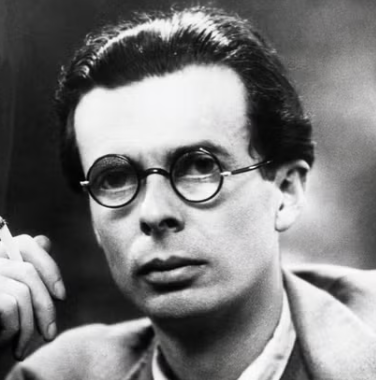
4 months 1 week ago
What the cinema can do better than literature or the spoken drama is to be fantastic.
▼
Source
"Where are the Movies Moving?" in Essays Old and New (1926)
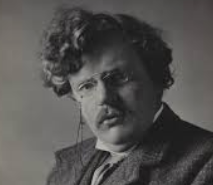
4 months 1 week ago
When fishes flew and forests walked And figs grew upon thorn,Some moment when the moon was blood Then surely I was born. With monstrous head and sickening cry And ears like errant wings, The devil’s walking parody On all four-footed things.
▼
Source
"The Donkey", sts. 1 and 2. The Wild Knight, and Other Poems (1900)
4 months 1 week ago
Natural science is throughout either a pure or an applied doctrine of motion.
▼
Source
Preface, Tr. Bax (1883)
4 months 1 week ago
Jews hate the name of Christ and have a secret and innate rancor against the people among whom they live.
▼
Source
See [https://books.google.com.br/books?id=-bIAEAAAQBAJ&pg=PT190 Silent Truth] by Mark Edwards
4 months 1 week ago
What, exactly, have the errors of exegesis and philosophy done in order to confuse Christianity, and how have they confused Christianity? Quite briefly and categorically, they have simply forced back the sphere of paradox-religion into the sphere of aesthetics, and in consequence have succeeded in brings Christian terminology to such a pass that terms which, so long as they remain within their sphere, are qualitative categories, can be put to almost any use as clever expressions.
▼
Source
Of The Difference Between A Genius And An Apostle, Alexander Dru translation 1962 p. 89
4 months 1 week ago
There is the growth of applied science, the increased interest in the control and reconstruction of nature, accompanied by a decline in the practice of meditation or the vocation of the intellectual life.
▼
Source
[describing the historical causes of the modern tendency to make intellect the servant of alien interests]
4 months 1 week ago
Who lives longer? the man who takes heroin for two years and dies, or a man who lives on roast beef, water and potatoes 'till 95? One passes his 24 months in eternity. All the years of the beefeater are lived only in time.
▼
Source
The Shortcut: 20 Stories To Get You From Here To There (2006) by Kevin A Fabiano, p. 179
4 months 1 week ago
There is in Islam a paradox which is perhaps a permanent menace. The great creed born in the desert creates a kind of ecstasy out of the very emptiness of its own land, and even, one may say, out of the emptiness of its own theology. [...] A void is made in the heart of Islam which has to be filled up again and again by a mere repetition of the revolution that founded it. There are no sacraments ; the only thing that can happen is a sort of apocalypse, as unique as the end of the world ; so the apocalypse can only be repeated and the world end again and again. There are no priests ; and yet this equality can only breed a multitude of lawless prophets almost as numerous as priests. The very dogma that there is only one Mahomet produces an endless procession of Mahomets.
▼
Source
[https://archive.org/stream/kitchener00chesuoft#page/7/mode/2up Lord Kitchener] (1917), pp. 7–8
4 months 1 week ago
There is needed, no doubt, a body of servants (ministerium) of the invisible church, but not officials (officiales), in other words, teachers but not dignitaries, because in the rational religion of every individual there does not yet exist a church as a universal union (omnitudo collectiva).
▼
Source
Book IV, Part 1, Section 1, “The Christian religion as a natural religion”
4 months 1 week ago
Touching the secrets of the heart and the successions of time, doth make a just and sound difference between the manner of the exposition of the Scriptures and all other books. For it is an excellent observation which hath been made upon the answers of our Saviour Christ to many of the questions which were propounded to Him, how that they are impertinent to the state of the question demanded: the reason whereof is, because not being like man, which knows man's thoughts by his words, but knowing man's thoughts immediately, He never answered their words, but their thoughts. Much in the like manner it is with the Scriptures, which being written to the thoughts of men, and to the succession of all ages, with a foresight of all heresies, contradictions, differing estates of the Church, yea, and particularly of the elect, are not to be interpreted only according to the latitude of the proper sense of the place, and respectively towards that present occasion whereupon the words were uttered, or in precise congruity or contexture with the words before or after, or in contemplation of the principal scope of the place; but have in themselves, not only totally or collectively, but distributively in clauses and words, infinite springs and streams of doctrine to water the Church in every part. And therefore as the literal sense is, as it were, the main stream or river, so the moral sense chiefly, and sometimes the allegorical or typical, are they whereof the Church hath most use; not that I wish men to be bold in allegories, or indulgent or light in allusions: but that I do much condemn that interpretation of the Scripture which is only after the manner as men use to interpret a profane book.
▼
Source
XXV. (17)
4 months 1 week ago
What if the equality between us human being, in which we completely resemble one another, were that none of us really thinks about his being loved? Preface P. 166
4 months 1 week ago
I'm using myself as a typical 20th century model as I'm trying to make sense out of the world around me … typical in the sense of being one of the damn good models around these days. I am typical in the sense that ...a lot of people are on the same wave length as me. I get fan mail from people that are absolutely stunned that there's somebody else besides themselves who thinks this way. So, we're a minority, but there are a lot of us. On a planet this overcrowded, a minority can have a few million numbers. … More scientific than religious. More open than dogmatic. More optimistic than pessimistic. More future oriented than past oriented. And more humorous than serious. I really dread serious people. Especially serious, dogmatic people. I regard them as sort of what Reich called the emotional plague. I regard them as very dangerous.
▼
Source
[http://www.wilhelmreichinhell.com/rawonreich.htm "Robert Anton Wilson on Wilhelm Reich" (March 1995)]
4 months 1 week ago
For in spite of language, in spite of intelligence and intuition and sympathy, one can never really communicate anything to anybody.
▼
Source
"Sermons in Cats"
4 months 1 week ago
Now it has appeared to me unfair that humanity should be engaged perpetually in calling all those things bad which have been good enough to make other things better, in everlastingly kicking down the ladder by which it has climbed. It has appeared to me that progress should be something else besides a continual parricide; therefore I have investigated the dust-heaps of humanity, and found a treasure in all of them. I have found that humanity is not incidentally engaged, but eternally and systematically engaged, in throwing gold into the gutter and diamonds into the sea.
▼
Source
"Introduction"
CivilSimian.com created by AxiomaticPanic, CivilSimian, Kalokagathia