
4 months 1 week ago
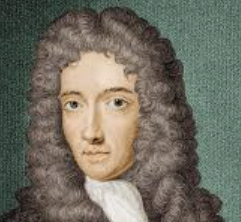
And of universal nature, the notion I would offer, should be something like this. Nature is the aggregate of the bodies, that make up the world, in its present state, considered as a principle, by virtue whereof, they act and suffer, according to the laws of motion, prescribed by the author of things.
▼
Source
Sect. 2.
4 months 1 week ago
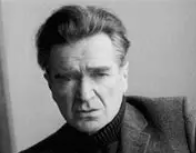
Tragic paradox of freedom: the mediocre men who alone make its exercise possible cannot guarantee its duration.
4 months 1 week ago
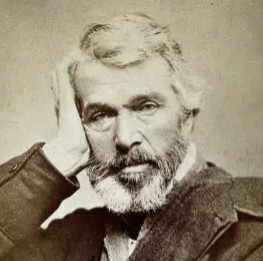
Between our Black West Indies and our White Ireland, between these two extremes of lazy refusal to work, and of famishing inability to find any work, what a world have we made of it, with our fierce Mammon-worships, and our benevolent philanderings, and idle godless nonsenses of one kind and another! Supply-and-demand, Leave-it-alone, Voluntary Principle, Time will mend it:—till British industrial existence seems fast becoming one huge poison-swamp of reeking pestilence physical and moral; a hideous living Golgotha of souls and bodies buried alive; such a Curtius' gulf, communicating with the Nether Deeps, as the Sun never saw till now. These scenes, which the Morning Chronicle is bringing home to all minds of men,—thanks to it for a service such as Newspapers have seldom done,—ought to excite unspeakable reflections in every mind. Thirty thousand outcast Needlewomen working themselves swiftly to death; three million Paupers rotting in forced idleness, helping said Needlewomen to die: these are but items in the sad ledger of despair.
4 months 1 week ago
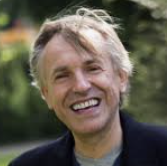
... our descendants may recognize that we are the sociopathic emotional primitives in the grip of an affective psychosis. Jealousy, envy, resentment, ridicule, hate, anger, disgust, spite, contempt, schadenfreude and a whole gamut of nameless but mean-spirited states we undergo each day are a toxic legacy of our Darwinian past. More commonly, perhaps, our genetic make-up ensures we simply feel indifference to the plight of all but a handful of significant others in our lives. Right now, for instance, one knows dimly at some level that there is frightful and preventable suffering in the world. Yet most of us feel no overpowering moral urgency to do anything about it.
▼
Source
"[https://www.hedweb.com/ecstasy/index.html Utopian Pharmacology: Mental Health in the Third Millennium MDMA and Beyond]", BLTC Research, last updated 2020
4 months 1 week ago
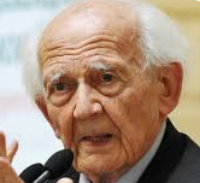
That's what would be expected from me, but I don't remember doing [anything like that]. I had nothing to do - I was sitting in my office and writing - it was hardly a field in which you could collect interesting information.
4 months 1 week ago
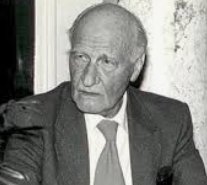
Worship itself is a given — or it does not exist at all.
▼
Source
p. 59
4 months 1 week ago
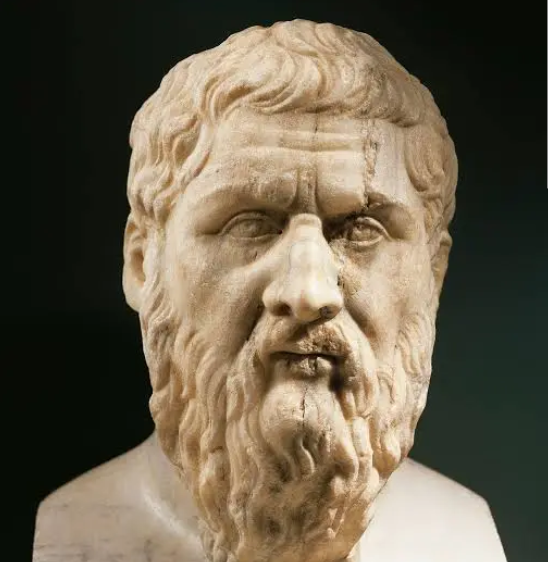
It is no idle question to wonder whether Plato, if he had stayed free of the Socratic spell, might not have found an even higher type of the philosophical man, now lost to us forever.
▼
Source
Friedrich Nietzsche, Human, All Too Human: A Book for Free Spirits (1878)
4 months 1 week ago
Facing a landscape annihilated by the light, to remain serene supposes a temper I do not have. The sun is my purveyor of black thoughts; and summer the season when I have always reconsidered my relations with this world and with myself, to the greatest prejudice of both.
4 months 1 week ago
Let us honor all honest human power of contrivance in its degree. The beaver intellect, so long as it steadfastly refuses to be vulpine, and answers the tempter pointing out short routes to it with an honest "No, no," is truly respectable to me; and many a highflying speaker and singer whom I have known, has appeared to me much less of a developed man than certain of my mill-owning, agricultural, commercial, mechanical, or otherwise industrial friends, who have held their peace all their days and gone on in the silent state. If a man can keep his intellect silent, and make it even into honest beaverism, several very manful moralities, in danger of wreck on other courses, may comport well with that, and give it a genuine and partly human character; and I will tell him, in these days he may do far worse with himself and his intellect than change it into beaverism, and make honest money with it.
4 months 1 week ago
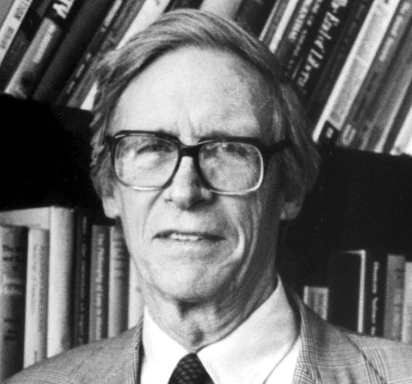
Indeed, it is tempting to suppose that it is self evident that things should be so arranged so as to lead to the most good.
▼
Source
Chapter I, Section 5, pg. 25
4 months 1 week ago
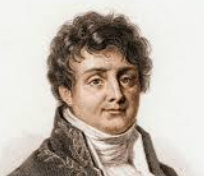
Profound study of nature is the most fertile source of mathematical discoveries.
▼
Source
Ch. 1, p. 7
4 months 1 week ago
When people come to me saying they want to kill themselves, I tell them, "What's your rush? You can kill yourself any time you like. So calm down. Suicide is a positive act." And they do calm down.
4 months 1 week ago
My father's education was altogether of the worst and most limited. I believe he was never more than three months at any school. What he learned there showed what he might have learned. A solid knowledge of arithmetic, a fine antique handwriting — these, with other limited practical etceteras, were all the things he ever heard mentioned as excellent. He had no room to strive for more.
4 months 1 week ago
The suppression of liberty is always likely to be irrational.
▼
Source
Chapter IV, Section 33, p. 210
4 months 1 week ago
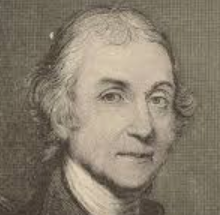
And since every man retains, and can never be deprived of his natural right (founded on a regard to the general good) of relieving himself from all oppression, that is, from every thing that has been imposed upon him without his own consent; this must be the only true and proper foundation of all the governments subsisting in the world, and that to which the people who compose them have an unalienable right to bring them back.
▼
Source
Section II, "Of Political Liberty"
4 months 1 week ago
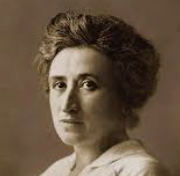
It makes no sense to regard the right of suffrage as a utopian product of fantasy, cut loose from social reality. And it is for this reason that it is not a serious instrument of the proletarian dictatorship. It is an anachronism, an anticipation of the juridical situation which is proper on the basis of an already completed socialist economy, but is not in the transition period of the proletarian dictatorship.
▼
Source
Chapter Five, "The Question of Suffrage"
4 months 1 week ago
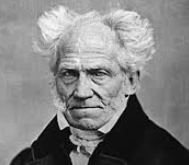
Talent hits a target no one else can hit; genius hits a target no one else can see.
▼
Source
Das Talent gleicht dem Schützen, der ein Ziel trifft, welches die Uebrigen nicht erreichen können; das Genie dem, der eines trifft, bis zu welchem sie nicht ein Mal zu sehn vermögen... | Vol. II, Ch. III, para. 31 (On Genius), 1844 | As cited in The Littl
4 months 1 week ago
Though we may prefer ourselves to the universe, we nonetheless loathe ourselves much more than we suspect. If the wise man is so rare a phenomenon, it is because he seems unshaken by the aversion which, like all beings, he must feel for himself.
4 months 1 week ago
This is the condition of England, according to Carlyle. An idle landowning aristocracy which "have not yet learned even to sit still and do no mischief", a working aristocracy submerged in Mammonism, who, when they ought to be collectively the leaders of labour, "captains of industry", are just a gang of industrial buccaneers and pirates. A Parliament elected by bribery, a philosophy of simply looking on, of doing nothing, of laissez-faire, a worn-out, crumbling religion, a total disappearance of all general human interests, a universal despair of truth and humanity, and in consequence a universal isolation of men in their own "brute individuality", a chaotic, savage confusion of all aspects of life, a war of all against all, a general death of the spirit, a dearth of "soul", that is, of truly human consciousness: a disproportionately strong working class, in intolerable oppression and wretchedness, in furious discontent and rebellion against the old social order, and hence a threatening, irresistibly advancing democracy — everywhere chaos, disorder, anarchy, dissolution of the old ties of society, everywhere intellectual insipidity, frivolity, and debility. — That is the condition of England. Thus far, if we discount a few expressions that have derived from Carlyle's particular standpoint, we must allow the truth of all he says. He, alone of the "respectable" class, has kept his eyes open at least towards the facts, he has at least correctly apprehended the immediate present, and that is indeed a very great deal for an "educated" Englishman.
▼
Source
Friedrich Engels, [https://www.marxists.org/archive/marx/works/1844/df-jahrbucher/carlyle.htm review of Past and Present], Deutsch-Französische Jahrbücher (1844)
4 months 1 week ago
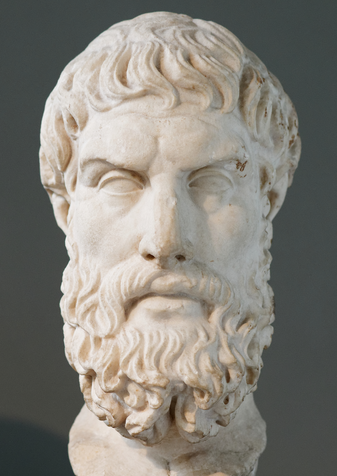
The wealth required by nature is limited and is easy to procure; but the wealth required by vain ideals extends to infinity.
4 months 1 week ago
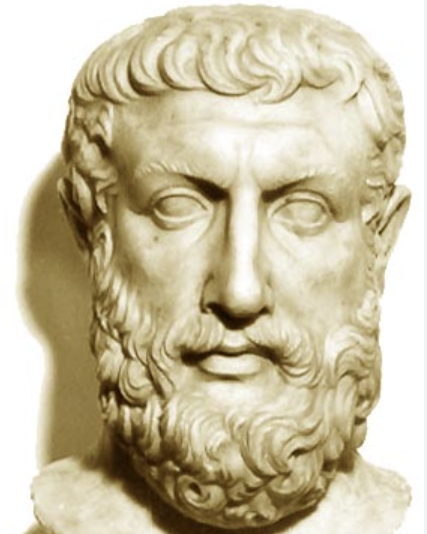
Parmenides made it clear for the first time that the Immortal Principle, the One, Truth, God, is separate from appearance and from opinion, and the importance of this separation and its effect upon subsequent history cannot be overstated. It's here that the classic mind, for the first time, took leave of its romantic origins and said, "The Good and the True are not necessarily the same," and goes its separate way. Anaxagoras and Parmenides had a listener named Socrates who carried their ideas into full fruition.
▼
Source
Robert M. Pirsig, in Zen and the Art of Motorcycle Maintenance (1974), Ch. 29
4 months 1 week ago
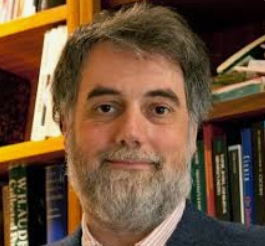
God is in command of history. Each crisis has something to teach us; each crisis is overcome by particular virtues and by reference to particular truths. The way out of a crisis is often unexpected, and often combines a decisive historical intervention by God, and a new spirit in the Church, animating new movements and new thinking. With hindsight we can even see in some cases how the crisis itself solved intractable problems which could not be solved in any other way
▼
Source
[https://remnantnewspaper.com/web/index.php/fetzen-fliegen/item/5036-interview-with-dr-joseph-shaw Interview with Dr. Joseph Shaw] (August 28, 2020)
4 months 1 week ago
Methink I am thrice-imprisoned—ask not me Of news that need no telling—By loss of sight, confinement in my house, And this vile body for my spirit’s dwelling.
▼
Source
Translation of Reynold Nicholson, as quoted in The Luzumiyat of Abu'l-Ala (1920) by Ameen Rihani
4 months 1 week ago
To be a philosopher, that is to say, a lover of wisdom (for wisdom is nothing but truth), it is not enough for a man to love truth, in so far as it is compatible with his own interest, with the will of his superiors, with the dogmas of the church, or with the prejudices and tastes of his contemporaries; so long as he rests content with this position, he is only a philautos, not a philosophos [a lover of self, not a lover of wisdom]. For this title of honor is well and wisely conceived precisely by its stating that one should love the truth earnestly and with one’s whole heart, and thus unconditionally and unreservedly, above all else, and, if need be, in defiance of all else. Now the reason for this is the one previously stated that the intellect has become free, and in this state it does not even know or understand any other interest than that of truth.
▼
Source
E. Payne, trans. (1974) Vol. 1, pp. 21–22
4 months 1 week ago
We dread the future only when we are not sure we can kill ourselves when we want to.
4 months 1 week ago
I then arrived at the certainty that it was necessary to posit that mathematics writes that which, of being itself, is pronounceable in the field of a pure theory of the Multiple. The entire history of rational thought appeared to me to be illuminated once one assumed the hypothesis that mathematics, far from being a game without object, draws the exceptional severity of its law from being bound to support the discourse of ontology.
▼
Source
Introduction
4 months 1 week ago
The brain may be regarded as a kind of parasite of the organism, a pensioner, as it were, who dwells with the body.
4 months 1 week ago
The mind that puts everything in question, reaches, after a thousand interrogations, an almost total inertia, a situation which the inert, in fact, knows from the start, by instinct. For what is inertia but a congenital perplexity?
4 months 1 week ago
It's gravity is the cause; and that which is heavy abides in the middle, and the earth is in the middle: in like manner also, the infinite will abide in itself, through some other cause... and will itself support itself. ...The places of the whole and the part are of the same species; as of the whole earth and a clod, the place is downward; and of the whole of fire, and a spark, the place is upward. So that if the place of the infinite is in itself, there will be the same place also of a part of the infinite.
▼
Source
Book III, Ch. VII, p. 162.
4 months 1 week ago
My poems are like a dagger Sprouting flowers from the hilt; My poetry is like a fountain Sprinkling streams of coral water.
▼
Source
V

4 months 1 week ago
Political thought as we understand it began in Athens because the Athenians were a trading people who looked at their contemporaries and saw how differently they organized themselves. If they had not lived where they did and organized their economic lives as they did, they could not have seen the contrast. Given the opportunity, they might not have paid attention to it. The Israelites of the Old Testament narrative were very conscious of their neighbors, Egyptian, Babylonian, and other, not least because they were often reduced to slavery or near-slavery by them. That narrative makes nothing of the fact that Egypt was a bureaucratic theocracy; it emphasizes that the Egyptians did not worship Yahweh. The history of Old Testament politics is the history of a people who did their best to have no politics. They saw themselves as under the direct government of God, with little room to decide their own fate except by obeying or disobeying God’s commandments. Only when God took them at their word and allowed them to choose a king did they become a political society, with familiar problems of competition for office and issues of succession. For the Jews, politics was a fall from grace. For the Greeks, it was an achievement. Many besides Plato thought it a flawed achievement; when historians and philosophers began to articulate its flaws, the history of political thought began among the argumentative Athenians.
4 months 1 week ago
Obstinacy is the result of the will forcing itself into the place of the intellect.
▼
Source
Vol. 2, Ch. 26, § 321
4 months 1 week ago
Philosophers write for professors; thinkers for writers.
4 months 1 week ago
The wise and virtuous man is at all times willing that his own private interests should be sacrificed to the public interest of his own particular society--that the interests of this order of society be sacrificed to the greater interest of the state. He should therefore he equally willing that all those inferior interests should be sacrificed to the greater society of all sensible and intelligent beings.
▼
Source
Section II, Chap. III; cited by Reinhold Niebuhr, The Children of Light and the Children of Darkness, New York: Charles Scribner's Sons, 1941, 24-25.
4 months 1 week ago
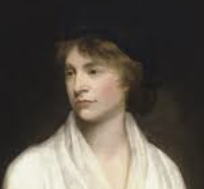
Women becoming, consequently weaker, in mind and body, than they ought to be...have not sufficient strength to discharge the first duty of a mother; and sacrificing to lasciviousness the parental affection...either destroy the embryo in the womb, or cast if off when born. Nature in every thing demands respect, and those who violate her laws seldom violate them with impunity.
▼
Source
Ch. 8
4 months 1 week ago
These examples point to the third and most fundamental aspect of the incommensurability of competing paradigms. In a sense that I am unable to explicate further, the proponents of competing paradigms practice their trades in different worlds. One contains constrained bodies that fall slowly, the other pendulums that repeat their motions again and again. In one, solutions are compounds, in the other mixtures. One is embedded in a flat, the other in a curved, matrix of space. Practicing in different worlds, the two groups of scientists see different things when they look from the same point in the same direction. Again, that is not to say that they can see anything they please. Both are looking at the world, and what they look at has not changed. But in some areas they see different things, and they see them in different relations one to the other. That is why a law that cannot even be demonstrated to one group of scientists may occasionally seem intuitively obvious to another.
▼
Source
p. 149
4 months 1 week ago
The British state has defaulted on its core functions while attempting to remake society.
▼
Source
New Statesman, [https://www.newstatesman.com/comment/2024/10/the-tories-have-a-chance-but-only-if-they-elect-a-leader-willing-to-disrupt 9 October 2024]
4 months 1 week ago
Now the mass of mankind are plainly... choosing a life like that of brute animals...
▼
Source
(Bk. 1, Chapter III)
4 months 1 week ago
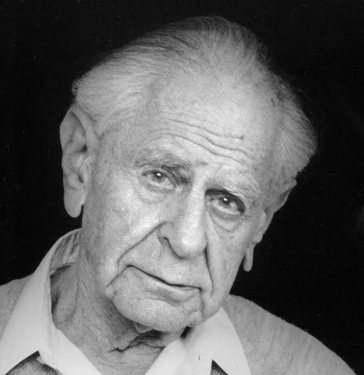
You can choose whatever name you like for the two types of government. I personally call the type of government which can be removed without violence "democracy", and the other "tyranny".
▼
Source
As quoted in Freedom: A New Analysis (1954) by Maurice William Cranston, p. 112
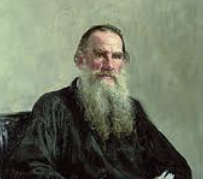
4 months 1 week ago
Government is violence, Christianity is meekness, non-resistance, love. And, therefore, government cannot be Christian, and a man who wishes to be a Christian must not serve government.
▼
Source
[https://en.wikisource.org/wiki/Letter_to_Dr._Eugen_Heinrich_Schmitt Letter to Dr. Eugen Heinrich Schmitt] (October 12, 1896), translated by [https://en.wikisource.org/wiki/Author:Nathan_Haskell_Dole Nathan Haskell Dole]
4 months 1 week ago
Through a marvelous law of natural compensation, he who gives of himself grows, and he who turns inward and lives from small pleasures, is afraid to share them with others, and only thinks avariciously of cultivating his appetites loses his humanity and becomes loneliness itself. He carries in his breast all the dreariness of winter. He becomes in fact and appearance an insect.
4 months 1 week ago
It was not Zeno, the founder of the Stoics, alone, who taught that the Universe evolves, and its primary substance is transformed from the state of fire into that of air, then into that of water, etc. Heraclitus of Ephesus maintained that the one principle that underlies all phenomena in Nature is fire. The intelligence that moves the Universe is fire, and fire is intelligence. And while Anaximenes said the same of air, and Thales of Miletus (600 years b.c.) of water, the Esoteric Doctrine reconciles all these philosophers, by showing that though each was right, the system of none was complete.
▼
Source
H.P. Blavatsky, [http://www.gutenberg.org/ebooks/54824 The Secret Doctrine, Vol. 1 of 4] (1888)
4 months 1 week ago
Because people have no thoughts to deal in, they deal cards, and try and win one another’s money. Idiots!
4 months 1 week ago
Everyone is mistaken, everyone lives in illusion. At best, we can admit a scale of fictions, a hierarchy of unrealities, giving preference to one rather than to another; but to choose, no, definitely not that...
4 months 1 week ago
The liberal reward of labour, therefore, as it is the affect of increasing wealth, so it is the cause of increasing population. To complain of it, is to lament over the necessary effect and cause of the greatest public prosperity.
▼
Source
Chapter VIII, p. 97.
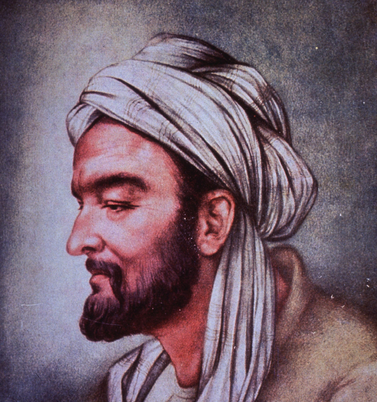
4 months 1 week ago
Those who deny the first principle should be flogged or burned until they admit that it is not the same thing to be burned and not burned, or whipped and not whipped.
▼
Source
Metaphysics, Book I
4 months 1 week ago
Lamachus chid a captain for a fault; and when he had said he would do so no more, "Sir," said he, "in war there is no room for a second miscarriage." Said one to Iphicrates, "What are ye afraid of?" "Of all speeches," said he, "none is so dishonourable for a general as ‘I should not have thought of it.'"
▼
Source
52 Iphicrates
4 months 1 week ago
Contrary to the cartoon history of ideas that prevails today, Darwinism’s threat to religion did not come principally from challenging the biblical account of creation. Until a few centuries ago the Genesis story was known to be a myth – a poetic way of rendering truths that would otherwise be inaccessible. At the beginning of the Christian religion, Augustine warned against the dangers of literalism. The Jewish scholars who preceded him always viewed the Genesis story as a metaphor for truths that could not be accessed in any other way. It was only with the rise of modern science that the Genesis myth came to be misunderstood as an explanatory theory. Yet Darwinism was still a major threat to religion, for it confronted Victorians with the prospect of their final mortality. Darwin forced them to ask why their lives should not end like those of other animals, in nothingness. If this was so, how could human existence have meaning? How could human values be maintained if human personality was destroyed at death?
▼
Source
Cross-correspondences (pp. 21-22)
4 months 1 week ago
For well-being and health, again, the homestead should be airy in summer, and sunny in winter. A homestead possessing these qualities would be longer than it is deep; and its main front would face the south.
▼
Source
[http://artflx.uchicago.edu/perseus-cgi/citequery3.pl?dbname=PerseusGreekTexts&getid=1&query=Arist.%20Oec.%201345a.20 1345a.20], Economics (Oeconomica), Greek Texts and Translations, Perseus under PhiloLogic.
4 months 1 week ago
In speaking of sociological laws or natural laws of social life I have in mind such laws as are formulated by modern economic theories, for instance, the theory of international trade, or the theory of the trade cycle. These and other important sociological laws are connected with the functioning of social institutions. These laws play a role in our social life corresponding to the role played in mechanical engineering by, say, the principle of the lever. For institutions, like levers, are needed if we want to achieve anything which goes beyond the power of our muscles. Like machines, institutions multiply our power for good or evil. Like machines, they need intelligent supervision by someone who understands their way of functioning and, most of all, their purpose, since we cannot build them so that they work entirely automatically.
▼
Source
Karl Popper, The Open Society and its Enemies, Vol I Plato Chapter 5: Nature and Convention. P. 67
CivilSimian.com created by AxiomaticPanic, CivilSimian, Kalokagathia