
4 months 1 week ago
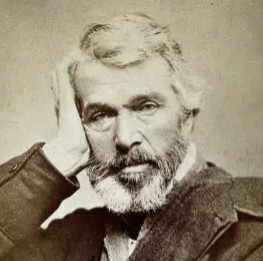
Every noble work is at first impossible.
▼
Source
From Past and Present (1843), Chapter XI : Labour
4 months 1 week ago
Neither art nor wisdom may be attained without learning.
4 months 1 week ago
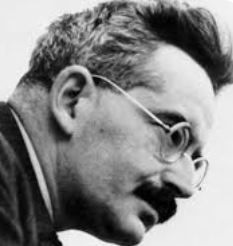
Criticism and prophecy must be the two categories that meet in the salvation of the past
▼
Source
p. 53-54 (trans. John Osborne (London: Verso, 1977)
4 months 1 week ago
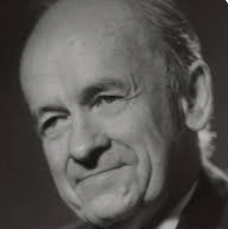
In the interests of the ideal of maximum output, [our society] judges men by their fitness for jobs, not jobs by their fitness for men.
▼
Source
p. 280.
4 months 1 week ago
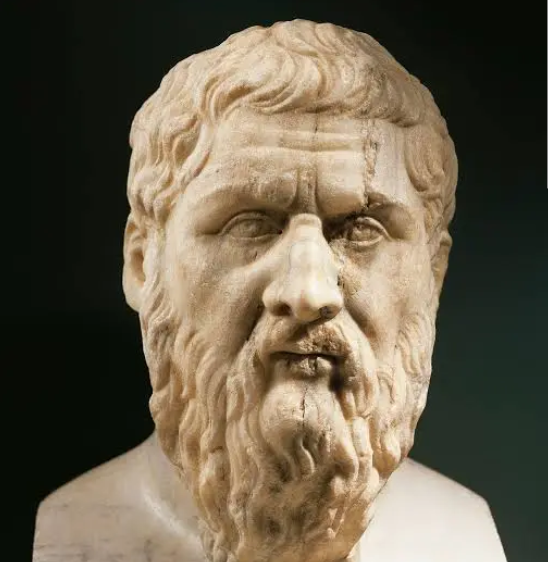
Let every man remind their descendants that they also are soldiers who must not desert the ranks of their ancestors, or from cowardice fall behind. Even as I exhort you this day, and in all future time, whenever I meet with any of you, shall continue to remind and exhort you, O ye sons of heroes, that you strive to be the bravest of men. And I think that I ought now to repeat what your fathers desired to have said to you who are their survivors, when they went out to battle, in case anything happened to them. I will tell you what I heard them say, and what, if they had only speech, they would fain be saying, judging from what they then said. And you must imagine that you hear them saying what I now repeat to you:Sons, the event proves that your fathers were brave men; for we might have lived dishonourably, but have preferred to die honourably rather than bring you and your children into disgrace, and rather than dishonour our own fathers and forefathers; considering that life is not life to one who is a dishonour to his race, and that to such a one neither men nor Gods are friendly, either while he is on the earth or after death in the world below.Remember our words, then, and whatever is your aim let virtue be the condition of the attainment of your aim, and know that without this all possessions and pursuits are dishonourable and evil.For neither does wealth bring honour to the owner, if he be a coward; of such a one the wealth belongs to another, and not to himself. Nor does beauty and strength of body, when dwelling in a base and cowardly man, appear comely, but the reverse of comely, making the possessor more conspicuous, and manifesting forth his cowardice.And all knowledge, when separated from justice and virtue, is seen to be cunning and not wisdom; wherefore make this your first and last and constant and all-absorbing aim, to exceed, if possible, not only us but all your ancestors in virtue; and know that to excel you in virtue only brings us shame, but that to be excelled by you is a source of happiness to us.And we shall most likely be defeated, and you will most likely be victors in the contest, if you learn so to order your lives as not to abuse or waste the reputation of your ancestors, knowing that to a man who has any self-respect, nothing is more dishonourable than to be honoured, not for his own sake, but on account of the reputation of his ancestors.The honour of parents is a fair and noble treasure to their posterity, but to have the use of a treasure of wealth and honour, and to leave none to your successors, because you have neither money nor reputation of your own, is alike base and dishonourable.And if you follow our precepts you will be received by us as friends, when the hour of destiny brings you hither; but if you neglect our words and are disgraced in your lives, no one will welcome or receive you. This is the message which is to be delivered to our children.
▼
Source
A speech of Aspasia, recounted by Socrates, as portrayed in the dialogue.
4 months 1 week ago
The phaenomena afforded by trades, are a part of the history of nature, and therefore may both challenge the naturalist's curiosity and add to his knowledge, Nor will it suffice to justify learned men in the neglect and contempt of this part of natural history, that the men, from whom it must be learned, are illiterate mechanicks... is indeed childish, and too unworthy of a philosopher, to be worthy of an honest answer.
▼
Source
"That the Goods of Mankind May be Much Increased by the Naturalist's Insight into Trades" in the Works of Robert Boyle, (1772) Vol.3 as quoted in Clifford D. Conner, A People's History of Science (2005) Note: Compare Francis Bacon's The Great Instauration
4 months 1 week ago
If we would regain our freedom, we must shake off the burden of sensation, no longer react to the world by our senses, break our bonds. For all sensation is a bond, pleasure as much as pain, joy as much as misery. The only free mind is the one that, pure of all intimacy with beings or objects, plies its own vacuity.
4 months 1 week ago
No man's error becomes his own Law; nor obliges him to persist in it.
▼
Source
The Second Part, Chapter 26, p. 144
4 months 1 week ago
In a valiant suffering for others, not in a slothful making others suffer for us, did nobleness ever lie.
4 months 1 week ago
Too many of our preferences reflect nasty behaviours and states of mind that were genetically adaptive in the ancestral environment. Instead, wouldn't it be better if we rewrote our own corrupt code?
▼
Source
"[https://www.abolitionist.com/ The Abolitionist Project]", Talks given at the FHI (Oxford University) and the Charity International Happiness Conference, 2007
4 months 1 week ago
Poets are witnesses to Being before the philosophers are able to bring it into thought.
▼
Source
Chapter Five, Christian sources, p. 105
4 months 1 week ago
The enunciation of a thought in advance of the moment provokes dissent or evokes approval, and thus promotes action. The thought may be unwise; but it is only by discussion, checked by experience, that its value can be determined.
4 months 1 week ago
And when the father who begat it perceived the created image of the eternal gods, that it had motion and life, he rejoiced and was well pleased; and he bethought him to make it yet more nearly like its pattern. Now whereas that is a living being eternally existent, even so he essayed to make this All the like to the best of his power. Now so it was that the nature of the ideal was eternal. But to bestow this attribute altogether upon a created thing was impossible; so he bethought him to make a moving image of eternity, and while he was ordering the universe he made of eternity that abides in unity an eternal image moving according to number, even that which we have named time. For whereas days and nights and months and years were not before the universe was created, he then devised the generation of them along with the fashioning of the universe. Now all these are portions of time, and was and shall be are forms of time that have come to be, although we wrongly ascribe them unawares to the eternal essence. For we say that it was and is and shall be, but in verity is alone belongs to it: and was and shall be it is meet should be applied only to Becoming which moves in time; for these are motions. But that which is ever changeless without motion must not become elder or younger in time, neither must it have become so in past nor be so in the future; nor has it to do with any attributes that Becoming attaches to the moving objects of sense: these have come into being as forms of time, which is the image of eternity and revolves according to number. Moreover we say that the become is the become, and the becoming is the becoming, and that which shall become is that which shall become, and not-being is not-being. In all this we speak incorrectly. But concerning these things the present were perchance not the right season to inquire particularly.
▼
Source
38b, as quoted by R. D. Archer-Hind, The Timaeus of Plato (1888)
4 months 1 week ago
And first the Doctrine that all their Theory is grounded on, seems to me Inevident and undemonstrated, not to say precarious.
4 months 1 week ago
Each of us must pay for the slightest damage he inflicts upon a universe created for indifference and stagnation, sooner or later, he will regret not having left it intact.
4 months 1 week ago
At the age of forty he was, for the first time, introduced to the works of Euclid, and at once 'fell in love with geometry,' being attracted, he says, more by the rigorous manner of proof employed than by the matter of the science. (Mathematics... were then only beginning to be seriously studied in England. Hobbes tells us that in his undergraduate days geometry was still looked upon generally as a form of the 'Black Art,' and it was not until 1619 that the will of Sir Henry Savile, Warden of Merton College, established the first Professorships of Geometry and Astronomy at Oxford.)
▼
Source
Alfred Edward Taylor, Thomas Hobbes (1908)
4 months 1 week ago
Sure enough, America is a great, and in many respects a blessed and hopeful phenomenon. Sure enough, these hardy millions of Anglo-Saxon men prove themselves worthy of their genealogy; and, with the axe and plough and hammer, if not yet with any much finer kind of implements, are triumphantly clearing out wide spaces, seedfields for the sustenance and refuge of mankind, arenas for the future history of the world; doing, in their day and generation, a creditable and cheering feat under the sun. But as to a Model Republic, or a model anything, the wise among themselves know too well that there is nothing to be said.
4 months 1 week ago
Suppose we encounter an advanced civilization that has engineered a happy biosphere. Population sizes are controlled by cross-species immunocontraception. Free-living herbivores lead idyllic lives in their wildlife parks. Should we urge the reintroduction of starvation, asphyxiation, disemboweling and being eaten alive by predators? Is their regime of compassionate stewardship of the biosphere best abandoned in favour of "re-wilding"? I suspect the advanced civilization would regard human pleas to restore the old Darwinian regime of "Nature, red in tooth and claw" as callous if not borderline sociopathic.
▼
Source
Reply to "[https://freethoughtblogs.com/pharyngula/2015/09/10/i-am-horrified-at-what-goes-on-in-philosophy-departments-personally/#comment-971596 I am horrified at what goes on in philosophy departments, personally]", Freethought Blogs, 10 Sept. 2015
4 months 1 week ago
Enlightenment rationalism, to the extent that its program is taken seriously, is an engine of perpetual revolution, which brings about the progressive destruction of every inherited institution, yet without ever being able to consolidate a stable consensus around any new ones.
▼
Source
p. 147
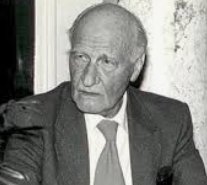
4 months 1 week ago
In leisure — not only there, but certainly there, if anywhere — the truly human is rescued and preserved precisely because the area of the "just human" is left behind over and over again — and this is not brought about through the application of extreme efforts but rather as with a kind of "moving away" (and this "moving" is of course more difficult than the extreme, active effort; it is "more difficult" because it is less at one's own disposal; the condition of utmost exertion is more easily to be realized than the condition of relaxation and detachment, even though the latter is effortless: this is the paradox that reigns over the attainment of leisure, which is at once a human and superhuman condition). As Aristotle said of it: "man cannot live this way insofar as he is man, but only insofar as something divine dwells in him." [Nichomachean Ethics X, 7 (1177b27–28)]
▼
Source
p. 36
4 months 1 week ago
With regard to this question modern physics takes a definite stand against the materialism of Democritus and for Plato and the Pythagoreans. The elementary particles are certainly not eternal and indestructible units of matter, they can actually be transformed into each other. … The elementary particles in Plato's Timaeus are finally not substance but mathematical forms.
▼
Source
Werner Heisenberg, Physics and Philosophy (1958)
4 months 1 week ago
It is debasing to die the way one does; it is intolerable to be exposed to an end over which we have no control, an end which lies in wait for us, overthrows us, casts us into the unnameable.
4 months 1 week ago
It lies deep in our habits, confirmed by all manner of educational and other arrangements for several centuries back, to consider human talent as best of all evincing itself by the faculty of eloquent speech. Our earliest schoolmasters teach us, as the one gift of culture they have, the art of spelling and pronouncing, the rules of correct speech; rhetorics, logics follow, sublime mysteries of grammar, whereby we may not only speak but write. And onward to the last of our schoolmasters in the highest university, it is still intrinsically grammar, under various figures grammar. To speak in various languages, on various things, but on all of them to speak, and appropriately deliver ourselves by tongue or pen,—this is the sublime goal towards which all manner of beneficent preceptors and learned professors, from the lowest hornbook upwards, are continually urging and guiding us.
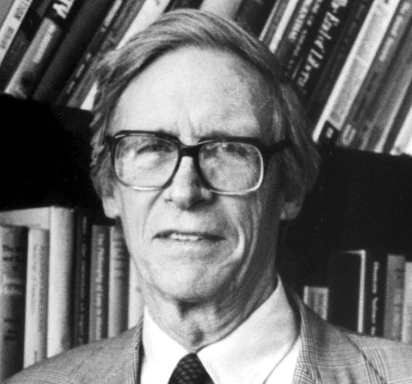
4 months 1 week ago
Justice is the first virtue of social institutions, as truth is of systems of thought. A theory however elegant and economical must be rejected or revised if it is untrue; likewise laws and institutions no matter how efficient and well-arranged must be reformed or abolished if they are unjust. Each person possesses an inviolability founded on justice that even the welfare of society as a whole cannot override. For this reason justice denies that the loss of freedom for some is made right by a greater good shared by others. It does not allow that the sacrifices imposed on a few are outweighed by the larger sum of advantages enjoyed by many. Therefore in a just society the liberties of equal citizenship are taken as settled; the rights secured by justice are not subject to political bargaining or to the calculus of social interests.
▼
Source
Chapter I, Section 1, pg. 3-4
4 months 1 week ago
All just order in the world is based on this, that man give man what is his due.
▼
Source
[http://books.google.com/books?id=XjYbAAAAIAAJ&q=%22All+just+order+in+the+world+is+based+on+this+that+man+give+man+what+is+his+due%22&pg=PA10#v=onepage Justice] (1955)
4 months 1 week ago
My faculty for disappointment surpasses understanding. It is what lets me comprehend Buddha, but also what keeps me from following him.
4 months 1 week ago
This great maxim of philosophy he had gathered by the teaching of nature alone — that man was created to work, not to speculate or feel or dream. Accordingly, he set his whole heart thitherwards. He did work wisely and unweariedly, and perhaps performed more with the tools he had than any man I now know.
4 months 1 week ago
When the basic structure of society is publicly known to satisfy its principles for an extended period of time, those subject to these arrangements tend to develop a desire to act in accordance with these principles and to do their part in institutions which exemplify them
▼
Source
Chapter III, Section 29, pg.177
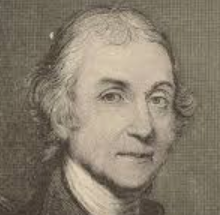
4 months 1 week ago
The History of Electricity is a field full of pleasing objects, according to all the genuine and universal principles of taste, deduced from a knowledge of human nature. Scenes like these, in which we see a gradual rise and progress in things, always exhibit a pleasing spectacle to the human mind. Nature, in all her delightful walks, abounds with such views, and they are in a more especial manner connected with every thing that relates to human life and happiness; things, in their own nature, the most interesting to us. Hence it is, that the power of association has annexed crowds of pleasing sensations to the contemplation of every object, in which this property is apparent. This pleasure, likewise, bears a considerable resemblance to that of the sublime, which is one of the most exquisite of all those that affect the human imagination. For an object in which we see a perpetual progress and improvement is, as it were, continually rising in its magnitude; and moreover, when we see an actual increase, in a long period of time past, we cannot help forming an idea of an unlimited increase in futurity; which is a prospect really boundless, and sublime.
▼
Source
Preface, p. i.
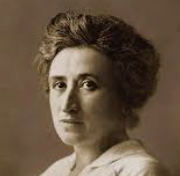
4 months 1 week ago
Plausible as the idea of the United States of Europe as a peace arrangement may seem to some at first glance, it has on closer examination not the least thing in common with the method of thought and the standpoint of social democracy . . . At the present stage of development of the world market and of world economy, the conception of Europe as an isolated economic unit is a sterile concoction of the brain. Europe no more forms a special unit within world economy than does Asia or America.
4 months 1 week ago
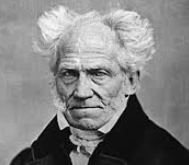
For what is modesty but hypocritical humility, by means of which, in a world swelling with vile envy, a man seeks to beg pardon for his excellences and merits from those who have none? For whoever attributes no merit to himself because he really has none is not modest, but merely honest.
▼
Source
Vol. I, Ch. III, The World As Representation: Second Aspect
4 months 1 week ago
I was walking late one night along a tree-lined path; a chestnut fell at my feet. The noise it made as it burst, the resonance it provoked in me, and an upheaval out of all proportion to this insignificant event thrust me into miracle, into the rapture of the definitive, as if there were no more questions — only answers. I was drunk on a thousand unexpected discoveries, none of which I could make use of. This is how I nearly reached the Supreme. But instead I went on with my walk.
4 months 1 week ago
The next group of reactionaries or romantics or whatever we elect to call them, gathers roughly around one great name. Scotland, from which had come so many of those harsh economists who made the first Radical philosophies of the Victorian Age, was destined also to fling forth (I had almost said to spit forth) their fiercest and most extraordinary enemy. The two primary things in Thomas Carlyle were his early Scotch education and his later German culture. The first was in almost all respects his strength; the latter in some respects his weakness. As an ordinary lowland peasant, he inherited the really valuable historic property of the Scots, their independence, their fighting spirit, and their instinctive philosophic consideration of men merely as men. But he was not an ordinary peasant. If he had laboured obscurely in his village till death, he would have been yet locally a marked man; a man with a wild eye, a man with an air of silent anger; perhaps a man at whom stones were sometimes thrown. A strain of disease and suffering ran athwart both his body and his soul. In spite of his praise of silence, it was only through his gift of utterance that he escaped madness. But while his fellow-peasants would have seen this in him and perhaps mocked it, they would also have seen something which they always expect in such men, and they would have got it: vision, a power in the mind akin to second sight.' Like many ungainly or otherwise unattractive Scotchmen, he was a seer. By which I do not mean to refer so much to his transcendental rhapsodies about the World-soul or the Nature-garment or the Mysteries and Eternities generally, these seem to me to belong more to his German side and to be less sincere and vital. I mean a real power of seeing things suddenly, not apparently reached by any process; a grand power of guessing. He saw the crowd of the new States General, Danton with his "rude flattened face," Robespierre peering mistily through his spectacles. He saw the English charge at Dunbar. He guessed that Mirabeau, however dissipated and diseased, had something sturdy inside him. He guessed that Lafayette, however brave and victorious, had nothing inside him. He supported the lawlessness of Cromwell, because across two centuries he almost physically felt the feebleness and hopelessness of the moderate Parliamentarians. He said a word of sympathy for the universally vituperated Jacobins of the Mountain, because through thick veils of national prejudice and misrepresentation, he felt the impossibility of the Gironde. He was wrong in denying to Scott the power of being inside his characters: but he really had a good deal of that power himself. It was one of his innumerable and rather provincial crotchets to encourage prose as against poetry. But, as a matter of fact, he himself was much greater considered as a kind of poet than considered as anything else; and the central idea of poetry is the idea of guessing right, like a child.
▼
Source
G. K. Chesterton in The Victorian Age in Literature.
4 months 1 week ago
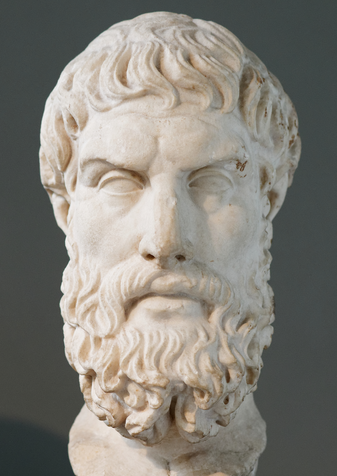
Let no one be slow to seek wisdom when he is young nor weary in the search of it when he has grown old. For no age is too early or too late for the health of the soul. And to say that the season for studying philosophy has not yet come, or that it is past and gone, is like saying that the season for happiness is not yet or that it is now no more. Therefore, both old and young alike ought to seek wisdom, the former in order that, as age comes over him, he may be young in good things because of the grace of what has been, and the latter in order that, while he is young, he may at the same time be old, because he has no fear of the things which are to come. So we must exercise ourselves in the things which bring happiness, since, if that be present, we have everything, and, if that be absent, all our actions are directed towards attaining it.
▼
Source
[http://www.epicurus.net/en/menoeceus.html "Letter to Menoeceus"], as translated in Stoic and Epicurean (1910) by Robert Drew Hicks, p. 167 | Variant translation: Let no one delay to study philosophy while he is young, and when he is old let him not becom
4 months 1 week ago
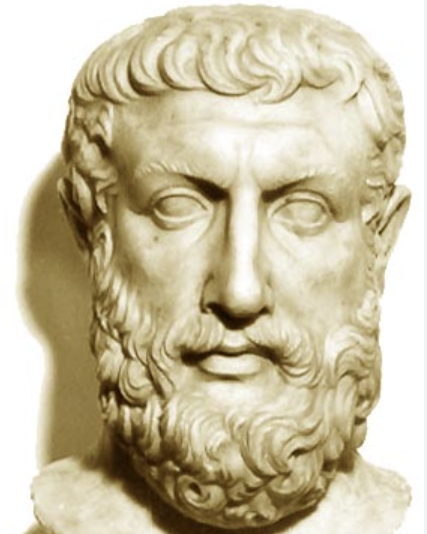
Greek philosophy returned for some time to the concept of the One in the teachings of Parmenides... His most important contribution... was, perhaps, that he introduced a purely logical argument into metaphysics. "One cannot know what is not—that is impossible—nor utter it; for it is the same thing that can be thought and that can be." Therefore, only the One is, and there is no becoming or passing away. Parmenides denied the existence of empty space for logical reasons. Since all change requires empty space... he dismissed change as an illusion.
▼
Source
Werner Heisenberg, Physics and Philosophy (1958) [https://archive.org/details/physicsphilosoph0000heis_n9m9/page/63/mode/1up?view=theater pp. 63-64.]
4 months 1 week ago
Too many christians have been chargeable with... confounding the Logos of Plato with that of John, and making of it a second person in the trinity, than which no two things can be more different.
▼
Source
General Conclusions, Part I : Containing Considerations addressed to Unbelievers and especially to Mr. Gibbon

4 months 1 week ago
A just city should favor justice and the just, hate tyranny and injustice, and give them both their just desserts.
▼
Source
H. Gibb et al., eds., "Mazalim", The Dictionary of Islam vol. IV (Leiden: Brill, 1991)
4 months 1 week ago
A mother gave her children Aesop’s fables to read, in the hope of educating and improving their minds; but they very soon brought the book back, and the eldest, wise beyond his years, delivered himself as follows: This is no book for us; it’s much too childish and stupid. You can’t make us believe that foxes and wolves and ravens are able to talk; we’ve got beyond stories of that kind! In these young hopefuls you have the enlightened Rationalists of the future.
▼
Source
“Similes, Parables and Fables” Parerga and Paralipomena
4 months 1 week ago
One cannot live without motives. I have no motives left, and I am living.
4 months 1 week ago
Never had beauty been so forgotten; style was poisoned at the fount of thought by Carlyle, whose sentences were confused disasters like railway accidents, and by Herbert Spencer, who wrote as though he were the offspring of two Times leaders; among novelists only Robert Louis Stevenson loved words...
▼
Source
Rebecca West, "Transition", in Henry James. London, 1916.
4 months 1 week ago
Gentleness, as opposed to an irascible temper, greatly contributes to the tranquility and happiness of life, by preserving the mind from perturbation, and arming it against the assaults of calumny and malice.
4 months 1 week ago
Barricades of ideas are worth more than barricades of stones. There is no prow that can cut through a cloudbank of ideas. A powerful idea, waved before the world at the proper time, can stop a squadron of iron-clad ships, like the mystical flag of the Last judgement.
4 months 1 week ago
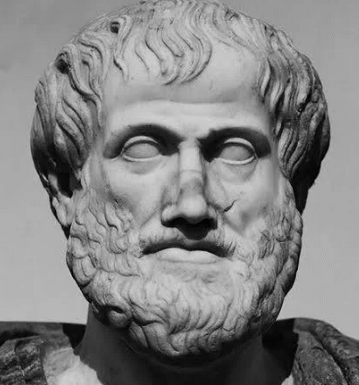
But it is better to assume principles less in number and finite, as Empedocles makes them to be. All philosophers... make principles to be contraries... (for Parmenides makes principles to be hot and cold, and these he demominates fire and earth) as those who introduce as principles the rare and the dense. But Democritus makes the principles to be the solid and the void; of which the former, he says, has the relation of being, and the latter of non-being. ...it is necessary that principles should be neither produced from each other, nor from other things; and that from these all things should be generated. But these requisites are inherent in the first contraries: for, because they are first, they are not from other things; and because they are contraries, they are not from each other.
▼
Source
Book I, Ch. VI, pp. 53-55.
4 months 1 week ago
The cinema is a place of intrinsic indiscernibility between art and non-art.
▼
Source
From Considérations sur l'état actuel du cinéma (1999), translated as Philosophy and Cinema in Infinite Thought: truth and the return of philosophy. London: Continuum, 2003. .
4 months 1 week ago
The teaching of my philosophy... that our whole existence is something which had better not have been, and that to disown and disclaim it is the highest wisdom.
▼
Source
Ch 1
4 months 1 week ago
The more you live, the less useful it seems to have lived.
4 months 1 week ago
Hatred and anger are the greatest poison to the happiness of a good mind.
▼
Source
Section II, Chap. III.
4 months 1 week ago
Nothing could be more natural than the developement of the passions, nor more striking than the views of the human heart. What delicate struggles! and uncommonly pretty turns of thought!
▼
Source
Mary: A Fiction (1788)
4 months 1 week ago
I suggest that scientific knowledge, though logically more articulate and far more complex, is of this sort. The books and teachers from whom it is acquired present concrete examples together with a multitude of theoretical generalizations. Both are essential carriers of knowledge, and it is therefore Pickwickian to seek a methodological criterion that supposes the scientist can specify in advance whether each imaginable instance fits or would falsify his theory.
▼
Source
"Logic of Discovery or Psychology of Research?", Criticism and the growth of knowledge edited by Imre Lakatos and Alan Musgrave (1970)
4 months 1 week ago
Perhaps the enemies of liberty are such only because they judge it by its loud voice. If they knew its charms, the dignity that accompanies it, how much a free man feels like a king, the perpetual inner light that is produced by decorous self-awareness and realization, perhaps there would be no greater friends of freedom than those who are its worst enemies.
CivilSimian.com created by AxiomaticPanic, CivilSimian, Kalokagathia