
4 months 1 week ago
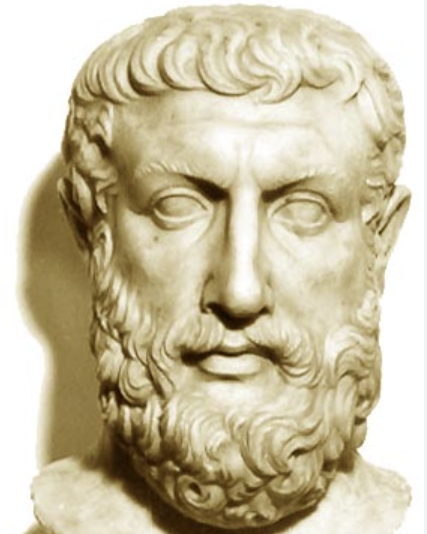
[E]mpty space is nothing, nothing cannot be thought, and therefore cannot exist. What is, never came into being, nor is anything going to come into being in the future. "Is it or is it not?" If it is, then it is now, all at once.
4 months 1 week ago
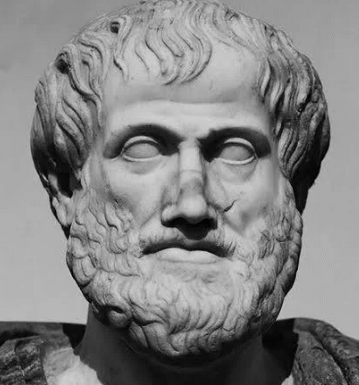
Nature does not do anything in vain.
4 months 1 week ago
This is the age in which hills can look down upon the mountains.
▼
Source
A Morir [To Die]
4 months 1 week ago
Everything turns on mastering the gap between the presupposition (that must be rejected) of a being of the one and the thesis of its 'there is'.
▼
Source
Meditation One: The One and the Multiple: a priori conditions of any possible ontology
4 months 1 week ago
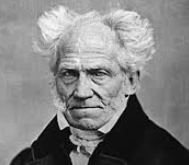
Epicurus, the great teacher of happiness, has correctly and finely divided human needs into three classes. First there are the natural and necessary needs which, if they are not satisfied, cause pain. Consequently, they are only victus et amictus [food and clothing] and are easy to satisfy. Then we have those that are natural yet not necessary, that is, the needs for sexual satisfaction. … These needs are more difficult to satisfy. Finally, there are those that are neither natural nor necessary, the needs for luxury, extravagance, pomp, and splendour, which are without end and very difficult to satisfy.
▼
Source
E. Payne, trans. (1974) Vol. 1, p. 346

4 months 1 week ago
I do nothing, granted. But I see the hours pass — which is better than trying to fill them.
4 months 1 week ago
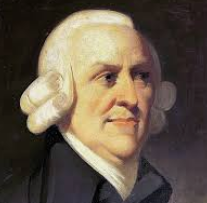
The Union was a measure from which infinite Good has been derived to this country.
▼
Source
Letter to William Strahan (4 April 1760), quoted in Adam Smith, The Correspondence of Adam Smith, eds. E. C. Mossner and I. S. Ross (1987), p. 68
4 months 1 week ago
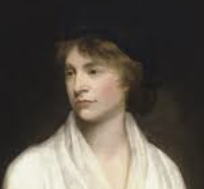
Virtue can only flourish amongst equals.
▼
Source
A Vindication of the Rights of Men (1790)
4 months 1 week ago
That body is heavier than another which, in an equal bulk, moves downward quicker.
▼
Source
IV. 1. as quoted by Florian Cajori (1899)
4 months 1 week ago
To insist on racial divisions, on racial differences, in an already divided people, is to place obstacles in the way of public and individual happiness, which can only be obtained by bringing people together as a nation.

4 months 1 week ago
The present article is almost wholly devoted to a single problem—the definition of truth. Its task is to construct—with reference to a given language—a materially adequate and formally correct definition of the term 'true sentence. This problem, which belongs to the classical problems of philosophy, raises considerable difficulties. For although the meaning of the term 'true sentence' in colloquial language seems to be quite clear and intelligible, all attempts to define this meaning more precisely have hitherto been fruitless, and many investigations in which this term has been used and which started with apparently evident premisses have often led to paradoxes and antinomies (for which, however, a more or less satisfactory solution has been found). The concept of truth shares in this respect the fate of other analogous concepts in the domain of the semantics of language.
▼
Source
"The Concept of Truth in Formalized Languages" (1931) in Logic, Semantics, Metamathematics: Papers from 1923 to 1938 (1956) Tr. J. H. Woodger.
4 months 1 week ago
Two Chinamen visiting Europe went to the theatre for the first time. One of them occupied himself with trying to understand the theatrical machinery, which he succeeded in doing. The other, despite his ignorance of the language, sought to unravel the meaning of the play. The former is like the astronomer, the latter the philosopher.
▼
Source
Vol. 2 "On Various Subjects" as translated in Essays and Aphorisms (1970), as translated by R. J. Hollingdale
4 months 1 week ago
To be is to be cornered.
4 months 1 week ago
The greatest improvement in the productive powers of labour, and the greatest part of skill, dexterity, and judgment with which it is any where directed, or applied, seem to have been the effects of the division of labour.
▼
Source
Chapter I, p. 7
4 months 1 week ago
To be a good mother — a woman must have sense, and that independence of mind which few women possess who are taught to depend entirely on their husbands. Meek wives are, in general, foolish mothers; wanting their children to love them best, and take their part, in secret, against the father, who is held up as a scarecrow.
▼
Source
Ch. 10
4 months 1 week ago
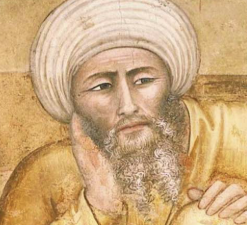
The necessary connexion of movement and time is real and time is something the soul (dhihn) constructs in movement.
▼
Source
As cited in "Being and Language in Averroes' “Tahafut At-Tahafut” (2003) by Massimo Campanini
4 months 1 week ago
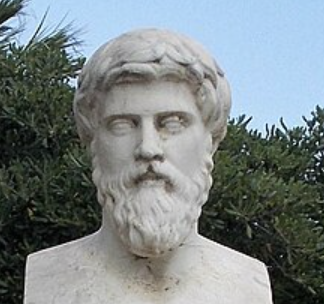
Valour, however unfortunate, commands great respect even from enemies: but the Romans despise cowardice, even though it be prosperous.
▼
Source
Aemilius Paulus 26 (Tr. Stewart and Long)

4 months 1 week ago
Hobbes’s understanding of the dangers of anarchy resonates powerfully today. Liberal thinkers still see the unchecked power of the state as the chief danger to human freedom. Hobbes knew better: freedom’s worst enemy is anarchy, which is at its most destructive when it is a battleground of rival faiths. The sectarian death squads roaming Baghdad show that fundamentalism is itself a type of anarchy in which each prophet claims divine authority to rule. In well-governed societies, the power of faith is curbed. The state and the churches temper the claims of revelation and enforce peace. Where this kind is impossible, tyranny is better than being ruled by warring prophets. Hobbes is a more reliable guide to the present than the liberal thinkers who followed. Yet his view of human beings was too simple, and overly rationalistic. Assuming that humans dread violent death more than anything, he left out the most intractable sources of conflict. It is not always because human beings act irrationally that they fail to achieve peace. Sometimes it is because they do not want peace. They may want the victory of the One True Faith – whether a traditional religion or a secular successor such as communism, democracy or universal human rights. Or – like the young people who joined far-Left terrorist groups in the 1970s, another generation of which is now joining Islamist networks – they may find in war a purpose that is lacking in peace. Nothing is more human than the readiness to kill and die in order to secure a meaning in life.
▼
Source
Post-Apocalypse: After Secularism (pp. 262-3)
4 months 1 week ago
A person might fairly doubt also what in the world they mean by the ‘absolute’ this that or the other, since, as they would themselves allow, the account of the humanity is one and the same in the absolute man, and in any individual man: for so far as the individual and the absolute man are both man, they will not differ at all: and if so, then the essential good and any particular good will not differ, in so far as both are good. Nor will it do to say that the eternity of the absolute good makes it to be more good; for a white thing which has lasted white ever so long, is no whiter than that which only lasts for a day.
▼
Source
(Bk. 1, Chapter III)
4 months 1 week ago
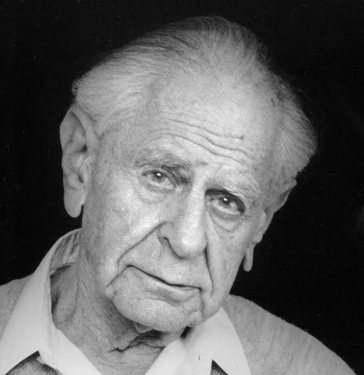
Before we as individuals are even conscious of our existence we have been profoundly influenced for a considerable time (since before birth) by our relationship to other individuals who have complicated histories, and are members of a society which has an infinitely more complicated and longer history than they do (and are members of it at a particular time and place in that history); and by the time we are able to make conscious choices we are already making use of categories in a language which has reached a particular degree of development through the lives of countless generations of human beings before us. . . . We are social creatures to the inmost centre of our being. The notion that one can begin anything at all from scratch, free from the past, or unindebted to others, could not conceivably be more wrong.
▼
Source
As quoted in Popper (1973) by Bryan Magee
4 months 1 week ago
The Anarchists are right in everything; in the negation of the existing order, and in the assertion that, without authority, there could not be worse violence than that of authority under existing conditions. They are mistaken only in thinking that Anarchy can be instituted by a revolution. "To establish Anarchy." "Anarchy will be instituted." But it will be instituted only by there being more and more people who do not require protection from governmental power, and by there being more and more people who will be ashamed of applying this power.
▼
Source
"On Anarchy", in Pamphlets : Translated from the Russian (1900) as translated by Aylmer Maude, p. 22
4 months 1 week ago
In truth, men speak too much of danger. Let others be terrified by the natural and healthy risks of life! We shall not be frightened! Poison sumac grows in a hard-working man's field, the serpent hisses from its hidden den, and the owl's eye shines in the belfry, but the sun goes on lighting the sky, and truth continues marching across the earth unscathed.

4 months 1 week ago
Where cultural representations do not reach out beyond themselves, there is the danger that they will function as the surrogates for activism, that they will constitute both the beginning and the end of political practice.
▼
Source
"Black Nationalism: The Sixties and the Nineties." Black Popular Culture, ed. Gina Dent (Seattle, Wash: Bay Press, 1992), 324.
4 months 1 week ago
To free a man from error is to give, not to take away. Knowledge that a thing is false is a truth. Error always does harm; sooner or later it will bring mischief to the man who harbors it. Then give up deceiving people; confess ignorance of what you don't know, and leave everyone to form his own articles of faith for himself. Perhaps they won't turn out so bad, especially as they'll rub one another's corners down, and mutually rectify mistakes. The existence of many views will at any rate lay a foundation of tolerance. Those who possess knowledge and capacity may betake themselves to the study of philosophy, or even in their own persons carry the history of philosophy a step further.
▼
Source
"Religion: A Dialogue." | Variant translation: To free a man from error does not mean to take something from him, but to give him something.
4 months 1 week ago
If I were to go blind, what would bother me the most would be no longer to be able to stare idiotically at the passing clouds.
4 months 1 week ago
The real and effectual discipline which is exercised over a workman is that of his customers. It is the fear of losing their employment which restrains his frauds and corrects his negligence.
▼
Source
Chapter X, Part II.
4 months 1 week ago
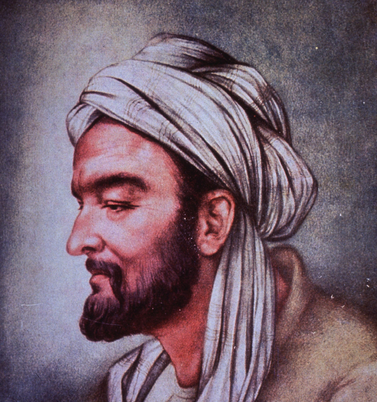
The world is divided into men who have wit and no religion and men who have religion and no wit.
▼
Source
This was declared without citation to have been attributed to Avicenna in A Rationalist Encyclopaedia : A Book of Reference on Religion, Philosophy, Ethics, and Science (1950), by Joseph McCabe, p. 43; it was also later wrongly attributed to Averroes in T
4 months 1 week ago
Lysander said, "Where the lion's skin will not reach, it must be pieced with the fox's."
▼
Source
60 Lysander
4 months 1 week ago
If our universe is one of many, unlike others in containing observers like ourselves, there is no need to posit a designer. Most universes will be too chaotic to allow the emergence of life or mind. In that case, the fact that humans exist in this universe needs no special explanation
▼
Source
Sweet Morality (p. 222)
4 months 1 week ago
Wit is cultured insolence.
▼
Source
Book II, 1389b.11
4 months 1 week ago
I do not overlook the fact that there are irrationalists who love mankind, and that not all forms of irrationalism engender criminality. But I hold that he who teaches that not reason but love should rule opens up the way for those who rule by hate. (Socrates, I believe, saw something of this when he suggested that mistrust or hatred of argument is related to mistrust or hatred of man).
▼
Source
Vol. 2, Ch. 24 "Oracular Philosophy and the Revolt against Reason"
4 months 1 week ago
In historical events great men — so-called — are but labels serving to give a name to the event, and like labels they have the least possible connection with the event itself. Every action of theirs, that seems to them an act of their own free will, is in an historical sense not free at all, but in bondage to the whole course of previous history, and predestined from all eternity.
▼
Source
Bk. IX, ch. 1
4 months 1 week ago
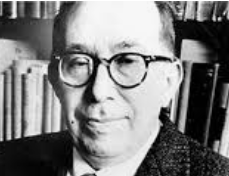
Science, as the positivist understands it, is susceptible of infinite progress. That you learn in every elementary school today, I believe. Every result of science is provisional and subject to future revision, and this will never change. In other words, fifty thousand years from now there will still be results entirely different from those now, but still subject to revision. Science is susceptible of infinite progress. But how can science be susceptible of infinite progress if its object does not have an inner infinity? The belief admitted by all believers in science today — that science is by its nature essentially progressive, and eternally progressive — implies, without saying it, that being is mysterious. And here is the point where the two lines I have tried to trace do not meet exactly, but where they come within hailing distance. And, I believe, to expect more in a general way, of people in general, would be unreasonable.
▼
Source
"Why We Remain Jews" (1962)
4 months 1 week ago
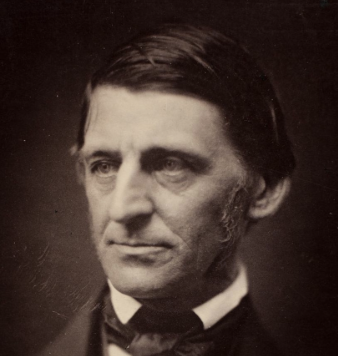
A man contains all that is needful to his government within himself. He is made a law unto himself. All real good or evil that can befal [sic] him must be from himself. He only can do himself any good or any harm. Nothing can be given to him or can taken from him but always there is a compensation.. There is a correspondence between the human soul and everything that exists in the world; more properly, everything that is known to man. Instead of studying things without the principles of them, all may be penetrated unto with him. Every act puts the agent in a new position. The purpose of life seems to be to acquaint a man with himself. He is not to live the future as described to him but to live the real future to the real present. The highest revelation is that God is in every man.
▼
Source
September 8, 1833
4 months 1 week ago
Insofar as the military contest between the North and the South was a war to overthrow the Southern slaveholding class, it was a war which had been basically conducted in the interests of the Northern bourgeoisie, i.e., the young and enthusiastic industrial capitalists who found their political voice in the Republican party. The Northern capitalists sought economic control over the entire nation. Their struggle against the Southern slaveocracy did not therefore mean that they supported the liberation of Black men or women as human beings.
4 months 1 week ago
Of all that makes us suffer, nothing — so much as disappointment — gives us the sensation of at last touching Truth.
4 months 1 week ago
It is not for its own sake that men desire money, but for the sake of what they can purchase with it.
▼
Source
Chapter I, p. 471.
4 months 1 week ago
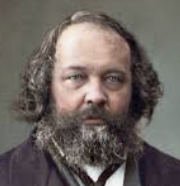
We exhort the compromisers to open their hearts to truth, to free themselves of their wretched and blind circumspection, of their intellectual arrogance, and of the servile fear which dries up their souls and paralyzes their movements. Let us therefore trust the eternal Spirit which destroys and annihilates only because it is the unfathomable and eternal source of all life. The passion for destruction is a creative passion, too!
▼
Source
"The Reaction in Germany" (1842) | Often paraphrased as, "The urge to destroy is also a creative urge"
4 months 1 week ago
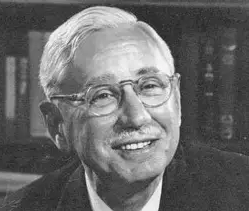
The rise of philosophy, then, often heralds the decay of a civilization. Speculation begins with nature and begets naturalism; it passes to man—first as a psychological mystery and then as a member of society—and begets individualism. Philosophers do not always desire these results; but they achieve them. They feel themselves the unwilling enemies of the state: they think of men in terms of personality while the state thinks of men in terms of social mechanism. Some philosophers would gladly hold their peace, but there is that in them which will out; and when philosophers speak, gods and dynasties fall. Most states have had their roots in heaven, and have paid the penalty for it: the twilight of the gods is the afternoon of states. Every civilization comes at last to the point where the individual, made by speculation conscious of himself as an end per se, demands of the state, as the price of its continuance, that it shall henceforth enhance rather than exploit his capacities. Philosophers sympathize with this demand, the state almost always rejects it: therefore civilizations come and civilizations go. The history of philosophy is essentially an account of the efforts great men have made to avert social disintegration by building up natural moral sanctions to take the place of the supernatural sanctions which they themselves have destroyed. To find—without resorting to celestial machinery—some way of winning for their people social coherence and permanence without sacrificing plasticity and individual uniqueness to regimentation,—that has been the task of philosophers, that is the task of philosophers.
4 months 1 week ago
Plutarch is amazing in every respect but especially where he makes judgements on men's actions.
▼
Source
Michel de Montaigne, 'On anger', The Complete Essays, translated by M. A. Screech (1991; 2003), p. 809
4 months 1 week ago
Rather than trying to escape violence, human beings more often become habituated to it. History abounds with long conflicts – the Thirty Years’ War in early seventeenth-century Europe, the Time of Troubles in Russia, twentieth-century guerrilla conflicts – in which continuous slaughter has been accepted as normal. Famously adaptable, the human animal quickly learns to live with violence and soon comes to find satisfaction in it.
▼
Source
In the Puppet Theatre: Roof Gardens, Feathers and Human Sacrifice (p. 80)
4 months 1 week ago
I do not agree with Plato, but if anything could make me do so, it would be Aristotle's arguments against him.
▼
Source
Bertrand Russell, A History of Western Philosophy (1945), Book One, Part II, Ch. XXI, Aristotle's Politics, p. 189
4 months 1 week ago
Scientific Method... [is] even less existent than some other non-existent subjects.
4 months 1 week ago
Go — take the mother's soul, and learn three truths: Learn What dwells in man, What is not given to man, and What men live by. When thou hast learnt these things, thou shalt return to heaven.
▼
Source
Ch. IV
4 months 1 week ago
The most superficial fact regarding the Discourses, the fact that the number of its chapters equals the number of books of Livy's History, compelled us to start a chain of tentative reasoning which brings us suddenly face to face with the only New Testament quotation that ever appears in Machiavelli's two books and with an enormous blasphemy.
▼
Source
p. 49
4 months 1 week ago
A nation never falls but by suicide.
▼
Source
1861
4 months 1 week ago
Positing decarceration as our overarching strategy, we would try to envision a continuum of alternatives to imprisonment - demilitarization of schools, revitalization of education at all levels, a health system that provides free physical and mental care to all, and a justice system based on reparatuon and reconciliation rather than retribution and vengeance.
▼
Source
Chapter Six
4 months 1 week ago
Basically—I speak of life as it is and not of abstract philosophical constructs—life is only bearable because one does not go to the end; doing something is only possible when one has particular illusions and that holds also for friendships, for everything.
4 months 1 week ago
It cannot be very difficult to determine who have been the contrivers of this whole mercantile system; not the consumers, we may believe, whose interest has been entirely neglected; but the producers, whose interests has been so carefully attended to; and among this later class our merchants and manufactures have been by far the principal architects. In the mercantile regulations, which have been taken notice of in this chapter, the interest of our manufacturers has been most peculiarly attended to;and the interest, not so much of the consumers, as that of some other sets of producers, has been sacrificed to it.
▼
Source
Chapter VIII, p. 721.
4 months 1 week ago
We must make a very precise distinction between the official and consequently dictatorial prerogatives of society organized as a state, and of the natural influence and action of the members of a non-official, non-artificial society.
CivilSimian.com created by AxiomaticPanic, CivilSimian, Kalokagathia