
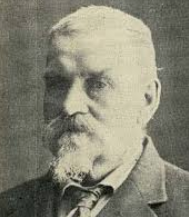
4 months 1 week ago
The matter of jurisprudence is positive law: law, simply and strictly so called : or law set by political superiors to political inferiors.
▼
Source
p. 1; opening line
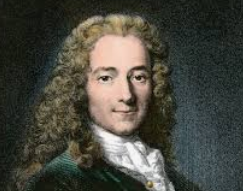
4 months 1 week ago
He is by his opinions, and also by his middle-class origin, the natural leader of an implacable opposition.
▼
Source
H. N. Brailsford, Voltaire, H. Holt and company, 1935

4 months 1 week ago
Not content with real sufferings, the anxious man imposes imaginary ones on himself; he is a being for whom unreality exists, must exist; otherwise where would he obtain the ration of torment his nature demands?
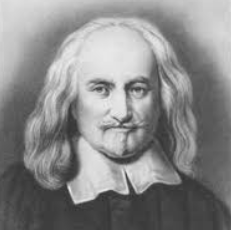
4 months 1 week ago
Sudden Glory, is the passion which maketh those Grimaces called LAUGHTER.
▼
Source
The First Part, Chapter 6, p. 27 (italics and spelling as per text)
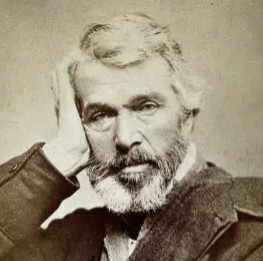
4 months 1 week ago
Truly it is a sad thing for a people, as for a man, to fall into Scepticism, into dilettantism, insincerity; not to know Sincerity when they see it. For this world, and for all worlds, what curse is so fatal?

4 months 1 week ago
Repentance for one's evil deeds is the safeguard of life.
4 months 1 week ago
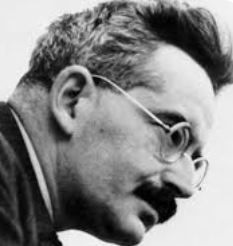
Mechanical reproduction emancipates the work of art from its parasitical dependence on ritual. To an ever greater degree the work of art reproduced becomes the work of art designed for reproducibility. From a photographic negative, for example, one can make any number of prints; to ask for the “authentic” print makes no sense. But the instant the criterion of authenticity ceases to be applicable to artistic production, the total function of art is reversed. Instead of being based on ritual, it begins to be based on another practice – politics.
▼
Source
Das Kunstwerk im Zeitalter seiner Reproduzierbarkeit The Work of Art in the Age of Mechanical Reproduction (1935)
4 months 1 week ago
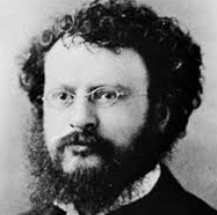
The United States—bounded on the north by the Aurora Borealis, on the south by the precession of the equinoxes, on the east by the primeval chaos, and on the west by the Day of Judgment.
▼
Source
"Bounding the United States", attributed to Fiske in Bartlett's Familiar Quotations, 14th ed. (1968) p. 655, note. However, Fiske was himself quoting: | Among the legends of our late Civil War there is a story of a dinner-party given by the Americans resi
4 months 1 week ago
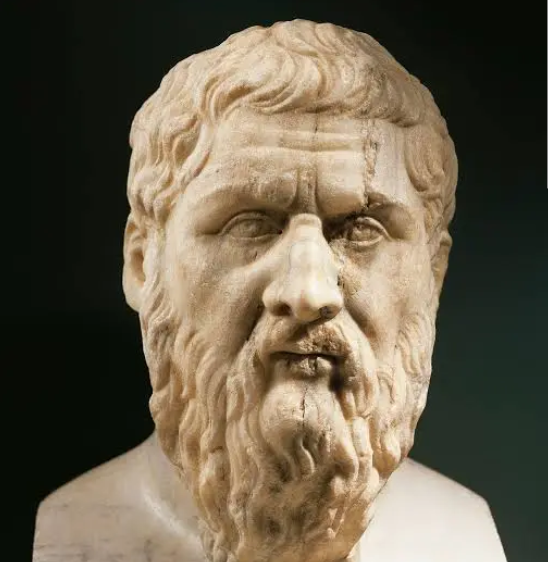
Parnenides: When there is a number of things which seem to you to be great, you may think, as you look at them all, that there is one and the same idea in them, and hence you think the great is one. But if with your mind's eye you regard the absolute great and these many great things in the same way, will not another great appear beyond, by which all these must appear to be great?
▼
Source
132a
4 months 1 week ago
I believe in the salvation of humanity, in the future of cyanide . . .
4 months 1 week ago
From whence it follows, that were the publique and private interest are most closely united, there is the publique most advanced.
▼
Source
The Second Part, Chapter 19, p. 97
4 months 1 week ago
And yet I will venture to believe that in no time, since the beginnings of Society, was the lot of those same dumb millions of toilers so entirely unbearable as it is even in the days now passing over us. It is not to die, or even to die of hunger, that makes a man wretched; many men have died; all men must die,—the last exit of us all is in a Fire-Chariot of Pain. But it is to live miserable we know not why; to work sore and yet gain nothing; to be heart-worn, weary, yet isolated, unrelated, girt in with a cold universal Laissez-faire: it is to die slowly all our life long, imprisoned in a deaf, dead, Infinite Injustice, as in the accursed iron belly of a Phalaris' Bull! This is and remains forever intolerable to all men whom God has made. Do we wonder at French Revolutions, Chartisms, Revolts of Three Days? The times, if we will consider them, are really unexampled.
4 months 1 week ago
Throw moderation to the winds, and the greatest pleasures bring the greatest pains.
4 months 1 week ago
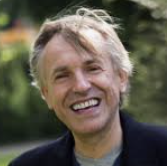
When Bernard Marx tells the Savage he will try to secure permission for him and his mother to visit the Other Place, John is initially pleased and excited. Echoing Miranda in The Tempest, he exclaims: "O brave new world that has such people in it." Heavy irony. Like innocent Miranda, he is eager to embrace a way of life he neither knows nor understands. And of course he comes unstuck. Yet if we swallow such fancy literary conceits, then ultimately the joke is on us. It is only funny in the sense there are "jokes" about Auschwitz. For it is Huxley who neither knows nor understands the glory of what lies ahead. A utopian society in which we are sublimely happy will be far better than we can presently imagine, not worse. And it is we, trapped in the emotional squalor of late-Darwinian antiquity, who neither know nor understand the lives of the god-like super-beings we are destined to become.
▼
Source
"[https://www.huxley.net/ Brave New World? A Defence of Paradise-Engineering]", BLTC Research, 1998
4 months 1 week ago
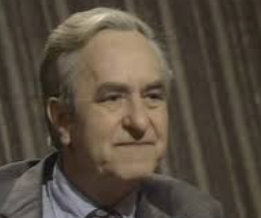
Journalism has become a great god of the period, and gods have a way of ruthlessly and demonically taking over their servitors.
▼
Source
Chapter Two, The Encounter With Nothingness, p. 27
4 months 1 week ago
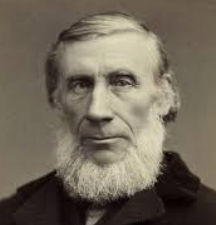
Christian love was not the feeling which long animated the respective followers of Peter and Paul.We who have been born into a settled state of things can hardly realise the commotion out of which this tranquillity has emerged. We have, for example, the canon of Scripture already arranged for us. But to sift and select these writings from the mass of spurious documents afloat at the time of compilation was a work of vast labour, difficulty, and responsibility. The age was rife with forgeries. Even good men lent themselves to these pious frauds, believing that true Christian doctrine, which of course was their doctrine, would be thereby quickened and promoted. There were gospels and counter-gospels; epistles and counter-epistles—some frivolous, some dull, some speculative and romantic, and some so rich and penetrating, so saturated with the Master's spirit, that, though not included in the canon, they enjoyed an authority almost equal to that of the canonical books.
4 months 1 week ago
Since those who rule in the city do so because they own a lot, I suppose they're unwilling to enact laws to prevent young people who've had no discipline from spending and wasting their wealth, so that by making loans to them, secured by the young people's property, and then calling those loans in, they themselves become even richer and more honored.
▼
Source
555c, G. Grube and C. Reeve, trans., Plato: Complete Works (1997), p. 1166
4 months 1 week ago
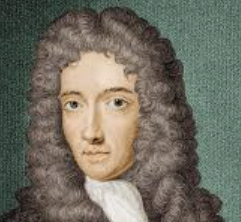
But for my part (Continues Carneades) what my Indignation at this Un-philosophical way of teaching Principles has now extorted from me, is meant chiefly to excuse my self, if I shall hereafter oppose any Particular Opinion or assertion, that some Follower of Paracelsus or any Eminent Artist may pretend not to be his Masters. For, as I told you long since, I am not Oblig'd to examine private mens writings, (which were a Labour as endless as unprofitable) being only engag'd to examine those Opinions about the Tria Prima, which I find those Chymists I have met with to agree in most: And I Doubt not but my Arguments against their Doctrine will be in great part easily enough applicable ev'n to those private Opinions, which they do not so directly and expresly oppose.
4 months 1 week ago
I foresee the day when we shall read nothing but telegrams and prayers.
4 months 1 week ago
It is a remarkable fact that, in a history extending over nearly twenty-five hundred years, a considerable part of the most significant writing on political philosophy was done in two periods of only about fifty years each and in two places of quite restricted area. … The Second place was England, and the period was the half century between 1640 and 1690, which produced the works of Hobbes and Locke, together with the works of a host of lesser figures.
▼
Source
George Sabine, "What is a Political Theory?" (1939)
4 months 1 week ago
Nature admits no lie.
▼
Source
Latter Day Pamphlet, No. 5.
4 months 1 week ago
One might naively suppose that a negative utilitarian would welcome human extinction. But only (trans)humans - or our potential superintelligent successors - are technically capable of phasing out the cruelties of the rest of the living world on Earth. And only (trans)humans - or rather our potential superintelligent successors - are technically capable of assuming stewardship of our entire Hubble volume.
▼
Source
"[https://www.hedweb.com/social-media/pre2014.html Unsorted Postings]", Facebook, pre-2014

4 months 1 week ago
The nationalism I grew up with is a principled standpoint that regards the world as governed best when nations are able to chart their own independent course, cultivating their own traditions and pursuing their own interests without interference. This is opposed to imperialism, which seeks to bring peace and prosperity to the world by uniting mankind, as much as possible, under a single political regime.
4 months 1 week ago
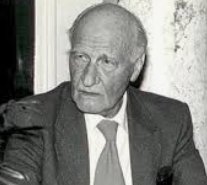
Not only the Greeks in general — Aristotle no less than Plato — but the great medieval thinkers as well, all held that there was an element of purely receptive "looking," not only in self-perception but also in intellectual knowing or, as Heraclitus said, "Listening-in to the being of things."The medievals distinguished between the intellect as ratio and the intellect as intellectus. Ratio is the power of discursive thought, of searching and re-searching, abstracting, refining, and concluding [cf. Latin dis-currere, "to run to and fro"], whereas intellectus refers to the ability of "simply looking" (simplex intuitus), to which the truth presents itself as a landscape presents itself to the eye.
▼
Source
p. 11
4 months 1 week ago
Here, first of all men for pure justice famed,And moral virtue, Aristocles lies;And if there e'er has lived one truly wise,This man was wiser still; too great for envy.
▼
Source
The epigram on his tomb, with what Laërtius reported to be his original name, in: {{cite web
4 months 1 week ago
He revived the atomic hypothesis, and explained chemical combination on the basis of affinity.
4 months 1 week ago
Creation is in fact a fault, man's famous sin thereby appearing as a minor version of a much graver one. What are we guilty of, except of having followed, more or less slavishly, the Creator's example? Easy to recognize in ourselves the fatality which was His: not for nothing have we issued from the hands of a wicked and woebegone god, a god accursed.
4 months 1 week ago
If Governments neglect to invite what noble intellect there is, then too surely all intellect, not omnipotent to resist bad influences, will tend to become beaverish ignoble intellect; and quitting high aims, which seem shut up from it, will help itself forward in the way of making money and such like; or will even sink to be sham intellect, helping itself by methods which are not only beaverish but vulpine, and so "ignoble" as not to have common honesty.
4 months 1 week ago
Facing a landscape annihilated by the light, to remain serene supposes a temper I do not have. The sun is my purveyor of black thoughts; and summer the season when I have always reconsidered my relations with this world and with myself, to the greatest prejudice of both.
4 months 1 week ago
Let us honor all honest human power of contrivance in its degree. The beaver intellect, so long as it steadfastly refuses to be vulpine, and answers the tempter pointing out short routes to it with an honest "No, no," is truly respectable to me; and many a highflying speaker and singer whom I have known, has appeared to me much less of a developed man than certain of my mill-owning, agricultural, commercial, mechanical, or otherwise industrial friends, who have held their peace all their days and gone on in the silent state. If a man can keep his intellect silent, and make it even into honest beaverism, several very manful moralities, in danger of wreck on other courses, may comport well with that, and give it a genuine and partly human character; and I will tell him, in these days he may do far worse with himself and his intellect than change it into beaverism, and make honest money with it.
4 months 1 week ago
Indeed, it is tempting to suppose that it is self evident that things should be so arranged so as to lead to the most good.
▼
Source
Chapter I, Section 5, pg. 25
4 months 1 week ago
Profound study of nature is the most fertile source of mathematical discoveries.
▼
Source
Ch. 1, p. 7
4 months 1 week ago
When people come to me saying they want to kill themselves, I tell them, "What's your rush? You can kill yourself any time you like. So calm down. Suicide is a positive act." And they do calm down.
4 months 1 week ago
My father's education was altogether of the worst and most limited. I believe he was never more than three months at any school. What he learned there showed what he might have learned. A solid knowledge of arithmetic, a fine antique handwriting — these, with other limited practical etceteras, were all the things he ever heard mentioned as excellent. He had no room to strive for more.
4 months 1 week ago
The suppression of liberty is always likely to be irrational.
▼
Source
Chapter IV, Section 33, p. 210
4 months 1 week ago
And since every man retains, and can never be deprived of his natural right (founded on a regard to the general good) of relieving himself from all oppression, that is, from every thing that has been imposed upon him without his own consent; this must be the only true and proper foundation of all the governments subsisting in the world, and that to which the people who compose them have an unalienable right to bring them back.
▼
Source
Section II, "Of Political Liberty"
4 months 1 week ago
It makes no sense to regard the right of suffrage as a utopian product of fantasy, cut loose from social reality. And it is for this reason that it is not a serious instrument of the proletarian dictatorship. It is an anachronism, an anticipation of the juridical situation which is proper on the basis of an already completed socialist economy, but is not in the transition period of the proletarian dictatorship.
▼
Source
Chapter Five, "The Question of Suffrage"
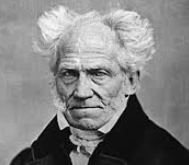
4 months 1 week ago
Talent hits a target no one else can hit; genius hits a target no one else can see.
▼
Source
Das Talent gleicht dem Schützen, der ein Ziel trifft, welches die Uebrigen nicht erreichen können; das Genie dem, der eines trifft, bis zu welchem sie nicht ein Mal zu sehn vermögen... | Vol. II, Ch. III, para. 31 (On Genius), 1844 | As cited in The Littl
4 months 1 week ago
Though we may prefer ourselves to the universe, we nonetheless loathe ourselves much more than we suspect. If the wise man is so rare a phenomenon, it is because he seems unshaken by the aversion which, like all beings, he must feel for himself.
4 months 1 week ago
This is the condition of England, according to Carlyle. An idle landowning aristocracy which "have not yet learned even to sit still and do no mischief", a working aristocracy submerged in Mammonism, who, when they ought to be collectively the leaders of labour, "captains of industry", are just a gang of industrial buccaneers and pirates. A Parliament elected by bribery, a philosophy of simply looking on, of doing nothing, of laissez-faire, a worn-out, crumbling religion, a total disappearance of all general human interests, a universal despair of truth and humanity, and in consequence a universal isolation of men in their own "brute individuality", a chaotic, savage confusion of all aspects of life, a war of all against all, a general death of the spirit, a dearth of "soul", that is, of truly human consciousness: a disproportionately strong working class, in intolerable oppression and wretchedness, in furious discontent and rebellion against the old social order, and hence a threatening, irresistibly advancing democracy — everywhere chaos, disorder, anarchy, dissolution of the old ties of society, everywhere intellectual insipidity, frivolity, and debility. — That is the condition of England. Thus far, if we discount a few expressions that have derived from Carlyle's particular standpoint, we must allow the truth of all he says. He, alone of the "respectable" class, has kept his eyes open at least towards the facts, he has at least correctly apprehended the immediate present, and that is indeed a very great deal for an "educated" Englishman.
▼
Source
Friedrich Engels, [https://www.marxists.org/archive/marx/works/1844/df-jahrbucher/carlyle.htm review of Past and Present], Deutsch-Französische Jahrbücher (1844)
4 months 1 week ago
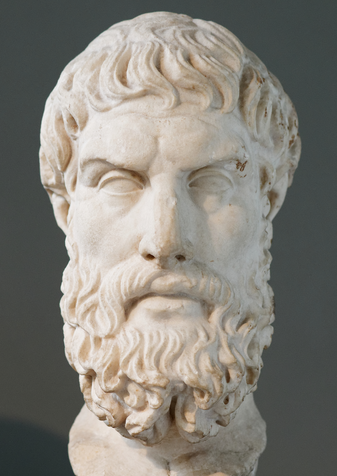
The wealth required by nature is limited and is easy to procure; but the wealth required by vain ideals extends to infinity.
4 months 1 week ago
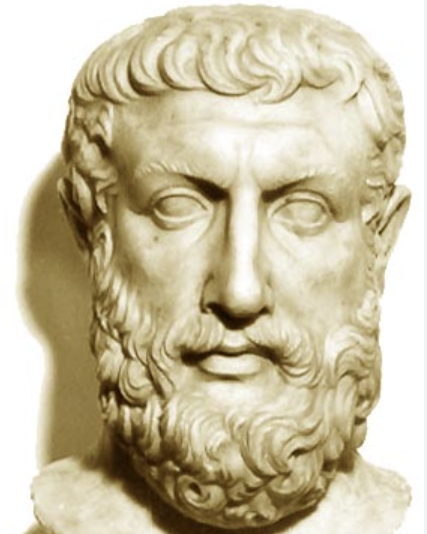
Parmenides made it clear for the first time that the Immortal Principle, the One, Truth, God, is separate from appearance and from opinion, and the importance of this separation and its effect upon subsequent history cannot be overstated. It's here that the classic mind, for the first time, took leave of its romantic origins and said, "The Good and the True are not necessarily the same," and goes its separate way. Anaxagoras and Parmenides had a listener named Socrates who carried their ideas into full fruition.
▼
Source
Robert M. Pirsig, in Zen and the Art of Motorcycle Maintenance (1974), Ch. 29
4 months 1 week ago
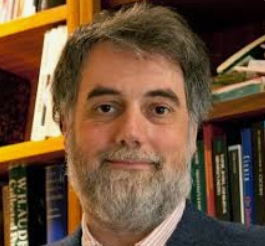
God is in command of history. Each crisis has something to teach us; each crisis is overcome by particular virtues and by reference to particular truths. The way out of a crisis is often unexpected, and often combines a decisive historical intervention by God, and a new spirit in the Church, animating new movements and new thinking. With hindsight we can even see in some cases how the crisis itself solved intractable problems which could not be solved in any other way
▼
Source
[https://remnantnewspaper.com/web/index.php/fetzen-fliegen/item/5036-interview-with-dr-joseph-shaw Interview with Dr. Joseph Shaw] (August 28, 2020)

4 months 1 week ago
Methink I am thrice-imprisoned—ask not me Of news that need no telling—By loss of sight, confinement in my house, And this vile body for my spirit’s dwelling.
▼
Source
Translation of Reynold Nicholson, as quoted in The Luzumiyat of Abu'l-Ala (1920) by Ameen Rihani
4 months 1 week ago
To be a philosopher, that is to say, a lover of wisdom (for wisdom is nothing but truth), it is not enough for a man to love truth, in so far as it is compatible with his own interest, with the will of his superiors, with the dogmas of the church, or with the prejudices and tastes of his contemporaries; so long as he rests content with this position, he is only a philautos, not a philosophos [a lover of self, not a lover of wisdom]. For this title of honor is well and wisely conceived precisely by its stating that one should love the truth earnestly and with one’s whole heart, and thus unconditionally and unreservedly, above all else, and, if need be, in defiance of all else. Now the reason for this is the one previously stated that the intellect has become free, and in this state it does not even know or understand any other interest than that of truth.
▼
Source
E. Payne, trans. (1974) Vol. 1, pp. 21–22
4 months 1 week ago
We dread the future only when we are not sure we can kill ourselves when we want to.
4 months 1 week ago
A true friend will partake of the wants and sorrows of his friend, as if they were his own; if he be in want, he will relieve him; if he be in prison, he will visit him; if he be sick, he will come to him; nay-situations may occur, in which he would not scruple to die for him. It cannot then be doubted, that friendship is one of the most useful means of procuring a secure, tranquil, and happy life.
4 months 1 week ago
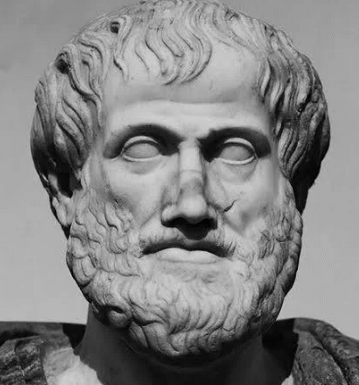
All things as subsist from nature appear to contain in themselves a principle of motion and permanency; some according to place, others according to increase and diminuation; and others according to change in quality.
▼
Source
Book II, Ch. I, p. 88.
4 months 1 week ago
Let the world be grafted onto our republics, but the trunk must be our own. And let the vanquished pedant hold his tongue, for there are no lands in which a man may take greater pride than in our long-suffering American republics.
4 months 1 week ago
Let us say in passing that since (philosophical) remedies are often worse than the malady, our age, in order to be cured of the Plato sickness, has swallowed such doses of a relativist, vaguely skeptical, lightly spiritualist and insipidly moralist medicine, that it is in the process of gently dying, in the small bed of its supposed democratic comfort.
▼
Source
From Plato, Our Dear Plato!, Magazine littéraire, no. 447 (November 2005).
CivilSimian.com created by AxiomaticPanic, CivilSimian, Kalokagathia