
4 months 1 week ago
Facing a landscape annihilated by the light, to remain serene supposes a temper I do not have. The sun is my purveyor of black thoughts; and summer the season when I have always reconsidered my relations with this world and with myself, to the greatest prejudice of both.
4 months 1 week ago
Let us honor all honest human power of contrivance in its degree. The beaver intellect, so long as it steadfastly refuses to be vulpine, and answers the tempter pointing out short routes to it with an honest "No, no," is truly respectable to me; and many a highflying speaker and singer whom I have known, has appeared to me much less of a developed man than certain of my mill-owning, agricultural, commercial, mechanical, or otherwise industrial friends, who have held their peace all their days and gone on in the silent state. If a man can keep his intellect silent, and make it even into honest beaverism, several very manful moralities, in danger of wreck on other courses, may comport well with that, and give it a genuine and partly human character; and I will tell him, in these days he may do far worse with himself and his intellect than change it into beaverism, and make honest money with it.
4 months 1 week ago
Indeed, it is tempting to suppose that it is self evident that things should be so arranged so as to lead to the most good.
▼
Source
Chapter I, Section 5, pg. 25
4 months 1 week ago
Profound study of nature is the most fertile source of mathematical discoveries.
▼
Source
Ch. 1, p. 7
4 months 1 week ago
When people come to me saying they want to kill themselves, I tell them, "What's your rush? You can kill yourself any time you like. So calm down. Suicide is a positive act." And they do calm down.
4 months 1 week ago
My father's education was altogether of the worst and most limited. I believe he was never more than three months at any school. What he learned there showed what he might have learned. A solid knowledge of arithmetic, a fine antique handwriting — these, with other limited practical etceteras, were all the things he ever heard mentioned as excellent. He had no room to strive for more.
4 months 1 week ago
The suppression of liberty is always likely to be irrational.
▼
Source
Chapter IV, Section 33, p. 210
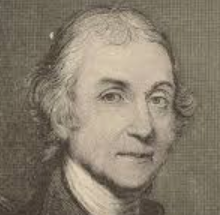
4 months 1 week ago
And since every man retains, and can never be deprived of his natural right (founded on a regard to the general good) of relieving himself from all oppression, that is, from every thing that has been imposed upon him without his own consent; this must be the only true and proper foundation of all the governments subsisting in the world, and that to which the people who compose them have an unalienable right to bring them back.
▼
Source
Section II, "Of Political Liberty"
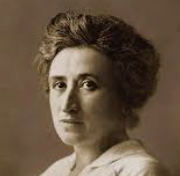
4 months 1 week ago
It makes no sense to regard the right of suffrage as a utopian product of fantasy, cut loose from social reality. And it is for this reason that it is not a serious instrument of the proletarian dictatorship. It is an anachronism, an anticipation of the juridical situation which is proper on the basis of an already completed socialist economy, but is not in the transition period of the proletarian dictatorship.
▼
Source
Chapter Five, "The Question of Suffrage"
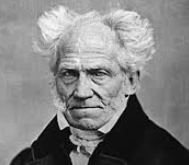
4 months 1 week ago
Talent hits a target no one else can hit; genius hits a target no one else can see.
▼
Source
Das Talent gleicht dem Schützen, der ein Ziel trifft, welches die Uebrigen nicht erreichen können; das Genie dem, der eines trifft, bis zu welchem sie nicht ein Mal zu sehn vermögen... | Vol. II, Ch. III, para. 31 (On Genius), 1844 | As cited in The Littl
4 months 1 week ago
Though we may prefer ourselves to the universe, we nonetheless loathe ourselves much more than we suspect. If the wise man is so rare a phenomenon, it is because he seems unshaken by the aversion which, like all beings, he must feel for himself.
4 months 1 week ago
This is the condition of England, according to Carlyle. An idle landowning aristocracy which "have not yet learned even to sit still and do no mischief", a working aristocracy submerged in Mammonism, who, when they ought to be collectively the leaders of labour, "captains of industry", are just a gang of industrial buccaneers and pirates. A Parliament elected by bribery, a philosophy of simply looking on, of doing nothing, of laissez-faire, a worn-out, crumbling religion, a total disappearance of all general human interests, a universal despair of truth and humanity, and in consequence a universal isolation of men in their own "brute individuality", a chaotic, savage confusion of all aspects of life, a war of all against all, a general death of the spirit, a dearth of "soul", that is, of truly human consciousness: a disproportionately strong working class, in intolerable oppression and wretchedness, in furious discontent and rebellion against the old social order, and hence a threatening, irresistibly advancing democracy — everywhere chaos, disorder, anarchy, dissolution of the old ties of society, everywhere intellectual insipidity, frivolity, and debility. — That is the condition of England. Thus far, if we discount a few expressions that have derived from Carlyle's particular standpoint, we must allow the truth of all he says. He, alone of the "respectable" class, has kept his eyes open at least towards the facts, he has at least correctly apprehended the immediate present, and that is indeed a very great deal for an "educated" Englishman.
▼
Source
Friedrich Engels, [https://www.marxists.org/archive/marx/works/1844/df-jahrbucher/carlyle.htm review of Past and Present], Deutsch-Französische Jahrbücher (1844)
4 months 1 week ago
The wealth required by nature is limited and is easy to procure; but the wealth required by vain ideals extends to infinity.
4 months 1 week ago
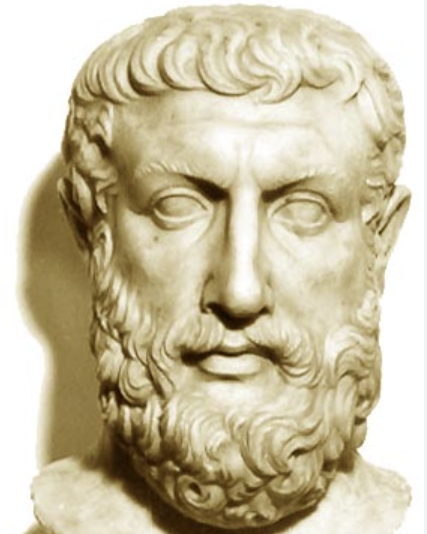
Parmenides made it clear for the first time that the Immortal Principle, the One, Truth, God, is separate from appearance and from opinion, and the importance of this separation and its effect upon subsequent history cannot be overstated. It's here that the classic mind, for the first time, took leave of its romantic origins and said, "The Good and the True are not necessarily the same," and goes its separate way. Anaxagoras and Parmenides had a listener named Socrates who carried their ideas into full fruition.
▼
Source
Robert M. Pirsig, in Zen and the Art of Motorcycle Maintenance (1974), Ch. 29
4 months 1 week ago
God is in command of history. Each crisis has something to teach us; each crisis is overcome by particular virtues and by reference to particular truths. The way out of a crisis is often unexpected, and often combines a decisive historical intervention by God, and a new spirit in the Church, animating new movements and new thinking. With hindsight we can even see in some cases how the crisis itself solved intractable problems which could not be solved in any other way
▼
Source
[https://remnantnewspaper.com/web/index.php/fetzen-fliegen/item/5036-interview-with-dr-joseph-shaw Interview with Dr. Joseph Shaw] (August 28, 2020)
4 months 1 week ago
Methink I am thrice-imprisoned—ask not me Of news that need no telling—By loss of sight, confinement in my house, And this vile body for my spirit’s dwelling.
▼
Source
Translation of Reynold Nicholson, as quoted in The Luzumiyat of Abu'l-Ala (1920) by Ameen Rihani
4 months 1 week ago
To be a philosopher, that is to say, a lover of wisdom (for wisdom is nothing but truth), it is not enough for a man to love truth, in so far as it is compatible with his own interest, with the will of his superiors, with the dogmas of the church, or with the prejudices and tastes of his contemporaries; so long as he rests content with this position, he is only a philautos, not a philosophos [a lover of self, not a lover of wisdom]. For this title of honor is well and wisely conceived precisely by its stating that one should love the truth earnestly and with one’s whole heart, and thus unconditionally and unreservedly, above all else, and, if need be, in defiance of all else. Now the reason for this is the one previously stated that the intellect has become free, and in this state it does not even know or understand any other interest than that of truth.
▼
Source
E. Payne, trans. (1974) Vol. 1, pp. 21–22
4 months 1 week ago
We dread the future only when we are not sure we can kill ourselves when we want to.
4 months 1 week ago
A true friend will partake of the wants and sorrows of his friend, as if they were his own; if he be in want, he will relieve him; if he be in prison, he will visit him; if he be sick, he will come to him; nay-situations may occur, in which he would not scruple to die for him. It cannot then be doubted, that friendship is one of the most useful means of procuring a secure, tranquil, and happy life.
4 months 1 week ago
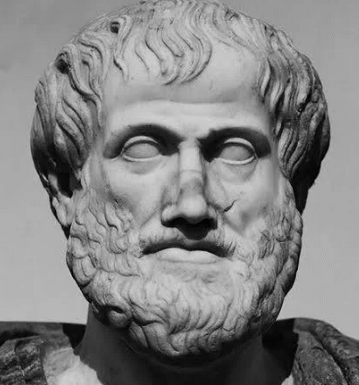
All things as subsist from nature appear to contain in themselves a principle of motion and permanency; some according to place, others according to increase and diminuation; and others according to change in quality.
▼
Source
Book II, Ch. I, p. 88.
4 months 1 week ago
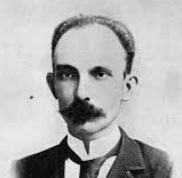
Let the world be grafted onto our republics, but the trunk must be our own. And let the vanquished pedant hold his tongue, for there are no lands in which a man may take greater pride than in our long-suffering American republics.
4 months 1 week ago
Let us say in passing that since (philosophical) remedies are often worse than the malady, our age, in order to be cured of the Plato sickness, has swallowed such doses of a relativist, vaguely skeptical, lightly spiritualist and insipidly moralist medicine, that it is in the process of gently dying, in the small bed of its supposed democratic comfort.
▼
Source
From Plato, Our Dear Plato!, Magazine littéraire, no. 447 (November 2005).
4 months 1 week ago
How very paltry and limited the normal human intellect is, and how little lucidity there is in the human consciousness, may be judged from the fact that, despite the ephemeral brevity of human life, the uncertainty of our existence and the countless enigmas which press upon us from all sides, everyone does not continually and ceaselessly philosophize, but that only the rarest of exceptions do.
▼
Source
Vol. 2, Ch. 3, § 39
4 months 1 week ago
My mission is to suffer for all those who suffer without knowing it. I must pay for them, expiate their unconsciousness, their luck to be ignorant of how unhappy they are.
4 months 1 week ago
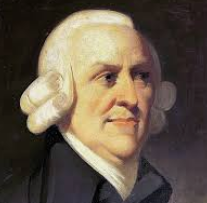
We are delighted to find a person who values us as we value ourselves, and distinguishes us from the rest of mankind, with an attention not unlike that with which we distinguish ourselves.
▼
Source
Section III, Chap. I.
4 months 1 week ago
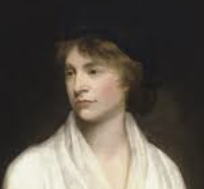
A standing army, for instance, is incompatible with freedom; because subordination and rigour are the very sinews of military discipline; and despotism is necessary to give vigour to enterprise that one will directs. A spirit inspired by romantic notions of honour, a kind of morality founded on the fashion of the age, can only be felt by a few officers, whilst the main body must be moved by command, like the waves of the sea; for the strong wind of authority pushes the crowd of subalterns forward, they scarcely know or care why, with headlong fury.
▼
Source
Ch. 1
4 months 1 week ago
Men whose research is based on shared paradigms are committed to the same rules and standards for scientific practice. That commitment and the apparent consensus it produces are prerequisites for normal science, i.e., for the genesis and continuation of a particular research tradition.
▼
Source
p. 11 (2012 ed.)

4 months 1 week ago
What I liked was Thatcherism's Bolshevik aspect, which was to shake up the whole of Britain quite fundamentally, and if you read what I wrote in those years I think you might agree that in taking the view that I did then — that this was necessary and desirable — I never subscribed to the main delusion of the Thatcherites, which was that you could change everything and everything would remain the same. If what you wanted was a very anarchic, globalised, polyglot, mixed-up society in which most of the structures which had somehow been renewed from the Edwardian period to the Sixties were destroyed, then Thatcherism was what would do the job.
▼
Source
Quoted in Will Self, "John Gray: Forget everything you know," The Independent (2002-09-03)
4 months 1 week ago
For it is owing to their wonder that men both now begin and at first began to philosophize; they wondered originally at the obvious difficulties, then advanced little by little and stated difficulties about the greater matters, e.g. about the phenomena of the moon and those of the sun and of the stars, and about the genesis of the universe. And a man who is puzzled and wonders thinks himself ignorant (whence even the lover of myth is in a sense a lover of Wisdom, for the myth is composed of wonders); therefore since they philosophized order to escape from ignorance, evidently they were pursuing science in order to know, and not for any utilitarian end.
▼
Source
Variant: [And] one who experiences a difficulty and who feels wonder thinks that he does not understand..., so that, if it is to escape ignorance that they have practised philosophy, then it is clearly for the sake of knowing, and not for any practical pu
4 months 1 week ago
The hero of my tale, whom I love with all the power of my soul, whom I have tried to portray in all his beauty, who has been, is, and will be beautiful, is Truth.
▼
Source
Sevastopol in May (1855), Ch. 16
4 months 1 week ago
Peoples are made of hate and of love, and more of hate than love. But love, like the sun that it is, sets afire and melts everything.
4 months 1 week ago
In the tradition of Abudhar, who is my mentor, whose thought, whose understanding of Islam and Shi'ism, and whose ideals, wants, and rage I emulate, I begin my talk with the name of the God of the oppressed (mustad'afan). My topic is very specific.
▼
Source
p. 1 Lead sentence.
4 months 1 week ago
If children were brought into the world by an act of pure reason alone, would the human race continue to exist? Would not a man rather have so much sympathy with the coming generation as to spare it the burden of existence?
▼
Source
"On the Sufferings of the World"
4 months 1 week ago
We must live, you used to say, as if we were never going to die. — Didn't you know that's how everyone lives, including those obsessed with Death?
4 months 1 week ago
As soon as the land of any country has all become private property, the landlords, like all other men, love to reap where they never sowed, and demand a rent even for its natural produce.
▼
Source
Chapter VI, p. 60.
4 months 1 week ago
I never saw that great woman, Mary Wollstonecraft, but I l have read her eloquent and unanswerable arguments in behalf of the liberty of womankind. I have met and known most of the progressive women who came after her...a long galaxy of great women...There have been others also just as true and devoted to the cause — I wish I could name every one — but with such women consecrating their lives, failure is impossible!
▼
Source
Susan B. Anthony [https://speakingwhilefemale.co/womans-vote-anthony7/ speech] February 15, 1906 — 38th Annual Convention, National American Woman Suffrage Association, Baltimore MD
4 months 1 week ago
The double meaning has been given to suit people's diverse intelligence. The apparent contradictions are meant to stimulate the learned to deeper study.
▼
Source
Ch 2
4 months 1 week ago
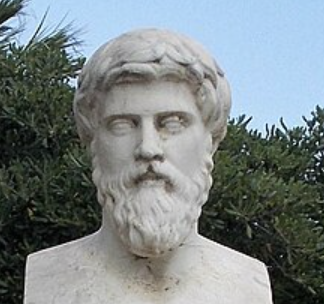
Being about to pitch his camp in a likely place, and hearing there was no hay to be had for the cattle, "What a life," said he, "is ours, since we must live according to the convenience of asses!"
▼
Source
37 Philip
4 months 1 week ago
It is because human needs are contradictory that no human life can be perfect. That does not mean that human life is imperfect. It means that the idea of perfection has no meaning.
▼
Source
'Modus Vivendi' (p.29)
4 months 1 week ago
.... In a word, acts of any kind produce habits or characters of the same kind. Hence we ought to make sure that our acts are of a certain kind; for the resulting character varies as they vary. It makes no small difference, therefore, whether a man be trained in his youth up in this way or that, but a great difference, or rather all the difference.
▼
Source
Book II, 1103b
4 months 1 week ago
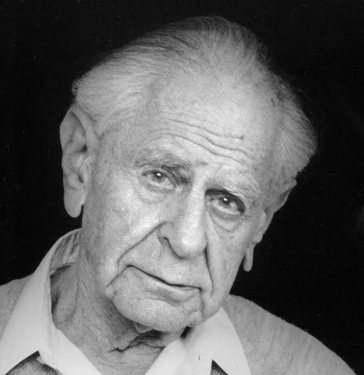
A principle of induction would be a statement with the help of which we could put inductive inferences into a logically acceptable form. In the eyes of the upholders of inductive logic, a principle of induction is of supreme importance for scientific method: "... this principle", says Reichenbach, "determines the truth of scientific theories. To eliminate it from science would mean nothing less than to deprive science of the power to decide the truth or falsity of its theories. Without it, clearly, science would no longer have the right to distinguish its theories from the fanciful and arbitrary creations of the poet's mind."Now this principle of induction cannot be a purely logical truth like a tautology or an analytic statement. Indeed, if there were such a thing as a purely logical principle of induction, there would be no problem of induction; for in this case, all inductive inferences would have to be regarded as purely logical or tautological transformations, just like inferences in inductive logic. Thus the principle of induction must be a synthetic statement; that is, a statement whose negation is not self-contradictory but logically possible. So the question arises why such a principle should be accepted at all, and how we can justify its acceptance on rational grounds.
▼
Source
Ch. 1 "A Survey of Some Fundamental Problems", Section 1: The Problem of Induction, pp. 4–5.
4 months 1 week ago
I longed for activity, instead of an even flow of existence. I wanted excitement and danger and the chance to renounce self for the sake of my love. I was conscious of a superabundance of energy which found no outlet in our quiet life. I had bouts of depression, which I tried to hide, as something to be ashamed of...My mind, even my senses were occupied, but there was another feeling – the feeling of youth and a craving for activity – which found no scope in our quiet life...So time went by, the snow piled higher and higher round the house, and there we remained together, always and for ever alone and just the same in each other's eyes; while somewhere far away amidst glitter and noise multitudes of people thrilled, suffered and rejoiced, without one thought of us and our existence which was ebbing away. Worst of all, I felt that every day that passed riveted another link to the chain of habit which was binding our life into a fixed shape, that our emotions, ceasing to be spontaneous, were being subordinated to the even, passionless flow of time... 'It's all very well ... ' I thought, 'it's all very well to do good and lead upright lives, as he says, but we'll have plenty of time for that later, and there are other things for which the time is now or never.' I wanted, not what I had got, but a life of challenge; I wanted feeling to guide us in life, and not life to guide us in feeling.
4 months 1 week ago
The greatest pain of all, Bahnsen maintains, comes from the death of a loved one. When we lose someone we cherish, someone in whom we have invested all our heart, we are shattered into a thousand pieces; our inner world is filled with “the infinity of nothingness". The most desolate emptiness of them all is “the dark feeling of loneliness” that comes with the loss of our nearest and dearest. In a world without providence, redemption or immortality, this loss is complete, eternal and irredeemable. There cannot be any comfort, there cannot be any compensation, for the loss. Of course, time heals all wounds; but we fear the dead becoming dead for us, because we know that, should we forget them, we too will be dead in our own best part.
▼
Source
Weltschmerz: Pessimism in German Philosophy, 1860-1900 (2016), p. 268.
4 months 1 week ago
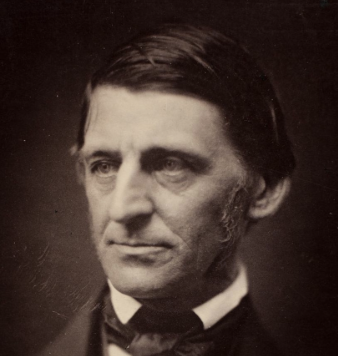
Literature is the effort of man to indemnify himself for the wrongs of his condition.
▼
Source
"Walter Savage Landor", from The Dial, xii (1841)

4 months 1 week ago
We believe that the most pressing political necessity is the consolidation of a United Front joining together all sections of the revolutionary, radical and democratic movements. Only a united front—led in the first place by the national liberation movements and the working people—can decisively counter, theoretically, ideologically and practically, the increasingly fascistic and genocidal posture of the present ruling clique
4 months 1 week ago
The law of simplicity and naïveté applies to all fine art, for it is compatible with what is most sublime. True brevity of expression consists in a man only saying what is worth saying, while avoiding all diffuse explanations of things which every one can think out for himself; that is, it consists in his correctly distinguishing between what is necessary and what is superfluous. On the other hand, one should never sacrifice clearness, to say nothing of grammar, for the sake of being brief. To impoverish the expression of a thought, or to obscure or spoil the meaning of a period for the sake of using fewer words shows a lamentable want of judgment.
4 months 1 week ago
What is not heartrending is superfluous, at least in music.
4 months 1 week ago
His capital is continually going from him in one shape, and returning to him in another, and it is only by means of such circulation, or successive exchanges, that it can yield him any profit. Such capitals, therefore, may very properly be called circulating capitals.
▼
Source
Chapter I, p. 305.
4 months 1 week ago
We may treat of the Soul as in the body — whether it be set above it or actually within it — since the association of the two constitutes the one thing called the living organism, the Animate. Now from this relation, from the Soul using the body as an instrument, it does not follow that the Soul must share the body's experiences: a man does not himself feel all the experiences of the tools with which he is working.
▼
Source
First Tractate : The Animate and the Man, §3
4 months 1 week ago
Socrates thought that if all our misfortunes were laid in one common heap, whence every one must take an equal portion, most persons would be contented to take their own and depart.
CivilSimian.com created by AxiomaticPanic, CivilSimian, Kalokagathia