
4 months 1 week ago
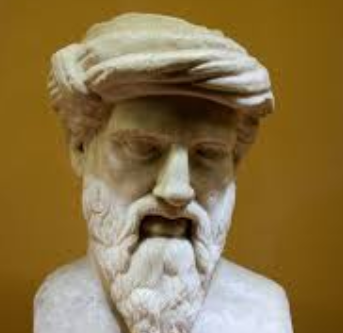
There are men and gods, and beings like Pythagoras.
▼
Source
Of himself, as quoted in A History of Western Philosophy (1945) by Bertrand Russell
4 months 1 week ago
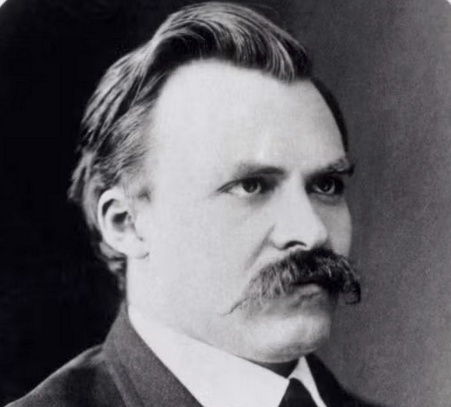
To those human beings who are of any concern to me I wish suffering, desolation, sickness, ill-treatment, indignities — I wish that they should not remain unfamiliar with profound self-contempt, the torture of self-mistrust, the wretchedness of the vanquished: I have no pity for them, because I wish them the only thing that can prove today whether one is worth anything or not — that one endures.
▼
Source
Sec 910 (Autumn 1887, KSA 12.513)
4 months 1 week ago
I started out very quiet and I beat Mr. Turgenev. Then I trained hard and I beat Mr. de Maupassant. I've fought two draws with Mr. Stendhal, and I think I had an edge in the last one. But nobody's going to get me in any ring with Mr. Tolstoy unless I'm crazy or I keep getting better.
▼
Source
Ernest Hemingway in The New Yorker (13 May 1950)
4 months 1 week ago
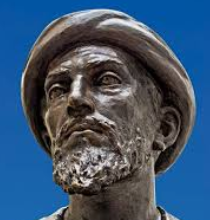
The true work of God is all good, since it is existence.
▼
Source
Ch.10
4 months 1 week ago
Daughters of Time, the hypocritic Days, Muffled and dumb like barefoot dervishes, And marching single in an endless file, Bring diadems and fagots in their hands.
▼
Source
Days
4 months 1 week ago
Quite clearly, our task is predominantly metaphysical, for it is how to get all of humanity to educate itself swiftly enough to generate spontaneous social behaviors that will avoid extinction.
4 months 1 week ago
"Memory is a field full of psychological ruins," wrote French philosopher Gaston Bachelard. For some that may be true, but memory is also a field of healing that has the capacity to restore the world, not only for the one person who recollects, but for cultures as well. When a person says "I remember," all things are possible.
▼
Source
Linda Hogan (writer) The Woman Who Watches Over the World: A Native Memoir (2001)
4 months 1 week ago
We have tested, in matters where ordinary intelligence and knowledge are competent to judge, the logical methods and intellectual honesty of the foremost of those who in the name of science eliminate God and degrade man, taking from human life its highest dignity and deepest hope. Now, if in simple matters we find such confusion, such credulity, such violation of every canon of sound reasoning as we have found here, shall we blindly trust in deeper matters — in those matters which always have and always must perplex the intellect of man? Let us rather, as I said in the beginning, not too much underrate our own powers in what is concerned with common facts and general relations. While we may not be scientists or philosophers we too are men. And as to things which the telescope cannot resolve, nor the microscope reveal, nor the spectrum analysis throw light on, nor the tests of the chemist discover, it is as irrational to accept blindly the dictum of those who say, "Thus saith science!" as it is in things that are the proper field of the natural sciences to bow before the dictum of those who say, "Thus saith religion!"
▼
Source
Conclusion : The Moral of this Examination
4 months 1 week ago
You will know that wretched men are the cause of their own suffering, who neither see nor hear the good that is near them, and few are the ones who know how to secure release from their troubles. Such is the fate that harms their minds; like pebbles they are tossed about from one thing to another with cares unceasing. For the dread companion Strife harms them unawares, whom one must not walk behind, but withdraw from and flee.
▼
Source
As quoted in Divine Harmony: The Life and Teachings of Pythagoras by John Strohmeier and Peter Westbrook (1999)
4 months 1 week ago
If you crush a cockroach, you're a hero. If you crush a beautiful butterfly, you're a villain. Morals have aesthetic criteria.
▼
Source
[https://www.goodreads.com/quotes/11842662-if-you-crush-a-cockroach-you-re-a-hero-if-you Sometimes attributed to Nietzsche], the quote appears in none of his works, the likely origin is a [https://x.com/samalmightysam/status/278540504386371584 2012 tweet]
4 months 1 week ago
According to each one of the different theories there are things which are impossible, whose existence cannot be admitted, and whose creation is excluded from the power of God, and the assumption that God does not change their nature does not imply weakness in God, or a limit to his power. Consequently things impossible remain impossible, and do not depend on the action of an agent. It is now clear that a difference of opinion exists only as to the question to which of the two classes anything belongs; whether to the class of the impossible, or to that of the possible. Note it.
▼
Source
Ch.15
4 months 1 week ago
The end of the human race will be that it will eventually die of civilization.
▼
Source
Civilization
4 months 1 week ago
Those whom God hath joined together let no one put asunder.
▼
Source
To Anne Hewlett Fuller on this, our 63rd Wedding Anniversary and my 85 Birthday—July 12, 1980
4 months 1 week ago
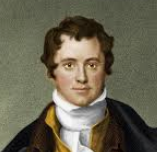
These grand discoveries, which some ascribed to the 'enormous batteries which were placed in his hands,' were the result of his intellectual powers, not of fortuitous circumstances. His voltaic battery was within the reach of many of the chemists of Europe; and consisted, in fact, of three different batteries united, one of 24 plates of copper and zinc, 12 inches square, another of 100 plates of 6 inches, and another of 150 plates of 4 inches.
4 months 1 week ago
Attempt nothing above thy strength!
4 months 1 week ago
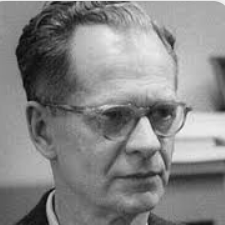
There are occasions when a worthless, insignificant book acquires significance as a scrap of litmus paper exposing a culture's intellectual state. Such a book is Beyond Freedom and Dignity by B.F. Skinner.... The book itself is like Boris Karloff's embodiment of Frankenstein's monster: a corpse patched with nuts, bolts and screws from the junkyard of philosophy (Pragmatism, Social Darwinism, Positivism, Linguistic Analysis, with some nails by Hume, threads by Russell, and glue by the New York Post). The book's voice, like Karloff's, is an emission of inarticulate, moaning growls — directed at a special enemy: "Autonomous Man."
▼
Source
Ayn Rand, The Ayn Rand Letter, Vol. 1, No. 8 (17 January 1972)
4 months 1 week ago
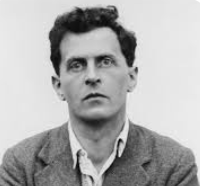
The world is all that is the case. (1)
▼
Source
Original German: Die Welt ist alles, was der Fall ist.
4 months 1 week ago
As there is a difference between works of nature and productions of human handicraft, so there is a difference between God's rule, providence, and intention in reference to all natural forces, and our rule, providence, and intention in reference to things which are the objects of our rule, providence, and intention. This lesson is the principal object of the whole Book of Job; it lays down this principle of faith, and recommends us to derive a proof from nature, that we should not fall into the error of imagining His knowledge to be similar to ours, or His intention, providence, and rule similar to ours. When we know this, we shall find everything that may befall us easy to bear; mishap will create no doubts in our hearts concerning God, whether He knows our affairs or not, whether He provides for us or abandons us. On the contrary, our fate will increase our love of God; as is said in the end of this prophecy: "Therefore I abhor myself and repent concerning the dust and ashes" (xlii. 6); and as our Sages say: "The pious do everything out of love, and rejoice in their own afflictions." If you pay to my words the attention which this treatise demands, and examine all that is said in the Book of Job, all will be clear to you, and you will find that I have grasped and taken hold of the whole subject; nothing has been left unnoticed, except such portions as are only introduced because of the context and the whole plan of the allegory. I have explained this method several times in the course of this treatise.
▼
Source
Ch.23
4 months 1 week ago
The gods sell anything to everybody at a fair price.
▼
Source
Quotation and Originality
4 months 1 week ago
Critical Path is a way to dig yourself out from all that misinformation.
4 months 1 week ago
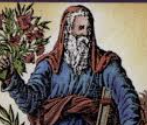
What appears to us to be an accurate definition of justice does not also appear to be so to the Gods. For we, looking to that which is most brief, direct our attention to things present, and to this momentary life, and the manner in which it subsists. But the Powers that are superior to us know the whole life of the Soul, and all its former lives.
▼
Source
The Mysteries of the Egyptians, Chaldeans, and Assyrians, [https://universaltheosophy.com/legacy/works/iamblichus-on-the-mysteries-of-the-egyptians-chaldeans-and-assyrians/ translated from the Greek by Thomas Taylor], (1821) quoted by Annie Besant in [htt
4 months 1 week ago
"I exist" does not follow from "there is a thought now." The fact that a thought occurs at a given moment does not entail that any other thought has occurred at any other moment, still less that there has occurred a series of thoughts sufficient to constitute a single self. As Hume conclusively showed, no one event intrinsically points to any other. We infer the existence of events which we are not actually observing, with the help of general principle. But these principles must be obtained inductively. By mere deduction from what is immediately given we cannot advance a single step beyond. And, consequently, any attempt to base a deductive system on propositions which describe what is immediately given is bound to be a failure.
▼
Source
p. 47.

4 months 1 week ago
Appearances to the mind are of four kinds. Things either are what they appear to be; or they neither are, nor appear to be; or they are, and do not appear to be; or they are not, and yet appear to be. Rightly to aim in all these cases is the wise man's task.
▼
Source
Book I, ch. 27, § 1.
4 months 1 week ago
Whenever he heard a person who was making use of his symbols, he immediately took him into his circle, and made him a friend.
▼
Source
Aristoxenus, as quoted in Birth of the Symbol: Ancient Readers at the Limits of Their Texts (2004) by Peter Struck
4 months 1 week ago
IF the passions and characters of man were not subject, like the material kingdoms, to distribution in series of groups, man would be out of unity with the universe; there would be duplicity of system in creation, and incoherence between the material and the passional worlds. If man would attain to social uniy, he should seek for the means in the serial order, to which God has subject all nature.
▼
Source
Le nouveau monde amoureux
4 months 1 week ago
To convince someone of the truth, it is not enough to state it, but rather one must find the path from error to truth.
▼
Source
Ch. 7 : Remarks on Frazer's Golden Bough, p. 119
4 months 1 week ago
From Moses to Moses there was none like Moses.
▼
Source
Jewish saying, emphasizing the prominence of Moses Maimonides, as quoted in Cyclopaedia Bibliographica (1854) edited by James Darling
4 months 1 week ago
By the rude bridge that arched the flood, Their flag to April's breeze unfurled, Here once the embattled farmers stood, And fired the shot heard round the world.
▼
Source
Hymn sung at the Completion of the Battle Monument
4 months 1 week ago
I understand that it is the wish of the Editor of this collection of essays that each contributor should describe his own system of philosophy. Were I to interpret this demand literally I could not contribute anything at all, for two excellent reasons. In the first place, I have nothing worth calling a system of philosophy of my own, and there is no other philosopher of whom I should be willing to reckon myself a faithful follower. If this be a defect I see no likelihood of its ever being cured. Secondly, if I had a system of my own, I should doubt the propriety of "pushing" my crude philosophical wares in competition with the excellent products of older firms with well-earned reputations.
▼
Source
From Critical and Speculative Philosophy (1924)
4 months 1 week ago
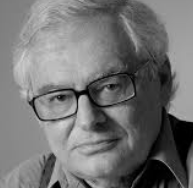
The human race, in its intellectual life, is organized like the bees: the masculine soul is a worker, sexually atrophied, and essentially dedicated to impersonal and universal arts; the feminine is a queen, infinitely fertile, omnipresent in its brooding industry, but passive and abounding in intuitions without method and passions without justice.
4 months 1 week ago
Suppose that the organism is given the problem of determining the analysis of a stimulus at a certain level of representation- e.g., the problem of determining which sequence of words a given utterance encodes. Since, in the general case, transducer outputs underdetermine perceptual analyses, we can think of the solution of such problems as involving processes of non-demonstrative inference. In particular, we can think of each input system as a computational mechanism which projects and confirms a certain class of hypotheses on the basis of a certain body of data.
▼
Source
p. 126, partly cited in: Meredith Williams (2002) Wittgenstein, Mind, and Meaning: Toward a Social Conception of Mind. p. 104. Quote about the direction of information flow in perceptual and observer analysis.
4 months 1 week ago
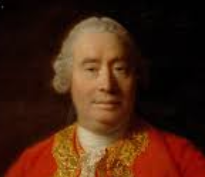
With regard to politics and the character of princes and great men, I think I am very moderate. My views of things are more conformable to Whig principles; my representation of persons to Tory prejudices. Nothing can so much prove that men commonly regard more persons than things, as to find that I am commonly numbered among the Tories.
▼
Source
E. C. Mossner, Life of David Hume (Clarendon Press, 2001), p. 311.
4 months 1 week ago
For this too is a very pleasant strand woven into the Cynic's pattern of life; he must needs be flogged like an ass, and while he is being flogged he must love the men who flog him, as though he were the father or brother of them all.
▼
Source
Book III, ch. 22, § 54
4 months 1 week ago
It may perhaps help us to realize the human side of our Masters if we remember that many of Them in comparatively recent times have been known as historical characters. The Master K.H. for example, appeared in Europe as the philosopher Pythagoras. Before that He was the Egyptian priest Sarthon, and on yet another occasion chief-priest of a temple at Agade, in Asia Minor, where He was killed in a general massacre of the inhabitants by a host of invading barbarians who swooped down upon them from the hills
▼
Source
C.W. Leadbeater, The Inner Life (1917)
4 months 1 week ago
Like everything metaphysical the harmony between thought and reality is to be found in the grammar of the language.
▼
Source
§ 112

4 months 1 week ago
The state is invisible...(it) needs to be symbolised before it can be loved.
▼
Source
A 1967 paper
4 months 1 week ago
His imperial muse tosses the creation like a bauble from hand to hand to embody any capricious thought that is uppermost in her mind. The remotest spaces of nature are visited, and the farthest sundered things are brought together by a subtle spiritual connection.
▼
Source
p. 237
4 months 1 week ago
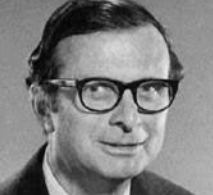
Wicked problems are social problems which are ill formulated, where the information is confusing, where there are many clients and decision-makers with conflicting values, and where the ramifications in the whole system are thoroughly confusing.
▼
Source
p. 141 cited in: John Mingers (2011) "Introduction to the Special Issue: Teaching Soft O.R., Problem Structuring Methods, and Multimethodology" in Informs, Vol. 12, No. 1, September 2011, pp. 1–3
4 months 1 week ago
Whenever a nation is converted to Christianity, its Christianity, in practice, must be largely converted to paganism.
▼
Source
p. 35
4 months 1 week ago
The sense of justice and injustice is not deriv'd from nature, but arises artificially... from education, and human conventions.
▼
Source
Part 2, 1.17
4 months 1 week ago
The close of the life of Pythagoras was, according to every statement, in the midst of misfortune and violence. Some particulars are related by Iamblichus, which, though he is not an authority beyond all exception, are so characteristic as seem to entitle them to the being transcribed. … Cylon, the richest man, or, as he is in one place styled, the prince, of Crotona, had manifested the greatest partiality to Pythagoras. He was at the same time a man of rude, impatient and boisterous character. He, together with Perialus of Thurium, submitted to all the severities of the Pythagorean school. They passed the three years of probation, and the five years of silence. They were received into the familiarity of the master. They were then initiated, and delivered all their wealth into the common stock. They were however ultimately pronounced deficient in intellectual power, or for some other reason were not judged worthy to continue among the confidential pupils of Pythagoras. They were expelled. The double of the property they had contributed was paid back to them. A monument was set up in memory of what they had been; and they were pronounced dead to the school. It will easily be conceived in what temper Cylon sustained this degradation. Of Perialus we hear nothing further. But--> … Cylon, from feelings of the deepest reverence and awe for Pythagoras, which he had cherished for years, was filled even to bursting with inextinguishable hatred and revenge. The unparalleled merits, the venerable age of the master whom he had so long followed, had no power to control his violence. His paramount influence in the city insured him the command of a great body of followers. He excited them to a frame of turbulence and riot. He represented to them how intolerable was the despotism of this pretended philosopher. They surrounded the school in which the pupils were accustomed to assemble, and set it on fire. Forty persons perished in the flames. According to some accounts Pythagoras was absent at the time. According to others he and two of his pupils escaped. He retired from Crotona to Metapontum. But the hostility which had broken out in the former city, followed him there. He took refuge in the Temple of the Muses. But he was held so closely besieged that no provisions could be conveyed to him; and he finally perished with hunger, after, according to Laertius, forty days' abstinence.
4 months 1 week ago
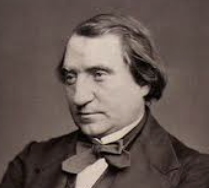
There has always been an element of the magical in the style of M. Ernest Renan—an art of saying things in a way to make them beautiful.
▼
Source
Henry James, Atlantic Monthly (August 1883)
4 months 1 week ago
378. Knowledge is in the end based on acknowledgement.

4 months 1 week ago
The Art of Peace is not easy. It is a fight to the finish, the slaying of evil desires and all falsehood within. On occasion the Voice of Peace resounds like thunder, jolting human beings out of their stupor.
4 months 1 week ago
What, then, is his secret? Is it not that he out-Yankees us all? that his range includes us all? that he is equally at home with the potato disease and original sin, with pegging shoes and the Over-soul? that, as we try all trades, so has he tried all cultures? and above all, that his mysticism gives us a counterpoise to our super-practicality?
▼
Source
James Russell Lowell, My Study Windows (1871), "Emerson, the Lecturer"
4 months 1 week ago
Finally we should note the basic assumption of the classical laboratory-namely, that nature is neither capricious nor secretive. If nature were capricious, she would tell one observer one thing and another observer a quite different thing... Also nature is not secretive, in the sense that she will not forever hide certain aspects of her being...
▼
Source
p. 57; as cited in: Carolyn Merchant (1982) "Isis' Consciousness Raised", in: Isis, Vol. 73, No. 3. (1982), pp. 398-409
4 months 1 week ago
In solitude it is possible to love mankind; in the world, for one who knows the world, there can be nothing but secret or open war.
4 months 1 week ago
The more exquisite any good is, of which a small specimen is afforded us, the sharper is the evil, allied to it; and few exceptions are found to this uniform law of nature. The most sprightly wit borders on madness; the highest effusions of joy produce the deepest melancholy; the most ravishing pleasures are attended with the most cruel lassitude and disgust; the most flattering hopes make way for the severest disappointments. And, in general, no course of life has such safety (for happiness is not to be dreamed of) as the temperate and moderate, which maintains, as far as possible, a mediocrity, and a kind of insensibility, in every thing. As the good, the great, the sublime, the ravishing are found eminently in the genuine principles of theism; it may be expected, from the analogy of nature, that the base, the absurd, the mean, the terrifying will be equally discovered in religious fictions and chimeras.
▼
Source
Part XV - General corollary
4 months 1 week ago
The Pythagoreans knew some properties of s... how a plane can be filled by... regular triangles, squares, or regular hexagons, and space by cubes... [They] may also have known the regular oktahedron and dodekahedron—the latter figure because pyrite, found in Italy, crystallizes in dodekahedra, and models... date to Etruscan times.
▼
Source
, A Concise History of Mathematics (1948)
4 months 1 week ago
The purely corporeal can be uncanny. Compare the way angels and devils are portrayed. So-called "miracles" must be connected with this. A miracle must be, as it were, a sacred gesture.
▼
Source
p. 50e
CivilSimian.com created by AxiomaticPanic, CivilSimian, Kalokagathia