
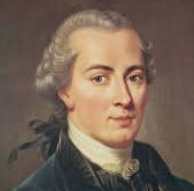
4 months 1 week ago
As everybody likes to be honoured, so people imagine that God also wants to be honoured. They forget that the fulfilment of duty towards men is the only honour adequate to him. Thus is formed the conception of a religion of worship, instead of a merely moral religion. … Apart from moral conduct, all that man thinks himself able to do in order to become acceptable to God is mere superstition and religious folly. If once a man has come to the idea of a service which is not purely moral, but is supposed to be agreeable to God himself, or capable of propitiating him, there is little difference between the several ways of serving him. For all these ways are of equal value. … Whether the devotee accomplishes his statutory walk to the church, or whether he undertakes a pilgrimage to the sanctuaries of Loretto and Palestine, whether he repeats his prayer-formulas with his lips, or like the Tibetan, uses a prayer-wheel … is quite indifferent. As the illusion of thinking that a man can justify himself before God in any way by acts of worship is religious superstition, so the illusion that he can obtain this justification by the so-called intercourse with God is religious mysticism (Schwärmerei). Such superstition leads inevitably to sacerdotalism (Pfaffenthum) which will always be found where the essence is sought not in principles of morality, but in statutory commandments, rules of faith and observances.
▼
Source
As quoted in German Thought, From The Seven Years' War To Goethe's Death : Six Lectures (1880) by Karl Hillebrand, p. 208
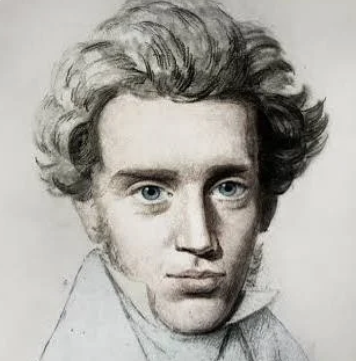
4 months 1 week ago
You wanted God's ideas about what was best for you to coincide with your ideas, but you also wanted him to be the almighty Creator of heaven and earth so that he could properly fulfill your wish. And yet, if he were to share your ideas, he would cease to be the almighty Father.
▼
Source
Søren Kierkegaard, Eighteen Upbuilding Discourses, Hong p. 37

4 months 1 week ago
The history of metaphysics, like the history of the West, is the history of these metaphors and metonymies. It’s matrix—If you will pardon me for demonstrating so little and for being elliptical in order to come more quickly to my principle theme—is the determination of Being as presence in all sense of this word.
▼
Source
Structure, Sign and Play
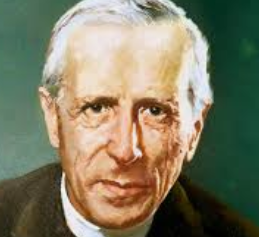
4 months 1 week ago
Autonomy, actuality, irreversibility, and... transcendence are the four attributes of Omega. In this way... we... enclose the energy-complex of our universe. ...Contrary to the appearances still admitted by physics, the Great Stability is not at the bottom in the infra-elementary sphere, but at the top in the ultra-synthetic sphere. ...[E]ntirely by its tangential envelope ...the world goes on dissipating itself in a chance way into matter. By its radial nucleus it finds its shape and... consistency in gravitating against the tide of probability towards a divine focus of mind which draws it onward.Thus something in the cosmos escapes from entropy, and does so more and more.
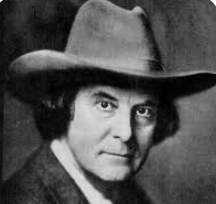
4 months 1 week ago
The greatest mistake you can make in life is to be continually fearing you will make one.
4 months 1 week ago
The ontological concept of truth is in the centre of a logic which may serve as a model of pre- technological rationality. It is the rationality of a two-dimensional universe of discourse which, contrasts with the of thought and behavior that develop in the execution of the technological project.
▼
Source
p. 130
4 months 1 week ago
The spurious axioms of the third kind from conditions proper to the subject whence they are transferred rashly to the object are plentiful, not, as in those of the Second Class, because the only way to the intellectual concept lies through the sensuous data, but because only by aid of the latter can the concept be applied to that which is given by experience, that is, can we know whether something is contained under a certain intellectual concept or not. To this class belongs the threadbare one of the schools: whatever exists contingently does at some time not exist. This spurious principle springs from the poverty of the intellect, having insight frequently into the nominal, rarely into the real, marks of contingency or necessity.
4 months 1 week ago
The immediacy of falling in love recognizes but one immediacy that is ebenburtig (of equal standing), and this is a religious immediacy; falling in love is too virginal to recognize any confidant other than God. But the religious is a new immediacy, has reflection in between-otherwise, paganism would actually be religious and Christianity not. That the religious is a new immediacy every person easily understands who is satisfied with following the honest path of ordinary common sense. And although I imagine I have but few readers, I confess nevertheless that I do imagine my readers to be among these, since I am far from wanting to instruct the admired ones, who make systematic discoveries a la Niels Klim, who have left their good skin in order to put on the “real appearance.”
▼
Source
Stages on Life's Way, p. 161-162
4 months 1 week ago
Man alone at the very moment of his birth, cast naked upon the naked earth, does she [Nature] abandon to cries and lamentations.
▼
Source
Book VII, sec. 2.
4 months 1 week ago
Whoever voluntarily undertakes the necessary office of rearing and educating, obtains the parental power without generation.
▼
Source
Book III, Ch. II, § II
4 months 1 week ago
While more conventional thinkers insisted that technology would create more leisure time, Marcuse warned that it would instead imprison people in unoriginal lives devoid of creative thinking. He warned that the though technology appeared to to help the dissenter, it would actually be used to muffle protest. People were being anesthetized into a complacency that was mistaken for happiness. Goods and services were rendering mankind useless and incapable of real thought. There was an increase in media, but it espoused less and less variety of ideas. People in today's world who "surf" through eighty or more television stations, only to find less there than when they had only four choices, might be beginning to grasp Marcuse's vision for a technological age in which people think they have more choices but the choices lack significant differences. In an age of abundance, when technology has made individuals extraordinarily efficient, why do people spend even more time working, and why is so much work mindless instead of stimulating? One of the first Marxists to lose faith in the Soviet system, Marcuse saw the West as also in a state of "unfreedom" and often suggested that revolution may be the only path to true freedom. Marcuse, the aging professor, seemed to warm to the role of guru to the student radicals. He frequently discussed their movements. He warned Abbie Hoffman on "flower power" that "flowers have no power" other than the force of the people that cultivate them—one of the few occasions on which Hoffman had no reply. But as Marcuse freely admitted, many of the young rebels who talked about his ideas had never read him. His work is written in the German dialectic tradition. Marcuse achieved popularity without ever developing an accessible writing style. Luis Gonzalez de Alba, one of the student leaders in Mexico, described finally sitting down to read some Marcuse simply because President Gustavo Díaz Ordez had accused the movement of being influenced by the philosopher: "I opened One-Dimensional Man and got as far as page five. Eros and Civilization had been a terrible bore. And now I had to read another of Marcuse's books, all because Diaz Ordaz had happened to mention the 'philosophers of destruction.'"
▼
Source
Mark Kurlansky, 1968: The Year that Rocked the World (2004), p. 108-109, ISBN 0-345-45581-9
4 months 1 week ago
Even if there never have been actions arising from such pure sources, what is at issue here is not whether this or that happened; that, instead, reason by itself and independently of all appearances commands what ought to happen; that, accordingly, actions of which the world has perhaps so far given no example, and whose very practicability might be very much doubted by one who bases everything on experience, are still inflexibly commanded by reason … because … duty … lies, prior to all experience, in the idea of a reason determing the will by means of apriori grounds.
4 months 1 week ago
In the system of Copernicus there are found many and great inconveniences; for both the loading of the earth with triple motion is very incommodious, and the separation of the sun from the company of the planets, with which it has so many passions in common, is likewise a difficulty, and the introduction of so much immobility into nature, by representing the sun and stars as immovable, especially being of all bodies the highest and most radiant, and making the moon revolve about the earth in an epicycle, and some other assumptions of his, are the speculations of one who cares not what fictions he introduces into nature, provided his calculations answer. But if it be granted that the earth moves, it would seem more natural to suppose that there is no system at all, but scattered globes (…) than to constitute a system of which the sun is the centre. And this the consent of ages and of antiquity has rather embraced and approved. For the opinion concerning the motion of the earth is not new, but revived from the ancients (…) whereas the opinion that the sun is the centre of the world and immovable is altogether new (…) and was first introduced by Copernicus. (…) But if the earth moves, the stars may either be stationary, as Copernicus thought or, as it is far more probable, and has been suggested by Gilbert, they may revolve each round its own centre in its own place, without any motion of its centre, as the earth itself does (…). But either way, there is no reason why there should not be stars above stars til they go beyond our sight.
▼
Source
Descriptio Globi Intellectualis (1653, written ca. 1612), Chap. 6, as quoted in "Description of the Intellectual Globe," The Works of Francis Bacon (1889), Vol. 4, ed. , , Douglas Denon Heath, [https://books.google.com/books?id=lsILAAAAIAAJ&pg=PA517 pp. 5
4 months 1 week ago
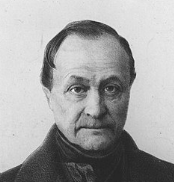
Catholicism minus Christianity.
▼
Source
T. H. Huxley, on the ideas of Comte.
4 months 1 week ago
Does a Human Being Have the Right to Let Himself Be Put to Death for the Truth?
4 months 1 week ago
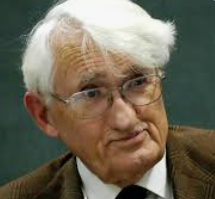
I shall develop the thesis that anyone acting communicatively must, in performing any speech act, raise universal validity claims and suppose that they can be vindicated.
▼
Source
p. 22
4 months 1 week ago
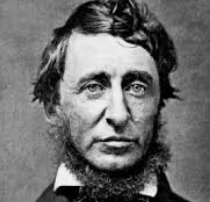
This insistence on "having his say upon the universe" is the profoundest motive of William James thinking as well as of his filial gratitude.
▼
Source
The Thought and Character of William James (1935), vol. 1, ch. VIII
4 months 1 week ago
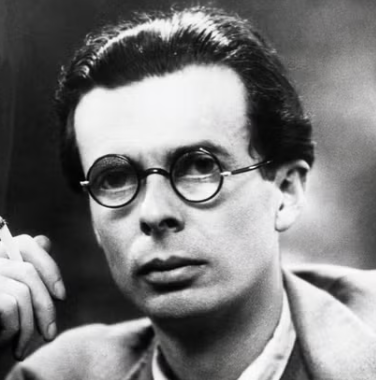
That men do not learn very much from the lessons of history is the most important of all the lessons that history has to teach.
▼
Source
"[http://www.christiebooks.com/ChristieBooksWP/2013/11/a-case-of-voluntary-ignorance-by-aldous-huxley/ A Case of Voluntary Ignorance]" in Collected Essays (1959)
4 months 1 week ago
Among the rich you will never find a really generous man even by accident. They may give their money away, but they will never give themselves away; they are egotistic, secretive, dry as old bones. To be smart enough to get all that money you must be dull enough to want it.
▼
Source
A Miscellany of Men (1912)
4 months 1 week ago
The inscrutable wisdom through which we exist is not less worthy of veneration in respect to what it denies us than in respect to what it has granted.
4 months 1 week ago
For the inquisition of Final Causes is barren, and like a virgin consecrated to God produces nothing.
▼
Source
Book III, viii
4 months 1 week ago
That a woman is presented as a teacher, as a prototype of piety, cannot amaze anyone who knows that piety or godliness is fundamentally womanliness. ... from a woman you learn concern for the one thing needful, from Mary, sister of Lazarus, who sat silent at Christ's feet with her heart's choice: the one thing needful. P. 149
4 months 1 week ago
A true initiation never ends.
▼
Source
Masks of the Illuminati (1981), p. 257
4 months 1 week ago
To aspire to be superhuman is a most discreditable admission that you lack the guts, the wit, the moderating judgment to be successfully and consummately human.
▼
Source
“Spinoza’s Worm,” p. 75
4 months 1 week ago
The cause which is blocking all progress today is the subtle scepticism which whispers in a million ears that things are not good enough to be worth improving. If the world is good we are revolutionaries, if the world is evil we must be conservatives. These essays, futile as they are considered as serious literature, are yet ethically sincere, since they seek to remind men that things must be loved first and improved afterwards.
▼
Source
"In Defence of a New Edition" — Preface to the second edition (1902)
4 months 1 week ago
The notion that one will not survive a particular catastrophe is, in general terms, a comfort since it is equivalent to abolishing the catastrophe.
▼
Source
The Message to the Planet (1989) p. 532.
4 months 1 week ago
The man of principles has character. Of him we know definitely what to expect. He does not act on the basis of his instinct, but on the basis of his will. Therefore, without being redundant one can classify characteristics according to a person's faculty of desire (what is practical), as a) his nature, or natural talent, b) his temperament, or disposition, and c) his general character, or mode of thinking.
▼
Source
Kant, Immanuel (1996), page 195
4 months 1 week ago
It is not possible to run a course aright when the goal itself has not been rightly placed.
▼
Source
Aphorism 81
4 months 1 week ago
This is approximately the way Christendom relates to the essentially Christian, the unconditioned. After seventeen, eighteen detours and running all around someone finally has his finite existence assured, and then we receive a sermon about Seek first the kingdom of God. Is this sobriety or is this intoxication? p. 112
4 months 1 week ago
ONLY THE MADMAN IS ABSOLUTELY SURE.
▼
Source
Part I : The Eye in the Pyramid p. 176 of 1988 edition
4 months 1 week ago
More than twenty-five centuries have passed since that which has been called the Perennial Philosophy was first committed to writing; and in the course of those centuries it has found expression, now partial, now complete, now in this form, now in that, again and again. In Vedanta and Hebrew prophecy, in the Tao Teh King and the Platonic dialogues, in the Gospel according to St. John and Mahayana theology, in Plotinus and the Areopagite, among the Persian Sufis and the Christian mystics of the Middle Ages and the Renaissance — the Perennial Philosophy has spoken almost all the languages of Asia and Europe and has made use of the terminology and traditions of every one of the higher religions. But under all this confusion of tongues and myths, of local histories and particularist doctrines, there remains a Highest Common Factor, which is the Perennial Philosophy in what may be called its chemically pure state. This final purity can never, of course, be expressed by any verbal statement of the philosophy, however undogmatic that statement may be, however deliberately syncretistic. The very fact that it is set down at a certain time by a certain writer, using this or that language, automatically imposes a certain sociological and personal bias on the doctrines so formulated. It is only in the act of contemplation when words and even personality are transcended, that the pure state of the Perennial Philosophy can actually be known. The records left by those who have known it in this way make it abundantly clear that all of them, whether Hindu, Buddhist, Hebrew, Taoist, Christian, or Mohammedan, were attempting to describe the same essentially indescribable Fact.
4 months 1 week ago
Much of our modern difficulty, in religion and other things, arises merely from this: that we confuse the word "indefinable" with the word "vague." If some one speaks of a spiritual fact as "indefinable" we promptly picture something misty, a cloud with indeterminate edges. But this is an error even in commonplace logic. The thing that cannot be defined is the first thing; the primary fact. It is our arms and legs, our pots and pans, that are indefinable. The indefinable is the indisputable. The man next door is indefinable, because he is too actual to be defined. And there are some to whom spiritual things have the same fierce and practical proximity; some to whom God is too actual to be defined.
▼
Source
Ch 1: "The Dickens Period"
4 months 1 week ago
For Kant, there are no different religions, but rather different forms of belief in divine revelation [...] among which Christianity, as far as we know, is the most appropriate.
▼
Source
Marcello Pera, Perché dobbiamo dirci cristiani, p. 43; quoted in Alessandro Roveri, [http://www.ilponterivista.com/article_view.php?intId=10 La conversione di Marcello Pera al cattolicesimo], Il ponte, January-February 2009
4 months 1 week ago
The Great Reform of Philosophy and Method, in which Bacon so eloquently called upon men to unite their exertions in his day, has, even in ours, been very imperfectly carried into effect. And even if his plan had been fully executed, it would now require to be pursued and extended.
▼
Source
William Whewell, History of the Inductive Sciences (1837)
4 months 1 week ago
It has been said that love robs those who have it of their wit, and gives it to those who have none.
▼
Source
Paradoxe sur le Comédien (1773-1777)
4 months 1 week ago
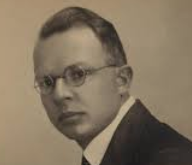
If we compare. e.g. the systems of classical mathematics and of intuitionistic mathematics, we find that the first is much simpler and technically more efficient, while the second is more safe from surprising occurences, e.g. contradictions. At the present time, any estimation of the degree of safety of the system of classical mathematics, in other words, the degree of plausibility of its principles, is rather subjective. The majority of mathematicians seem to regard this degree as sufficiently high for all practical purposes and therefore prefer the application of classical mathematics to that of intuitionistic mathematics. The latter has not, so far as I know, been seriously applied in physics by anybody.
▼
Source
Rudolf Carnap (1939; 51), as cited in: Paul van Ulsen. [http://www.illc.uva.nl/Research/Publications/Inaugurals/IV-10-Arend-Heyting.text.pdf Wetenschapsfilosofie], 6 november 2017.
4 months 1 week ago
It had been, when I read it, only a vaguely pregnant piece of nonsense. Now it was all as clear as day, as evident as Euclid. Of course the Dharma-Body of the Buddha was the hedge at the bottom of the garden. At the same time, and no less obviously, it was these flowers, it was anything that I—or rather the blessed Not-I, released for a moment from my throttling embrace—cared to look at.
▼
Source
describing his experiment with mescaline, pp. 18-19
4 months 1 week ago
The Puritan is only strong enough to stiffen; the Catholic is strong enough to relax.
▼
Source
"The Critic"
4 months 1 week ago
Reason is to the philosopher what grace is to the Christian.Grace causes the Christian to act, reason the philosopher. Other men are carried away by their passions, their actions not being preceded by reflection: these are the men who walk in darkness. On the other hand, the philosopher, even in his passions, acts only after reflection; he walks in the dark, but by a torch. The philosopher forms his principles from an infinity of particular observations. Most people adopt principles without thinking of the observations that have produced them, they believe the maxims exist, so to speak, by themselves. But the philosopher takes maxims from their source; he examines their origin; he knows their proper value, and he makes use of them only in so far as they suit him. Truth is not for the philosopher a mistress who corrupts his imagination and whom he believes to be found everywhere; he contents himself with being able to unravel it where he can perceive it. He does not confound it with probability; he takes for true what is true, for false what is false, for doubtful what is doubtful, and probable what is only probable. He does more, and here you have a great perfection of the philosopher: when he has no reason by which to judge, he knows how to live in suspension of judgment... The philosophical spirit is, then, a spirit of observation and exactness, which relates everything to true principles...
▼
Source
Article on Philosophy, Vol. 25, p. 667, as quoted in Main Currents of Western Thought : Readings in Western European Intellectual History from the Middle Ages to the Present (1978) by Franklin Le Van Baumer | Variant translation: Reason is to the philosop
4 months 1 week ago
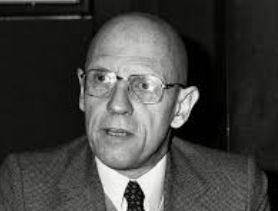
But what then is this confrontation below the language of reason? Where might this interrogation lead, following not reason in its horizontal becoming, but seeking to retrace in time this constant verticality, which, the length of Western culture, confronts it with what it is not, measuring it with its own extravagance?
▼
Source
Preface to 1961 edition
4 months 1 week ago
What else do conservatives and libertarians profess in common? The answer to that question is simple: nothing. Nor will they ever. To talk of forming a league or coalition between these two is like advocating a union of ice and fire.
4 months 1 week ago
The indispensible is not necessarily the desirable.
▼
Source
Chapter 6 (p. 48)
4 months 1 week ago
But since he stood for England And knew what England means, Unless you give him bacon You mustn’t give him beans.
▼
Source
Ch. XV: "The Songs of the Car Club" (The Englishman, st. 2)
4 months 1 week ago
The most dangerous madmen are those created by religion, and … people whose aim is to disrupt society always know how to make good use of them on occasion.
4 months 1 week ago
We must first rid ourselves of the illusion that penality is above all (if not exclusively) a means of reducing crime and that, in this role, according to the social forms, the political systems or beliefs, it may be severe or lenient, tend towards expiation of obtaining redress, towards the pursuit of individuals or the attribution of collective responsibility. We must analyse rather the ‘concrete systems of punishment’, study them as social phenomena that cannot be accounted for by the juridical structure of society alone, nor by its fundamental ethical choices; we must situate them in their field of operation, in which the punishment of crime is not the sole element; we must show that punitive measures are not simply ‘negative’ mechanisms that make it possible to repress, to prevent, to exclude, to eliminate; but that they are linked to a whole series of positive and useful effects which it is their task to support (and, in this sense,although legal punishment is carried out in order to punish offences, one might say that the definition of offences and their prosecution are carried out in turn in order to maintain the punitive mechanisms and their functions).
▼
Source
Chapter One, The body of the condemned, pp. 24

4 months 1 week ago
When Sartre and I met not only did our backgrounds fuse, but also our solidity, our individual conviction that we were what we were made to be. In that framework we could not become rivals. Then, as the relationship between Sartre and me grew, I became convinced that I was irreplaceable in his life, and he in mine. In other words, we were totally secure in the knowledge that our relationship was also totally solid, again preordained, though, of course, we would have laughed at that word then. When you have such security it's easy not to be jealous. But had I thought that another woman played the same role as I did in Sartre's life, of course, I would have been jealous.
▼
Source
[http://www.marxists.org/reference/subject/ethics/de-beauvoir/1976/interview.htm Interview by John Gerassi in Society (January-February 1976)]
4 months 1 week ago
It is something to have wept as we have wept, It is something to have done as we have done, It is something to have watched when all men slept, And seen the stars which never see the sun. It is something to have smelt the mystic rose, Although it break and leave the thorny rods, It is something to have hungered once as those Must hunger who have ate the bread of gods.
▼
Source
The Great Minimum
4 months 1 week ago
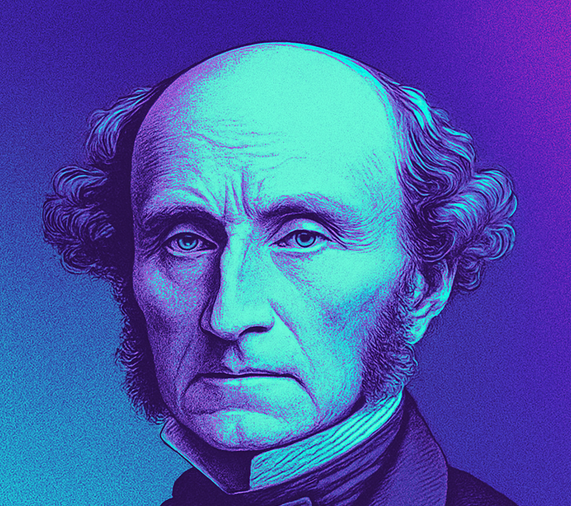
Society can and does execute its own mandates: and if it issues wrong mandates instead of right, or any mandates at all in things with which it ought not to meddle, it practises a social tyranny more formidable than many kinds of political oppression, since, though not usually upheld by such extreme penalties, it leaves fewer means of escape, penetrating much more deeply into the details of life, and enslaving the soul itself. Protection, therefore, against the tyranny of the magistrate is not enough: there needs protection also against the tyranny of the prevailing opinion and feeling; against the tendency of society to impose, by other means than civil penalties, its own ideas and practices as rules of conduct on those who dissent from them; to fetter the development, and, if possible, prevent the formation, of any individuality not in harmony with its ways, and compel all characters to fashion themselves upon the model of its own.
▼
Source
Ch. 1: Introductory
4 months 1 week ago
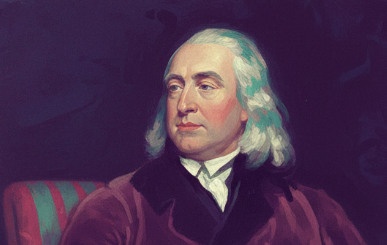
Nature has placed mankind under the governance of two sovereign masters, pain and pleasure. It is for them alone to point out what we ought to do, as well as to determine what we shall do. On the one hand the standard of right and wrong, on the other the chain of causes and effects, are fastened to their throne. They govern us in all we do, in all we say, in all we think: every effort we can make to throw off our subjection, will serve but to demonstrate and confirm it. In words a man may pretend to abjure their empire: but in reality he will remain subject to it all the while. The principle of utility recognizes this subjection, and assumes it for the foundation of that system, the object of which is to rear the fabric of felicity by the hands of reason and of law. Systems which attempt to question it, deal in sounds instead of sense, in caprice instead of reason, in darkness instead of light.
▼
Source
Ch. 1: Of the Principle of Utility
4 months 1 week ago
Homosexuality appears as one of the forms of sexuality when it was transposed from the practice of sodomy onto a kind of interior androgyny, a hermaphroditism of the soul. The sodomite had been a temporary aberration; the homosexual was now a species.
▼
Source
Vol I: La volonté de savoir
CivilSimian.com created by AxiomaticPanic, CivilSimian, Kalokagathia