
4 months 1 week ago
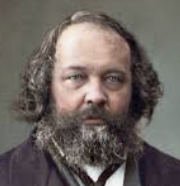
Allow me, Gentlemen, to pose this question in a more serious manner. Do I need to tell you that it is not a question at first of the natural, physiological, ethnographic difference that exists between individuals, but of the social difference, that is produced by the economic organization of society? Give to all the children, from their birth, the same means of maintenance, education, and instruction; give then to all the men thus raised the same social milieu, the same means of earning their living by their own labor, and you will see then that many of these differences, that we believe to be natural differences, will disappear because they are nothing but the effect of an unequal division of the conditions of intellectual and physical development — of the conditions of life.
4 months 1 week ago
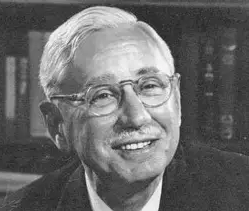
There is no greater drama in human record than the sight of a few Christians, scorned or oppressed by a succession of emperors, bearing all trials with a fierce tenacity, multiplying quietly, building order while their enemies generated chaos, fighting the sword with the word, brutality with hope, and at last defeating the strongest state that history has known. Caesar and Christ had met in the arena, and Christ had won.
▼
Source
Chapter 30, part 1, p. 652

4 months 1 week ago
A hymn is the praise of God with song; a song is the exultation of the mind dwelling on eternal things, bursting forth in the voice.
▼
Source
[http://dhspriory.org/thomas/english/PsalmsAquinas/ThoPs0.htm Commentary on the Psalms] (c. 1273), Introduction
4 months 1 week ago
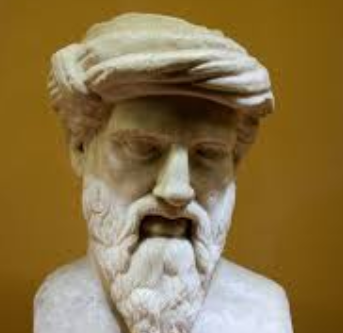
The Pythagoreans made kindness to beasts a training in humanity and pity.
▼
Source
3, 20, 7
4 months 1 week ago
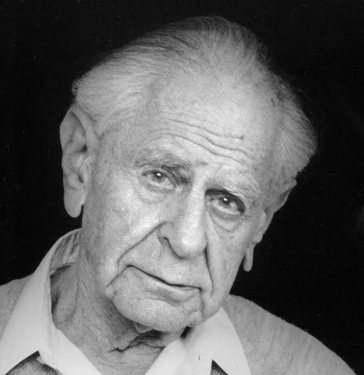
When we enter a new situation in life and are confronted by a new person, we bring with us the prejudices of the past and our previous experiences of people. These prejudices we project upon the new person. Indeed, getting to know a person is largely a matter of withdrawing projections; of dispelling the smoke screen of what we imagine he is like and replacing it with the reality of what he is actually like.
▼
Source
Anthony Storr as quoted in The Observer (12 July 1970)
4 months 1 week ago
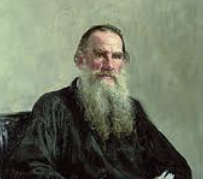
If there may be doubts for men and for a childless woman as to the way to, fulfil the will of God, for a mother that path is firmly and clearly defined, and if she fulfils it humbly with a simple heart she stands on the highest point of perfection a human being can attain, and becomes for all a model of that complete performance of God's will which all desire. Only a mother can before her death tranquilly say to Him who sent her into this world, and Whom she has served by bearing and bringing up children whom she has loved more than herself - only she having served Him in the way appointed to her can say with tranquillity, Now lettest Thou Thy servant depart in peace. And that is the highest perfection to which, as to the highest good, men aspire.
4 months 1 week ago
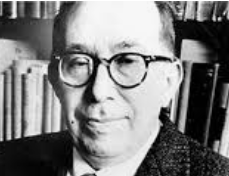
Liberal education, which consists in the constant intercourse with the greatest minds, is a training in the highest form of modesty. … It is at the same time a training in boldness. … It demands from us the boldness implied in the resolve to regard the accepted views as mere opinions, or to regard the average opinions as extreme opinions which are at least as likely to be wrong as the most strange or least popular opinions
▼
Source
“What is liberal education,” p. 8
4 months 1 week ago
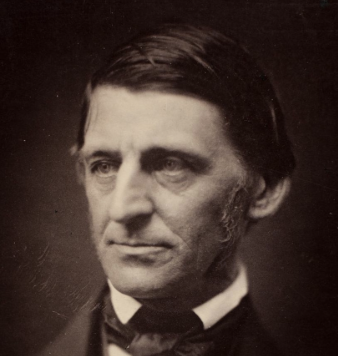
What would we really know the meaning of? The meal in the firkin; the milk in the pan; the ballad in the street; the news of the boat; the glance of the eye; the form and the gait of the body; — show me the ultimate reason of these matters; show me the sublime presence of the highest spiritual cause lurking, as always it does lurk, in these suburbs and extremities of nature; let me see every trifle bristling with the polarity that ranges it instantly on an eternal law; and the shop, the plough, and the ledger, referred to the like cause by which light undulates and poets sing; — and the world lies no longer a dull miscellany and lumber-room, but has form and order; there is no trifle; there is no puzzle; but one design unites and animates the farthest pinnacle and the lowest trench.
▼
Source
par. 40
4 months 1 week ago
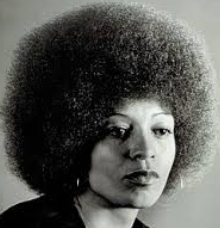
The call to defund the police is, I think, an abolitionist demand, but it reflects only one aspect of the process represented by the demand. Defunding the police is not simply about withdrawing funding for law enforcement and doing nothing else. And it appears as if this is the rather superficial understanding that has caused Biden to move in the direction he’s moving in. It’s about shifting public funds to new services and new institutions — mental health counselors, who can respond to people who are in crisis without arms. It’s about shifting funding to education, to housing, to recreation. All of these things help to create security and safety. It’s about learning that safety, safeguarded by violence, is not really safetyAnd I would say that abolition is not primarily a negative strategy. It’s not primarily about dismantling, getting rid of, but it’s about reenvisioning. It’s about building anew... And one sees in these abolitionist demands that are emerging the pivotal influence of feminist theories and practices... Abolition is really about rethinking the kind of future we want, the social future, the economic future, the political future. It’s about revolution, I would argue.
4 months 1 week ago
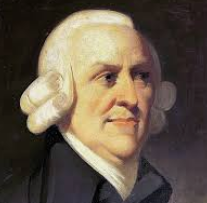
Every tax, however, is to the person who pays it a badge, not of slavery but of liberty. It denotes that he is a subject to government, indeed, but that, as he has some property, he cannot himself be the property of a master.
▼
Source
Chapter II, Part II, p. 927.
4 months 1 week ago
Some communities will be abandoned, others will struggle along, others will split, others will flourish, gain members, and be duplicated elsewhere. Each community must win and hold the voluntary adherence of its members. No pattern is imposed on everyone, and the result will be one pattern if and only if everyone voluntarily chooses to live in accordance with that pattern of community.
▼
Source
Ch. 10 : A Framework for Utopia; Design Devices and Filter Devices, p. 316
4 months 1 week ago
And this is the only explanation of the dreadful intensity with which men of modern times strive to stupefy themselves, with spirits, tobacco, opium, cards, reading newspapers, traveling, and all kinds of spectacles and amusements. These pursuits are followed up as an important, serious business. And indeed they are a serious business. If there were no external means of dulling their sensibilities, half of mankind would shoot themselves without delay, for to live in opposition to one's reason is the most intolerable condition. And that is the condition of all men of the present day. All men of the modern world exist in a state of continual and flagrant antagonism between their conscience and their way of life. This antagonism is apparent in economic as well as political life. But most striking of all is the contradiction between the Christian law of the brotherhood of men existing in the conscience and the necessity under which all men are placed by compulsory military service of being prepared for hatred and murder—of being at the same time a Christian and a gladiator.
▼
Source
Chapter V, Contradiction Between our Life and our Christian Conscience
4 months 1 week ago
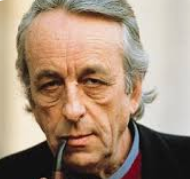
The proletariat must seize state power in order to destroy the existing bourgeois state apparatus and, in a first phase, replace it with a quite different, proletarian, state apparatus, then in later phases set in motion a radical process, that of the destruction of the state.
▼
Source
p. 95
4 months 1 week ago
Announced by all the trumpets of the sky Arrives the snow, and, driving o'er the fields, Seems nowhere to alight: the whited air Hides hills and woods, the river and the heaven, And veils the farm-house at the garden's end.
▼
Source
The Snow-Storm
4 months 1 week ago
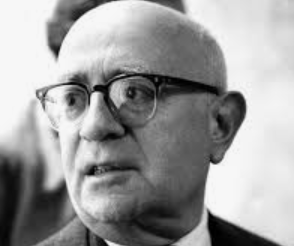
Bourgeois sport wants to differentiate itself strictly from play. Its bestial seriousness consists in the fact that instead of remaining faithful to the dream of freedom by getting away from purposiveness, the treatment of play as a duty puts it among useful purposes and thereby wipes out the trace of freedom in it. This is particularly valid for contemporary mass music. It is only play as a repetition of prescribed models, and the playful release from responsibility which is thereby achieved does not reduce at all the time devoted to duty except by transferring the responsibility to the models, the following of which one makes into a duty for himself.
▼
Source
p. 296

4 months 1 week ago
True courage…has so little to do with Anger, that there lies always the strongest Suspicion against it, where this Passion is highest. The true Courage is the cool and calm. The bravest of Men have the least of a brutal bullying Insolence; and in the very time of Danger are found the most serene, pleasant, and free. Rage, we know, can make a Coward forget himself and fight. But what is done in Fury, or Anger, can never be plac’d to the account of Courage.
▼
Source
Vol. 1, p. 66; "Sensus Communis".
4 months 1 week ago
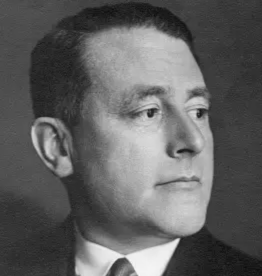
That the state is an entity and in fact the decisive entity rests upon its political character.
4 months 1 week ago
For Smith’s encyclopedic scope and knowledge there can be only admiration. It was only in the eighteenth century that so huge, all-embracing, secure, caustic, and profound a book could have been written. Indeed, The Wealth of Nations and The Theory of Moral Sentiments, together with his few other essays, reveal that Smith was much more than just an economist. He was a philosopher-psychologist-historian-sociologist who conceived a vision that included human motives and historic “stages” and economic mechanisms, all of which expressed the plan of the Great Architect of Nature (as Smith called him). From this viewpoint, The Wealth of Nations is more than a masterwork of political economy. It is part of a huge conception of the human adventure itself.
▼
Source
Robert Heilbroner, The Worldly Philosophers 7th ed. (1999), Chapter III. The Wonderful World of Adam Smith
4 months 1 week ago
In the upper, rich, more educated classes of European society doubt arose as to the truth of that understanding of life which was expressed by Church Christianity. When, after the Crusades and the maximum development of papal power and its abuses, people of the rich classes became acquainted with the wisdom of the classics and saw, on the one hand, the reasonable lucidity of the teachings of the ancient sages, and on the other hand, the incompatibility of the Church doctrine with the teaching of Christ, they found it impossible to continue to believe the Church teaching.
4 months 1 week ago
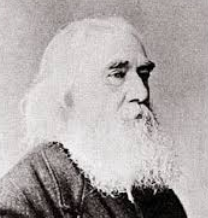
But whether the Constitution really be one thing, or another, this much is certain—that it has either authorized such a government as we have had, or has been powerless to prevent it. In either case it is unfit to exist.
▼
Source
p. 63, Appendix, last sentence
4 months 1 week ago
It costs a beautiful person no exertion to paint her image on our eyes; yet how splendid is that benefit! It costs no more for a wise soul to convey his quality to other men.
▼
Source
Uses of Great Men
4 months 1 week ago
Above all Theodor W. Adorno repeatedly emphasized that the appropriateness and quality of our conceptual thinking is dependent on the extent to which it can remain aware of its original bond with the object of a drive, thus with persons and things that are loved.
▼
Source
Axel Honneth, Verdinglichung: Eine annerkennungstheoretische Studie (Frankfurt: Suhrkamp, 2005), p. 69; as quoted in Andrew Bowie, Adorno and the Ends of Philosophy (Cambridge: Polity, 2013), p. 52
4 months 1 week ago
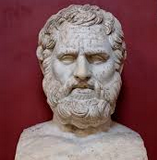
Do not speak fast, for that shows folly.
4 months 1 week ago
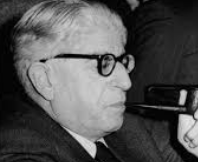
Evil does not approach us as pride any more, but on the contrary as slumber, lassitude, concealment of the "I." … It may make us so quickly contented, that any definitive fire will die down. The venomous, breathtaking frigid mist seems able … to harden hearts and fill them with envy, obduracy and resentment, with bloody scorn for the divine image and light, with all the causes of the only true original sin, which is not wanting to be like God.
▼
Source
p. 62
4 months 1 week ago
Few intellectual victories have been more overwhelming than that which the proponents of the new political economy won in the matter of the regulation of the internal corn trade... The "unlimited, unrestrained freedom of the corn trade" was...the demand of Adam Smith. The new economy entailed a de-moralizing of the theory of trade and consumption no less far-reaching than the more widely-debated dissolution of restrictions upon usury... [T]he new political economy was disinfested of intrusive moral imperatives... The prejudices against forestallers Smith dismissed curtly as superstitions on a level with witchcraft... In some respects Smith's model conformed more closely to eighteenth-century realities than did the paternalist; and in symmetry and scope of intellectual construction it was superior. But one should not overlook the specious air of empirical validation which the model carries. Whereas the first appeals to a moral norm—what ought to be men's reciprocal duties—the second appears to say: "this is the way things work, or would work if the State did not interfere". And yet if one considers these sections of The Wealth of Nations they impress less as an essay in empirical enquiry than as a superb, self-validating essay in logic.
▼
Source
E. P. Thompson, 'The Moral Economy of the English Crowd in the Eighteenth Century', Past & Present, No. 50 (February 1971), pp. 89-91
4 months 1 week ago
Remember then: there is only one time that is important—Now! It is the most important time because it is the only time when we have any power. The most necessary man is he with whom you are, for no man knows whether he will ever have dealings with any one else: and the most important affair is, to do him good, because for that purpose alone was man sent into this life!
▼
Source
Part VII: Stories Given to Aid Persecuted Jews (1903) "Three Questions", translated by Louise and Aylmer Maude, p271.
4 months 1 week ago
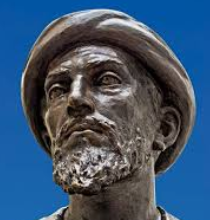
Thus they shall not miss this particular branch of the many branches of the Law and will have no need to roam and ramble about in other books in search of information on matters set forth in this treatise.
▼
Source
Book 3 (Sefer Zemanim "Times"), Treatise 8 (Kiddush HaChodesh "Sanctification of the New Moon"), closing words
4 months 1 week ago
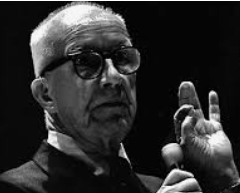
The manly part is to do with might and main what you can do.
▼
Source
Wealth
4 months 1 week ago
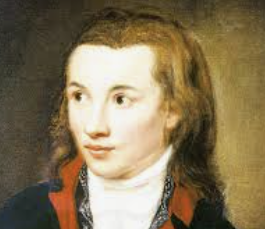
All sports are time control demonstrations...
4 months 1 week ago
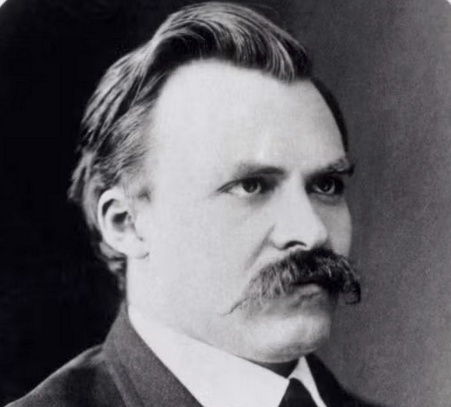
Many counterrevolutionary books have been written in favor of the Revolution. But Burke has written a revolutionary book against the Revolution.
▼
Source
Fragment No. 104; on Edmund Burke's Reflections on the Revolution in France (1790).
4 months 1 week ago
Only fool! Only poet!Merely speaking colorfully,From fools' masks shouting colorfully,Climbing about on deceptive word-bridges,On misleading rainbows,Between false heavensRambling, lurking —Only fool! Only poet!
4 months 1 week ago
The compassionate are not rich; therefore, the rich are not compassionate.
▼
Source
p. 89
4 months 1 week ago
You will not find it strange that I mention the explanation of Jonathan, son of Uzziel, whilst I give a different explanation myself; for you will find many of the wise men and the commentators differ from him in the interpretation of some words and in many things respecting the prophets. Why should it be otherwise in these profound matters? Besides, I do not decide in favour of my interpretation. It is for you to learn both—the whole of his explanation, from what I have pointed out to you, and also my own explanation. God knoweth which of the two explanations is in accordance with that which the prophet intended to say.
▼
Source
Ch.4
4 months 1 week ago
There are always two parties, the party of the Past and the party of the Future: the Establishment and the Movement. At times the resistance is reanimated, the schism runs under the world and appears in Literature, Philosophy, Church, State and social customs.
▼
Source
p. 529, col. 1
4 months 1 week ago
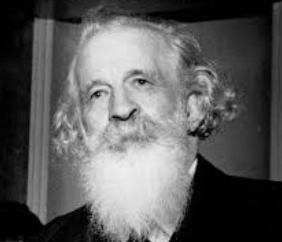
After working out scenarios for satisfying what we considered the two most vital bare maximums-external electric energy and internal food supply-we evolved into some of the possible synergetic scenarios that would result from the first moves. The establishment of bare maximum levels of the above throughout the world would engender the need for bare maximums in housing, medical attention, income, communications and travel.
4 months 1 week ago
Poetry is one of the destinies of speech.... One would say that the poetic image, in its newness, opens a future to language.
▼
Source
Introduction, sect. 2
4 months 1 week ago
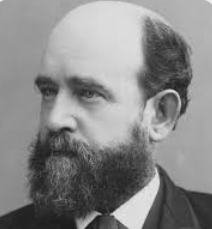
The great work of the present for every man, and every organization of men, who would improve social conditions, is the work of education — the propagation of ideas. It is only as it aids this that anything else can avail. And in this work every one who can think may aid — first by forming clear ideas himself, and then by endeavoring to arouse the thought of those with whom he comes in contact.
▼
Source
Ch. 21 : Conclusion
4 months 1 week ago
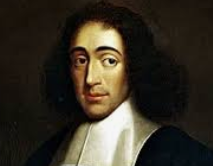
All laws which can be broken without any injury to another, are counted but a laughing-stock, and are so far from bridling the desires and lusts of men, that on the contrary they stimulate them.
▼
Source
Ch. 10, Of Aristocracy, Conclusion | Variant translation : Laws which can be broken without any wrong to one's neighbor are but a laughing-stoke ; and, so far from such laws restraining the appetites and lusts of mankind, they rather heighten them. | Vari
4 months 1 week ago
Man has ever expressed some symbolical Philosophy of his Being in his Works and Conduct; he announces himself and his Gospel of Nature; he is the Messiah of Nature.
4 months 1 week ago
Declining from the public ways, walk in unfrequented paths.
▼
Source
Symbol 5
4 months 1 week ago
The concept of greatness is changeable, in the realm of morality as well as in that of esthetics. And so philosophy starts by legislating greatness.
▼
Source
p. 43
4 months 1 week ago
"Both of them are heresiarchs," Akhmatova used to say about Dostoyevski and Tolstoi. She compared the two greatest Russian writers to twin towers of the same building. Both of them sought salvation from imminent catastrophe, the nature of which was understood by Dostoyevski, though not by Tolstoi. In their actual proposals for salvation both of them exhibited license in the highest degree. In fact, however, not even the best of proposals would have been able to halt a process of decomposition already so far advanced.
▼
Source
Nadezhda Mandelstam Hope Abandoned (1974) Translated from the Russian by Max Hayward
4 months 1 week ago
The second class of evils comprises such evils as people cause to each other, when, e.g., some of them use their strength against others. These evils are more numerous than those of the first kind... they likewise originate in ourselves, though the sufferer himself cannot avert them.
▼
Source
Ch.12
4 months 1 week ago
And striving to be man, the worm Mounts through all the spires of form.
▼
Source
May-Day
4 months 1 week ago
Unity is plural and, at minimum, is two.
▼
Source
[http://www.rwgrayprojects.com/synergetics/s02/p2400.html#224.12 224.12]
4 months 1 week ago
An important recurring theme in George is the purposeful corruption of the science of economics in order to serve and apologize for wealthy special interests. As a self trained economist, the academics preferred to ignore the uncomfortable realities George’s work exposed.
▼
Source
Stephen Zarlenga, 2001, https://monetary.org/articles/henry-georges-concept-of-money/
4 months 1 week ago
None can be free who is a slave to, and ruled by, his passions.
▼
Source
As quoted in Florilegium, XVIII, 23, as translated in Dictionary of Quotations (1906) by Thomas Benfield Harbottle, p. 368 | No one is free who has not obtained the empire of himself. | As translated by Nicholas Rowe(1732) | No man is free who cannot comm
4 months 1 week ago
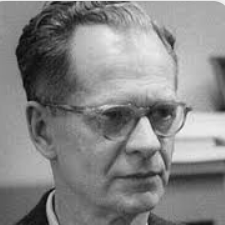
We shouldn't teach great books; we should teach a love of reading. Knowing the contents of a few works of literature is a trivial achievement. Being inclined to go on reading is a great achievement.
▼
Source
As quoted in B. F. Skinner : The Man and His Ideas (1968) by Richard Isadore Evans, p. 73
4 months 1 week ago
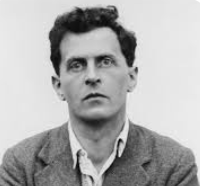
One often makes a remark and only later sees how true it is.
▼
Source
Journal entry (11 October 1914), p. 10e
4 months 1 week ago
Even when a person suffers pain in consequence of a thorn having entered into his hand, although it is at once drawn out, it is a punishment that has been inflicted on him, and the least pleasure he enjoys is a reward; all this is meted out by strict justice; as is said in the Scripture, "all His ways are judgement" (Deut. xxxii. 4); we are only ignorant of the working of that judgement.
▼
Source
Ch.17
CivilSimian.com created by AxiomaticPanic, CivilSimian, Kalokagathia