
4 months 1 week ago
Religion in its humility restores man to his only dignity, the courage to live by grace.
▼
Source
Ch. 4
4 months 1 week ago
The heroes in paganism correspond exactly to the saints in popery, and holy dervises in MAHOMETANISM. The place of, HERCULES, THESEUS, HECTOR, ROMULUS, is now supplied by DOMINIC, FRANCIS, ANTHONY, and BENEDICT. Instead of the destruction of monsters, the subduing of tyrants, the defence of our native country; whippings and fastings, cowardice and humility, abject submission and slavish obedience, are become the means of obtaining celestial honours among mankind.
▼
Source
Part X - With regard to courage or abasement
4 months 1 week ago
The Neo-Pythagoreans treated all the divisions of philosophy. In Metaphysics they held that the Unit and the (indeterminate) Two are the basis of all things. the Unit being the form, and the Two the matter. ...The Unit being the prior principle may be identified with Deity, and, as such, was thought of either as the former [creator] of indefinite matter into individual things, or, as in Neo-Platonism, as the transcendent origin of the derivative Unit and Two. Another mode of conception was to identify the numbers with the Platonic Ideas and then to think of the Unit as comprehending them in the same manner as the mind comprehends its thoughts and gives them form. In Logic the Neo-Pythagoreans were for the most part imitators of Aristotle. Their Physics was Aristotelian and Stoic. Their Anthropology was Platonic. In Ethics and Politics they merely reechoed the Academy and the Lyceum with Stoic additions. In all this Neo-Pythagoreanism has little originality.
▼
Source
George Johnson, [https://books.google.com/books?id=FIpNAAAAMAAJ The Arithmetical Philosophy of Nicomachus of Gersa] (1916)
4 months 1 week ago
A philosopher is a man who has to cure many intellectual diseases in himself before he can arrive at the notions of common sense.
▼
Source
p. 44e
4 months 1 week ago
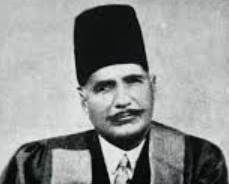
My forefathers were Brahmins. They spent their lives in search of God. I am spending my life in search of Man.
▼
Source
Educational Thinkers [https://books.google.com/books?id=O6Fp2zaQVVMC&pg=PA151&dq=#v=onepage&q&f=false]
4 months 1 week ago
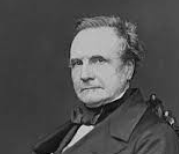
The first application of this principle [of the division of labor] must have been made in a very early stage of society; for it must soon have been apparent that more comforts and conveniences could be acquired by one man restricting his occupation to the art of making bows, another to that of building houses, a third boats, and so on. This division of labor Into trades was not, however, the result of an opinion that the general riches of the community would be increased by such an arrangement: but it must have arisen from the circumstances, of each individual so employed discovering that he himself could thus make a greater profit of his labour than by pursuing more varied occupations.
▼
Source
p. 170. Ch 19. "On the division of labour"
4 months 1 week ago
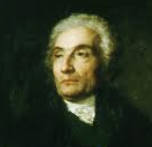
Human reason reduced to its own resources is perfectly worthless, not only for creating but also for preserving any political or religious association, because it only produces disputes, and, to conduct himself well, man needs not problems but beliefs. His cradle should be surrounded by dogmas, and when his reason is awakened, it should find all his opinions ready-made, at least all those relating to his conduct. Nothing is so important to him as prejudices. Let us not take this word in a bad sense. It does not necessarily mean false ideas, but only, in the strict sense of the word, opinions adopted before any examination. Now these sorts of opinions are man’s greatest need, the true elements of his happiness, and the Palladium of empires. Without them, there can be neither worship, nor morality, nor government. There must be a state religion just as there is a state policy; or, rather, religious and political dogmas must be merged and mingled together to form a complete common or national reason strong enough to repress the aberrations of individual reason, which of its nature is the mortal enemy of any association whatever because it produces only divergent opinions.
▼
Source
p. 87
4 months 1 week ago
His character does not appear more extraordinary and unusual by the mixture of so much absurdity with so much penetration, than by his tempering such violent ambition, and such enraged fanaticism with so much regard to justice and humanity.
▼
Source
Volume III, Chapter LXI; referring to Oliver Cromwell
4 months 1 week ago
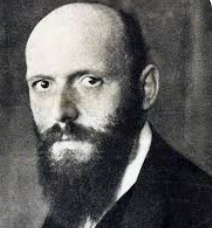
The Sabbath is not simply a time to rest, to recuperate. We should look at our work from the outside, not just from within.
▼
Source
p. 91e
4 months 1 week ago
When devotion to men with an urge for new social organization replaces devotion to men with theological illumination and a way of life pleasing to God, then the actions of the innovator and his formulations are often gauged by their significance for human happiness. Behaviour is examined through the happiness it produces, which is an empirical matter; transcendence is overcome.
▼
Source
p. 327-328
4 months 1 week ago
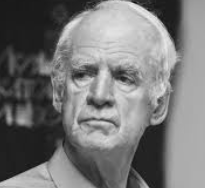
The earlier views, those of Hobbes or Locke for instance, saw language as an instrument, and understood meaning in terms of designation. Discovering the meaning of words is finding what ideas or things they stood for. ... By contrast, a hermeneutical view requires a very different conception. If we are partly constituted by our self-understanding, and this in turn can be very different according to the various languages which articulate for us a background of distinctions of worth, then language does not only serve to depict ourselves and the world, it also helps constitute our lives. Certain ways of being, of feeling, of relating to each other are only possible given certain linguistic resources.
▼
Source
Human Agency and Language (Cambridge: 1985), pp. 9-10
4 months 1 week ago
Providence has already begun the punishment of the guilty; more than sixty regicides, the most guilty among them, have already died a violent death.
▼
Source
Chapter X, p. 97
4 months 1 week ago
It is...in his analysis of the circumstances which determined the evolution of the chief legal institutions, in which he shows why a complex civilisation could grow up only where certain types of legal institutions developed, that he makes some of his most important contributions to jurisprudence. In the discussion of these problems his economic and his legal and political theory are intimately connected. Hume is indeed one of the few social theorists who are clearly aware of the connection between the rules men obey and the order which is formed as a result... What he undertakes is to show that certain characteristics of modern society which we prize are dependent on conditions which were not created in order to bring about these results, yet are nevertheless their indispensable presuppositions. They are institutions "advantageous to the public though...not intended for that purpose by the inventors". Hume shows, in effect, that an orderly society can develop only if men learn to obey certain rules of conduct.
▼
Source
Friedrich Hayek, 'The Legal and Political Philosophy of David Hume' (18 July 1963), in Studies in Philosophy, Politics and Economics (1967), pp. 111-112
4 months 1 week ago
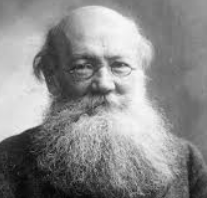
When a revolutionary situation arises in a country, before the spirit of revolt is sufficiently awakened in the masses to express itself in violent demonstrations in the streets or by rebellions and uprisings, it is through action that minorities succeed in awakening that feeling of independence and that spirit of audacity without which no revolution can come to a head. Men of courage, not satisfied with words, but ever searching for the means to transform them into action, — men of integrity for whom the act is one with the idea, for whom prison, exile, and death are preferable to a life contrary to their principles, — intrepid souls who know that it is necessary to dare in order to succeed, — these are the lonely sentinels who enter the battle long before the masses are sufficiently roused to raise openly the banner of insurrection and to march, arms in hand, to the conquest of their rights.
4 months 1 week ago
Muggeridge: ‘Positivism will deprive man, not only of all objects of religious reverence, but of all objects of the reverence which great philosophers have always, and rightly, received.’ True, Malcolm, except for the 'and rightly' part. In fact the reverence which has been and is accorded, by pre-Positivist man, to such two-legged plagues as Plato, Kant, and Hegel, is merely insane.
▼
Source
[https://https://web.maths.unsw.edu.au/~jim/wrongthoughts.html The Plato Cult and Other Philosophical Follies], 1991. Page 201
4 months 1 week ago
The Christian woman is therefore a supernatural model like the angel. […] At the sight of these figures, however beautiful one can imagine them, no profane thought would dare arise in the heart of a man of taste. One owes them a certain intellectual admiration as pure as their models. Even in their clothing there is something that is not terrestrial. One must see there elegance without elaboration, poverty without ugliness, and, if the subject demands it, pomp without magnificence. They are beautiful like temples.
▼
Source
p. 288
4 months 1 week ago
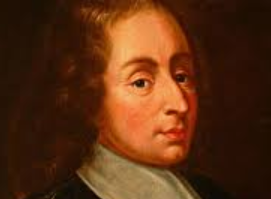
What is it, in your opinion, to be a great nobleman? It is to be master of several objects that men covet, and thus to be able to satisfy the wants and the desires of many. It is these wants and these desires that attract them towards you, and that make them submit to you: were it not for these, they would not even look at you; but they hope, by these services... to obtain from you some part of the good which they desire, and of which they see that you have the disposal.
4 months 1 week ago
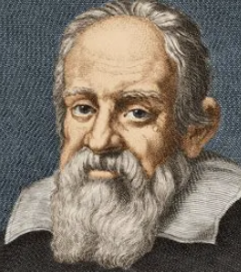
Surely it is a great thing to increase the numerous host of fixed stars previously visible to the unaided vision, adding countless more which have never before been seen, exposing these plainly to the eye in numbers ten times exceeding the old and familiar stars.
▼
Source
Translation by Stillman Drake in Discoveries and Opinions of Galileo (1957)
4 months 1 week ago
To begin with, if man, since his origin, has always lived in societies, the State is but one of the forms of social life, quite recent as far as regards European societies. Men lived thousands of years before the first States were constituted; Greece and Rome existed for centuries before the Macedonian and Roman Empires were built up, and for us modern Europeans the centralized States date but from the sixteenth century. It was only then, after the defeat of the free mediæval Communes had been completed that the mutual insurance company between military, judicial, landlord, and capitalist authority which we call "State," could be fully established.
4 months 1 week ago
He declared that he knew nothing, except the fact of his ignorance.
▼
Source
Socrates, 16.
4 months 1 week ago
Five [of the above] rules are of absolute necessity, and cannot be dispensed with without essential defect and often without error.
4 months 1 week ago
I mentally conceive of some moveable [sphere] projected on a horizontal plane, all impediments being put aside. Now it is evident... that equable motion on this plane would be perpetual if the plane were of infinite extent, but if we assume it to be ended, and [situated] on high, the movable, driven to the end of this plane and going on further, adds on to its previous equable and indelible motion, that downward tendency which it has from its heaviness. Thus, there emerges a certain motion, compounded...
▼
Source
Author, Day Four, On the Motion of Projectiles, Stillman Drake translation (1974) p. 268
4 months 1 week ago
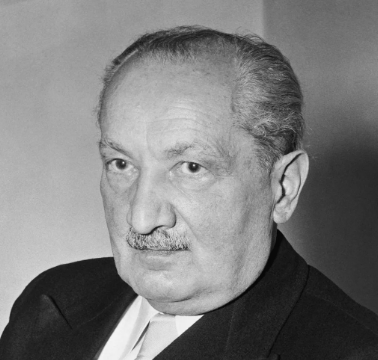
We ourselves are the entities to be analyzed
▼
Source
Macquarrie & Robinson translation
4 months 1 week ago
The means of production being the collective work of humanity, the product should be the collective property of the race. Individual appropriation is neither just nor serviceable. All belongs to all.
▼
Source
Ch. 1 : Our Riches, p. 61
4 months 1 week ago
He was once asked what a friend is, and his answer was, "One soul abiding in two bodies."
▼
Source
Aristotle, 9.
4 months 1 week ago
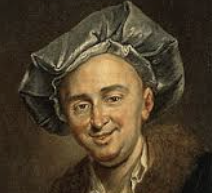
A good prescription is still more profitable than an .
▼
Source
(c. 1734) in a successful argument to persuade his father that a medical education was preferred. As quoted by , History of Materialism and Critique of its Present Importance Tr. Ernest Chester Thomas (1882) 2nd edition, Vol. 2, [https://books.google.com/
4 months 1 week ago
May some future student go over this ground again, and have the leisure to give his results to the world.
4 months 1 week ago
We think of beauty as being most worthy of reverence. But what is most worthy of reverence lights up only where the magnificent strength to revere is alive. To revere is not a thing for the petty and lowly, the incapacitated and underdeveloped. It is a matter of tremendous passion; only what flows from such passion is in the grand style.
▼
Source
p. 125
4 months 1 week ago
We thus see that the over-population fallacy does not stand the very first attempt at submitting it to a closer examination.
4 months 1 week ago
Pythagoras used to say that he had received as a gift from Mercury the perpetual transmigration of his soul, so that it was constantly transmigrating and passing into all sorts of plants or animals.
▼
Source
Pythagoras, 4.
4 months 1 week ago
The Preface to the Phenomenology is one of the greatest philosophical undertakings of all times, constituting no less an attempts than to reinstate philosophy as the highest form of human knowledge, as ‘the Science.’ P. 97
4 months 1 week ago
The sciences that are expressed by numbers or by other small signs, are easily learned; and... this facility rather than its demonstrability is what has made the fortune of algebra.
4 months 1 week ago
Let me now try to gather up all these odds and ends of commentary and restate the law of mind, in a unitary way.
4 months 1 week ago
The first question we should face is: What is the aim of a physical theory? To this question diverse answers have been made, but all of them may be reduced to two main principles:"A physical theory," certain logicians have replied, "has for its object the explanation of a group of laws experimentally established.""A physical theory," other thinkers have said, "is an abstract system whose aim is to summarize and classify logically a group of experimental laws without claiming to explain these laws...Now these two questions — Does there exist a material reality distinct from sensible appearances? and What is the nature of reality? — do not have their source in experimental method, which is acquainted only with sensible appearances and can discover nothing beyond them. The resolution of these questions transcends the methods used by physics; it is the object of metaphysics.Therefore, if the aim of physical theories is to explain experimental laws, theoretical physics is not an autonomous science; it is subordinate to metaphysics...Now, to make physical theories depend on metaphysics is surely not the way to let them enjoy the privilege of universal consent.
4 months 1 week ago
Freedom cannot be bestowed — it must be achieved.
▼
Source
Elbert Hubbard, in his essay on Booker T. Washington in Little Journeys For 1908, p. 21; Franklin D. Roosevelt later used this line on the occasion of the 74th anniversary of the Emancipation Proclamation: "In the truest sense, freedom cannot be bestowed;
4 months 1 week ago
The intellectual is called on the carpet. ... Don't you conceal something? You talk a language which is suspect. You don't talk like the rest of us, like the man in the street, but rather like a foreigner who does not belong here. We have to cut you down to size, expose your tricks, purge you.
▼
Source
p. 192
4 months 1 week ago
If we endeavor to form our conceptions upon history and life, we remark three classes of men. The first consists of those for whom the chief thing is the qualities of feelings. These men create art. The second consists of the practical men, who carry on the business of the world. They respect nothing but power, and respect power only so far as it [is] exercized. The third class consists of men to whom nothing seems great but reason. If force interests them, it is not in its exertion, but in that it has a reason and a law. For men of the first class, nature is a picture; for men of the second class, it is an opportunity; for men of the third class, it is a cosmos, so admirable, that to penetrate to its ways seems to them the only thing that makes life worth living.
▼
Source
Vol. I, par. 43
4 months 1 week ago
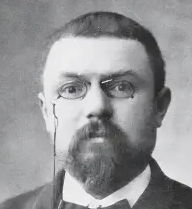
What is mass? According to Newton, it is the product of the volume by the density. According to Thomson and Tait, it would be better to say that density is the quotient of the mass by the volume. What is force? It, is replies Lagrange, that which moves or tends to move a body. It is, Kirchhoff will say, the product of the mass by the acceleration. But then, why not say the mass is the quotient of the force by the acceleration?These difficulties are inextricable.When we say force is the cause of motion, we talk metaphysics, and this definition, if one were content with it, would be absolutely sterile. For a definition to be of any use, it must teach us to measure force; moreover that suffices; it is not at all necessary that it teach us what force is in itself, nor whether it is the cause or the effect of motion.We must therefore first define the equality of two forces. When shall we say two forces are equal? It is, we are told, when, applied to the same mass, they impress upon it the same acceleration, or when, opposed directly one to the other, they produce equilibrium. This definition is only a sham. A force applied to a body can not be uncoupled to hook it up to another body, as one uncouples a locomotive to attach it to another train. It is therefore impossible to know what acceleration such a force, applied to such a body, would impress upon such an other body, if it were applied to it. It is impossible to know how two forces which are not directly opposed would act, if they were directly opposed.We are... obliged in the definition of the equality of the two forces to bring in the principle of the equality of action and reaction; on this account, this principle must no longer be regarded as an experimental law, but as a definition.
▼
Source
Ch. VI: The Classical Mechanics (1905) [https://books.google.com/books?id=5nQSAAAAYAAJ Tr.] George Bruce Halstead
4 months 1 week ago
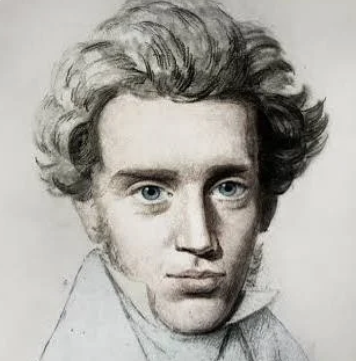
I have never fought in such a way as to say: I am the true Christian, others are not Christians. No, my contention has been this: I know what Christianity is, my imperfection as a Christian I myself fully recognize — but I know what Christianity is. And to get this properly recognized must be, I should think, to every man's interest, whether he be a Christian or not, whether his intention is to accept Christianity or to reject it. But I have attacked no one as not being a Christian, I have condemned no one. Indeed, the pseudonym Johannes Climacus, who sets the problem ‘about becoming a Christian’, does exactly the opposite: he denies that he is a Christian and concedes this claim to the others — the remotest possible remove, surely, from condemning others! And I myself have from the first clearly asserted, again and again repeated, that I am ‘without authority’. My tactics were, by God's aid, to employ every means to make it clear what the requirement of Christianity truly is — even though not one single person should be induced to enter into it, and though I myself might have to give up being a Christian (in which case I should have felt obliged to make open admission of the fact). On the other hand, my tactics were these: instead of giving the impression, in however small a degree, that there are such difficulties about Christianity that an apology for it is needed if men are to be persuaded to enter into it, rather to represent it as a thing so infinitely lofty, as in truth it is, that the apology belongs in another place, is required, that is to say, of us for the fact that we venture to call ourselves Christians, or it transforms itself into a contrite confession that we have God to thank if we merely assume to regard ourselves as a Christian. But neither must this ever be forgotten: Christianity is just as lenient as it is austere, just as lenient, that is to say, infinitely lenient. When the infinite requirement is heard and upheld, heard and upheld in all its infinitude, then grace is offered, or rather grace offers itself, and to it the individual, each for himself, as I also do, can flee for refuge.
▼
Source
The Point of View of My Work as an Author (1848, 1851, 1859) p. 153-155
4 months 1 week ago
When a change occurs in Nature, the quantity of action necessary for that change is as small as possible.
4 months 1 week ago
"Should we have an Eleventh Commandment?" asked a youth of the Greatest Living Actress. "Most assuredly, no - we have ten too many now!" answered the divine Sara.
▼
Source
p. 17
4 months 1 week ago
In the form of the oeuvre, the actual circumstances are placed in another dimension where the given reality shows itself as that which it is. Thus it tells the truth about itself; its language ceases to be that of deception, ignorance, and submission. Fiction calls the facts by their name and their reign collapses; fiction subverts everyday experience and shows it to be mutilated and false.
▼
Source
p. 62
4 months 1 week ago
Every bureaucracy, therefore, in accord with the peculiar emphasis on its own position, tends to generalize its own experience and to overlook the fact that the realm of administration and of smoothly functioning order represents only a part of the total political reality. Bureaucratic thought does not deny the possibility of the science of politics, but regards it as identical with the science of administration. Thus irrational factors are overlooked, and when these nevertheless force themselves to the fore, they are treated as "routine matters of state."
4 months 1 week ago
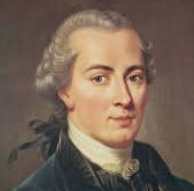
Beneficence is a duty. He who often practices this, and sees his beneficent purpose succeed, comes at last really to love him whom he has benefited. When, therefore, it is said, "Thou shalt love thy neighbor as thyself," this does not mean, "Thou shalt first of all love, and by means of love (in the next place) do him good"; but: "Do good to thy neighbour, and this beneficence will produce in thee the love of men (as a settled habit of inclination to beneficence)."
▼
Source
Metaphysical Elements of Ethics (1780). Translated by Thomas Kingsmill Abbott, translation available at [http://philosophy.eserver.org/kant/metaphys-elements-of-ethics.txt Philosophy.eserver.org]. From section "Preliminary Notions of the Susceptibility of
4 months 1 week ago
All that is not thought is pure nothingness; since we can think only thought and all the words we use to speak of things can express only thoughts, to say there is something other than thought, is therefore an affirmation which can have no meaning.And yet—strange contradiction for those who believe in time—geologic history shows us that life is only a short episode between two eternities of death, and that, even in this episode, conscious thought has lasted and will last only a moment. Thought is only a gleam in the midst of a long night. But it is this gleam which is everything.
4 months 1 week ago
How absurd men are! They never use the liberties they have, they demand those they do not have. They have freedom of thought, they demand freedom of speech.
▼
Source
Either/Or Part I, Swenson Translation p. 19 | Variations include: | People demand freedom of speech to make up for the freedom of thought, which they avoid. | People demand freedom of speech as a compensation for the freedom of thought which they seldom u
4 months 1 week ago
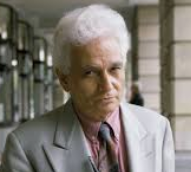
If it recedes one day, leaving behind its works and signs on the shores of our civilization, the structuralist invasion might become a question or the historian of ideas, or perhaps even an object. But the historian would be deceived if he came to this pass: by the very act of considering the structuralist invasion as an object he would forget its meaning and would forget that what is at stake, first of all, is an adventure of vision, a conversion of the way of putting questions to any object posed before us, to historical objects-his own- in particular. And, unexpectedly among these, the literary objects.
▼
Source
Force and Signification
4 months 1 week ago
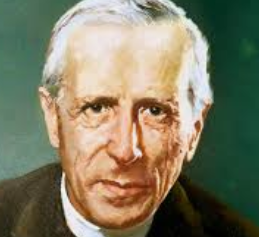
Is evolution a theory, a system or a hypothesis? It is much more: it is a general condition to which all theories, all hypotheses, all systems must bow and which they must satisfy henceforward if they are to be thinkable and true. Evolution is a light illuminating all facts, a curve that all lines must follow.
4 months 1 week ago
Life without absorbing occupation is hell — joy consists in forgetting life.
4 months 1 week ago
The world of immediate experience—the world in which we find ourselves living—must be comprehended, transformed, even subverted in order to become that which it really is.
▼
Source
p. 123
CivilSimian.com created by AxiomaticPanic, CivilSimian, Kalokagathia