
4 months 1 week ago
If it were right to overstep a little the limits of apodictic certainty befitting metaphysics, it would seem worth while to trace out some things pertaining not merely to the laws but even to the causes of sensuous intuition, which are only intellectually knowable. Of course the human mind is not affected by external things, and the world does not lie open to its insight infinitely, except as far as itself together with all other things is sustained by the same infinite power of one. Hence it does not perceive external things but by the presence of the same common sustaining cause; and hence space, which is the universal and necessary condition of the joint presence of everything known sensuously, may be called the phenomenal omnipresence, for the cause of the universe is not present to all things and everything, as being in their places, but their places, that is the relations of the substances, are possible, because it is intimately present to all. Furthermore, since the possibility of the changes and successions of all things whose principle as far as sensuously known resides in the concept of time, supposes the continuous existence of the subject whose opposite states succeed; that whose states are in flux, lasting not, however, unless sustained by another; the concept of time as one infinite and immutable in which all things are and last, is the phenomenal eternity of the general cause} But it seems more cautious to hug the shore of the cognitions granted to us by the mediocrity of our intellect than to be carried out upon the high seas of such mystic investigations, like Malebranche, whose opinion that we see all things in God is pretty nearly what has here been expounded.
4 months 1 week ago
Man is a synthesis of psyche and body, but he is also a synthesis of the temporal and the eternal. In the former, the two factors are psyche and body, and spirit is the third, yet in such a way that one can speak of a synthesis only when the spirit is posited. The latter synthesis has only two factors, the temporal and the eternal. Where is the third factor? And if there is no third factor, there really is no synthesis, for a synthesis that is a contradiction cannot be completed as a synthesis without a third factor, because the fact that the synthesis is a contradiction asserts that it is not. What, then, is the temporal?
▼
Source
p. 85
4 months 1 week ago
In comparing various authors with one another, I have discovered that some of the gravest and latest writers have transcribed, word for word, from former works, without making acknowledgment.
▼
Source
Book I, Dedication, sec. 22.
4 months 1 week ago
Whence this secret Chain between each Person and Mankind? How is my Interest connected with the most distant Parts of it?
▼
Source
An Inquiry into the Original of our Ideas of Beauty and Virtue (1725), Treatise II: An Inquiry concerning Moral Good and Evil, Sect. I
4 months 1 week ago
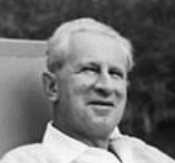
I think that the influence of philosophy is a question of formulating, asking the kinds of questions that would otherwise be foreclosed. I suppose I can say that I learned a great deal from Herbert Marcuse about the relation between philosophy and ideology critique, political critique. His work, for example, Counterrevolution and Revolt, engages directly with the material conditions of the period, the late 1960s. But, at the same time, the framework is philosophical. The kinds of questions that are posed are those questions that otherwise would not be capable of formulation, and I think that is what I try to do. Because really it's not so much about the answers you discover, it's about the reach of the questions.
▼
Source
2003 interview in Conversations with Angela Davis Edited by Sharon Lynette Jones (2021)
4 months 1 week ago
To a high degree we are, through art and science, cultured. We are civilized — perhaps too much for our own good — in all sorts of social grace and decorum. But to consider ourselves as having reached morality — for that, much is lacking. The ideal of morality belongs to culture; its use for some simulacrum of morality in the love of honor and outward decorum constitutes mere civilization. So long as states waste their forces in vain and violent self-expansion, and thereby constantly thwart the slow efforts to improve the minds of their citizens by even withdrawing all support from them, nothing in the way of a moral order is to be expected. For such an end, a long internal working of each political body toward the education of its citizens is required. Everything good that is not based on a morally good disposition, however, is nothing but pretense and glittering misery. In such a condition the human species will no doubt remain until, in the way I have described, it works its way out of the chaotic conditions of its international relations.
▼
Source
Seventh Thesis
4 months 1 week ago
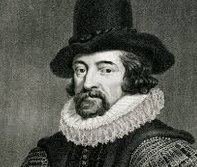
Riches are a good handmaid, but the worst mistress.
▼
Source
De Augmentis Scientiarum, Book II, "Antitheta" (1623)
4 months 1 week ago
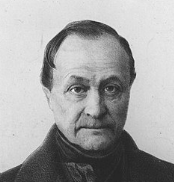
Every attempt to refer chemical questions to mathematical doctrines must be considered, now and always, profoundly irrational, as being contrary to the nature of the phenomena. . . . but if the employment of mathematical analysis should ever become so preponderant in chemistry (an aberration which is happily almost impossible) it would occasion vast and rapid retrogradation....
4 months 1 week ago
Every earthly or worldly good is in itself selfish, begrudging; its possession is begrudging or is envy and in one way or another must make others poorer – what I have someone else cannot have; the more I have, the less someone else must have. The unrighteous mammon (with this term we perhaps may indeed designate every earthly good, also worldly honor, power, etc.) is in itself unjust and makes for injustice (quite apart here from the question of acquiring it or possessing it in an unlawful manner) and in itself cannot be acquired or possessed equally. If one person is to have much of it, there must be someone else who necessarily gets only a little, and what the one has the other cannot possibly have. Furthermore, all the time and energy, all the mental solicitude and concern that is applied to acquiring or possessing earthly good is selfish, begrudging, or the person who is occupied in this way is selfish, at every such moment has no thought for others; at every such moment he is selfishly working for himself or selfishly for a few others, but not equally for himself and for everyone else. Even if a person is willing to share his earthly goods, at every moment in which he is occupied with acquiring them or is engrossed in possessing them, he is selfish, just as that is which he possesses or acquires.
▼
Source
Soren Kierkegaard, Christian Discourses 1848, Hong 1997 p. 115-116
4 months 1 week ago
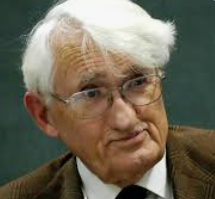
The only knowledge that can truly orient action is knowledge that frees itself from mere human interests and is based in Ideas—in other words knowledge that has taken a theoretical attitude.
▼
Source
p. 301
4 months 1 week ago
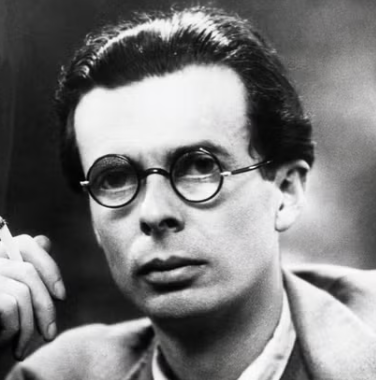
At least two thirds of our miseries spring from human stupidity, human malice, and those great motivators and justifiers of malice and stupidity, idealism, dogmatism and proselytizing zeal on behalf of religious or political idols.
▼
Source
Tomorrow and Tomorrow and Tomorrow (1952)
4 months 1 week ago
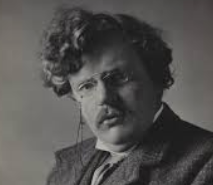
The riddles of God are more satisfying than the solutions of man.
▼
Source
"The Book of Job: An introduction", in Putnam's Monthly (June 1907) p. 356, col. 1
4 months 1 week ago
This proof can at most, therefore, demonstrate the existence of an architect of the world, whose efforts are limited by the capabilities of the material with which he works, but not of a creator of the world, to whom all things are subject.
▼
Source
A 627, B 655 (Physico-Theological Proof Impossible)
4 months 1 week ago
But men must know that in this theater of man's life it is reserved only for God and angels to be lookers on.
▼
Source
Book II, xx, 8
4 months 1 week ago
Accept the invitation so that the inviter may save you from what is so hard and dangerous to be saved from, so that, saved, you may be with him who is the Savior of all, of innocence also. For even if it were possible that utterly pure innocence was to be found somewhere, why should it not also need a Savior who could keep it safe from evil! –The invitation stands at the crossroad, there where the way of sin turns more deeply into sin. Come here, all you who are lost and gone astray, whatever your error and sin, be it to human eyes more excusable and yet perhaps more terrible, or be it to human eyes more terrible and yet perhaps more excusable, be it disclosed here on earth or be it hidden and yet known in heaven-and even if you found forgiveness on earth but no peace within, or found no forgiveness because you did not seek it, or because you sought it in vain: oh, turn around and come here, here is rest! The invitation stands at the crossroad, there where the way of sin turns off for the last time and disappears from view in-perdition. Oh, turn around, turn around, come here; do not shrink from the difficulty of retreat, no matter how hard it is; do not be afraid of the laborious pace of conversion, however toilsomely it leads to salvation, whereas sin leads onward with winged speed, with mounting haste-or leads downward so easily, so indescribably easily, indeed, as easily as when the horse, completely relieved of pulling, cannot, not even with all its strength, stop the wagon, which runs it into the abyss. Do not despair over every relapse, which the God of patience has the patience to forgive and under which a sinner certainly should have the patience to humble himself. No, fear nothing and do not despair; he who says “Come here” is with you on the way; from him there is help and forgiveness on the way of conversion that leads to him, and with him is rest.
▼
Source
p. 18-19
4 months 1 week ago
No wife, no horse, no mustache.
▼
Source
in Schrödinger's Cat Trilogy : The Trick Top Hat (1979), p. 79 | Also appears in Masks of the Illuminati (1981), p. 80 (and other pages) | appears in several of his other books in varying contexts
4 months 1 week ago
The modern world is still suffering from the native incapacity of the Jews to be political. The art of making and preserving a City, which we call be the Greek name, “Politics,” was never an indigenous growth among the Hebrews. The City of the Greeks and the other civilized nations of antiquity was hateful to them. Their ideas were essentially anti-political. The politics of Judaea, when there were any, were borrowed from the Egyptians and Babylonians and, later, from the Greeks. These borrowings were regarded with violent disapproval by the champions of Hebrew orthodoxy, who objected to organized civilization on two grounds. Some, like Amos, hated it just because it was civilization and not nomadic barbarism. It was in the desert that God had made his covenant with the Chosen Race, and in the desert there was nothing else to think about but God. So, Back to the Desert! was their war-cry. Others, the Ebionites, objected to civilization because it was hierarchical, because it made for social inequality. They gave prophetically indignant utterance to the envious hatred of the poor in cash and in spirit against the rich and talented and cultured. A pious and universal mediocrity was their ideal.
▼
Source
“One and Many,” pp. 17–18
4 months 1 week ago
There is something to be said for every error; but, whatever may be said for it, the most important thing to be said about it is that it is erroneous.
▼
Source
In The Illustrated London News (25 April 1931)
4 months 1 week ago
Art is the final cunning of the human soul which would rather do anything than face the gods.
▼
Source
"Art and Eros: A Dialogue about Art", Acastos: Two Platonic Dialogues (1986).
4 months 1 week ago
A mind of slow apprehension is therefore not necessarily a weak mind. The one who is alert with abstractions is not always profound, he is more often very superficial.
▼
Source
Kant, Immanuel (1996), page 99
4 months 1 week ago
...it is the peculiar and perpetual error of the human understanding to be more moved and excited by affirmatives than by negatives...
▼
Source
Aphorism 46
4 months 1 week ago
The life-giving Spirit is the very one who slays you; the first thing the life-giving Spirit says is that you must enter into death, that you must die to – it is this way in order that you many not take Christianity in vain. A life-giving Spirit – that is the invitation; who would not willingly take hold of it! But die first – that is the halt!
4 months 1 week ago
The worst that can happen under monarchy is rule by a single imbecile, but democracy often means the rule by an assembly of three or four hundred imbeciles.
▼
Source
The Historical Illuminatus as spoken by M. Gabriel Sartines
4 months 1 week ago
One unscrupulous distortion of the truth tends to beget other and opposite distortions.
▼
Source
Ch. 14, p. 316 [2012 reprint]
4 months 1 week ago
Lord! what a strange world in which a man cannot remain unique even by taking the trouble to go mad!
▼
Source
Book V, Chapter I: "The Empire of Notting Hill"
4 months 1 week ago
Have patience awhile; slanders are not long-lived. Truth is the child of time; erelong she shall appear to vindicate thee.
▼
Source
This quote has been misattributed to Kant [https://books.google.com/books?id=4nHUAAAAMAAJ&dq=%22truth%20is%20the%20child%20of%20time%22&pg=PA512 since the late 19th century], but it is actually from [https://quod.lib.umich.edu/e/eebo/A45113.0001.001/1:9.9
4 months 1 week ago
Books must follow sciences, and not sciences books.
▼
Source
Proposition touching Amendment of Laws
4 months 1 week ago
What is this world? A complex whole, subject to endless revolutions. All these revolutions show a continual tendency to destruction; a swift succession of beings who follow one another, press forward, and vanish; a fleeting symmetry; the order of a moment. I reproached you just now with estimating the perfection of things by your own capacity; and I might accuse you here of measuring its duration by the length of your own days. You judge of the continuous existence of the world, as an ephemeral insect might judge of yours. The world is eternal for you, as you are eternal to the being that lives but for one instant. Yet the insect is the more reasonable of the two. For what a prodigious succession of ephemeral generations attests your eternity! What an immeasurable tradition! Yet shall we all pass away, without the possibility of assigning either the real extension that we filled in space, or the precise time that we shall have endured. Time, matter, space — all, it may be, are no more than a point.
▼
Source
Dying words of Nicholas Saunderson as portrayed in Lettre sur les aveugles [Letter on the Blind] (1749) | Variant translation: | What is this world of ours? A complex entity subject to sudden changes which all indicate a tendency to destruction; a swift s
4 months 1 week ago
If we are to be morally and ethically responsible, there can be no turning back once we find, as we have found, that some of the most basic presuppositions of these values are mistaken. Playing God is indeed playing with fire. But that is what we mortals have done since Prometheus, the patron saint of dangerous discoveries. We play with fire and take the consequences, because the alternative is cowardice in the face of the unknown.
▼
Source
Sovereign Virtue (2000), p. 446
4 months 1 week ago
"Is it agreeable?" somebody asked.
4 months 1 week ago
It is not only possible to say a great deal in praise of play; it is really possible to say the highest things in praise of it. It might reasonably be maintained that the true object of all human life is play. Earth is a task garden; heaven is a playground. To be at last in such secure innocence that one can juggle with the universe and the stars, to be so good that one can treat everything as a joke — that may be, perhaps, the real end and final holiday of human souls.
▼
Source
"Oxford from Without"
4 months 1 week ago
Scepticism is the first step towards truth.
▼
Source
Variant: A thing is not proved just because no one has ever questioned it. What has never been gone into impartially has never been properly gone into. Hence skepticism is the first step toward truth. It must be applied generally, because it is the touchs
4 months 1 week ago
There has been an inversion in the hierarchy of the two principles of antiquity, “Take care of yourself” and “Know yourself.” In Greco-Roman culture, knowledge of oneself appeared as the consequence of the care of the self. In the modern world, knowledge of oneself constitutes the fundamental principle.
▼
Source
“Technologies of the Self,” Ethics, Subjectivity and Truth (1994), p. 228
4 months 1 week ago
True conservatism rises at the antipodes from individualism. Individualism is social atomism; conservatism is community of spirit.
4 months 1 week ago
Propaganda in favor of action that is consonant with enlightened self-interest appeals to reason by means of logical arguments based upon the best available evidence fully and honestly set forth. Propaganda in favor of action dictated by the impulses that are below self-interest offers false, garbled or incomplete evidence, avoids logical argument and seeks to influence its victims by the mere repetition of catchwords, by the furious denunciation of foreign or domestic scapegoats, and by cunningly associating the lower passions with the highest ideals, so that atrocities come to be perpetrated in the name of God and the most cynical kind of Realpolitik is treated as a matter of religious principle and patriotic duty.
▼
Source
Chapter 4 (p. 33)
4 months 1 week ago
Dogma does not mean the absence of thought, but the end of thought.
▼
Source
Ch I: The Victorian Compromise and Its Enemies ([http://books.google.com/books?id=mKs-AAAAYAAJ&q=%22Dogma+does+not+mean+the+absence+of+thought+but+the+end+of+thought%22&pg=PA43#v=onepage p. 43])
4 months 1 week ago
Morals are in all countries the result of legislation and government; they are not African or Asian or European: they are good or bad.
4 months 1 week ago
Instead of insanity eliminating the crime according to the original meaning of article 64,every crime and even every offense now carries within it, as a legitimate suspicion, but also as a right that may be claimed, the hypothesis of insanity, in any case of anomaly. And the sentence that condemns or acquits is not simply a judgement of guily, a legal decision that lays down punishment; it bears within it an assessment of normality and a technical prescription for a possible normalization Today the judge- magistrate or juror0 certainly does more than 'judge'
▼
Source
pp. 20-21

4 months 1 week ago
It was said that I refused to grant any value to the maternal instinct and to love. This was not so. I simply asked that women should experience them truthfully and freely, whereas they often use them as excuses and take refuge in them, only to find themselves imprisoned in that refuge when those emotions have dried up in their hearts. I was accused of preaching sexual promiscuity; but at no point did I ever advise anyone to sleep with just anyone at just any time; my opinion on this subject is that all choices, agreements and refusals should be made independently of institutions, conventions and motives of self-aggrandizement; if the reasons for it are not of the same order as the act itself, then the only result can be lies, distortions and mutilations.
▼
Source
Force of Circumstances Vol. III (1963) as translated by Richard Howard (1968) - [http://www.marxists.org/reference/subject/ethics/de-beauvoir/1963/interview.htm Excerpt online]
4 months 1 week ago
On the morning of November 22nd, a Friday, it became clear the gap between living and dying was closing. Realizing that Aldous [Huxley] might not survive the day, Laura [Huxley's wife] sent a telegram to his son, Matthew, urging him to come at once. At ten in the morning, an almost inaudible Aldous asked for paper and scribbled "If I go" and then some directions about his will. It was his first admission that he might die ...Around noon he asked for a pad of paper and scribbledLSD-try itintermuscular100mmIn a letter circulated to Aldous's friends, Laura Huxley described what followed: 'You know very well the uneasiness in the medical mind about this drug. But no 'authority', not even an army of authorities, could have stopped me then. I went into Aldous's room with the vial of LSD and prepared a syringe. The doctor asked me if I wanted him to give the shot- maybe because he saw that my hands were trembling. His asking me that made me conscious of my hands, and I said, 'No, I must do this.'An hour later she gave Huxley a second 100mm. Then she began to talk, bending close to his ear, whispering, 'light and free you let go, darling; forward and up. You are going forward and up; you are going toward the light. Willingly and consciously you are going, willingly and consciously, and you are doing this beautifully — you are going toward the light — you are going toward a greater love ... You are going toward Maria's [Huxley's first wife, who had died many years earlier] love with my love. You are going toward a greater love than you have ever known. You are going toward the best, the greatest love, and it is easy, it is so easy, and you are doing it so beautifully.'All struggle ceased. The breathing became slower and slower and slower until, 'like a piece of music just finishing so gently in sempre piu piano, dolcamente,' at twenty past five in the afternoon, Aldous Huxley died.
▼
Source
Laura Huxley in This Timeless Moment (1971) as quoted by Jay Stevens in Storming Heaven: LSD and the American Dream (1987)
4 months 1 week ago
The walls are hung with velvet that is black and soft as sin,And little dwarfs creep out of it and little dwarfs creep in.He holds a crystal phial that has colours like the moon,He touches, and it tingles, and he trembles very soon,And his face is as a fungus of a leprous white and greyLike plants in the high houses that are shuttered from the day.
▼
Source
Lepanto
4 months 1 week ago
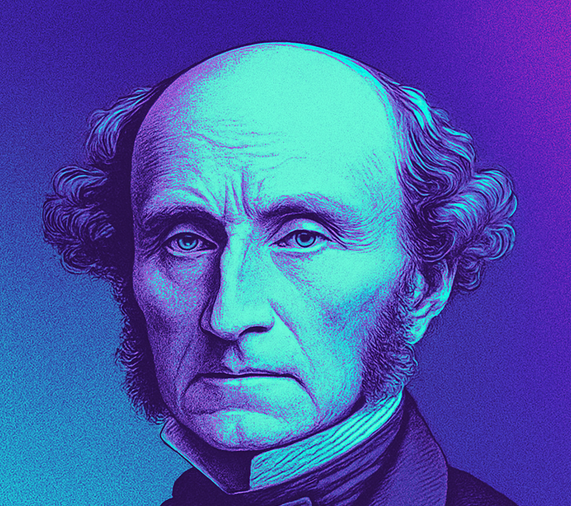
Aim at something great; aim at things which are difficult; and there is no great thing which is not difficult. Do not pare down your undertaking to what you can hope to see successful in the next few years, or in the years of your own life. Fear not the reproach of Quixotism and impracticability, or to be pointed at as the knight-errants of an idea. After you have well weighed what you undertake, if you see your way clearly, and are convinced that you are right, go forward, even though you...do it at the risk of being torn to pieces by the very men through whose changed hearts your purpose will one day be accomplished. Fight on with all your strength against whatever odds, and with however small a band of supporters. If you are right, the time will come when that small band will swell into a multitude: you will at least lay the foundations of something memorable, and you may...—though you ought not to need or expect so great a reward—be spared to see that work completed which, when you began it, you only hoped it might be given to you to help forward a few stages on its way.
▼
Source
John Stuart Mill, William Lloyd Garrison, in The Collected Works of John Stuart Mill, Toronto, 1988, vol. 28, p. 202
4 months 1 week ago
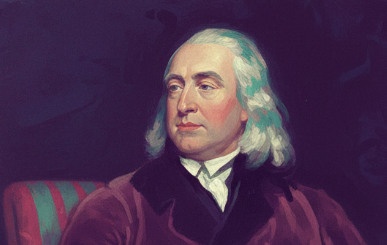
Of corruption, the principal and direct use is, to engage the representatives of the people to betray their trust, and sell themselves and the people to the universal corrupter—the monarch, in his capacity of corrupter-general.
▼
Source
Constitutional Code (written between 1820 and 1832), quoted in The Works of Jeremy Bentham, Vol. XVII (1841), p. 76
4 months 1 week ago
The judges of normality are present everywhere. We are in the society of the teacher-judge, the doctor-judge, the educator-judge, the social worker-judge; it is on them that the universal reign of the normative is based; and each individual, wherever he may find himself, subjects to it his body, his gestures, his behavior, his aptitudes, his achievements.
4 months 1 week ago
After wars peace, after peace, another war. Every day men are born and others die.
4 months 1 week ago
'You have no business to be an unbeliever. You ought to stand for all the things these stupid people call superstitions. Come now, don't you think there's a lot in those old wives' tales about luck and charms and so on, silver bullets included? What do you say about them as a Catholic?' 'I say I'm an agnostic,' replied Father Brown, smiling. 'Nonsense,' said Aylmer impatiently. 'It's your business to believe things.' 'Well, I do believe some things, of course,' conceded Father Brown; 'and therefore, of course, I don't believe other things.' .
4 months 1 week ago
All honour to those who can abnegate for themselves the personal enjoyment of life, when by such renunciation they contribute worthily to increase the amount of happiness in the world; but he who does it, or professes to do it, for any other purpose, is no more deserving of admiration than the ascetic mounted on his pillar. He may be an inspiriting proof of what men can do, but assuredly not an example of what they should.
▼
Source
Ch. 2
4 months 1 week ago
The parrhesia comes from "below,"... and is directed... "above." ...[A]n ancient Greek would not say ...a teacher or father who criticizes a child uses parrhesia.
4 months 1 week ago
I only wish that wisdom were the kind of thing that flowed ... from the vessel that was full to the one that was empty.
▼
Source
Plato, Symposium, 175d
CivilSimian.com created by AxiomaticPanic, CivilSimian, Kalokagathia