
4 months 1 week ago
When the pessimist Besme says in La Ville that nothing is, he means precisely this, that there is no experience that withstands the analytical test.
4 months 1 week ago
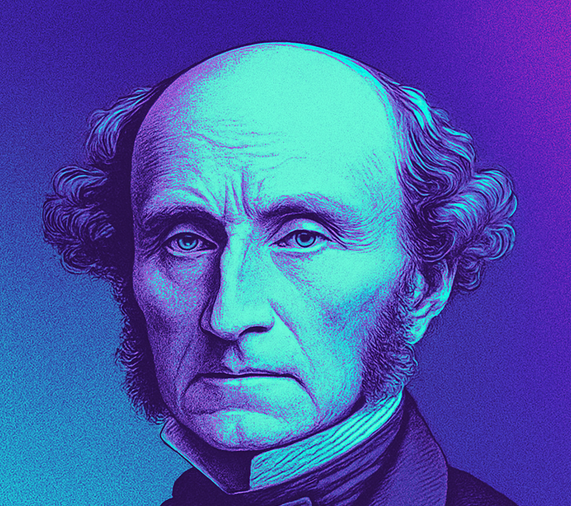
He was often, and much beyond reason, provoked by my failures in cases where success could not have been expected; but in the main his method was right, and it succeeded. I do not believe that any scientific teaching ever was more thorough, or better fitted for training the faculties, than the mode in which logic and political economy were taught to me by my father. Striving, even in an exaggerated degree, to call forth the activity of my faculties, by making me find out everything for myself, he gave his explanations not before, but after, I had felt the full force of the difficulties; and not only gave me an accurate knowledge of these two great subjects, as far as they were then understood, but made me a thinker on both.
▼
Source
([https://archive.org/details/autobiography01mill/page/28/mode/1up pp. 28–29])
4 months 1 week ago
The metaphor is perhaps one of man's most fruitful potentialities. Its efficacy verges on magic, and it seems a tool for creation which God forgot inside one of His creatures when He made him. All our other faculties keep us within the realm of the real, of what is already there. The most we can do is to combine things or to break them up. The metaphor alone furnishes an escape; between the real things, it lets emerge imaginary reefs, a crop of floating islands. A strange thing, indeed, the existence in man of this mental activity which substitutes one thing for another — from an urge not so much to get at the first as to get rid of the second.
▼
Source
"Taboo and Metaphor"
4 months 1 week ago
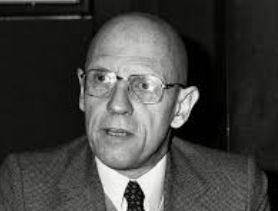
In making these various critical points, I am not proposing that Foucault should lose his place in the social and political theory hall of fame. He undoubtedly deserves his berth (as well as deserving what all the other inductees have won as a right: the right to be constructively criticised). I am not even suggesting that Foucault's writings on power are totally tainted by the problems I have highlighted. Certainly, many of his pronouncements about surveillance, for instance, along with the examples offered above look overblown now. The fact that the panopticon was never actually built should have alerted more readers (including me) to this at the time his main power pieces were being published, as should have the fact that the ‘eye of power’ arrangements of hospitals, schools, factories, and so forth (see esp. Foucault 1980: 146–65) were more a matter of architectural fashion, among other things, than they were an attempt to enhance the surveillance of subjects. But making claims that now look overblown is not much of a charge; it was the 1970s after all. I think that in this context I should dismiss that charge as trivial and concentrate instead on the fact that the second and third volumes of the History of Sexuality project (both published posthumously: Foucault 1986a, 1986b) – books in which the problem of ‘theorising’ stressed above is totally absent – were inspirational to Peter Brown in producing some of the most exciting and convincing work on power produced in the last thirty years (see esp. Brown 1988). This is both Foucault on power and Foucault at his very best: ‘the author of descriptive genealogies – “grey, meticulous and patiently documentary”’ (Saunders, quoting Foucault, 1997: 105–6)
▼
Source
Gary Wickham, "Foucault and the Promise of Power without Dogma", in Routledge International Handbook of Contemporary Social and Political Theory (2011) edited by Gerard Delanty and Stephen P. Turner
4 months 1 week ago
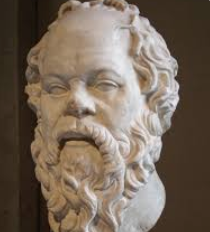
We admitted that everything living is born of the dead. For if the soul existed before birth, and in coming to life and being born can be born only from death and dying, must she not after death continue to exist, since she has to be born again?

4 months 1 week ago
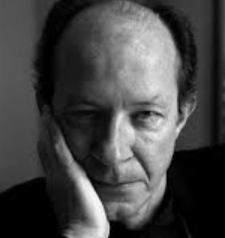
Puerto Ricans...castrate their children. As a reality check. Because they know the colonial systems will not allow their children to achieve all the things that they want in life. I saw that in my childhood. I saw this impotence that was imposed on me since my childhood. But I said, “I’m going to build an empire of uselessness. I’m going to take from the Americans the ingenuity, and I’m going to take from the Spaniards the wisdom.” And that’s what I do. I mix wisdom and ingenuity.
▼
Source
On decolonization of the self. [https://www.academia.edu/36916781/A_Graphic_Revolution_Talking_Poetry_and_Politics_with_Giannina_Braschi] (Chiricú Journal, 2018)
4 months 1 week ago
The influence of Charles Austin over me differed from that of the persons I have hitherto mentioned, in being not the influence of a man over a boy, but that of an elder contemporary. It was through him that I first felt myself, not a pupil under teachers, but a man among men. He was the first person of intellect whom I met on a ground of equality, though as yet much his inferior on that common ground. He was a man who never failed to impress greatly those with whom he came in contact, even when their opinions were the very reverse of his. The impression he gave was that of boundless strength, together with talents which, combined with such apparent force of will and character, seemed capable of dominating the world. Those who knew him, whether friendly to him or not, always anticipated that he would play a conspicuous part in public life. It is seldom that men produce so great an immediate effect by speech, unless they, in some degree, lay themselves out for it; and he did this in no ordinary degree. He loved to strike, and even to startle. He knew that decision is the greatest element of effect, and he uttered his opinions with all the decision he could throw into them, never so well pleased as when he astonished any one by their audacity.
▼
Source
([https://archive.org/details/autobiography01mill/page/77/mode/1up pp. 77-78])
4 months 1 week ago
Human life, by its very nature, has to be dedicated to something, an enterprise glorious or humble, a destiny illustrious or trivial. We are faced with a condition, strange but inexorable, involved in our very existence.
▼
Source
Chapter XIV: Who Rules The World?
4 months 1 week ago
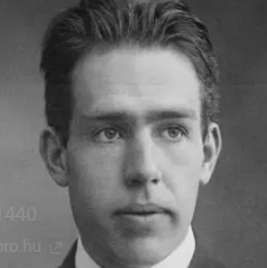
Even the mathematical framework helps nothing, I would first like to understand how Nature avoids the contradictions. (1927)
▼
Source
Quoted in Werner Heisenberg: Die Sprache der Atome (2010) by H. Rechenberg, p. 564.
4 months 1 week ago
If death had only been the end of all, the wicked would have had a good bargain in dying, for they would have been happily quit not only of their body, but of their own evil together with their souls. But now, as the soul plainly appears to be immortal, there is no release or salvation from evil except the attainment of the highest virtue and wisdom. For the soul when on her progress to the world below takes nothing with her but nurture and education...
4 months 1 week ago
Kuhn acknowledges having used the term "paradigm" in two different meanings. In the first one, "paradigm" designates what the members of a certain scientific community have in common, that is to say, the whole of techniques, patents and values shared by the members of the community. In the second sense, the paradigm is a single element of a whole, say for instance Newton’s Principia, which, acting as a common model or an example... stands for the explicit rules and thus defines a coherent tradition of investigation. Thus the question is for Kuhn to investigate by means of the paradigm what makes possible the constitution of what he calls "normal science". That is to say, the science which can decide if a certain problem will be considered scientific or not. Normal science does not mean at all a science guided by a coherent system of rules, on the contrary, the rules can be derived from the paradigms, but the paradigms can guide the investigation also in the absence of rules. This is precisely the second meaning of the term "paradigm", which Kuhn considered the most new and profound, though it is in truth the oldest.
4 months 1 week ago
It is not to be supposed that she was, or that any one, at the age at which I first saw her, could be, all that she afterwards became. Least of all could this be true of her, with whom self-improvement, progress in the highest and in all senses, was a law of her nature; a necessity equally from the ardour with which she sought it, and from the spontaneous tendency of faculties which could not receive an impression or an experience without making it the source or the occasion of an accession of wisdom. Up to the time when I first saw her, her rich and powerful nature had chiefly unfolded itself according to the received type of feminine genius. To her outer circle she was a beauty and a wit, with an air of natural distinction, felt by all who approached her: to the inner, a woman of deep and strong feeling, of penetrating and intuitive intelligence, and of an eminently meditative and poetic nature.
▼
Source
([https://archive.org/details/autobiography01mill/page/185/mode/1up p. 185])
4 months 1 week ago
I have always thought that clarity is a form of courtesy that the philosopher owes; moreover, this discipline of ours considers it more truly a matter of honor today than ever before to be open to all minds … This is different from the individual sciences which increasingly [interpose] between the treasure of their discoveries and the curiosity of the profane the tremendous dragon of their closed terminology.
▼
Source
p. 19
4 months 1 week ago
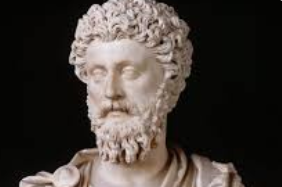
For we carry our fate with us — and it carries us. (Hays translation)
▼
Source
III, 4
4 months 1 week ago
If quantum theory has any philosophical importance at all, it lies in the fact that it demonstrates for a single, sharply defined science the necessity of dual aspects and complementary considerations. Niels Bohr has discussed this question with respect to many applications in physiology, psychology, and philosophy in general.
▼
Source
Max Born in [https://archive.org/stream/naturalphilosoph032159mbp#page/n137/search/sharply Natural Philosophy of Cause and Chance (1949) ch. 10, p. 127]

4 months 1 week ago
[One thing] underpins, makes consistent, and gives meaning to all our other activities on behalf of animals. This one thing is that we take responsibility for our own lives, and make them as free of cruelty as we can. The first step is that we cease to eat animals. Many people who are opposed to cruelty to animals draw the line at becoming a vegetarian. It was of such people that Oliver Goldsmith, the eighteenth-century humanitarian essayist, wrote: "They pity, and they eat the objects of their compassion."
▼
Source
Ch. 4: Becoming a Vegetarian
4 months 1 week ago
The state will only ever be a half of itself.
▼
Source
Socrates in Plato's Republic talking about women lacking rights. As quoted by Bettany Hughes: [http://www.telegraph.co.uk/women/womens-life/11785181/Feminism-started-with-the-Buddha-and-Confucius-25-centuries-ago.html "Feminism started with the Buddha and
4 months 1 week ago
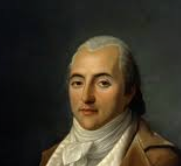
It was in America, while I was fighting for the cause of industrial liberty, that I first felt the desire to see this plant from another world flower in my own country. This desire has since dominated all my thinking. Without respite I studied the course of advancement and further assured myself that the progress of civilisation could have no other end. And I invoked this aim of true liberty, true public happiness, with my most fervent hopes. For me every event that seemed to point in that direction was a new joy, a new hope. The French Revolution broke out, and at first it seemed to be thoroughly industrial. But it soon lost that character, and the many noble efforts which ought to have produced liberty resulted only in the tyranny of the Jacobins and military despotism. A happier age has now started to dawn for us: at last a government has been established which declares its own power to be based on the power of opinion. Ever since then France has yielded to common sense, that is, to the free discussion of its common interests.
4 months 1 week ago
We are far too apt to think of Mill as a technically philosophical writer, because we cannot help thinking of him as the author of the Logic, and to forget that he, no less than Bentham and the other utilitarians, is primarily dominated by the practical interest of the social reformer. He is really far more interested in the question of how, “once the general happiness is recognized as the ethical standard,” this ideal is to be practically realized, than in the question of the ethical criterion and its proof.
▼
Source
James Seth, The Alleged Fallacies in Mill’s “Utilitarianism”, The Philosophical Review, 17(5): 478
4 months 1 week ago
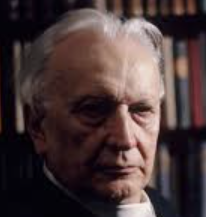
I approach the presentation of Kierkegaard with some trepidation. Next to Nietzsche, or rather, prior to Nietzsche, I consider him to be the most important thinker of our post-Kantian age. With Goethe and Hegel, an epoch had reached its conclusion, and our prevalent way of thinking — that is, the positivistic, natural-scientific one — cannot really be considered as philosophy.
▼
Source
The Great Philosophers (1962)
4 months 1 week ago
Death hangs over thee: whilst yet thou livest, whilst thou mayest, be good.
▼
Source
IV, 14 (trans. Meric Casaubon) | Variant: Death hangs over thee. While thou livest, while it is in thy power, be good. | τὸ χρεὼν ἐπήρτηται· ἕως ζῇς, ἕως ἔξεστιν, ἀγαθὸς γενοῦ. | IV, 17 (trans. George Long)
4 months 1 week ago
September 11, 2001, was just another day for most of the world’s desperately poor people, so presumably close to 30,000 children under five died from these causes on that day—about ten times the number of victims of the terrorist attacks. The publication of these figures did not lead to an avalanche of money for UNICEF or other aid agencies helping to reduce infant mortality. In the year 2000 Americans made private donations for foreign aid of all kinds totaling about $4 per person in extreme poverty, or roughly $20 per family. New Yorkers who were living in lower Manhattan on September 11, 2001, whether wealthy or not, were able to receive an average of $5,300 per family. The distance between these amounts encapsulates the way in which, for many people, the circle of concern for others stops at the boundaries of their own country—if it extends even that far.
▼
Source
Chapter 5: One Community (p. 176)
4 months 1 week ago
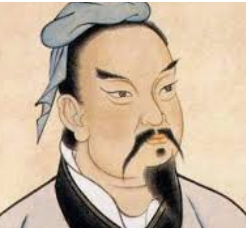
Victory is reserved for those who are willing to pay its price.
▼
Source
Attributed to Sun Tzu in multiple books and internet sites, but this text does not appear in The Art of War and seems to be a more recent creation.
4 months 1 week ago
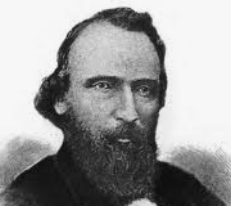
My privilege is to be spectator of my life drama, to be fully conscious of the tragi-comedy of my own destiny, and, more than that, to be in the secret of the tragi-comic itself, that is to say, to be unable to take my illusions seriously, to see myself, so to speak, from the theater on the stage, or to be like a man looking from beyond the tomb into existence. I feel myself forced to feign a particular interest in my individual part, while all the time I am living in the confidence of the poet who is playing with all these agents which seem so important, and knows all that they are ignorant of. It is a strange position, and one which becomes painful as soon as grief obliges me to betake myself once more to my own little rôle, binding me closely to it, and warning me that I am going too far in imagining myself, because of my conversations with the poet, dispensed from taking up again my modest part of valet in the piece. Shakespeare must have experienced this feeling often, and Hamlet, I think, must express it somewhere. It is a Doppelgängerei, quite German in character, and which explains the disgust with reality and the repugnance to public life, so common among the thinkers of Germany. There is, as it were, a degradation a gnostic fall, in thus folding one's wings and going back again into the vulgar shell of one's own individuality. Without grief, which is the string of this venturesome kite, man would soar too quickly and too high, and the chosen souls would be lost for the race, like balloons which, save for gravitation, would never return from the empyrean.
▼
Source
8 November 1852
4 months 1 week ago
You don't love yourself enough. Or you'd love your nature too, and what it demands of you. People who love what they do wear themselves down doing it, they even forget to wash or eat. Do you have less respect for your own nature than the engraver does for engraving, the dancer for the dance, the miser for money or the social climber for status? When they're really possessed by what they do, they'd rather stop eating and sleeping than give up practicing their arts. Is helping others less valuable to you? Not worth your effort?
▼
Source
V, 1(Hays translation)
4 months 1 week ago
As long as we try to project from the relative and conditioned to the absolute and unconditioned, we shall keep the pendulum swinging between dogmatism and skepticism. The only way to stop this increasingly tiresome pendulum swing is to change our conception of what philosophy is good for. But that is not something which will be accomplished by a few neat arguments. It will be accomplished, if it ever is, by a long, slow process of cultural change – that is to say, of change in common sense, changes in the intuitions available for being pumped up by philosophical arguments.
▼
Source
Introduction to Truth and Progress: Philosophical Papers, Volume 3 (1998).

4 months 1 week ago
You ask whether it is possible to understand the indication regarding the appearance of Christ in lesser images and in reality. Certainly. Medievalism made an inaccessible idol of Christ and deprived him of any humanity, therefore also of divinity. Thus, all the Teachings of the East proclaim that there is no god (or gods) who was not at one time a man. Such a forced separation of Christ from human essence threatened and still threatens a complete break in the communion of humanity with the Higher World. One can trace how in the Middle Ages there appeared every now and then great saints who tried to re-establish this almost lost communion, and all of them insisted precisely on the human essence of Christ. Especially strong affirmations of this can be found in the pages of the autobiography of St. Theresa, the Spanish saint of the sixteenth century, and still earlier, in the visions and writings of St. Catherine of Siena and St. Gertrude. Thus, the form and the quality of the visions and communications received through such communion always correspond with the level of the consciousness of those who see and receive them, and also with the needs of the time. As it was said, "In is precisely by following the character of the visions that the best history of the intellect may be written."
▼
Source
Helena Roerich, Letters of Helena Roerich II, (2 April 1936)
4 months 1 week ago
The manners of our fore-fathers were, I believe, in many respects better: they had more probity perhaps, they had certainly more show of honour, and greater industry.
▼
Source
p. 18
4 months 1 week ago
How many together with whom I came into the world are already gone out of it.
▼
Source
VI, 56
4 months 1 week ago
We are firm believers in the maxim that for all right judgment of any man or thing it is useful, nay, essential, to see his good qualities before pronouncing on his bad.
▼
Source
Goethe.
4 months 1 week ago
If we rejoice with the world, there is reason to fear that with the world we shall grieve too. But when the world rejoices, let us grieve; and when the world afterward grieves, we shall rejoice.
▼
Source
Chapter XIII, Of the Observance of Days Connected with Idolatry
4 months 1 week ago
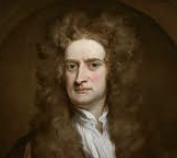
If I have seen further it is by standing on ye sholders of Giants.
▼
Source
Letter to Robert Hooke (15 February 1676) [dated as 5 February 1675 using the Julian calendar with March 25th rather than January 1st as New Years Day, equivalent to 15 February 1676 by Gregorian reckonings.] A facsimile of the original is online at [http
4 months 1 week ago
He engaged young, and distinguished himself in business; and his penetration was almost intuition. I am old enough to have heard him speak in parliament. And I remember that, though prejudiced against him by party, I felt all the force and charms of his eloquence. Like Belial in Milton, “he made the worse appear the better cause.” All the internal and external advantages and talents of an orator are undoubtedly his. Figure, voice, elocution, knowledge, and, above all, the purest and most florid diction, with the justest metaphors and happiest images, had raised him to the post of Secretary at War, at four-and-twenty years old, an age at which others are hardly thought fit for the smallest employments.
▼
Source
Earl of Chesterfield to his son (12 December 1749) quoted in Letters Written By The Late Right Honourable Philip Dormer Stanhope, Earl Of Chesterfield, To His Son, Philip Stanhope, Esq. Late Envoy-Extraordinary At The Court Of Dresden: Together with Sever
4 months 1 week ago
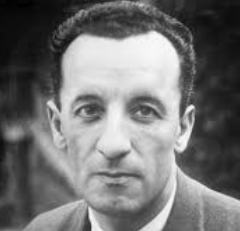
Thought without language, says Lavelle, would not be a purer thought; it would be no more than the intention to think. And his last book offers a theory of expressiveness which makes of expression not “a faithful image of an already realized interior being, but the very means by which it is realized.”
▼
Source
p. 8
4 months 1 week ago
Where any work can be done conformably to the reason which is common to gods and men, there we have nothing to fear; for where we are able to get profit by means of the activity which is successful and proceeds according to our constitution, there no harm is to be suspected.
▼
Source
VII, 53
4 months 1 week ago
If we read History with any degree of thoughtfulness, we shall find that checks and balances of Profit and Loss have never been the grand agents with men, that they have never been roused into deep, thorough, all-pervading efforts by any computable prospect of Profit and Loss, for any visible, finite object; but always for some invisible and infinite one.
4 months 1 week ago
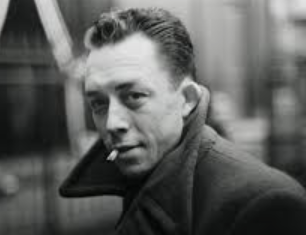
There is not love of life without despair about life.
▼
Source
Preface, Lyrical and Critical Essays (1970)
4 months 1 week ago
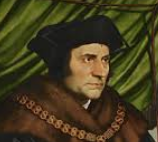
I die the king's faithful servant, and God's first.
▼
Source
Words on the scaffold, attributed in The Essentials of Freedom : The Idea and Practice of Ordered Liberty in the Twentieth Century as explored at Kenyon College (1960) by Paul Gray Hoffman, p. 43 | First reported in indirect speech in the Paris Newsletter
4 months 1 week ago
In my Judgment no Lines ought to be admitted into plain Geometry besides the right Line and the Circle.
4 months 1 week ago
Western humanism has religious and transcendent sources without which it is incomprehensible to itself.
▼
Source
p. 154.
4 months 1 week ago
The things... which are proper to the understanding no other man is used to impede, for neither fire, nor iron, nor tyrant, nor abuse, touches it in any way. When it has been made a sphere, it continues a sphere.
▼
Source
VIII, 41
4 months 1 week ago
The premonition of madness is complicated by the fear of lucidity in madness, the fear of the moments of return and reunion, when the intuition of disaster is so painful that it almost provokes a greater madness [...] One would welcome chaos if one were not afraid of lights in it.
4 months 1 week ago
O thou who art able to write a Book, which once in the two centuries or oftener there is a man gifted to do, envy not him whom they name City-builder, and inexpressibly pity him whom they name Conqueror or City-burner! Thou too art a Conqueror and Victor; but of the true sort, namely over the Devil: thou too hast built what will outlast all marble and metal, and be a wonder-bringing City of the Mind, a Temple and Seminary and Prophetic Mount, whereto all kindreds of the Earth will pilgrim.
▼
Source
Bk. II, ch. 8.
4 months 1 week ago
There is but one truly serious philosophical problem and that is suicide. Judging whether life is or is not worth living amounts to answering the fundamental question of philosophy. All the rest – whether or not the world has three dimensions, whether the mind has nine or twelve categories – comes afterwards. These are games; one must first answer. And if it is true, as Nietzsche claims, that a philosopher, to deserve our respect, must preach by example, you can appreciate the importance of that reply, for it will precede the definitive act. These are facts the heart can feel; yet they call for careful study before they become clear to the intellect. If I ask myself how to judge that this question is more urgent than that, I reply that one judges by the actions it entails. I have never seen anyone die for the ontological argument.
▼
Source
Absurdity and Suicide
4 months 1 week ago
They are things beyond reasoning sensible, practical truths, not mere vagaries and rambles of the brain.
4 months 1 week ago
They must at the same time be so expressed as to be capable of appealing to the sentiments of the masses. An ideology embodying the interests of a given ruling class would not be of the slightest use as social cement if it openly expressed its function of keeping the ruling class in power over the rest of society. The ideology must ostensibly speak in the name of 'humanity', 'the people', the race', 'the future', 'God', 'destiny', and so on.
▼
Source
186; as cited in: Thomas Diefenbach (2009) Management and the Dominance of Managers. p. 128
4 months 1 week ago
Do what nature now requires. Set thyself in motion, if it is in thy power, and do not look about thee to see if any one will observe it; nor yet expect Plato's Republic: but be content if the smallest thing goes on well, and consider such an event to be no small matter.
▼
Source
Forward, as occasion offers. Never look round to see whether any shall note it.... Be satisfied with success in even the smallest matter, and think that even such a result is no trifle. | IX, 29
4 months 1 week ago
That fear which gives birth to thoughts, and the fear of thoughts...
4 months 1 week ago
The uttered part of a man's life, let us always repeat, bears to the unuttered, unconscious part a small unknown proportion. He himself never knows it, much less do others.
4 months 1 week ago
A profound thought is in a constant state of becoming; it adopts the experience of a life and assumes its shape. Likewise, a man's sole creation is strengthened in its successive and multiple aspects: his works. One after another they complement one another, correct or overtake one another, contradict one another, too. If something brings creation to an end, it is not the victorious and illusory cry of the blinded artist: "I have said everything," but the death of the creator which closes his experiences and the book of his genius. That effort, that superhuman consciousness are not necessarily apparent to the reader. There is no mystery in human creation. Will performs this miracle. But at least there is no true creation without a secret. To be true, a succession of works can be but a series of approximations of the same thought. But it is possible to conceive of another type of creator proceeding by juxtaposition. Their words may seem to be devoid of inter-relations, to a certain degree, they are contradictory. But viewed all together, they resume their natural grouping.
CivilSimian.com created by AxiomaticPanic, CivilSimian, Kalokagathia