
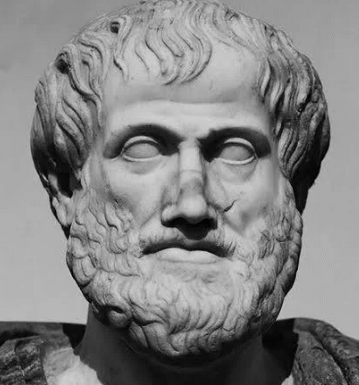
4 months 1 week ago
Perhaps then we must begin with such facts as are known to us from individual experience. It is necessary therefore that the person who is to study, with any tolerable chance of profit, the principles of nobleness and justice and politics generally, should have received a good moral training.
▼
Source
(Bk I, Ch II)
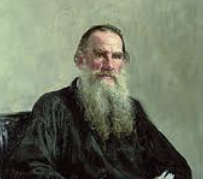
4 months 1 week ago
Six feet of land was all that he needed.
▼
Source
How Much Land Does a Man Need? (1886)
4 months 1 week ago
Talent is a gift that brings with it an obligation to serve the world, and not ourselves, for it is not of our making. To use for our exclusive benefit what is not ours is theft. Culture, which makes talent shine, is not completely ours either, nor can we place it solely at our disposal. Rather, it belongs mainly to our country, which gave it to us, and to humanity, from which we receive it as a birthright. A selfish man is a thief.
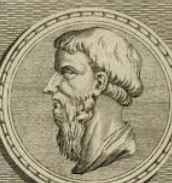
4 months 1 week ago
Under which head do you class those who are at sea?
▼
Source
Having been asked whether the dead or the living were more numerous., as quoted in The Lives and Opinions of Eminent Philosophers by Diogenes Laërtius, as translated by C. D. Yonge, (1853), "Anacharsis" sect. 5, p. 48
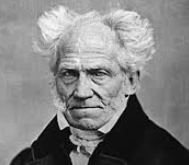
4 months 1 week ago
Every parting gives a foretaste of death; every coming together again a foretaste of the resurrection.
▼
Source
"Psychological Observations"

4 months 1 week ago
After all, why should ordinary people want to contemplate the End, especially when we see the condition of those who do?
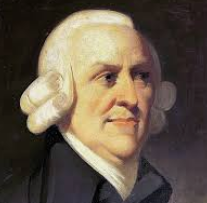
4 months 1 week ago
China has been long one of the richest, that is, one of the most fertile, best cultivated, most industrious, and most populous countries in the world. It seems, however, to have been long stationary. Marco Polo, who visited it more than five hundred years ago, describes its cultivation, industry, and populousness, almost in the same terms in which they are described by travellers in the present times.
▼
Source
Chapter VIII, p. 86.
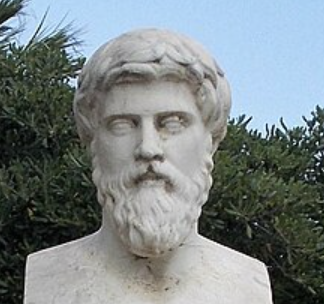
4 months 1 week ago
Antagoras the poet was boiling a conger, and Antigonus, coming behind him as he was stirring his skillet, said, "Do you think, Antagoras, that Homer boiled congers when he wrote the deeds of Agamemnon?" Antagoras replied, "Do you think, O king, that Agamemnon, when he did such exploits, was a peeping in his army to see who boiled congers?"
▼
Source
46 Antigonus I

4 months 1 week ago
The evil of totalitarianism is not only that it fails to protect specific liberties but that it extinguishes the very possibility of freedom.
▼
Source
'Isaiah Berlin: The Value of Decency' (p.104)
4 months 1 week ago
When people are friends, they have no need of justice, but when they are just, they need friendship in addition.
▼
Source
Book VIII, 1155a.26
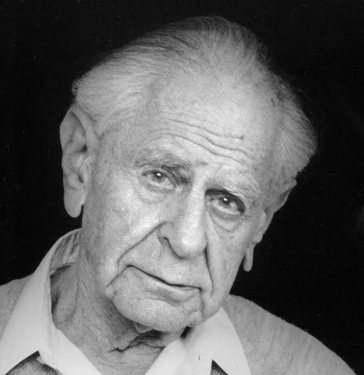
4 months 1 week ago
If in this book harsh words are spoken about some of the greatest among the intellectual leaders of mankind, my motive is not, I hope, the wish to belittle them. It springs rather from my conviction that, if our civilization is to survive, we must break with the habit of deference to great men. Great men may make great mistakes; and as the book tries to show, some of the greatest leaders of the past supported the perennial attack on freedom and reason. Their influence, too rarely challenged, continues to mislead those on whose defence civilization depends, and to divide them. The responsibility of this tragic and possibly fatal division becomes ours if we hesitate to be outspoken in our criticism of what admittedly is a part of our intellectual heritage. By reluctance to criticize some of it, we may help to destroy it all.
▼
Source
Preface to the First Edition
4 months 1 week ago
Anna Pávlovna's reception was in full swing. The spindles hummed steadily and ceaselessly on all sides. With the exception of the aunt, beside whom sat only one elderly lady, who with her thin careworn face was rather out of place in this brilliant society, the whole company had settled into three groups. One, chiefly masculine, had formed round the abbé. Another, of young people, was grouped round the beautiful Princess Hélène, Prince Vasíli's daughter, and the little Princess Bolkónskaya, very pretty and rosy, though rather too plump for her age. The third group was gathered round Mortemart and Anna Pávlovna.
▼
Source
Bk. I, Ch. III

4 months 1 week ago
But yet, since He knew that it would be good, He created both angels and men free to do that which is righteous, and He appointed periods of time during which He knew it would be good for them to have the exercise of free-will; and because He likewise knew it would be good, He made general and particular judgments; each one’s freedom of will, however, being guarded.
▼
Source
Dialogue with Trypho, chapter CII. In ANF1, that is, Roberts A, Donaldson J and Coxe AC (1885) Ante-Nicene Fathers, Vol 1. [Cf chapter LXXXVIII.]
4 months 1 week ago
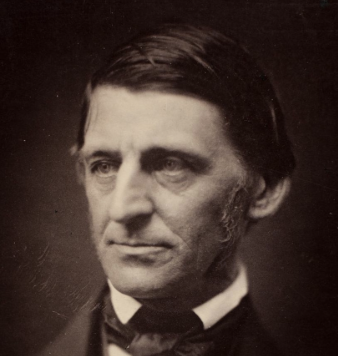
Only the great generalizations survive. The sharp words of the Declaration of Independence, lampooned then and since as 'glittering generalities,' have turned out blazing ubiquities that will burn forever and ever.
▼
Source
From a lecture on Books given in the Fraternity Course in Boston in 1864; the quoted phrase 'glittering generalities' had been used by Rufus Choate to describe the declaration of the rights of man in the Preamble to the Constitution

4 months 1 week ago
The vicious circle linking poverty, police, courts and prison is an integral element of ghetto existence.
4 months 1 week ago
We are struck by the psychological force and even fierceness with which he reveals the deepest recesses of the human heart.
▼
Source
[http://www.lib.uiowa.edu/spec-coll/MSC/ToMsc500/MsC488/MsC488.htm Eric F. J. Payne], in his introduction to his 1958 translation of [http://books.google.com/books?id=pvnAL_fReokC&pg=PR7&lpg=PR7&dq=%22are+struck+by+the+psychological+force+and+even+fiercen
4 months 1 week ago
I anticipated witnessing in my lifetime the disappearance of our species. But the Gods have been against me.
4 months 1 week ago
The ancient Egyptians had a superstitious antipathy to the sea; a superstition nearly of the same kind prevails among the Indians; and the Chinese have never excelled in foreign commerce.
▼
Source
Chapter V, p. 402.
4 months 1 week ago
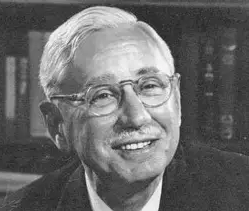
I felt more keenly than before the need of a philosophy that would do justice to the infinite vitality of nature. In the inexhaustible activity of the atom, in the endless resourcefulness of plants, in the teeming fertility of animals, in the hunger and movement of infants, in the laughter and play of children, in the love and devotion of youth, in the restless ambition of fathers and the lifelong sacrifice of mothers, in the undiscourageable researches of scientists and the sufferings of genius, in the crucifixion of prophets and the martyrdom of saints — in all things I saw the passion of life for growth and greatness, the drama of everlasting creation. I came to think of myself, not as a dance and chaos of molecules, but as a brief and minute portion of that majestic process... I became almost reconciled to mortality, knowing that my spirit would survive me enshrined in a fairer mold... and that my little worth would somehow be preserved in the heritage of men. In a measure the Great Sadness was lifted from me, and, where I had seen omnipresent death, I saw now everywhere the pageant and triumph of life.
▼
Source
Transition (1927)
4 months 1 week ago
"I will show," said Agesilaus, "that it is not the places that grace men, but men the places."
▼
Source
Of Agesilaus the Great
4 months 1 week ago
Human knowledge increases, while human irrationality stays the same. Scientific inquiry may be an embodiment of reason, but what such inquiry demonstrates is that humans are not rational animals. The fact that humanists refuse to accept the demonstration only confirms its truth.
▼
Source
An Old Chaos: Humanism and Flying Saucers (p. 81)
4 months 1 week ago
We live in deeds, not years; in thoughts not breaths; // In feelings, not in figures on a dial. // We should count time by heart throbs. He most lives // Who thinks most, feels the noblest, acts the best.
▼
Source
This is actually from the poem "We live in deeds..." by Philip James Bailey. This explains the strange pattern of capitalization.
4 months 1 week ago
Do not allow your dreams of a beautiful world to lure you away from the claims of men who suffer here and now.
▼
Source
p. 485
4 months 1 week ago
He knew she was there by the joy and fear that overwhelmed his heart.
▼
Source
Pt. I, ch. 9
4 months 1 week ago
Nothing ought to be said or done which could create the impression that unbiased reconsideration of the most elementary premises of philosophy is a merely academic or historical affair.
▼
Source
p. 31
4 months 1 week ago
Poetry must be new as foam, and as old as the rock.
▼
Source
March 1845
4 months 1 week ago
Paradoxically, demands for parity with men's prisons, instead of creating greater educational, vocational, and health opportunities for women prisoners, often have led to more repressive conditions for women. This is not only a consequence of deploying liberal - that is, formalistic - notions of equality, but of, more dangerous, allowing male prisons to function as the punishment norm.
▼
Source
Chapter Four
4 months 1 week ago
When we have no further desire to show ourselves, we take refuge in music, the Providence of the abulic.
4 months 1 week ago
In every country it always is and must be the interest of the great body of the people to buy whatever they want of those who sell it cheapest. The proposition is so very manifest that it seems ridiculous to take any pains to prove it; nor could it ever have been called in question had not the interested sophistry of merchants and manufacturers confounded the common sense of mankind. Their interest is, in this respect, directly opposite to that of the great body of the people.
▼
Source
Chapter III, Part II, p. 531.
4 months 1 week ago
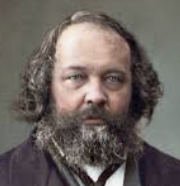
Liberty is so great a magician, endowed with so marvelous a power of productivity, that under the inspiration of this spirit alone, North America was able within less than a century to equal, and even surpass, the civilization of Europe.
4 months 1 week ago
The news of this barbaric orgy of military sadism was kept from the world for half a year. A belated commission of inquiry was appointed by the Government. A committee appointed by the Indian National Congress made a more through investigation and reported 1,200 killed, and 3,600 wounded. Gen. Dyer was censured by the House of Commons, exonerated by the House of Lords, and was retired on a pension. Thinking this was insufficient the militarists of the Empire raised a fund of $150,000 for him and presented him with a jeweled sword of honor. (source: The Case for India - By Will Durant Simon and Schuster, New York. 1930 p. This book was banned by the British Government. Durant held the view that no part of the world suffered so much poverty andoppression as India did and that this was largely due to British imperialism).

4 months 1 week ago
Anything done against faith or conscience is sinful.
▼
Source
Commentary on Romans, cap 14, I 3

4 months 1 week ago
Incorporeal hypostases, in descending, are distributed into parts, and multiplied about individuals with a diminution of power; but when they ascend by their energies beyond bodies, they become united, and proceed into a simultaneous subsistence, through exuberance of power.
▼
Source
11
4 months 1 week ago
There are uncertain truths — even true statements that we may take to be false — but there are no uncertain certainties. Since we can never know anything for sure, it is simply not worth searching for certainty; but it is well worth searching for truth; and we do this chiefly by searching for mistakes, so that we have to correct them.
4 months 1 week ago
This new fraud is just like the old ones: its essence lies in substituting something external for the use of our own reason and conscience and that of our predecessors: in the Church teaching this external thing was revelation, in the scientific teaching it is observation. The trick played by this science is to destroy man's faith in reason and conscience by directing attention to the grossest deviations from the use of human reason and conscience, and having clothed the deception in a scientific theory, to assure them that by acquiring knowledge of external phenomena they will get to know indubitable facts which will reveal to them the law of man's life. And the mental demoralization consists in this, that coming to believe that things which should be decided by conscience and reason are decided by observation, these people lose their consciousness of good and evil and become incapable of understanding the expression and definitions of good and evil that have been formed by the whole preceding life of humanity. All this, in their jargon, is conditional and subjective. It must all be abandoned - they say - the truth cannot be understood by one's reason, for one may err, but there is another path which is infallible and almost mechanical: one must study facts. And facts must be studied on the basis of the scientists' science, that is, on the basis of two unfounded propositions: positivism and evolution which are put forward as indubitable truths. And the reigning science, with not less misleading solemnity than the Church, announces that the solution of all questions of life is only possible by the study of the facts of nature, and especially of organisms. A frivolous crowd of youths mastered by the novelty of this authority, which is as yet not merely not destroyed but not even touched by criticism, throws itself into the study of these facts of natural science as the sole path which, according to the assertions of the prevailing doctrine, can lead to the elucidation of the questions of life. But the further these disciples advance in this study the further and further are they removed not only from the possibility but even from the very thought of solving life's problems, and the more they become accustomed not so much to observe as to take on trust what they are told of the observations of others (to believe in cells, in protoplasm, in the fourth state of matter,1 &c.), the more and more does the form hide the contents from them; the more and more do they lose consciousness of good and evil and capacity to understand the expressions and definitions of good and evil worked out by the whole preceding life of humanity; the more and more do they adopt the specialized scientific jargon of conventional expressions which have no general human significance; the farther and farther do they wander among the debris of quite unilluminated observations; the more and more do they lose capacity not only to think independently but even to under-stand another man's fresh human thought lying outside their Talmud; and, what is most important, they pass their best years in growing unaccustomed to life, that is, to labour, and grow accustomed to consider their condition justified, while they become physically good-for-nothing parasites. And just like the theologians and the Talmudists they completely castrate their brains and become eunuchs of thought. And just like them, to the degree to which they become stupefied, they acquire a self-confidence which deprives them for ever of the possibility of returning to a simple clear and human way of thinking.
4 months 1 week ago
Education to perfect gentlemanship, to human excellence, liberal education consists in reminding oneself of human excellence, of human greatness.
▼
Source
“What is liberal education,” p. 6
4 months 1 week ago
Man Thinking must not be subdued by his instruments.
▼
Source
par. 20
4 months 1 week ago
every person in this country, from high school to the postgraduate level, should read W. E. B. Du Bois's Black Reconstruction in America. In the 1960s we confronted issues that should have been resolved in the 1860s. And I'm making this point because what happens when 2060 rolls around? Will people still be addressing these same issues?
4 months 1 week ago
II. The tax which each individual is bound to pay ought to be certain, and not arbitrary.
▼
Source
Chapter II, Part II, p. 892.
4 months 1 week ago
As one of our Swiss friends put it: "Now every German tailor living in Japan, China, or Moscow feels that he has the German navy and all of Germany's power behind him. This proud consciousness sends him into an insane rapture: the German has finally lived to see the day when he can say with pride, relying on his own state, like an Englishman or an American, 'I am a German.' True, when the Englishman or American says 'I am an Englishman,' or 'I am an American,' he is saying 'I am a free man.' The German, however, is saying 'I am a slave, but my emperor is stronger than all other princes, and the German soldier who is strangling me will strangle all of you.'"

4 months 1 week ago
Lacking much historical information and assuming (1) that victims of injustice generally do worse than they otherwise would and (2) that those from the least well-off group in the society have the highest probabilities of being the (descendants of) victims of the most serious injustice who are owed compensation by those who benefited from the injustices, ... then a rough rule of thumb for rectifying injustices might seem to be the following: organize society so as to maximize the position of whatever group ends up least well-off in the society.
▼
Source
pp. [http://books.google.com/books?id=fVITAAAAQBAJ&pg=PT138 231-232]
4 months 1 week ago
The whole historic existence of mankind is nothing else than the gradual transition from the personal, animal conception of life to the social conception of life, and from the social conception of life to the divine conception of life.
▼
Source
Chapter IV, Christianity Misunderstood by Men of Science
4 months 1 week ago
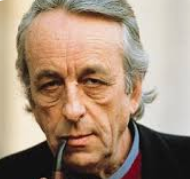
To become 'ideologists of the working class' (Lenin), 'organic intellectuals' of the proletariat (Gramsci), intellectuals have to carry out a radical revolution in their ideas: a long, painful and difficult re-education. An endless external and internal struggle.
▼
Source
p. 2
4 months 1 week ago
I saw men go up and down, In the country and the town, With this tablet on their neck,— 'Judgement and a judge we seek.' Not to monarchs they repair, Nor to learned jurist's chair; But they hurry to their peers, To their kinsfolk and their dears; Louder than with speech they pray,— 'What am I? companion, say.'
▼
Source
Astræa
4 months 1 week ago
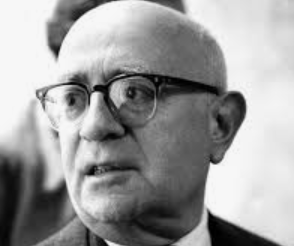
Impulse, subjectivity and profanation, the old adversaries of materialistic alienation, now succumb to it. ... The representatives of the opposition to the authoritarian schema become witnesses to the authority of commercial success. ... In the service of success they renounce that insubordinate character which was theirs.
▼
Source
p. 273

4 months 1 week ago
Truth is the most powerful thing in the world, since even fiction itself must be governed by it, and can only please by its resemblance.
▼
Source
Vol. 1, p. 8; "A Letter Concerning Enthusiasm".
4 months 1 week ago
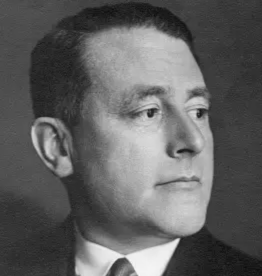
The enemy is not merely any competitor or just any partner of a conflict in general. He is also not the private adversary whom one hates. An enemy exists only when, at least potentially, one fighting collectivity of people confronts a similar collectivity. The enemy is solely the public enemy, because everything that has a relationship to such a collectivity of men, particularly to a whole nation, becomes public by virtue of such a relationship.
4 months 1 week ago
It has been called “the outpouring not only of a great mind, but of a whole epoch.” Yet it is not, in the strict sense of the word, an “original” book. There is a long line of observers before Smith who have approached his understanding of the world: Locke, Steuart, Mandeville, Petty, Cantillon, Turgot, not to mention Quesnay and Hume again. Smith took from all of them: there are over a hundred authors mentioned by name in his treatise. But where others had fished here and there, Smith spread his net wide; where others had clarified this and that issue, Smith illuminated the entire landscape. The Wealth of Nations is not a wholly original book, but it is unquestionably a masterpiece.
▼
Source
Robert Heilbroner, The Worldly Philosophers 7th ed. (1999), Chapter III. The Wonderful World of Adam Smith
4 months 1 week ago
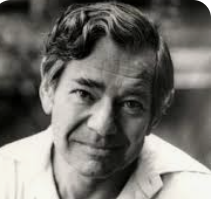
Heresy is a set of opinions "at variance with established or generally received principles." In this sense, heresy is the price of all originality and innovation.
4 months 1 week ago
Art is not, as the metaphysicians say, the manifestation of some mysterious Idea of beauty or God; it is not, as the aesthetical physiologists say, [play or] a game in which one releases surplus energy, ...not the production of pleasing objects, and is above all, not pleasure itself, but it is the means of union among mankind, joining them in the same feelings, and necessary for the life and progress toward the good of the individual and of humanity.
CivilSimian.com created by AxiomaticPanic, CivilSimian, Kalokagathia